
Why the condenser coil decides how long a compressor lives
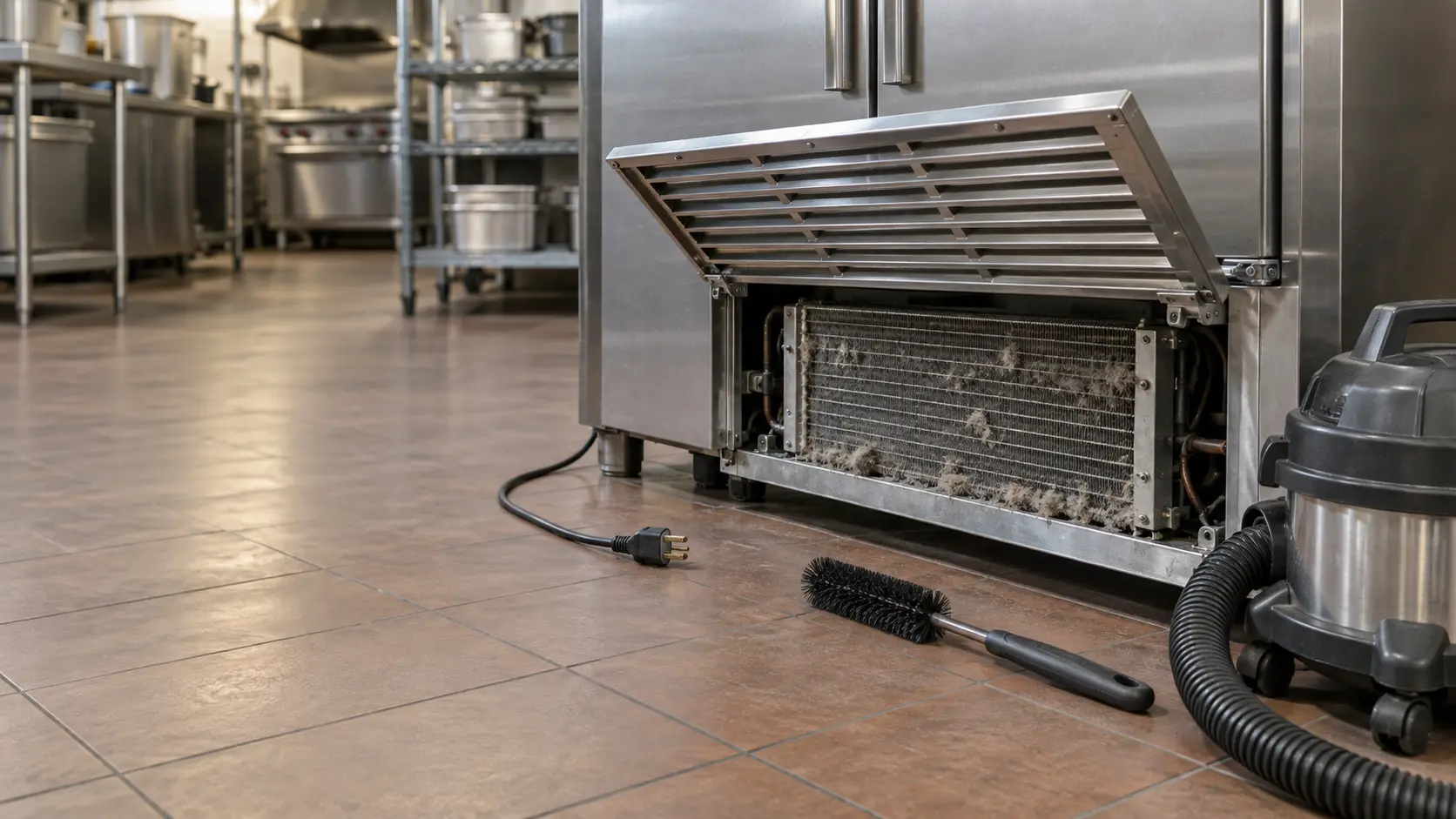
The condenser is where a cold cabinet dumps its heat. When dust and grease mat the fins, less air passes, the compressor runs longer and hotter, and the box struggles to hold temperature on a busy afternoon. Delfield describes the progression plainly: high temperatures and long run times first, then compressor failure if the unit keeps running with a clogged coil.
Traulsen calls regular coil cleaning the most important thing an owner can do for a long service life, and adds that a clean coil lets the cabinet use less energy. It is also cheap insurance on paper, since Delfield says neglecting the procedure voids compressor coverage.
Source: Delfield — 6000XL and 6100XL reach-ins installation, operation and maintenance manual — Clean the condenser monthly with a vacuum or stiff brush, more often if it blocks within a month, with a commercial condenser cleaner if extremely dirty; a dirty coil causes high temperatures, long run times and compressor failure, and neglect voids compressor warranties.; Traulsen — owner's manuals (R-Series uprights, TR35743) — Disconnect power, remove two screws and lift the front louver; vacuum or brush the coil and use compressed air for heavy dirt; StayClear coils every 6 months; remove ignition sources before cleaning R-290 coils and ventilate and call for service if the coil leaks.
How often, maker by maker
The intervals below are the ones each maker prints for the models named. Treat them as a maximum and shorten them for coils that sit near fryers, griddles, bakery benches or a laundry, where airborne grease, flour and lint arrive faster.
| Maker and line | Interval | Tools the manual names |
|---|---|---|
| Delfield 6000XL reach-ins | Monthly, more often if blocked within a month | Vacuum or stiff brush; condenser cleaner if extremely dirty |
| Turbo Air M3 reach-ins | At least every 3 months (90 days) or as needed | Vacuum, brush or CO2 |
| Traulsen R-Series, finned coil | Regularly scheduled | Vacuum or brush; compressed air for heavy dirt |
| Traulsen R-Series, StayClear coil | Every 6 months or when dirt blocks the fins | Same steps as the finned coil |
Setting your own interval
Start at the printed interval and look at the coil each time. If it is matted when you open the grille, halve the interval; if it is barely dusty after three cleanings, you can hold the schedule. Write your condenser coil cleaning schedule on the unit's log sheet so it survives staff changes.
- Matted gray felt across the fins: clean twice as often.
- A light film of dust: keep the interval.
- Dark, sticky buildup: book a technician and move the cabinet away from the heat or grease source if you can.
Source: Delfield — 6000XL and 6100XL reach-ins installation, operation and maintenance manual — Clean the condenser monthly with a vacuum or stiff brush, more often if it blocks within a month, with a commercial condenser cleaner if extremely dirty; a dirty coil causes high temperatures, long run times and compressor failure, and neglect voids compressor warranties.; Turbo Air — M3 series reach-ins installation and operation manual — Clean the condenser at least every three months (90 days) or as needed, unplugged, with a vacuum, brush or CO2; condenser cleaner may not remove grease; self-cleaning condensers should be blown out with nitrogen once or twice a year.; Traulsen — owner's manuals (R-Series uprights, TR35743) — Disconnect power, remove two screws and lift the front louver; vacuum or brush the coil and use compressed air for heavy dirt; StayClear coils every 6 months; remove ignition sources before cleaning R-290 coils and ventilate and call for service if the coil leaks.

Where to find the coil on each kind of cabinet
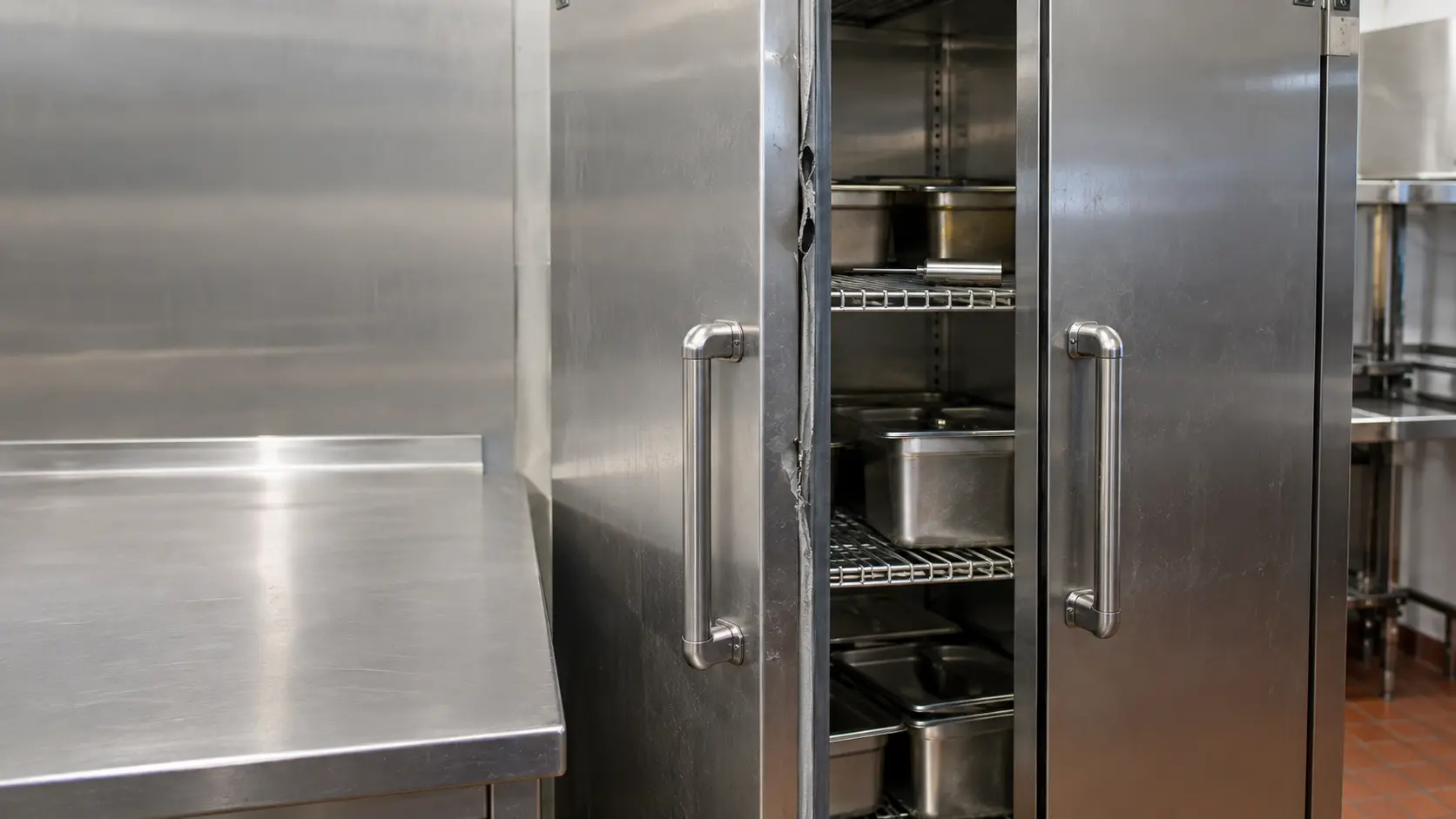
On most bottom-mount reach-ins the condensing unit sits behind a louvered grille at the base. Traulsen's R-Series louver lifts after two screws at its lower corners come out, and then pivots up to expose the front-facing coil. Top-mount cabinets carry the coil above the doors behind a panel, which means a stable step and two people.
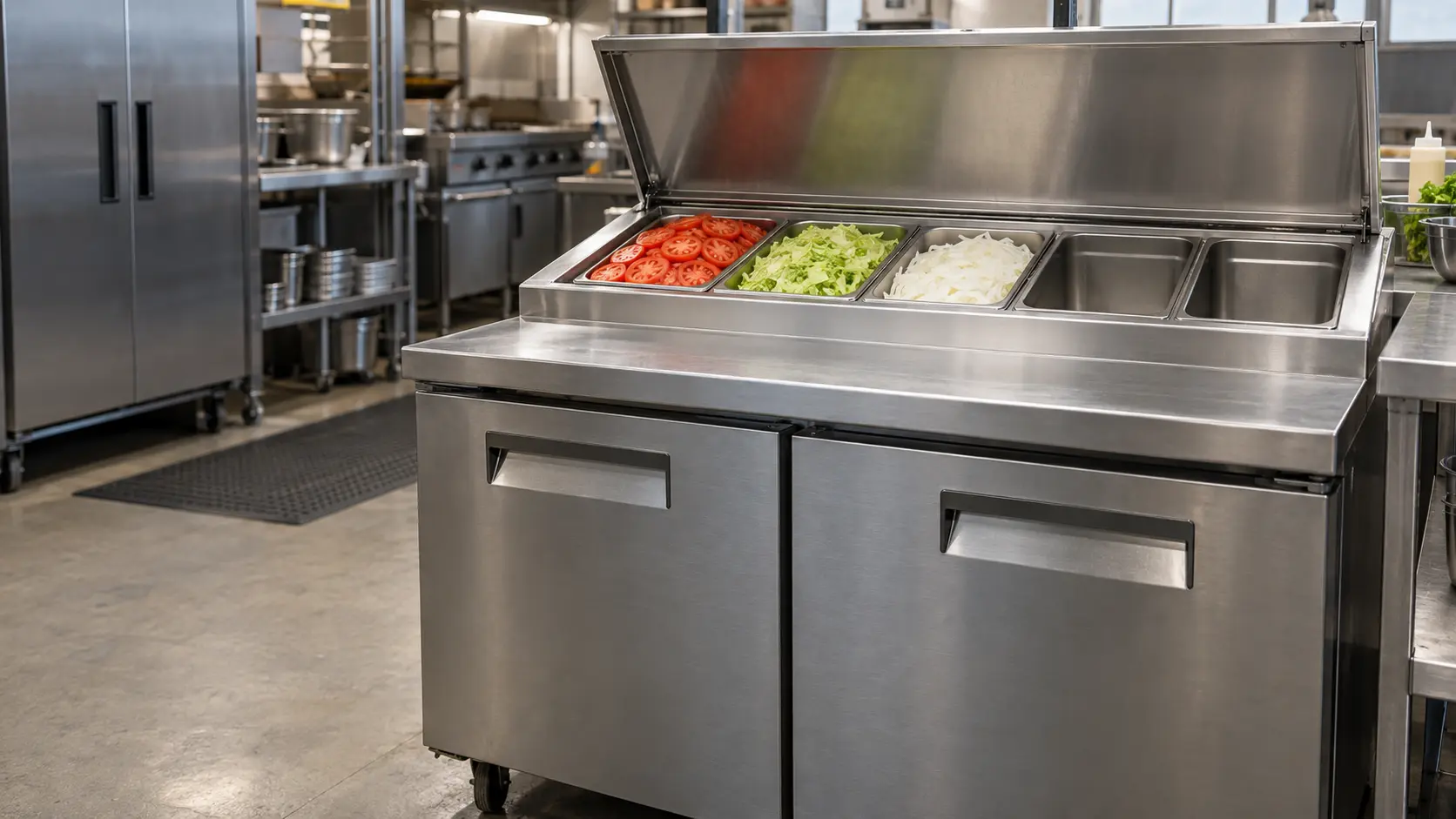
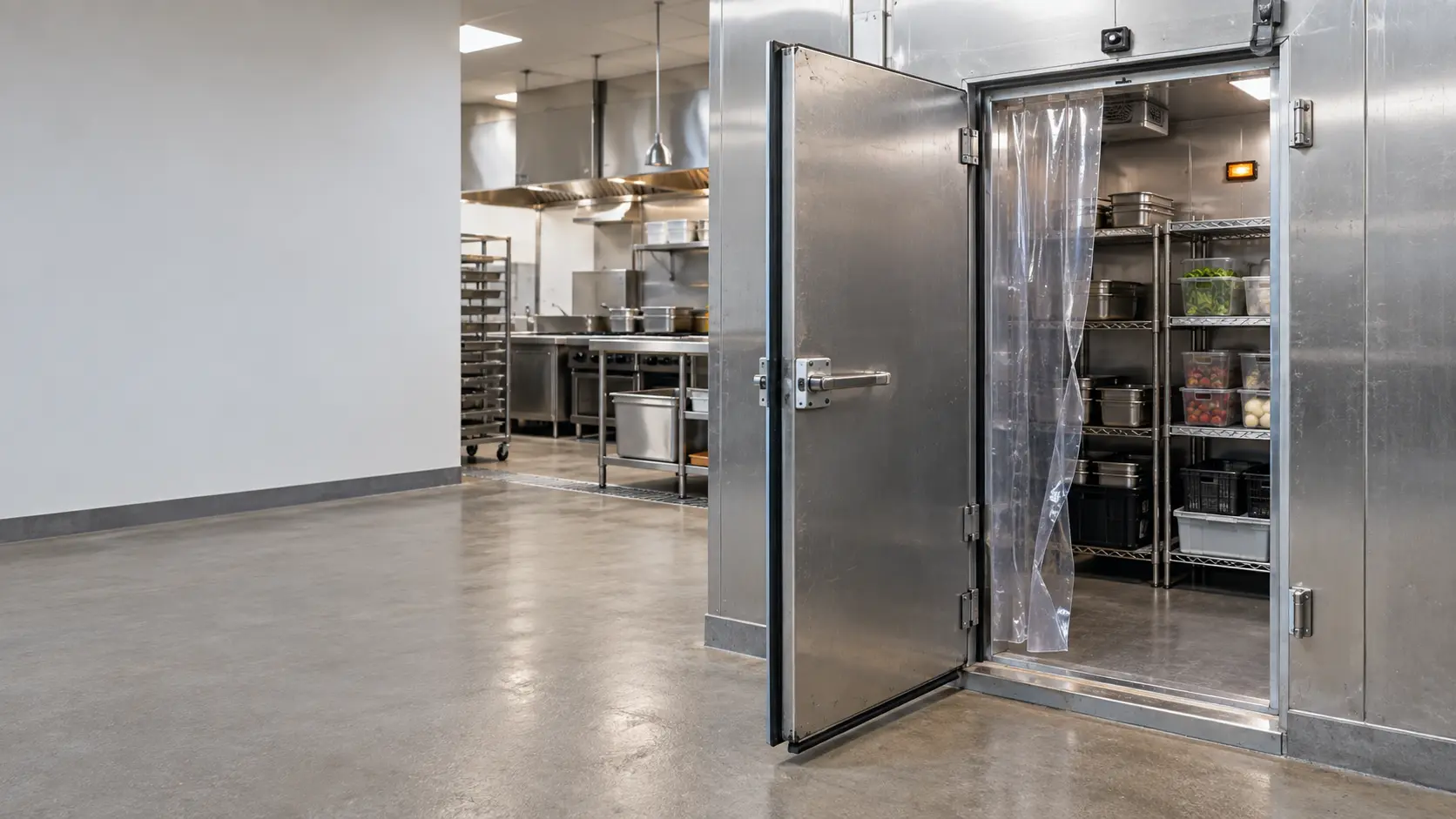
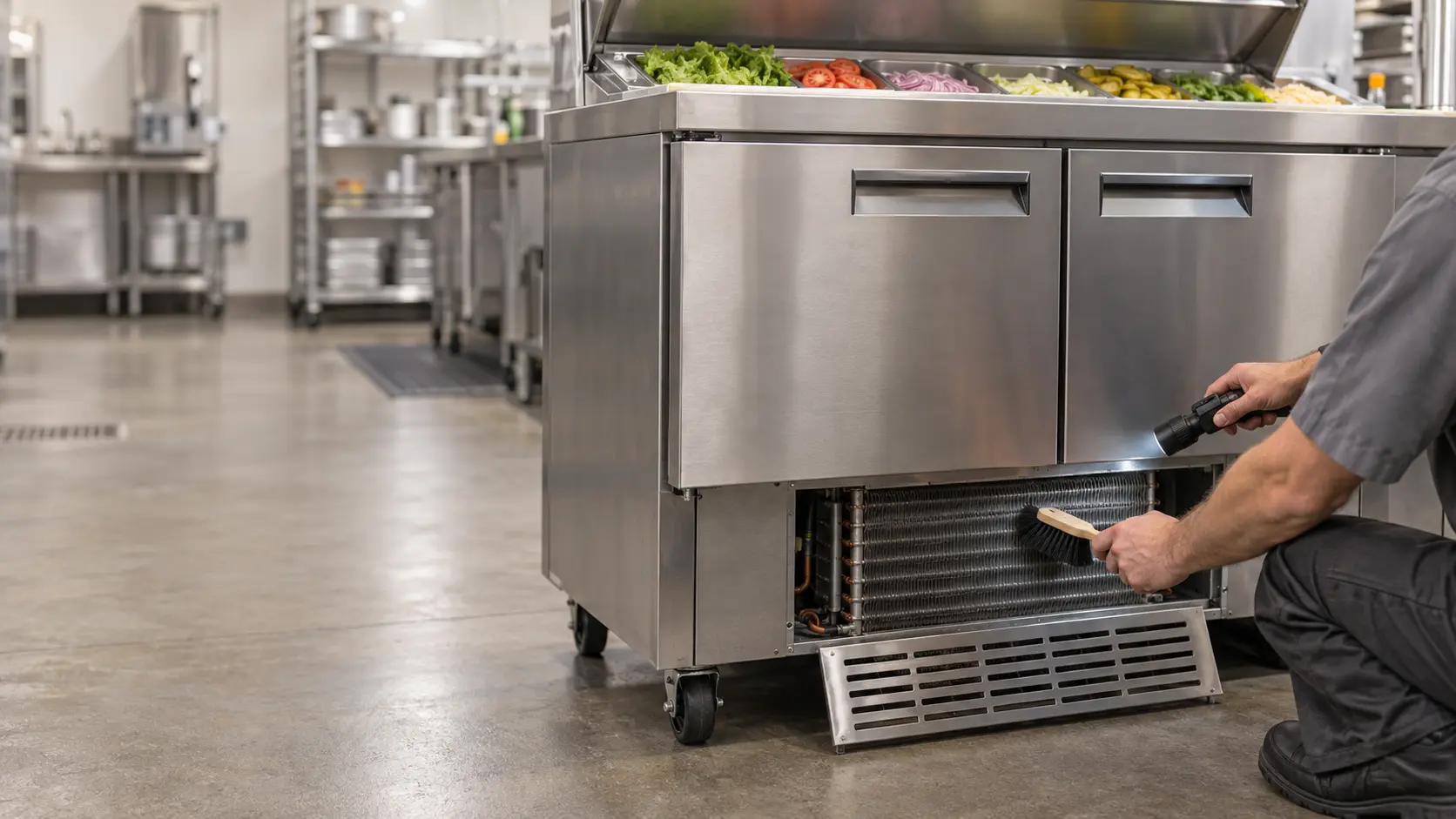
Undercounter units and prep tables usually hide the coil behind a front grille or a side or rear panel; the manual for the model shows which. A walk-in's condensing unit is separate from the box, often on the roof or an outside pad, and that one belongs on a technician's visit rather than a crew checklist.
- Bottom-mount reach-in or pass-through: lower front louver.
- Top-mount reach-in: panel above the doors.
- Undercounter and prep table: front grille, or a side or rear panel.
- Walk-in cooler: remote condensing unit, left to the technician.
Getting to the coil without damage
Move product and staff clear of the cabinet before starting, and pull it out from the wall only if it rolls on casters and its power cord and any drain line have slack. Keep the removed grille and its screws together on the worktop, and refit every screw before power goes back on.
Source: Traulsen — owner's manuals (R-Series uprights, TR35743) — Disconnect power, remove two screws and lift the front louver; vacuum or brush the coil and use compressed air for heavy dirt; StayClear coils every 6 months; remove ignition sources before cleaning R-290 coils and ventilate and call for service if the coil leaks.
Greasy coils, flammable gas and self-cleaning condensers
Dry dust comes off with a brush and vacuum. Grease binds the dust into a felt that a brush only smears, and Turbo Air warns that condenser cleaner may not remove grease; Delfield allows a commercial condenser cleaner when the coil is extremely dirty. A coil that stays dark after brushing is a job for the next service visit.
Many newer cabinets run on propane (R-290). Traulsen asks that every ignition source be removed before cleaning those coils, and says that if the coil is damaged badly enough to leak, the area should be ventilated at once and service called.
Units sold with a self-cleaning condenser
Turbo Air says its self-cleaning condenser models do not need routine coil cleaning, but it still recommends blowing the coil out with nitrogen once or twice a year. That calls for a cylinder and regulator, so schedule it with a technician rather than skipping it.
Source: Delfield — 6000XL and 6100XL reach-ins installation, operation and maintenance manual — Clean the condenser monthly with a vacuum or stiff brush, more often if it blocks within a month, with a commercial condenser cleaner if extremely dirty; a dirty coil causes high temperatures, long run times and compressor failure, and neglect voids compressor warranties.; Turbo Air — M3 series reach-ins installation and operation manual — Clean the condenser at least every three months (90 days) or as needed, unplugged, with a vacuum, brush or CO2; condenser cleaner may not remove grease; self-cleaning condensers should be blown out with nitrogen once or twice a year.; Traulsen — owner's manuals (R-Series uprights, TR35743) — Disconnect power, remove two screws and lift the front louver; vacuum or brush the coil and use compressed air for heavy dirt; StayClear coils every 6 months; remove ignition sources before cleaning R-290 coils and ventilate and call for service if the coil leaks.