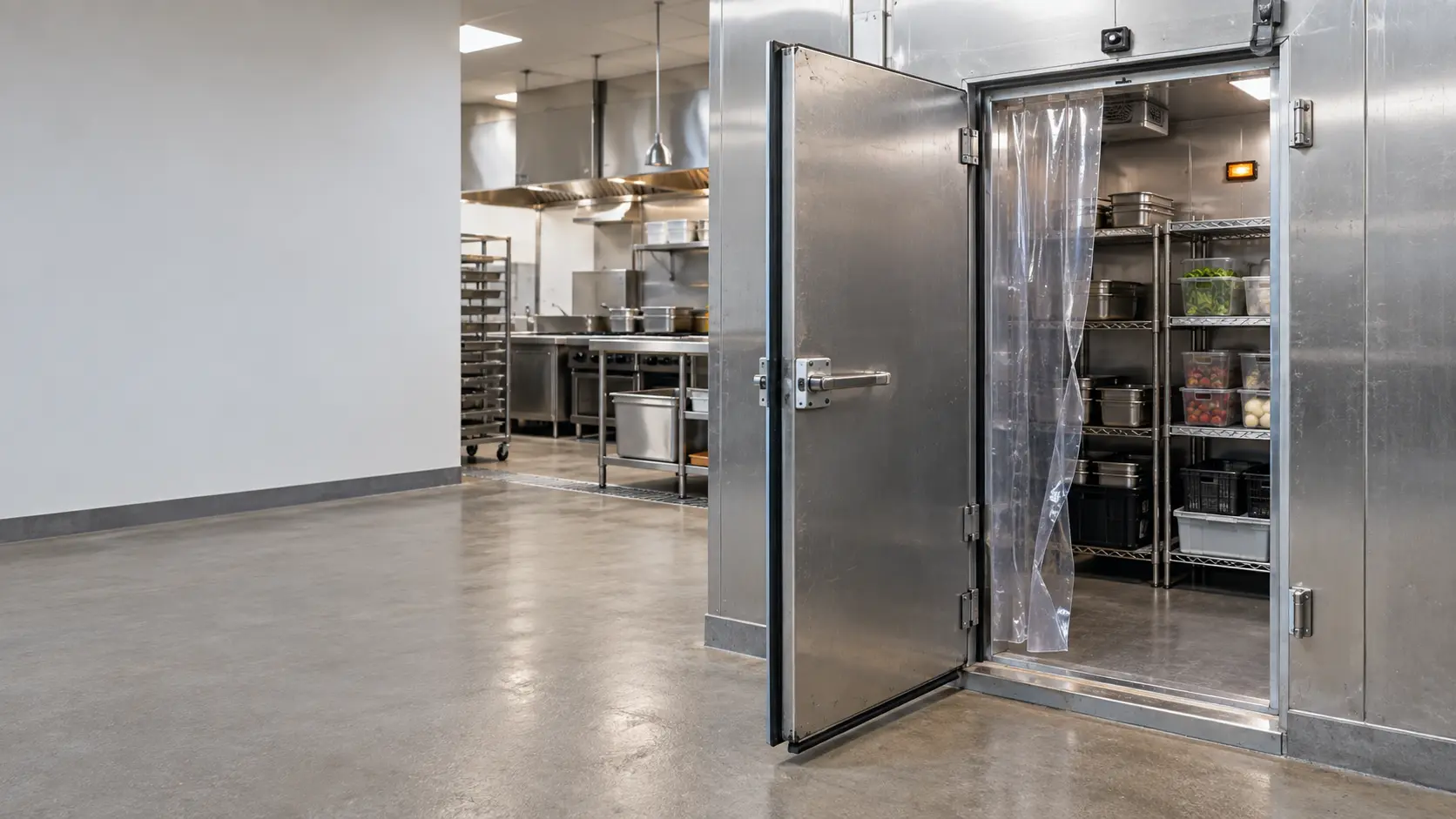


Walk-In Cooler Warm Above 41°F With Food Inside
A walk-in cooler warm above 41°F means the box air or the product probe reads over the cold-holding limit, the evaporator fans blow soft air, or the log shows the temperature creeping up since the last check.
Mon–Sat, 8am–8pm
- Gas, fire, food at risk or water near power
- 5 questions that narrow it
- 6 causes, cheapest first
Book a visit
Three short steps, about a minute.
or call (844) 571-4566
Loading appointment form…
The appointment form couldn’t load. Please try again.
Gas or fire? Everyone out first. Food at risk? Move it
A warm walk-in with product inside is a same-day call, and a food safety matter before it is a repair. Food to working units, temperatures logged with times, discard per the Food Code, then book. The box is not restocked until it has held temperature for a full cycle.
What it
usually means.
A walk-in is three things working together: an insulated box with a heavy door, an evaporator hanging inside with its coil and fans, and a condensing unit that may sit outside on a pad or up on the roof. The box keeps cold in, the evaporator pulls heat out of the air, and the condensing unit dumps that heat outdoors. A warm reading points to one of the three. The box loses when the door is propped open for a delivery, when a strip curtain is torn down, or when a closer and gasket stop sealing. The evaporator loses when its coil ices over or a fan motor quits. The condensing unit loses when its coil on a hot roof is matted with grease from the kitchen exhaust and cottonwood, or when a leak or a compressor failure stops it cold. For the business the clock matters as much as the cause: under the FDA Food Code, cold-held food belongs at 41°F or below, and how long it sat warmer decides what may be kept. Moving product to working units and logging temperatures with times is the first job, before anyone looks for a reason.
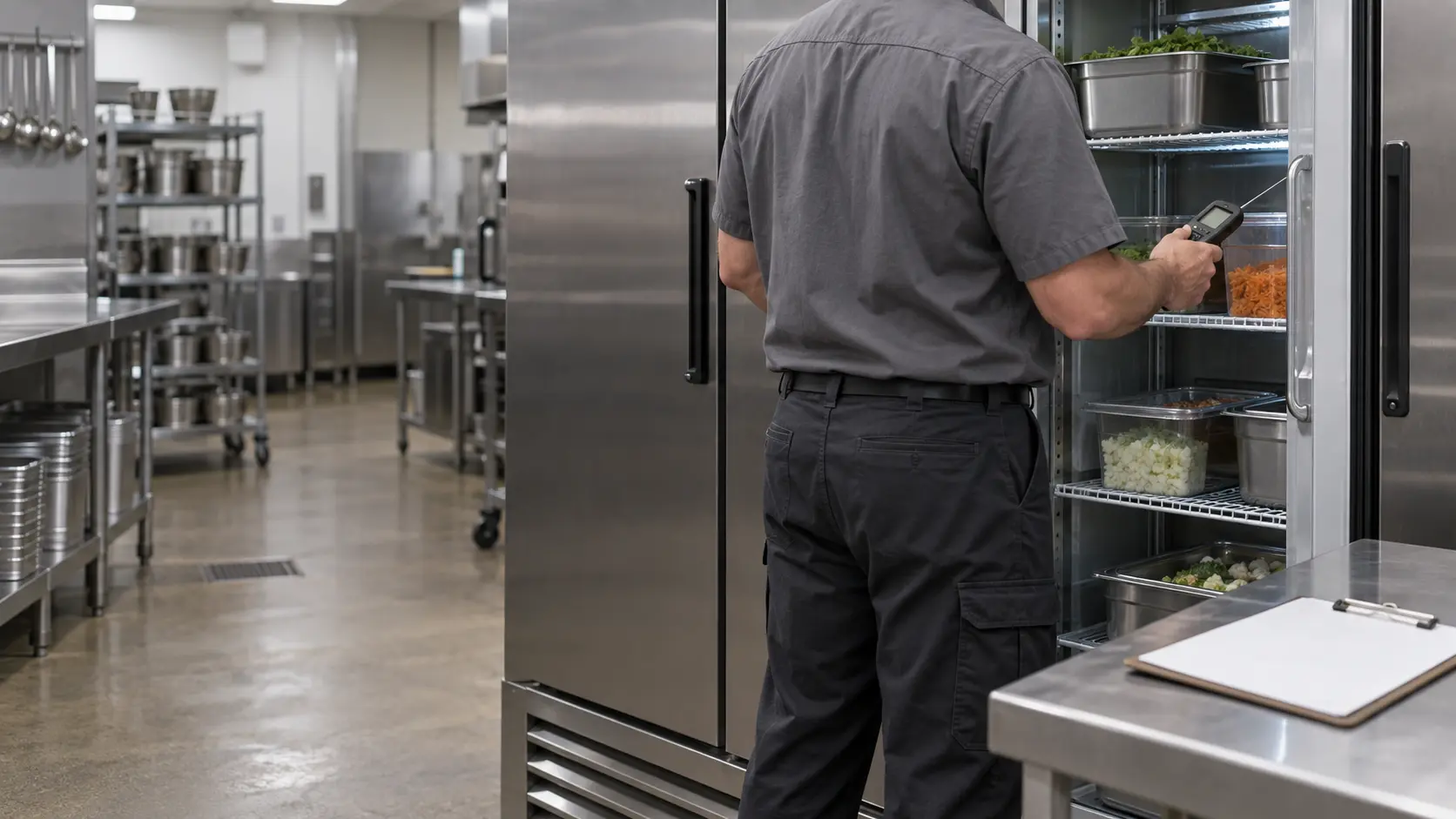 The 6 causes, cheapest first
Answer these first
What do the box thermometer and a probe in the product each read, and when was the last good log entry?
Was the door propped open for a delivery or a stock rotation, or is the strip curtain missing?
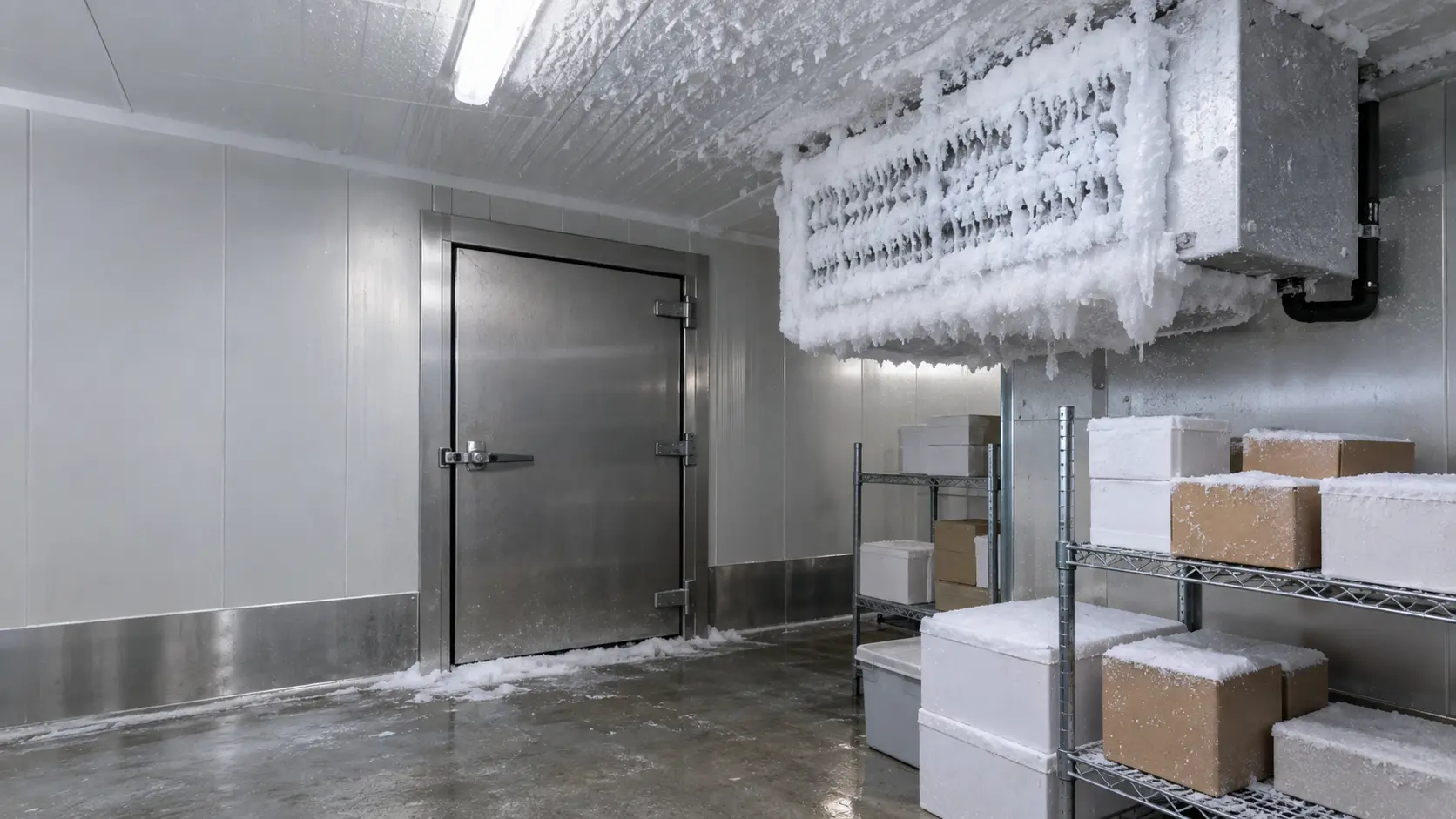
Are the evaporator fans inside the box blowing, and is the coil behind them white with ice?
Is the condensing unit outside or on the roof running, and when were its coils last cleaned?
Did the problem start on a very hot day or after a storm or power outage?
Check these
before you book.
Walk-in cooler warm: 5 checks, and none of them costs anything.
Move the most perishable food into reach-ins or another walk-in that is holding 41°F or below, starting with meat, dairy and cut produce.
Probe the product and write down each temperature with the time; the log is what you and the health inspector will judge the food by.
Follow the FDA Food Code and your local health department on anything held above 41°F; when you cannot show how long it was warm, discard it and record it.
Also worth checking
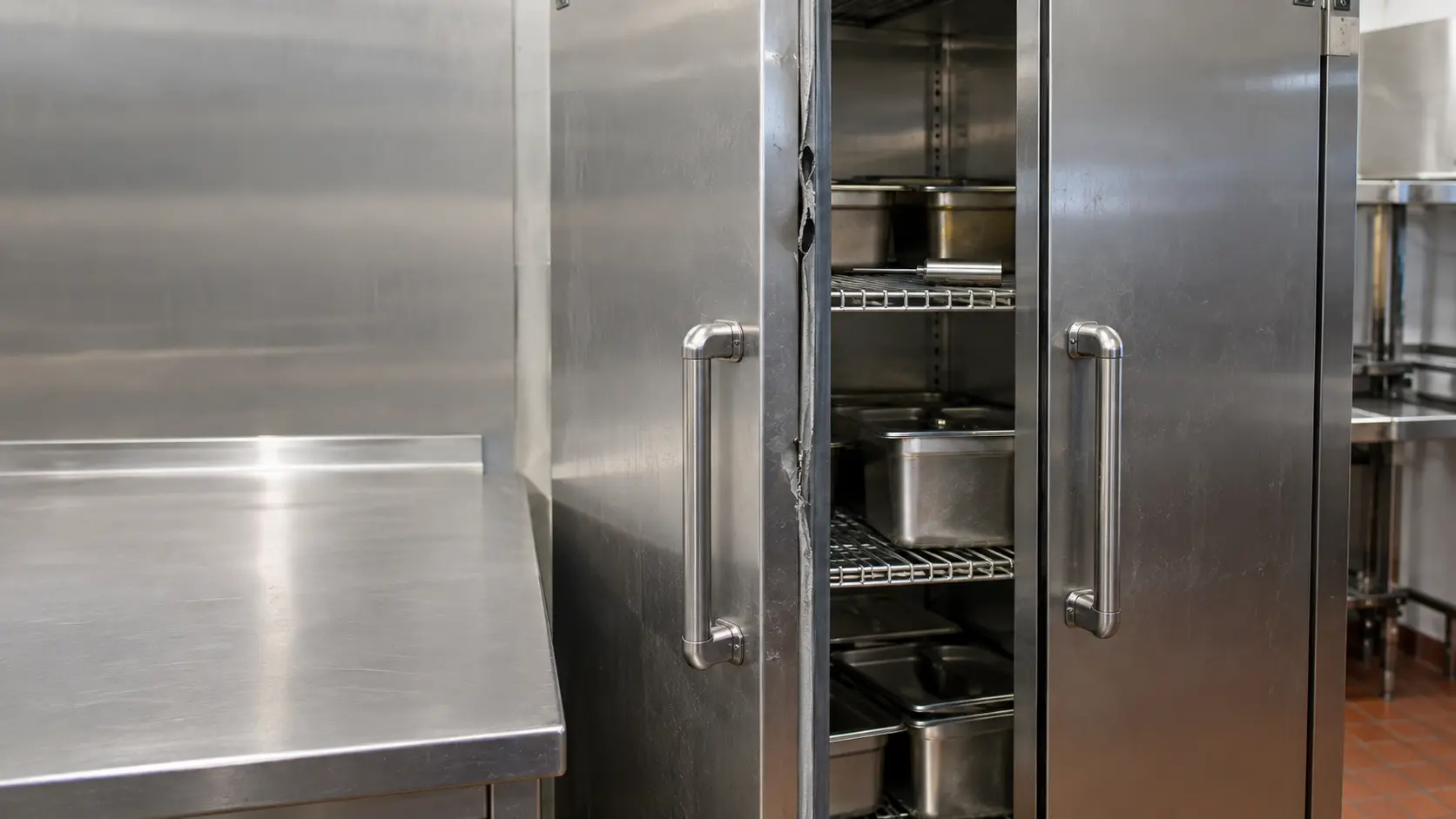
- Close the door firmly, check the latch and gasket, and see whether the evaporator fans are turning and the coil is iced.
- Leave the refrigerant lines, the electrical panel and the rooftop unit to the technician; nobody climbs to the roof in a hurry.
The causes,
cheapest first.
6 things walk-in cooler warm above 41°f with food inside turns out to be, from door propped open during a delivery to refrigerant leak or a compressor that will not run.
The cost guide-
01 no repair
Door propped open during a delivery
A door wedged open for twenty minutes while a truck is unloaded floods the box with warm, humid air. The reading usually recovers within the hour once the door stays shut, and the log shows the dip.
-
02 lowest
Strip curtain removed or tied back
Staff tie the strips aside because they get in the way of carts, and every door opening then dumps the cold. The curtain is rehung or replaced, and the door closer and gasket are checked on the same trip.
-
03 low
Rooftop condenser clogged with grease and debris
Exhaust fans next to the condensing unit coat its coil with airborne grease, and cottonwood and leaves stick to it. The coil is cleaned properly and the head pressure is read before the technician leaves.
-
04 low to moderate
Evaporator fan motor stopped
With one fan still, the coil cannot move enough air and the box warms from the far corner first. The motor is replaced and the other fans on the evaporator are checked for the same wear.
-
05 moderate
Evaporator coil iced solid
A failed defrost, a blocked drain or a door left open for hours lets ice fill the coil until air stops passing. The coil is thawed, and the defrost controls and drain are fixed so it does not return.
-
06 moderate to highest
Refrigerant leak or a compressor that will not run
An oily spot on a line, a hissing joint or a compressor that hums and trips means the sealed system needs work. The technician finds the leak or the failed part and states the repair before any gas is added.
What else
it could be.
Most often confused with walk-in freezer icing up on the coil, floor and door frame, then reach-in cooler not holding temperature through a shift.
All problemsCodes that come with it
HiBeverage-Air · Temperature and alarmsHIContinental Refrigerator · Temperature and alarmsHiDelfield · Temperature and alarmsCHITraulsen · Temperature and alarmsHITrue Residential · Temperature and alarmsC1Turbo Air · Compressor and cooling
Also related
The makes
it happens on.
35 makes on this site; walk-in cooler warm above 41°f with food inside can show up on any of them. Each mark opens that make's own page.
All 35 brandsWalk-In Cooler Warm Above 41°F With Food Inside,
where we come out.
9 metros, each with its own page.
All service areasTampa BayFL · 31 areas
Miami / South FloridaFL · 47 areas
New York MetroNY · 75 areas
HoustonTX · 36 areas
ChicagoIL · 50 areas
Los AngelesCA · 95 areas
San DiegoCA · 31 areas

Questions about
walk-in cooler warm above 41°f with food inside.
The walk-in read 45°F this morning. Does all the food have to go?
Can staff hose ice off the evaporator coil themselves?
Why did our walk-in cooler get warm only on the hottest afternoon?
Should the health inspector be told about a walk-in failure?
Back to your everyday
Still seeing walk-in cooler warm above 41°f with food inside?
Book with what you checked above — 5 answers save the technician the first part of the visit.