Why the plan has to be on paper
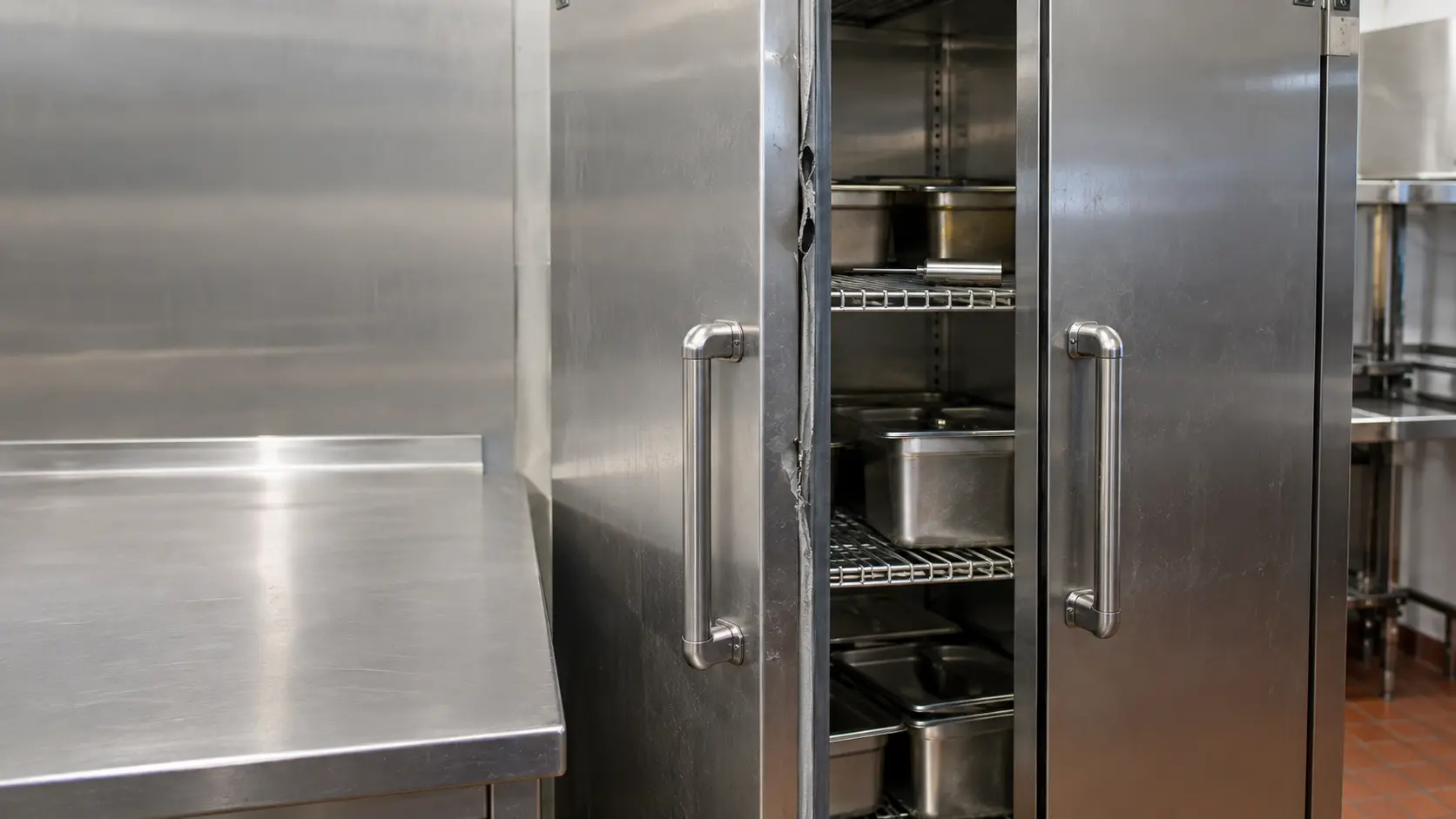
The FDA Food Code expects equipment to be kept in good repair, with doors, seals and hinges adjusted to the maker's specifications, and non-food-contact surfaces cleaned often enough that soil never builds up. An inspector sees the result; a written plan is how a kitchen produces it every week rather than the week before an inspection.
The makers read the same paper from the other side. Alto-Shaam's combi coverage excludes damage from not following the maintenance schedule in its manuals, and Delfield states that neglecting condenser coil cleaning voids compressor coverage. A plan with dates is the evidence that those schedules were kept.
Restaurant equipment preventive maintenance that lives only in someone's head disappears the week that person leaves. Written down, it also becomes something you can hand to a new manager, a service contractor or an insurer.
Source: FDA — Food Code 2022, sections 3-501.16, 4-501.11 and 4-602.13 — Equipment kept in good repair and adjusted to the manufacturer's specifications; non-food-contact surfaces cleaned often enough to preclude soil buildup; cold holding at 41°F or less and hot holding at 135°F or above.; Alto-Shaam — Combitherm CT PROformance operator's manual (MN-35948), archived copy — Coverage excludes damage from not following the required maintenance schedule; descale the oven monthly.; Delfield — 6000XL and 6100XL reach-ins installation, operation and maintenance manual — Clean the condenser monthly, more often if it blocks within a month; neglecting coil cleaning voids compressor warranties.
A schedule built from the manuals
Each line below comes from a maker's published schedule for its own equipment. Your units may differ, so treat this as a pattern and replace each interval with the one printed in your own manual.
| Task | Interval | Whose manual |
|---|---|---|
| Replace the fryer filter pad or paper | Daily, or when sediment passes the hold-down ring | Frymaster FilterQuick |
| Clean the tumbler lint filter and its compartment | Daily | Alliance Laundry Systems |
| Wipe the steamer cabinet with a half vinegar, half water solution | Daily | Cleveland SteamChef |
| Clean convection oven air intakes and cooling fan guard | Weekly | Blodgett Zephaire |
| Clean reach-in condenser coil | Monthly, more often if it clogs within a month | Delfield 6000XL |
| Boil out or cold-clean the frypot | At least monthly | Frymaster FilterQuick |
| Descale the combi oven | Monthly | Alto-Shaam CT PROformance |
| Inspect dish machine chemical tubes and rinse aid strainer | Every 3 months | Hobart LXn |
| Clean the gas valve vent tube | Every 6 months | Frymaster FilterQuick |
| Full inspection by qualified service personnel | At least once a year | Frymaster, Pitco, Rational |
Daily tasks by station
Daily items work best when they are part of closing, written on the closing checklist for each station rather than kept in a separate binder.
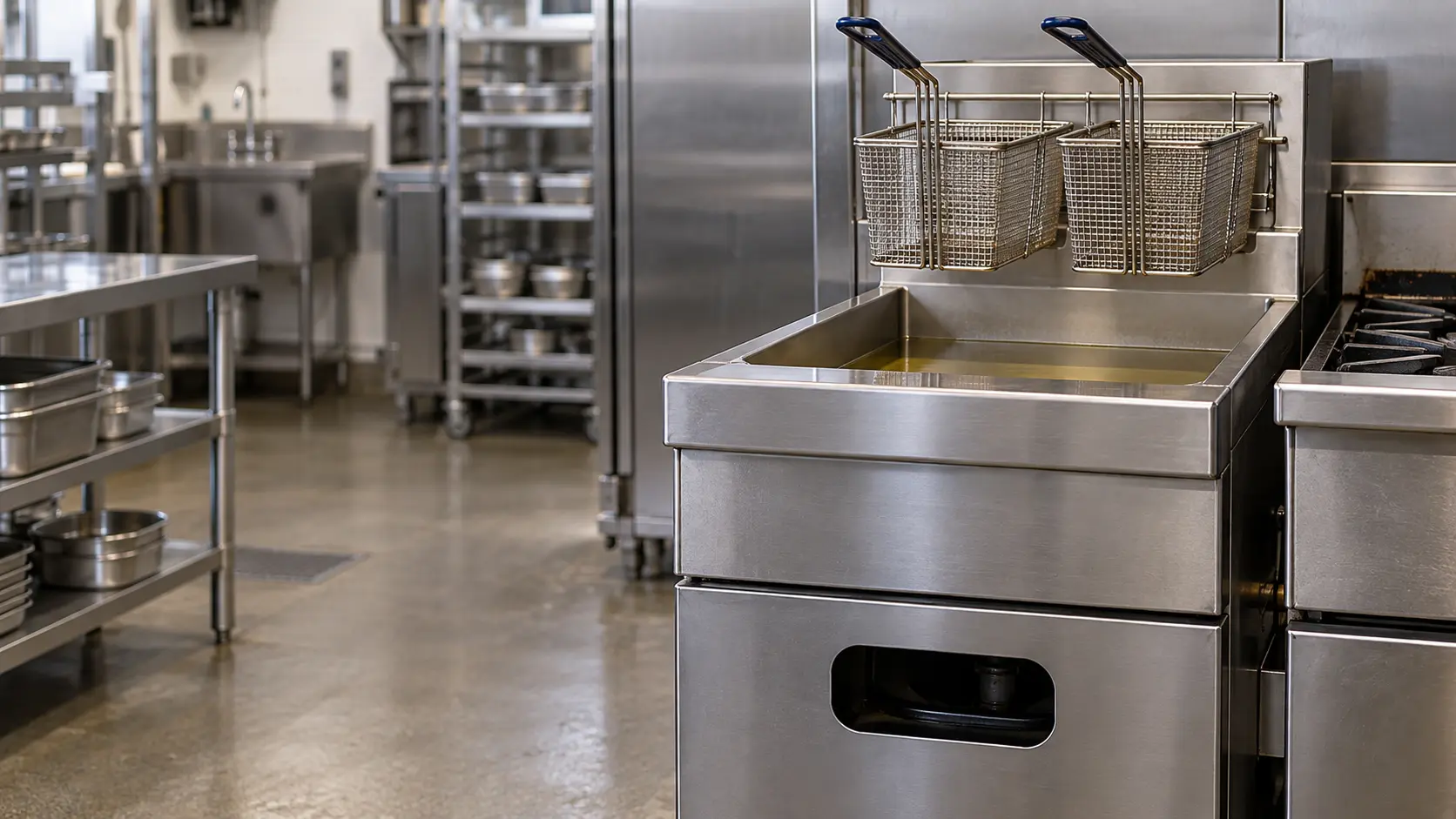
- Fry station: filter, change the pad, empty the crumb basket into a fireproof container, wipe the cabinet.
- Dish machine: drain, pull and rinse the strainers, wipe the interior and leave the door ajar overnight, as Hobart recommends.
- Steamers and combis: run or schedule the cleaning cycle and wipe the door gasket.
- Laundry: clean every lint screen and compartment before the first load.
- Cold storage: record the temperature of each box at opening and closing.
Source: Alto-Shaam — Combitherm CT PROformance operator's manual (MN-35948), archived copy — Coverage excludes damage from not following the required maintenance schedule; descale the oven monthly.; Delfield — 6000XL and 6100XL reach-ins installation, operation and maintenance manual — Clean the condenser monthly, more often if it blocks within a month; neglecting coil cleaning voids compressor warranties.; Frymaster — FilterQuick FQG30U gas fryer installation, operation and maintenance manual, document 8197521 — Filter pad or paper replaced daily; frypot boil-out at least monthly; gas valve vent tube cleaned semiannually; annual inspection of burners, gas connections, manifold pressure, probes, wiring and safeties.; the crumb basket is emptied into a fireproof container and cleaned daily.; Alliance Laundry Systems — tumble dryer Touch Vend control manual (70600001) — Always clean the lint filter daily; remove debris from the lint screen filter and inside the filter compartment.; Cleveland — SteamChef 22CET3.1 and 22CET6.1 operator's manual, archived copy — Wipe the cooking compartment daily with a half water, half white vinegar solution to prevent scale buildup.; Blodgett — Zephaire G-ES convection oven installation, operation and maintenance manual — Clean the air intakes, blower motor, rear cooling fan and fan guard weekly.; Hobart — LXn and LXGn series dish machine instructions (F41243) — Inspect chemical tubes and the rinse aid suction strainer every 3 months; leave the door ajar overnight; disconnect power to the machine and booster and follow lockout and tagout before maintenance.; Pitco — SG series gas fryer installation and operation manual (L20-206) — Inspection by a qualified service technician on a yearly basis.; Rational — iCombi Pro 20-1/1 and 20-2/1 original instructions for use (US) — Serviced by a Rational service partner at least once per year.
Split the work between crew and technician
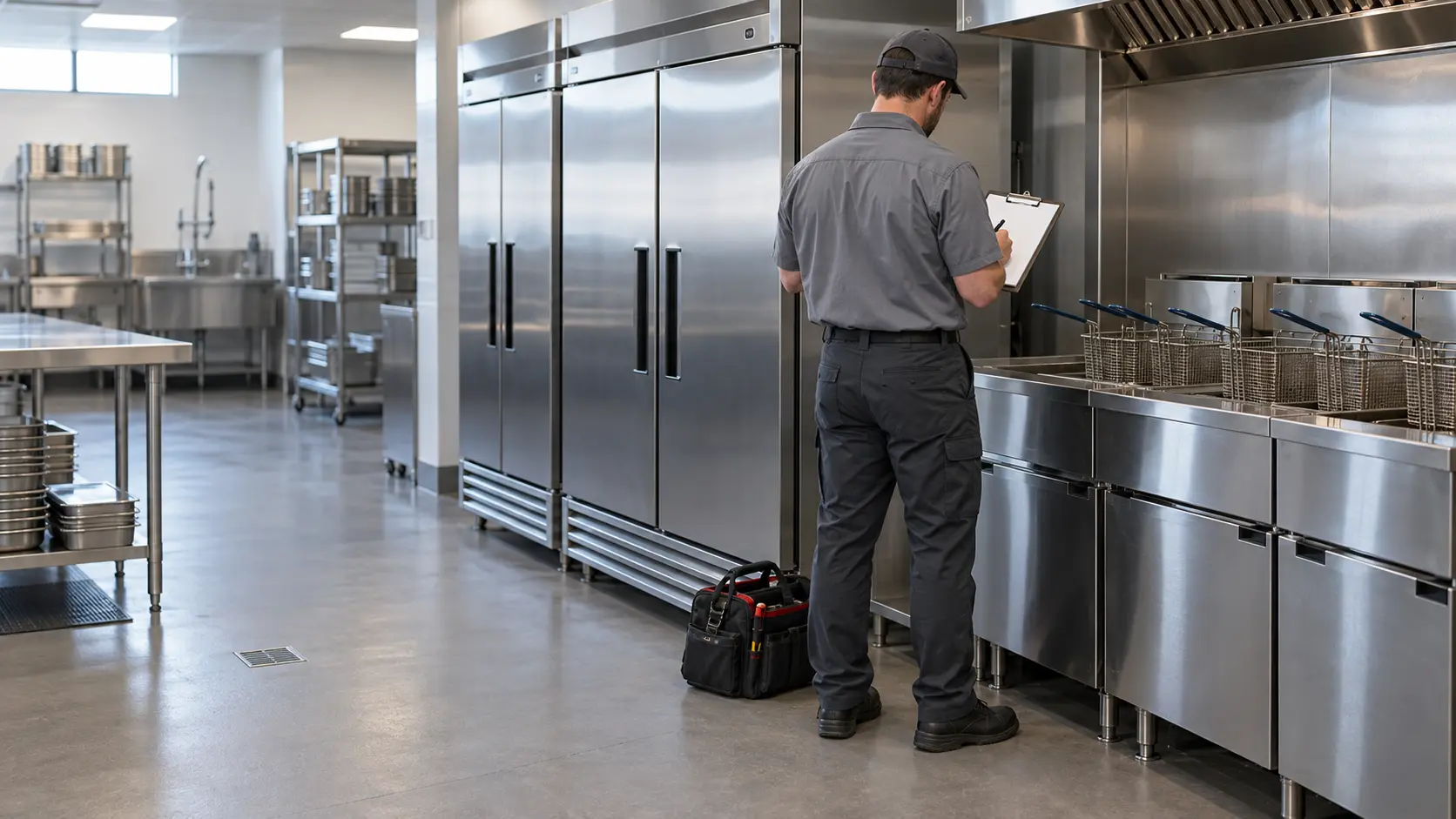
The crew's share is everything done from the outside with the unit switched off or cooled: screens, filters, gaskets, coils behind a front grille, cleaning cycles and logs. The technician's share is anything that needs a gauge, a meter or a panel off with power present: gas pressure, burner flames, coolant charge, high-limit safeties, contactors and wiring.
OSHA warns that unexpected startup or the release of stored energy during servicing and maintenance can cause serious injury or death, which is why Hobart asks for the power to the dish machine and its booster to be disconnected and locked out before maintenance. Build that step into every task that goes inside a unit.
What the yearly visit covers
Frymaster's annual list is a good model for any gas appliance: check the burners and pilots, test gas connections for leaks, confirm manifold pressure against the rating plate, confirm the temperature and high-limit probes, look over the component box wiring, and test every safety. Ask for the same depth on ovens, steamers and tumblers, and a written report for each unit.
Source: Hobart — LXn and LXGn series dish machine instructions (F41243) — Inspect chemical tubes and the rinse aid suction strainer every 3 months; leave the door ajar overnight; disconnect power to the machine and booster and follow lockout and tagout before maintenance.; OSHA — Control of hazardous energy (lockout/tagout) — During servicing and maintenance, the unexpected startup or release of stored energy can result in serious injury or death.
Logs that make the plan work
A plan is only as good as the page that proves it was followed. Keep a sheet per unit with the data plate details at the top, then a line for each task with the date and initials. Temperatures belong on their own log, since cold units must hold food at 41°F or below and hot holding at 135°F or above under the Food Code.
Review the sheets once a quarter and look for the patterns below. Each one points to where the next repair will come from, and most can be handled on a planned visit instead of a Friday night callout.
- A coil that is matted at every monthly cleaning.
- A fryer that needs a boil-out between the scheduled ones.
- A steamer or combi that prompts for deliming sooner each time.
- A tumbler whose loads take longer to dry with a clean lint screen.
- A cold cabinet whose logged temperature creeps up through the afternoon.
When the plan slips
Missed tasks tend to cluster during staff turnover and the busiest season. Tie each task to a position rather than a person, and walk a new hire through the closing checklist for their station during their first week on the job.
Source: FDA — Food Code 2022, sections 3-501.16, 4-501.11 and 4-602.13 — Equipment kept in good repair and adjusted to the manufacturer's specifications; non-food-contact surfaces cleaned often enough to preclude soil buildup; cold holding at 41°F or less and hot holding at 135°F or above.