


Start with what you own
Commercial appliance
types,
told apart.
Four groups of commercial equipment, four very different ways to fail. Cold storage moves heat out of a box with a compressor, an evaporator and a condensing unit that may sit on the roof; cooking equipment makes heat with gas burners, electric elements or steam, guarded by thermostats and high-limits; a dish machine heats, sprays and sanitizes with pumps, a booster and chemical feeds; and laundry equipment spins and tumbles heavy loads with big drive motors and a coin or card system. Naming the group in the booking tells the technician which tools, parts and trade to bring.
Mon–Sat, 8am–8pm
- 4 types
- Serviced in place
- What each one costs
Book a visit
Three short steps, about a minute.
or call (844) 571-4566
Loading appointment form…
The appointment form couldn’t load. Please try again.
Four types,
each its own job.
Each one is built, reached and repaired differently. Open yours for what fails on it and what the work involves.

Commercial cold storage
Reach-in and pass-through cabinets, walk-in coolers and walk-in freezers, prep and sandwich tables, undercounter units and blast chillers that hold a kitchen's food at safe temperatures.
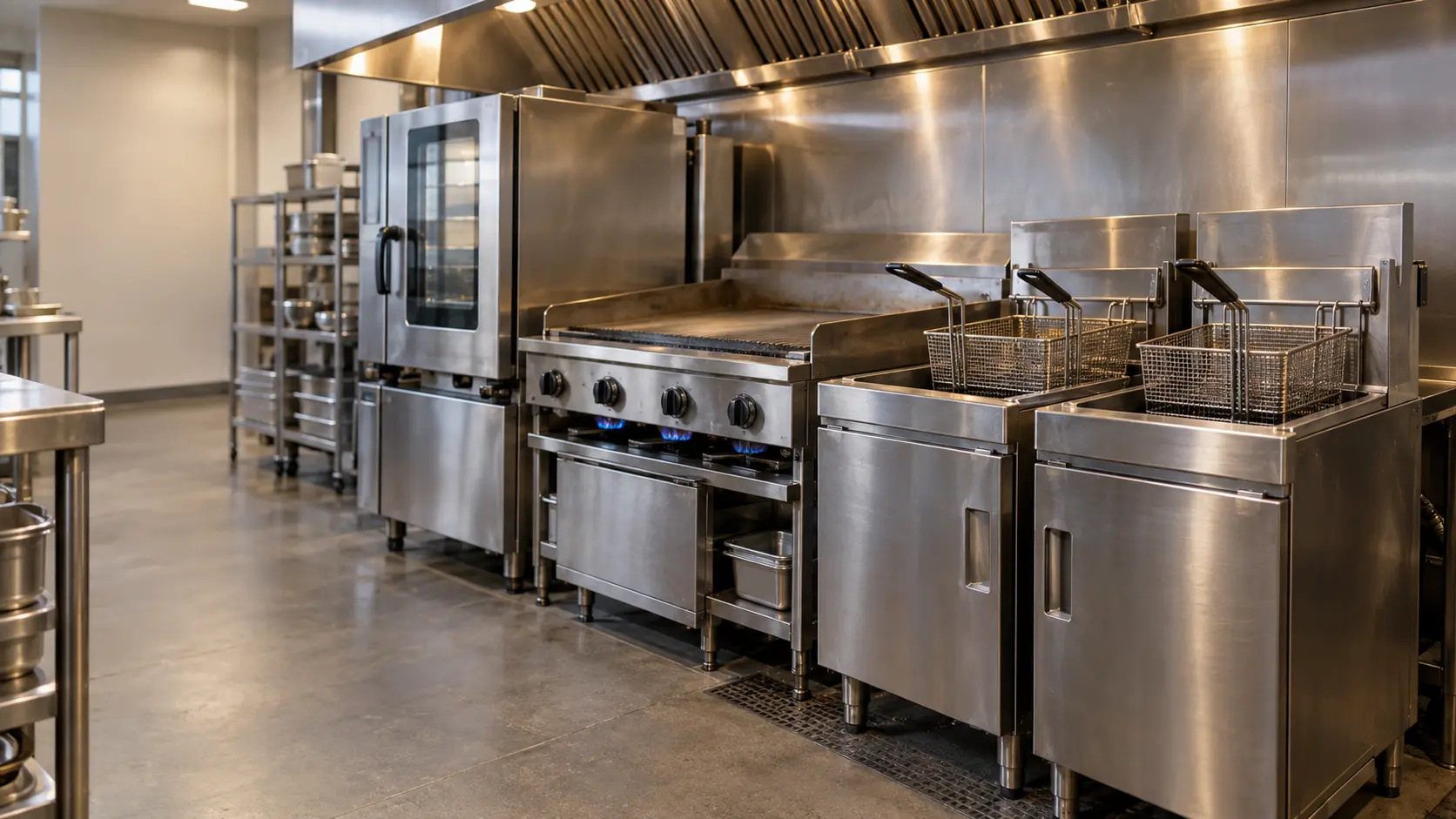
Commercial cooking equipment
Fryers, griddles, charbroilers, restaurant ranges, convection and combi ovens, steamers, kettles, holding cabinets and toasters, on gas or electric, that make up the hot side of a kitchen line.
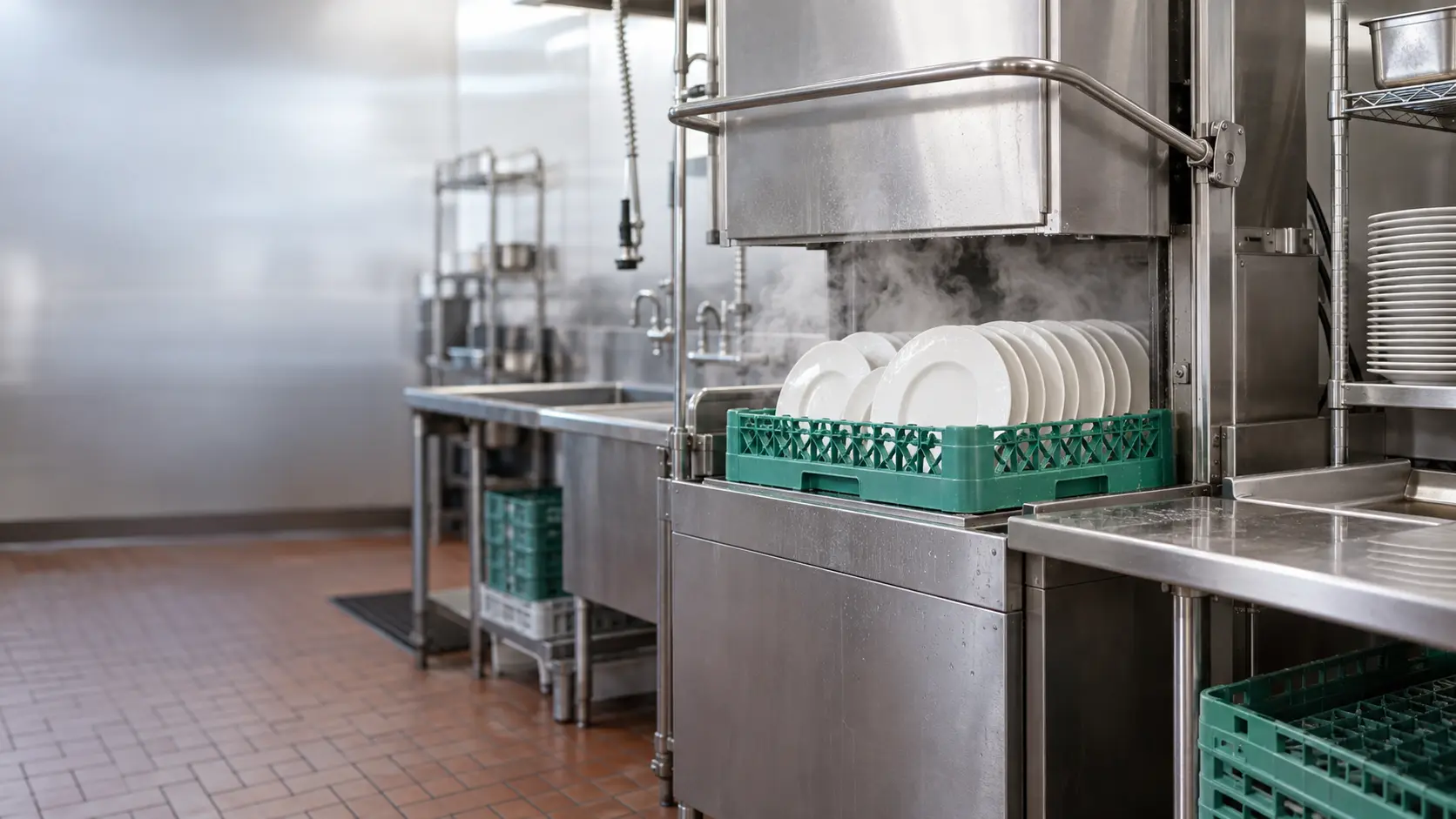
Commercial dish machines
Undercounter, door-type and conveyor dish machines with their booster heaters and chemical feeds, the warewashing station that washes and sanitizes every rack before it goes back on the line.
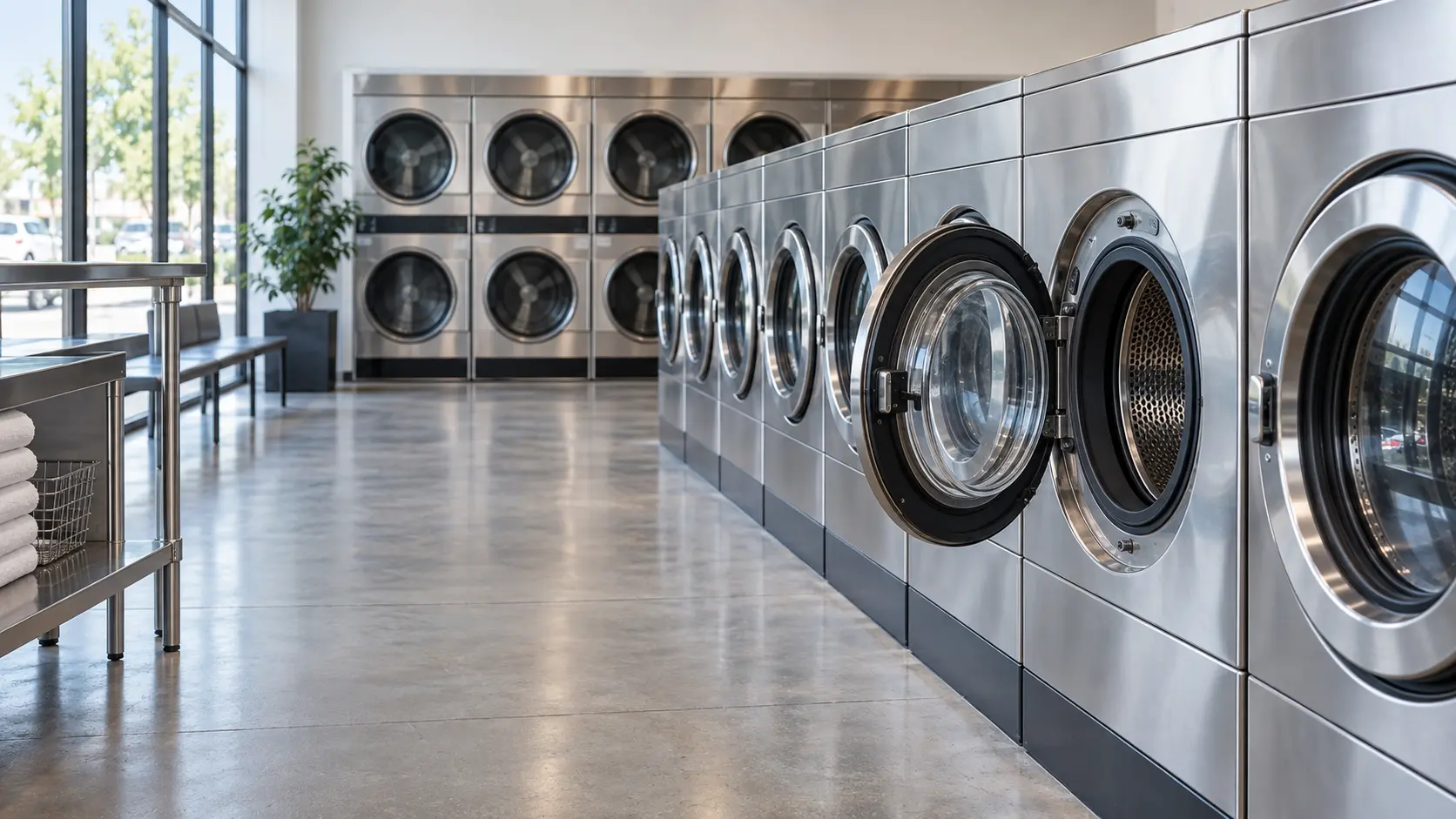
Commercial laundry equipment
Coin, card and app-paid front-load machines, washer-extractors, stacked units and tumble dryers in laundromats, multi-housing laundry rooms, hotels, gyms and on-premise laundries.
Not sure which you have?Start from what it is doing
If the commercial appliance in your back of house does not obviously match one of these, work from the symptom instead. It reaches the same answer from the other end.
17 problemsIn order of costWhat to check first Go to the problemsWhich one
is yours?
One look at the commercial appliance usually settles it. The first sign of each type is on the right; its page has the rest, and what that type means for a repair.
Repair or replaceCold storageCommercial cold storage
The unit has a stainless or coated steel cabinet, heavy self-closing doors and a digital or dial thermometer on the front, and it runs on a dedicated circuit.
Cooking equipmentCommercial cooking equipment
The equipment sits under a ventilation hood on a gas manifold or a heavy electrical supply, usually on casters with a restraint cable at the back.
Dish machinesCommercial dish machines
The machine is stainless, fed from the hot water line and a drain, with racks going in on one side and coming out clean on the other.
Laundry equipmentCommercial laundry equipment
The machine has a coin drop, a card reader or an app sticker on the front, or it is a large extractor bolted to a concrete pad or standing on a spring base.
What a repair
usually costs.
Weigh a repair against what a replacement truly costs the business, not just the catalog figure for a new unit. A new walk-in condensing unit, fryer battery, combi oven or dish machine also means delivery, the gas, water, drain or electrical connection, sometimes a hood or permit check, staff learning a new controller, and the shifts the station is down while you wait for it. Set beside that, gaskets, fans, thermostats, pilots, door locks and fill valves are small, and most mid-size repairs still win. The balance turns when a unit has had several major repairs in a year, runs on a refrigerant or a controller the maker no longer supports, or has a tank, shell or drum that is failing; then the technician writes out both sums, with the downtime each one costs, and the choice is yours. A preventive maintenance plan is the cheapest way to move repairs off the busy nights.
| Repair | Relative cost | Notes |
|---|---|---|
| Walk-in evaporator fan, defrost heater or drain line heater, door gasket, frame heater, expansion valve, leak repair, compressor or condensing unit | moderate to highest | An evaporator fan motor, a new door gasket or a defrost termination switch is the lighter end. A defrost heater set, a frame heater or an expansion valve sits in the middle, and a leak found, repaired and recharged, or a compressor or a whole condensing unit on the roof, is the top of the scale. |
| Reach-in, pass-through or prep table gasket, hinge, fan motor, thermostat or controller, defrost heater, leak repair or compressor | moderate | A cleaned condenser, a gasket or a hinge cam is modest. A fan motor, a thermostat or a controller with its probe comes next, and a leak repair with a recharge or a compressor in a self-contained cabinet is the fuller job. |
| Fryer pilot assembly, thermopile, thermostat or probe, high-limit, gas valve, ignition module, element, contactor or filter pump motor | low to moderate | A thermopile, a pilot assembly or a high-limit is the small end. A thermostat, a probe or an ignition module is a step up, and a gas valve, an element set or a filtration pump motor sits at the top. |
| Convection or combi blower motor, door switch or gasket, igniter or element, core probe, level probe, steam generator or controller | moderate to highest | A door gasket, a door switch or a probe is the lighter work. A blower motor, an igniter or an element comes next, and a steam generator, a descaling job that has gone too far or a main controller on a combi is the largest repair on this page. |
| Cooking line pilot, thermocouple, burner or orifice, safety valve, griddle thermostat, regulator or quick-disconnect hose, leak-checked | low to moderate | Cleaning a pilot or a burner and replacing a thermocouple is modest. A safety valve, a griddle thermostat or a regulator is in the middle, and several sections of a line, or a new hose with its restraint cable, make the fuller job. |
| Dish machine tank heater or booster element, thermostat, fill valve, float switch, drain valve, wash pump seal or motor, conveyor drive | moderate | A fill valve, a float switch or a drain valve is the small end. A tank heater, a booster element or a pump seal is a step up, and a wash pump motor, a booster tank or a conveyor drive on a long machine is the top of the band. |
| Laundry machine door lock, belt, bearings and seal, drain valve, inverter or motor; tumbler igniter, flame sensor, gas valve coil or airflow switch | moderate | A door lock, a belt, a drain valve cleared of coins or a tumbler igniter is the lighter end. An airflow switch, a gas valve coil or a payment reader sits in the middle, and bearings with the tub seal, an inverter or a drive motor is the fuller job. |
| Controller, touch panel, probe or sensor, relay, contactor, power supply, door switch or interlock, tested before anything is changed | moderate | A probe, a door switch or a contactor is modest. A relay board or a power supply is in the middle, and a main controller or a touch panel, set back up with your setpoints and cycle values, is the dearest part here. |
| Scheduled maintenance visit: coils and drains cleaned, gaskets and doors checked, thermostats calibrated, gas leak check, temperatures logged | lowest | A routine maintenance visit per unit is the smallest item on this page. Worn parts found along the way are quoted as their own repair, and nothing is replaced during the visit before you agree. |

Questions about
the types.
Which commercial equipment does this site cover?
Is a walk-in repaired like a reach-in?
What goes wrong most with dish machines and laundry machines?
What about our unit helps the technician most?
Back to your everyday
Let’s get your commercial appliance working again.
Three short steps online, or one call. Tell us what you are seeing and pick a window that works.