

Commercial Cold Storage Repair
Reach-in and pass-through cabinets, walk-in coolers and walk-in freezers, prep and sandwich tables, undercounter units and blast chillers that hold a kitchen's food at safe temperatures.
Mon–Sat, 8am–8pm
- 4 things that fail on it
- 13 makes build it
- 7 problems it shows
Book a visit
Three short steps, about a minute.
or call (844) 571-4566
Loading appointment form…
The appointment form couldn’t load. Please try again.
Is yours
a cold storage?
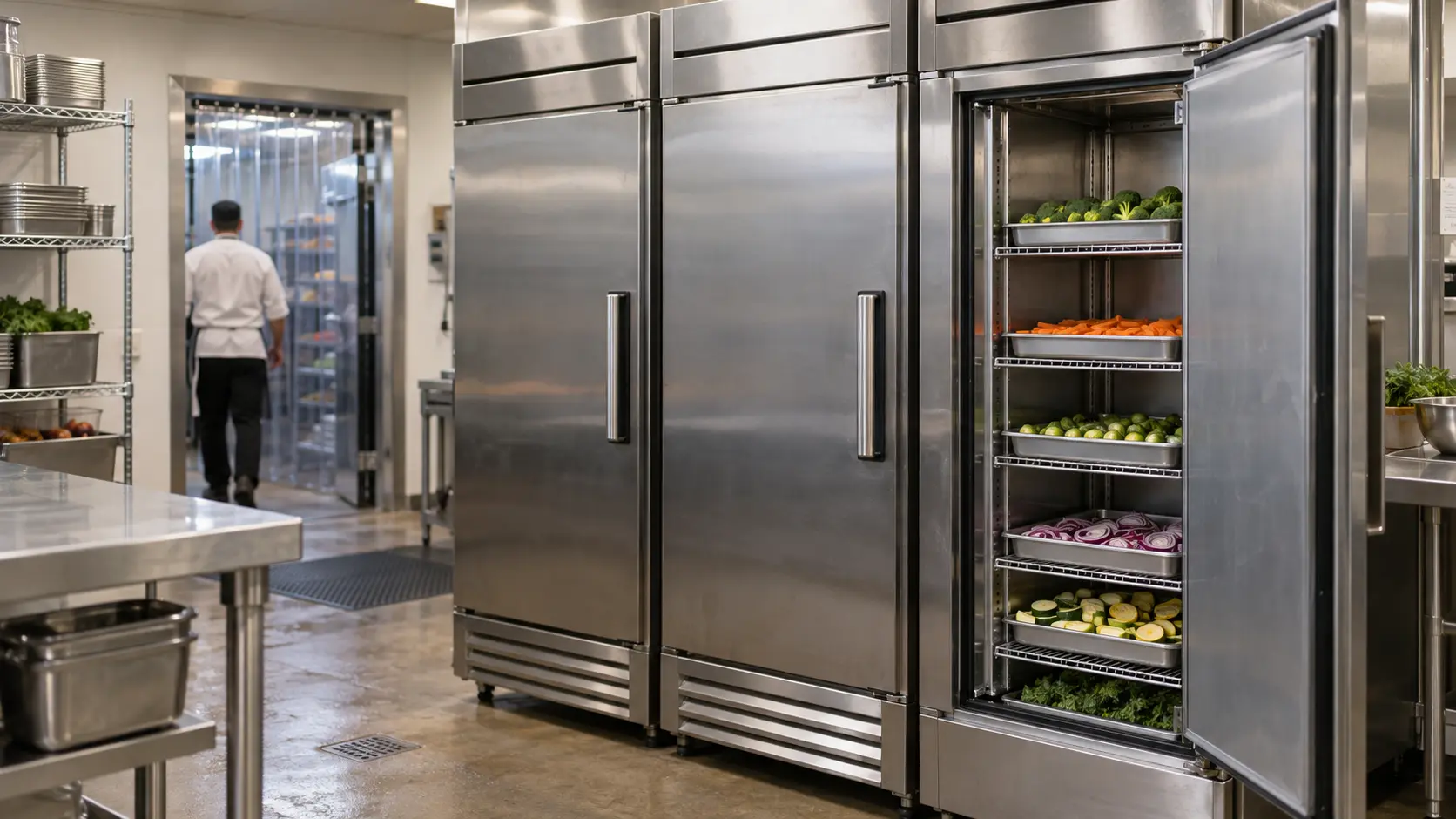
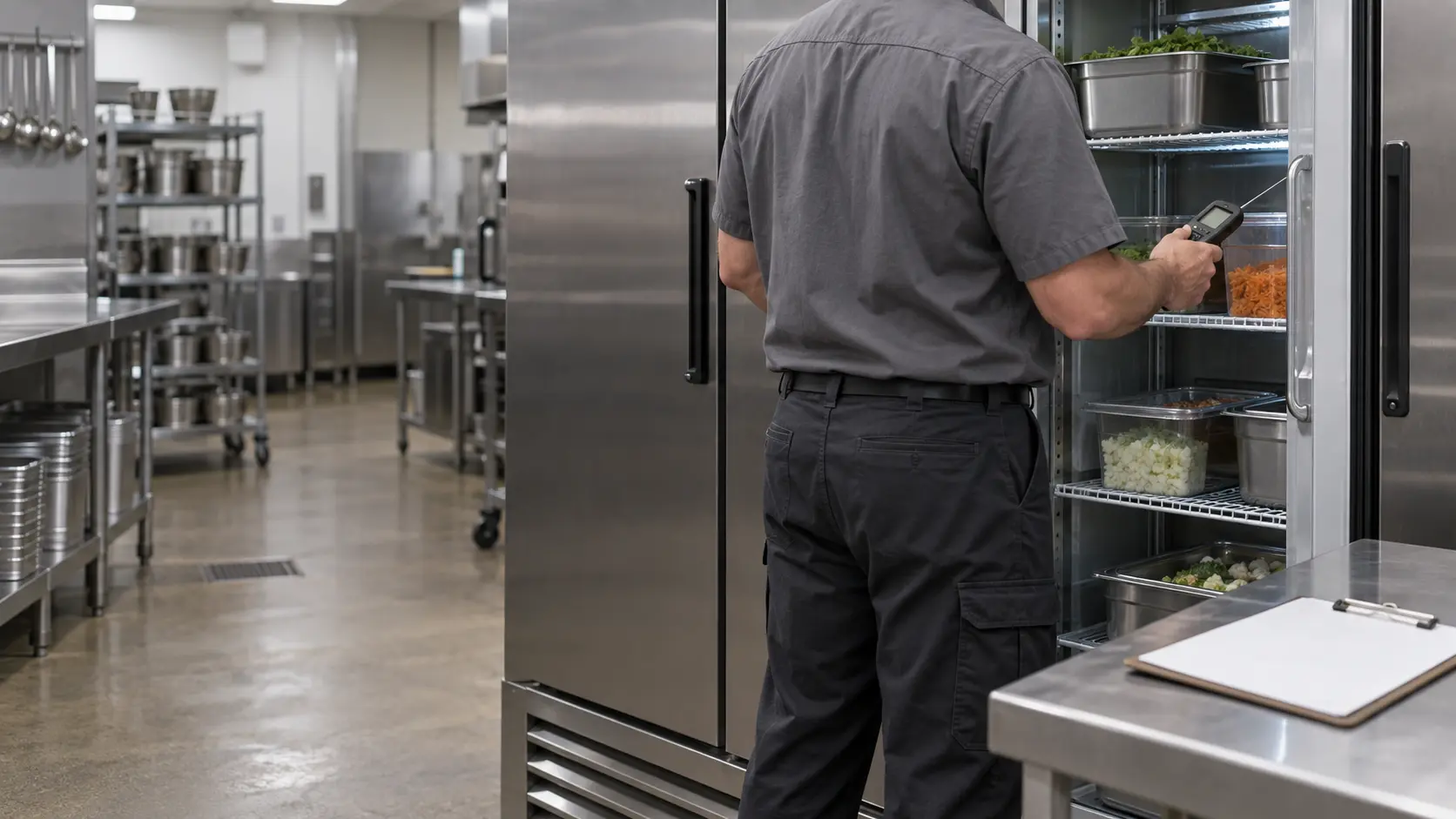
Commercial cold storage is every box in a business that keeps product at 41°F or below, and it comes in a handful of shapes. A reach-in is a stainless cabinet with one to three solid or glass doors, its compressor either on top or underneath; a pass-through opens on both sides so the line can pull what the prep crew loads. A prep or sandwich table carries a rail of pans over a refrigerated base, and the pans sit in the warmest air in the kitchen. A walk-in is a room built from insulated panels, with an evaporator hanging from the ceiling inside and a condensing unit on the roof, on a pad out back or sitting on top of the box. Blast chillers pull cooked food down through the danger zone fast enough to satisfy the cooling steps in the FDA Food Code. Makers such as True, Traulsen, Turbo Air, Beverage-Air, Delfield, Randell, Victory and Continental build the cabinets and tables, and Hoshizaki sells reach-ins alongside its better-known ice line. The work these boxes do never stops, so trouble shows up as a slow drift before it becomes an emergency: a door gasket torn at the hinge corner, a condenser coil furred with kitchen grease, an evaporator buried in frost because a defrost heater quit, or a drain line frozen solid in a walk-in freezer. A manager usually sees it first on the temperature log.
 What fails on a commercial cold storage unit
How to tell
The unit has a stainless or coated steel cabinet, heavy self-closing doors and a digital or dial thermometer on the front, and it runs on a dedicated circuit.
A walk-in has a full-height insulated door, a strip curtain or air curtain behind it, and an evaporator with fans hanging from the ceiling inside.
A prep table has a lid or a rail of food pans on top, a cutting board along the front edge and doors or drawers below.
A data plate inside the door or on the back names the maker, the model, the refrigerant and the electrical rating, the way a household unit rarely does.
Not yours?Commercial cooking equipmentCommercial dish machinesCommercial laundry equipment
What fails
on this design.
On a commercial cold storage unit: condenser coils choked by kitchen air, door gaskets, hinges and closers, defrost heaters, timers and drain lines, evaporator fans, thermostats and controllers.
The problems it showsCondenser coils choked by kitchen air
The condenser pulls air from the hottest, greasiest room in the building. Flour, lint and cooking vapor bond into a mat on the fins, the compressor labors through longer cycles, and the box starts to lose a degree or two every busy afternoon.
Door gaskets, hinges and closers
A cooler door gets opened hundreds of times a shift. Gaskets split at the corners, hinges sag so the door no longer seals, and a walk-in door with a tired closer is left ajar, which loads the evaporator with humid air and frost.
Defrost heaters, timers and drain lines
Freezer sections and walk-in freezers melt their frost with heaters on a schedule. When a heater, a termination switch or the drain line heater fails, ice builds on the coil, water refreezes in the drain pan and the box warms while the compressor runs.
Evaporator fans, thermostats and controllers
A seized fan motor stops air moving across the cold coil, so the box warms even with the compressor humming. A drifting probe or controller reads the wrong number, and the unit either cycles off early or freezes the lettuce.
Getting at it,
and whether to.
Move the food to a working box first if the unit reads above 41°F, and write down the time and the reading for the log.
What repairs costOn the visit
- Clear a path to the condensing unit, and tell us whether it sits on top of the cabinet, on a pad outside or on the roof and how we get up there.
- Leave frost and ice on the evaporator where they are; the pattern they make tells the technician which part stopped doing its job.
- Have the model and serial from the data plate ready, along with any code on the controller and when the box last had its coils cleaned.
Repair or replace
Most cold storage calls end in a repair, because gaskets, fans, defrost heaters, thermostats and even a condensing unit on a walk-in cost far less than a new box, and the insulated panels of a walk-in can last decades. A reach-in with a failed compressor is where the math gets closer: an older cabinet on a phased-out refrigerant, with rusted hinges and a tired shell, may be better replaced. The technician writes out both paths, including the downtime each one means, and you decide.
Book a visit for a commercial cold storage unitThe problems
it shows.
On a commercial cold storage unit, most often walk-in cooler warm above 41°f with food inside.
All problems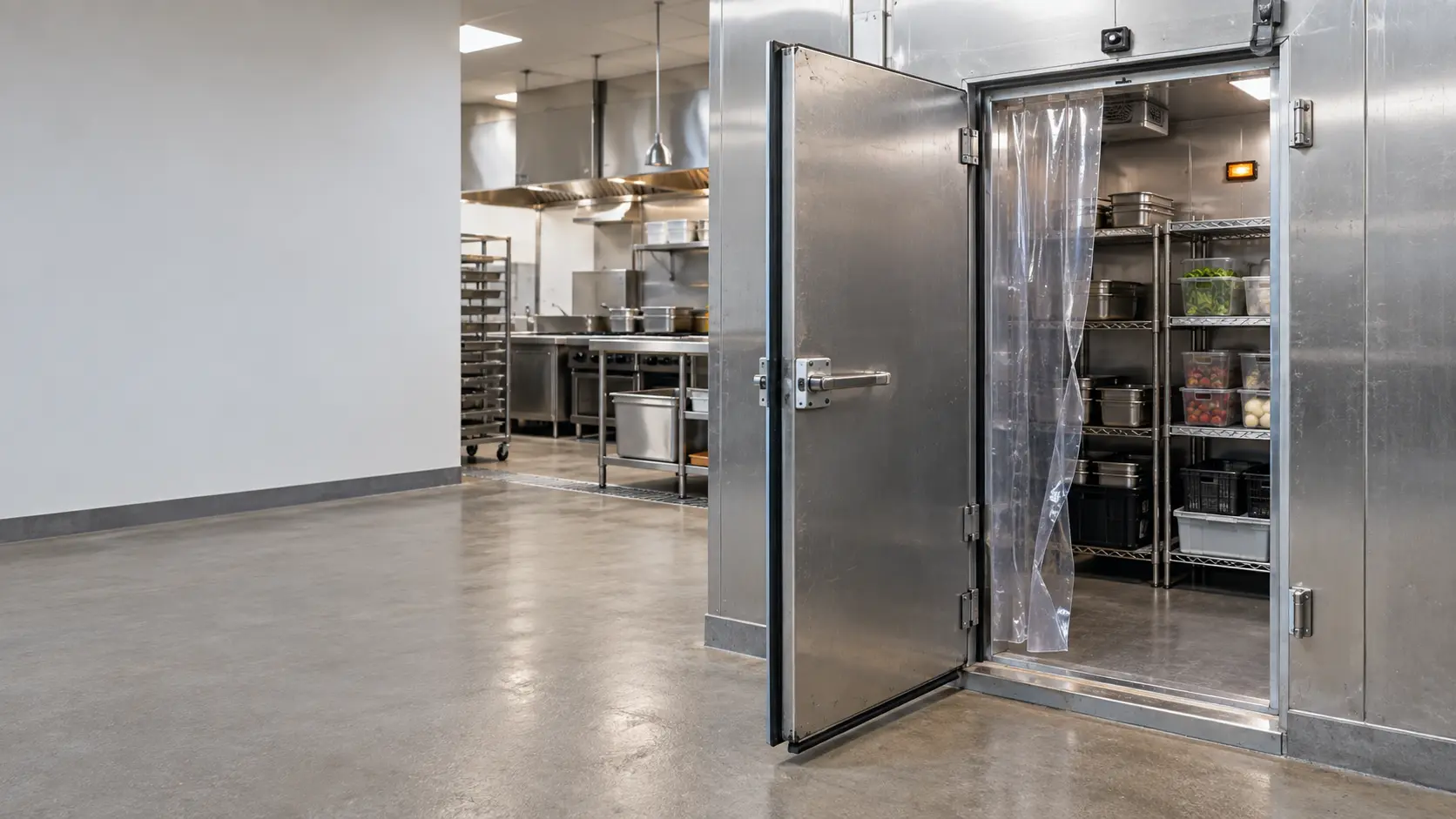
Walk-In Cooler Warm Above 41°F With Food Inside
6 causes, cheapest first
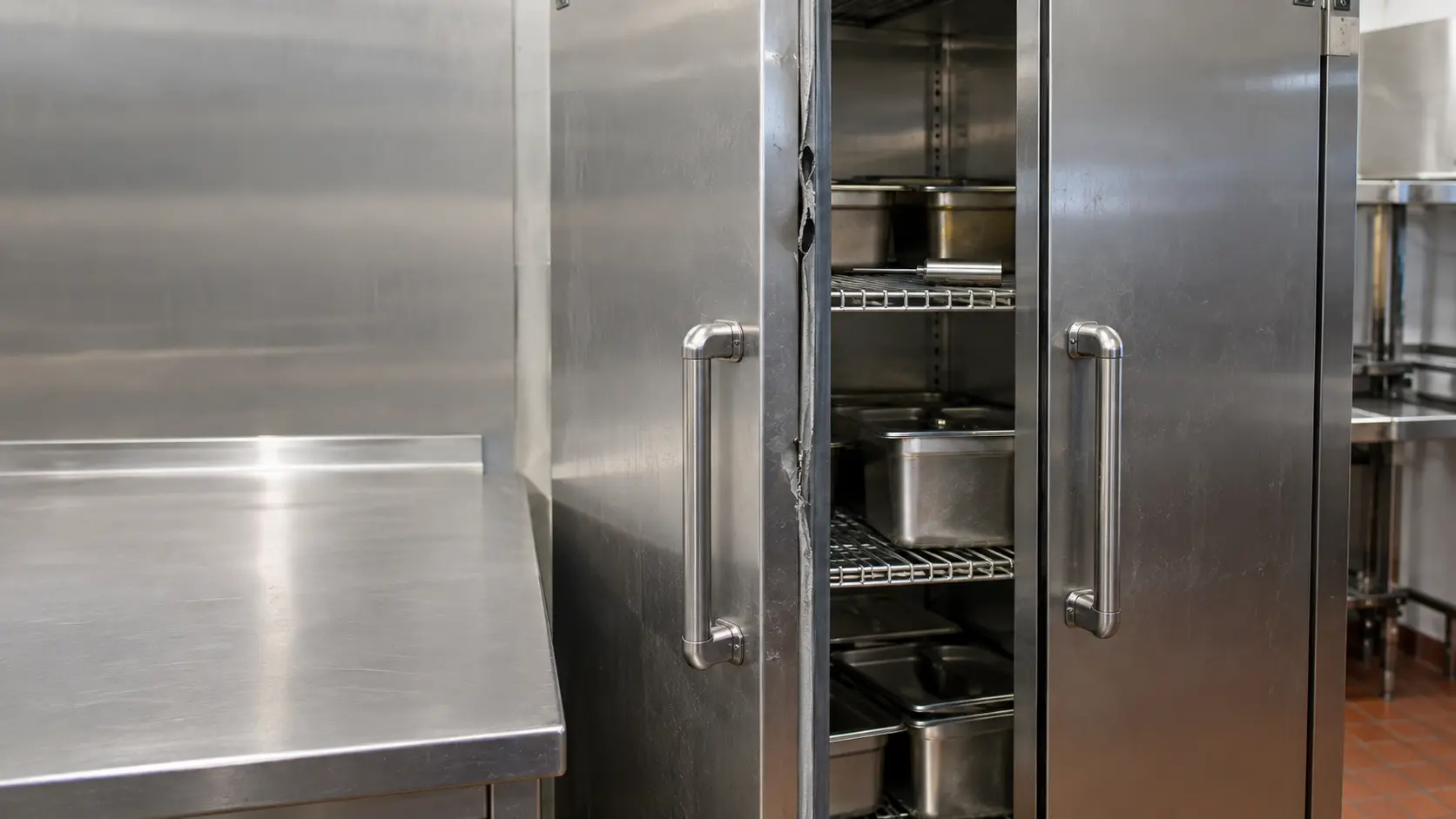
Reach-In Cooler Not Holding Temperature Through a Shift
6 causes, cheapest first
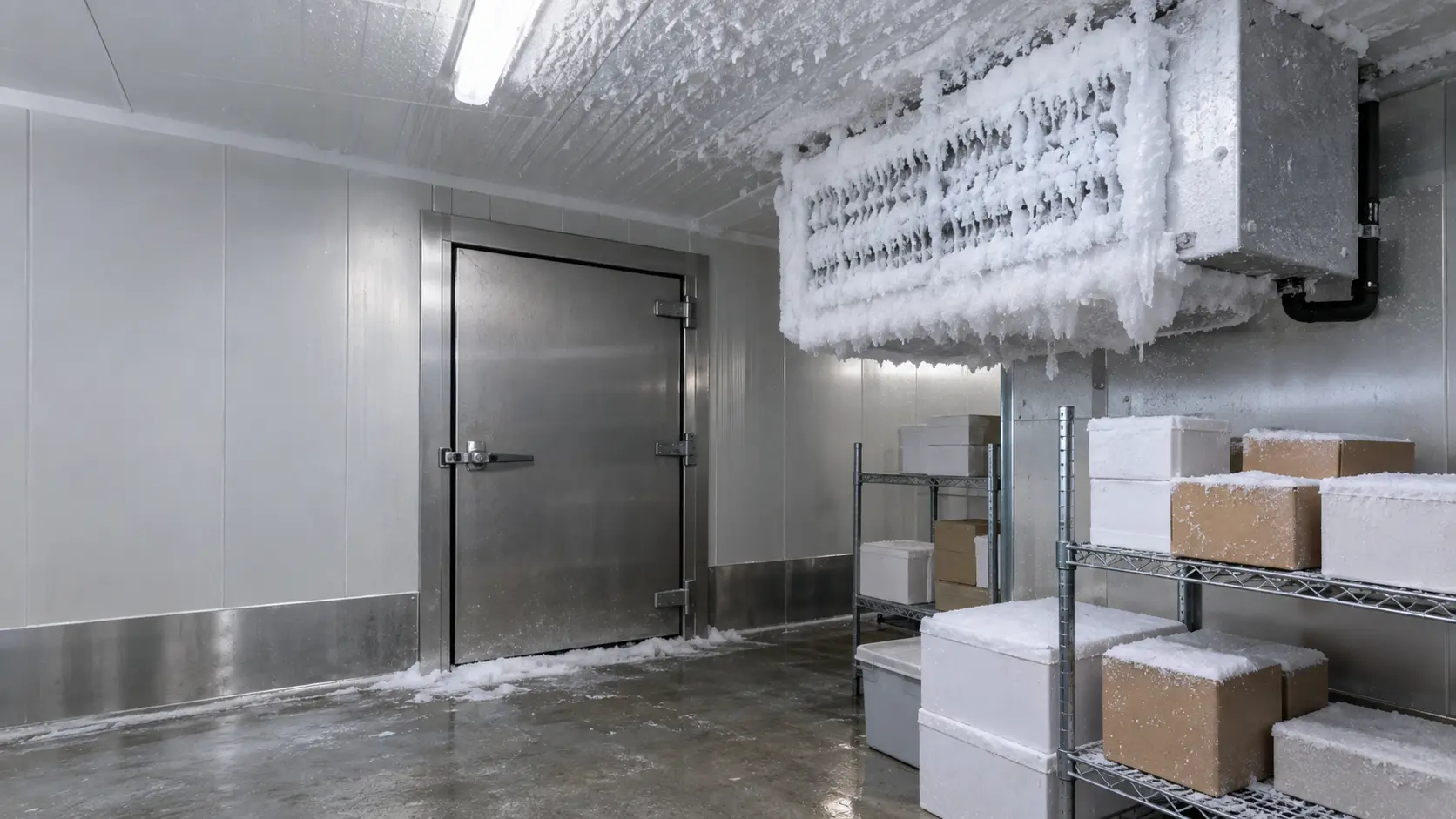
Walk-In Freezer Icing Up on the Coil, Floor and Door Frame
6 causes, cheapest first
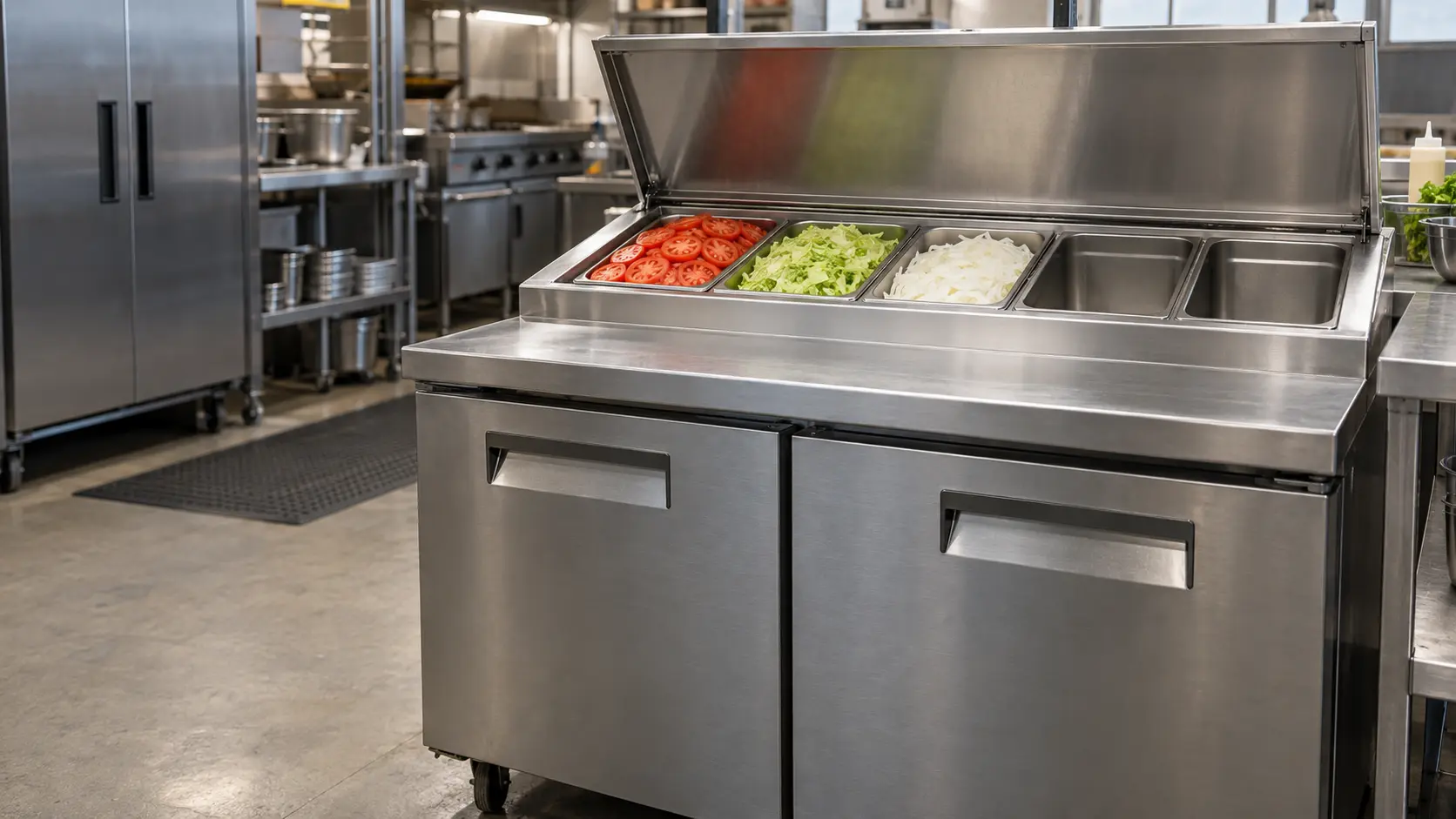
Prep Table Running Warm in the Top Rail and the Base
6 causes, cheapest first
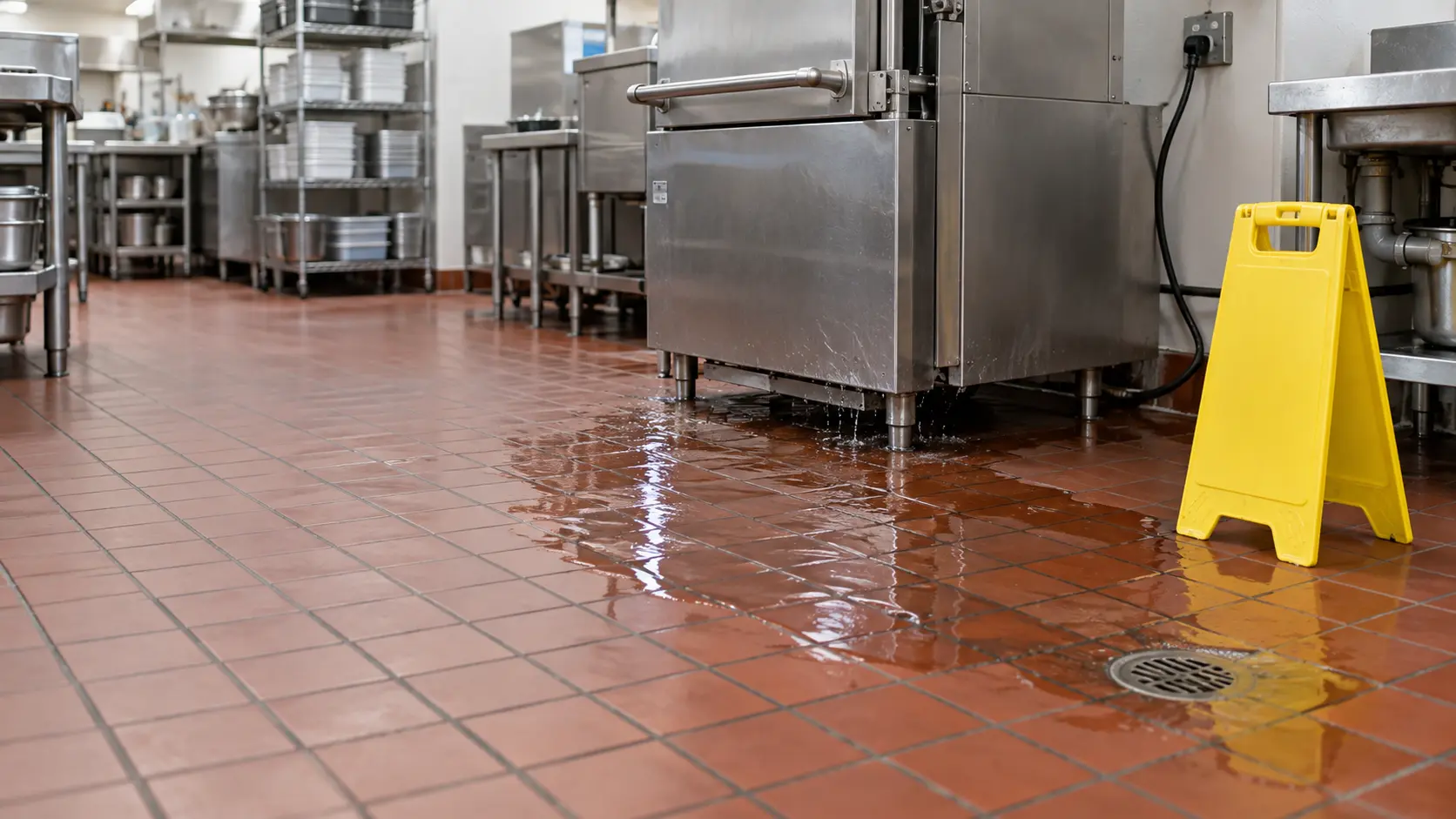
Water on the Commercial Kitchen Floor Near Equipment and Outlets
6 causes, cheapest first
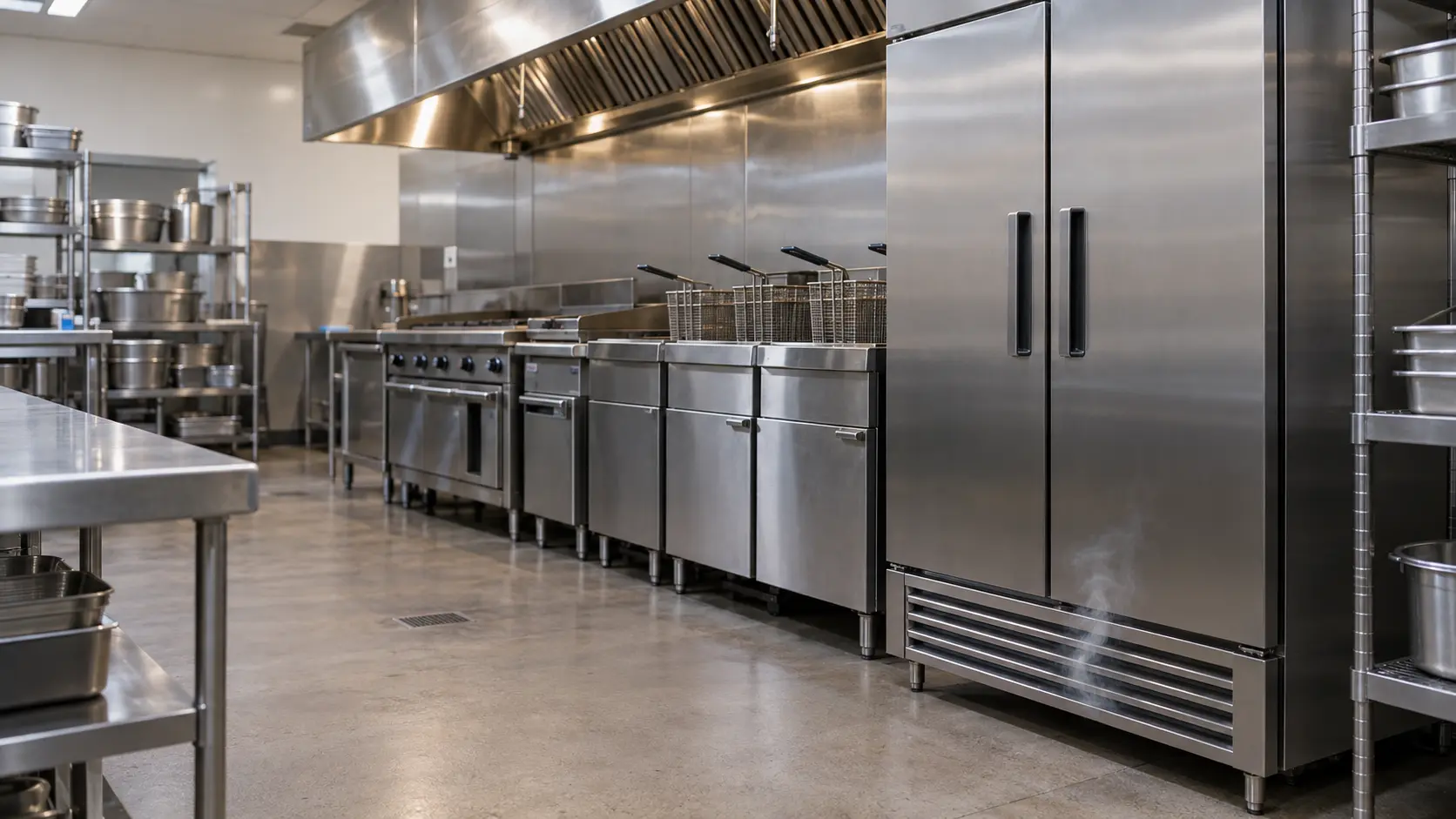
Restaurant Equipment Burning Smell: Scorched Oil, Hot Wiring or Lint
6 causes, cheapest first

Commercial Appliance Error Code on a Combi, Fryer, Dish Machine or Laundry Display
8 causes, cheapest first
Who builds
a cold storage.
13 of the makes on this site build a commercial cold storage unit. Each mark opens that make's own page.
All 35 brandsCommercial cold storage repair,
where we come out.
9 metros, each with its own page.
All service areasTampa BayFL · 31 areas
Miami / South FloridaFL · 47 areas
New York MetroNY · 75 areas
HoustonTX · 36 areas
ChicagoIL · 50 areas
Los AngelesCA · 95 areas
San DiegoCA · 31 areas

Questions about
commercial cold storage units.
How often should a walk-in cooler have its condenser coil cleaned?
What temperature should reach-in coolers hold for a health inspection?
Why does frost keep building on the coil inside our walk-in freezer?
Back to your everyday
Is it a commercial cold storage unit?
Say so when you book — it changes what the technician brings and how the visit is planned.