
Reach-in and Prep Table Repair
Reach-ins, pass-throughs, prep tables and blast chillers: gaskets, hinges, fans, thermostats, condensers and compressors.
Mon–Sat, 8am–8pm
- Moderate cost band
- 5 steps on the visit
- 5 problems it answers
Book a visit
Three short steps, about a minute.
or call (844) 571-4566
Loading appointment form…
The appointment form couldn’t load. Please try again.
What the reach-in and prep table repair
involves.
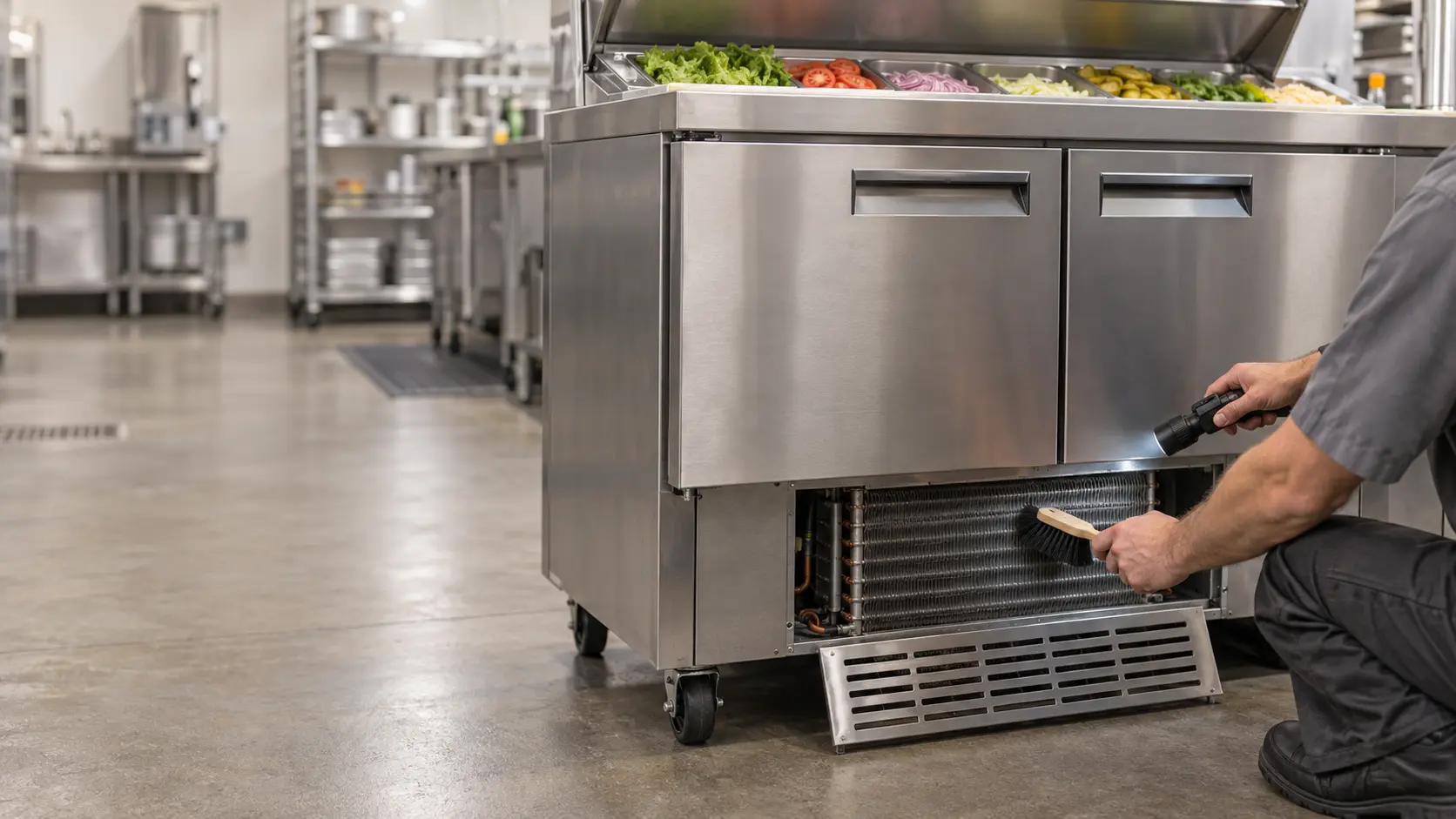
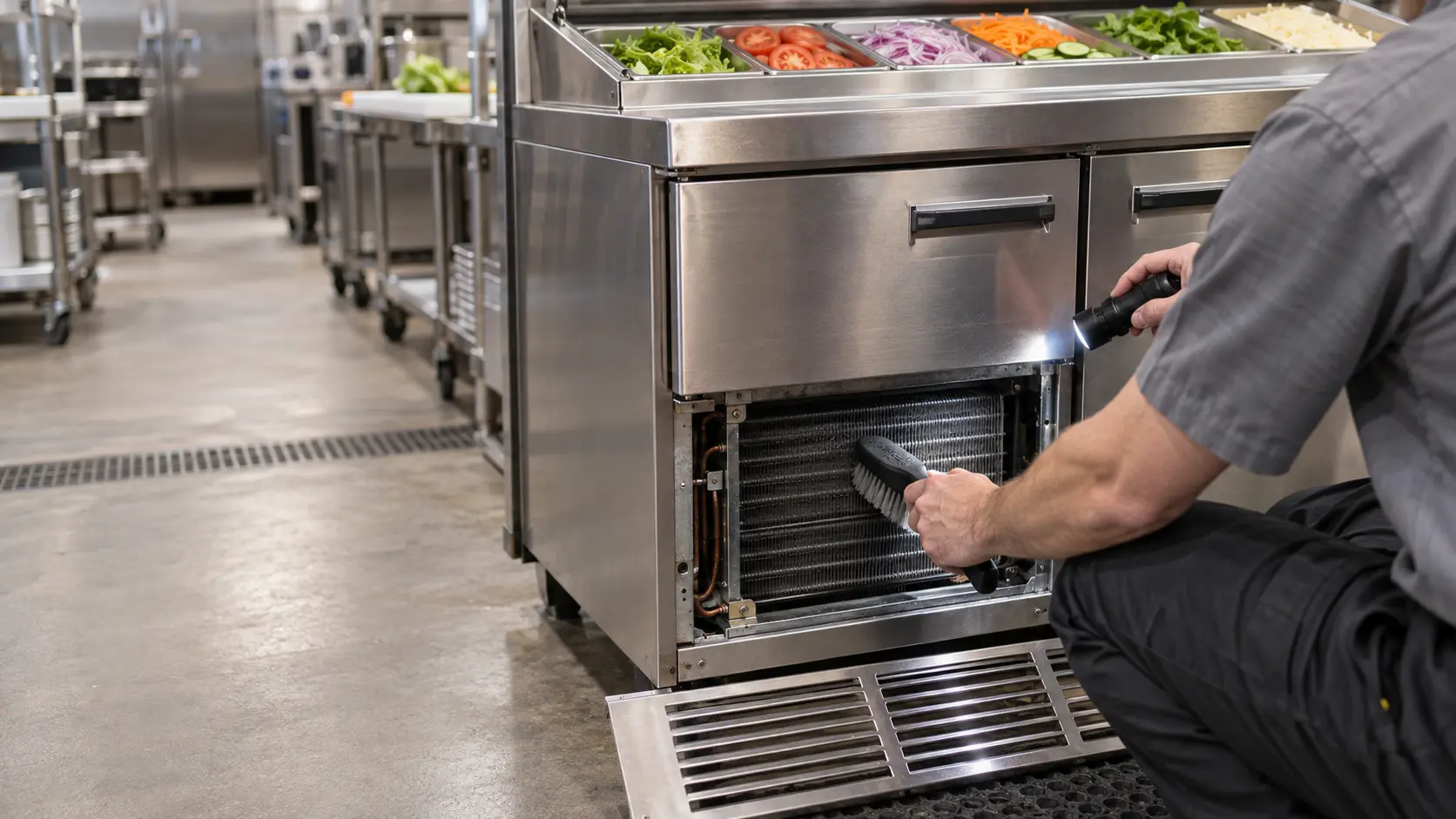
Reach-ins and prep tables are self-contained: the compressor, the condenser and its fan live in a compartment on top or underneath, and the evaporator sits behind a panel inside the cabinet. That compactness is the problem in a hot kitchen. The condenser breathes the air from the line, so grease and flour coat it fast, and the compressor behind it runs hot. Prep tables have it harder still, because the pan rail on top sits open to the room for hours and the cold air meant to hold those pans at 41°F spills out every time the lid is lifted. The technician starts with the temperatures, of the air, the product and the pans, then checks the condenser and its fan, the evaporator and its fan, the defrost on freezer models, and the thermostat or electronic controller and its probe. Doors get their share of attention: gaskets that no longer grip, hinges and cams that let a door hang open, and heaters around freezer door frames that stop sweat and ice. Repairs run from a cleaned coil and a new gasket to a fan motor, a controller, a defrost heater, a leak repair and recharge, or a compressor. On an old cabinet, the technician compares the bigger repairs with a replacement and says so.
How the visit goesWhat it usually costsModerate · Reach-in, pass-through or prep table gasket, hinge, fan motor, thermostat or controller, defrost heater, leak repair or compressor
A cleaned condenser, a gasket or a hinge cam is modest. A fan motor, a thermostat or a controller with its probe comes next, and a leak repair with a recharge or a compressor in a self-contained cabinet is the fuller job.
Answers 5 problemsReach-In Cooler Not Holding Temperature Through a Shift
Prep Table Running Warm in the Top Rail and the Base · Water on the Commercial Kitchen Floor Near Equipment and Outlets · Restaurant Equipment Burning Smell: Scorched Oil, Hot Wiring or Lint · Commercial Appliance Error Code on a Combi, Fryer, Dish Machine or Laundry Display
Comes up most onCommercial cold storage
Codes that lead hereE13 · E36 · E109 · Hi
Alto-Shaam E13: the steam generator is running too hot.
Reach-in and prep table repair,
step by step.
Replace the failed part, confirm the cabinet holds 41°F or its freezer setpoint, and note the parts that are wearing.
Measure the air, the product and the pan rail temperatures, and read the controller and any code it stored.
Clean and check the condenser coil and its fan, which are the most common reason a self-contained unit runs warm.
Open the evaporator panel to check the coil, fan and defrost, and test the thermostat or controller and its probe.
Check each door and drawer: gaskets, hinges, cams, closers and the frame heaters on freezer sections.
Replace the failed part, confirm the cabinet holds 41°F or its freezer setpoint, and note the parts that are wearing.
The problems
it answers.
5 of them, from reach-in cooler not holding temperature through a shift to commercial appliance error code on a combi, fryer, dish machine or laundry display.
All problems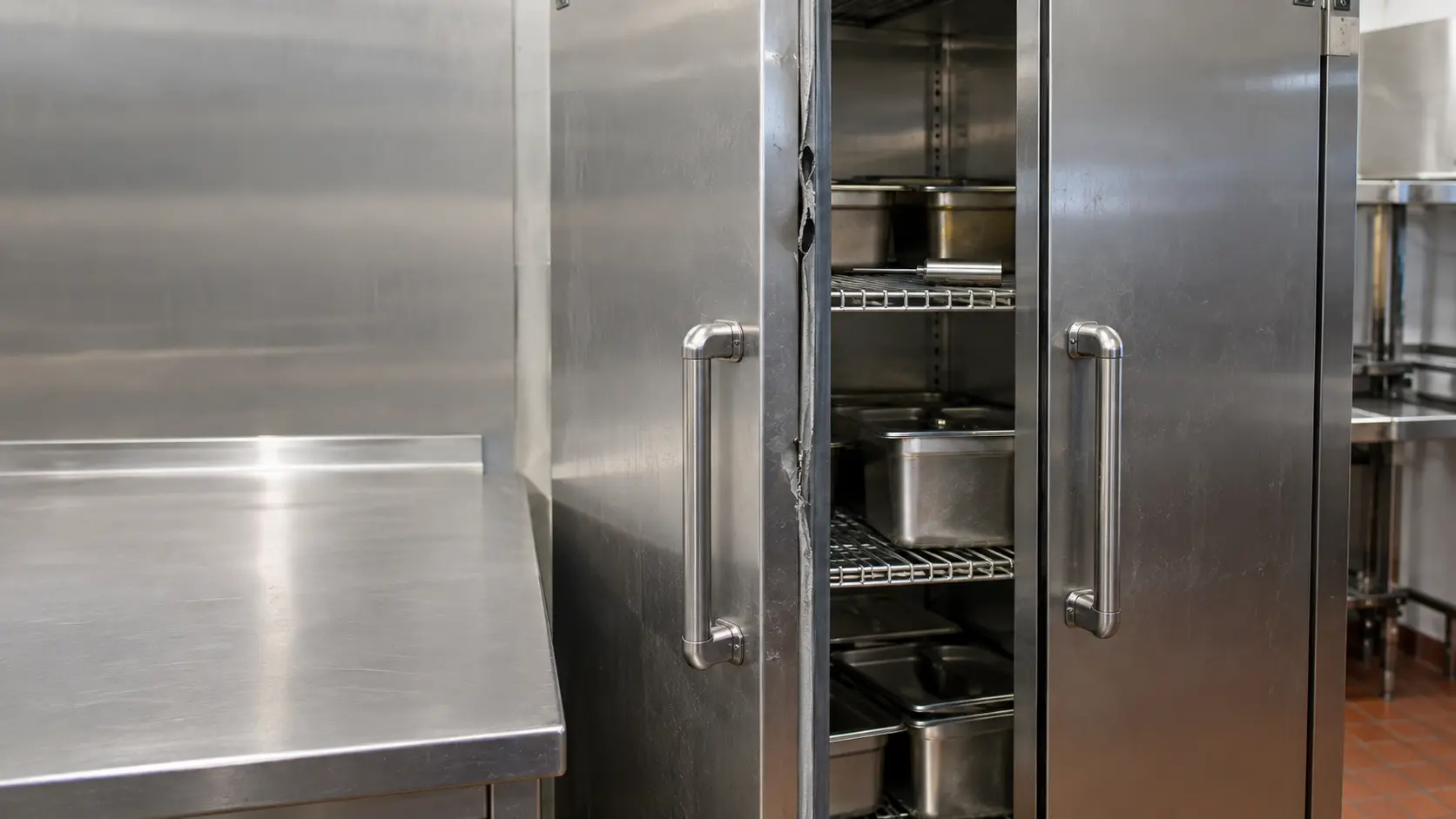
Reach-In Cooler Not Holding Temperature Through a Shift
6 causes, cheapest first
Before you call
Tell us this when you book
- Whether it is a reach-in, a pass-through, an undercounter unit, a prep or sandwich table or a blast chiller
- The temperature it reads and the product temperature, and whether the trouble is in the base, the pan rail or both
- Whether the compressor is on top or below, and if anything sits against the grille that lets it breathe
- The make, model and serial from the data plate, and any code or alarm on the controller
It also answers
- Prep Table Running Warm in the Top Rail and the Base6 causes
- Water on the Commercial Kitchen Floor Near Equipment and Outlets6 causes · gas, fire, food at risk or water near power
- Restaurant Equipment Burning Smell: Scorched Oil, Hot Wiring or Lint6 causes · gas, fire, food at risk or water near power
- Commercial Appliance Error Code on a Combi, Fryer, Dish Machine or Laundry Display8 causes
Moderate,
on the site's scale.
A cleaned condenser, a gasket or a hinge cam is modest. A fan motor, a thermostat or a controller with its probe comes next, and a leak repair with a recharge or a compressor in a self-contained cabinet is the fuller job.
Read the full cost guideWhere it
comes up most.
Most bookings: Commercial cold storage.
All commercial appliance types
The makes
we see it on.
35 makes on this site, and the reach-in and prep table repair on any of them. Each mark opens that make's own page.
All 35 brandsReach-in and prep table repair,
where we come out.
The business, the climate and the building all change how the reach-in and prep table repair goes. These notes are about that, metro by metro.
All service areasTampa BayFL · 31 areas
Beach bars and hotel kitchens around Tampa Bay run reach-ins and prep tables in rooms that sit near 90°F on a summer afternoon, so the condenser under each cabinet clogs quickly with lint and grease and gets cleaned on almost every call.
OrlandoFL · 30 areas
An Orlando sandwich line near the parks keeps its prep table lid open for hours, and when the pans in the rail run warm the technician checks the rail's airflow, the lid gasket and the evaporator fan before an inspector finds it first.
Miami / South FloridaFL · 47 areas
A South Florida reach-in beside an open service door or a patio breathes wet air all day, and gaskets that have stopped sealing let frost pack the coil until the cabinet warms, the usual call from the cafe rows of Miami.
New York MetroNY · 75 areas
New York kitchens set reach-ins and prep tables tight against the cooking line with no gap behind them, and a cabinet that cannot throw off its heat runs without rest, so repairs there often finish by moving it a few inches and clearing its vent path.
HoustonTX · 36 areas
When a Houston line kitchen loses its air conditioning in August, the undercounter reach-ins struggle first, and a unit that trips its compressor overload every afternoon is checked for a blocked condenser and a tired fan before its compressor is written off.
ChicagoIL · 50 areas
Chicagoland taverns and sandwich shops lean on prep tables through long winter nights with the front door letting in the cold, and a pan rail that runs too cold and freezes the toppings is as common a call there as one that runs warm.
Los AngelesCA · 95 areas
Los Angeles food halls and taco counters put reach-ins out front under display lights and beside the heat of the line, and a cabinet in that spot needs its coil cleaned and its gaskets renewed far more often than one in a back room.
San DiegoCA · 31 areas
San Diego hotel and brewery kitchens keep prep tables loaded through long service hours, and a technician there checks the cabinet's display against a probe in the product itself, since an inspector reads the food, not the dial on the door.
San Francisco Bay AreaCA · 74 areas
Bay Area cafes and campus kitchens often run reach-ins with electronic controllers that keep an alarm history, and reading it first shows whether a warm cabinet came from a door propped during service or from a sensor or fan that quit.

Questions about
the reach-in and prep table repair.
Why is the pan rail on our prep table warm while the base below holds temperature?
Is it worth replacing a door gasket on a reach-in cooler?
Our reach-in runs constantly but never reaches its setpoint. What should we check first?
Back to your everyday
Ready to book the reach-in and prep table repair?
Have these to hand: whether it is a reach-in, a pass-through, an undercounter unit, a prep or sandwich table or a blast chiller, the temperature it reads and the product temperature, and whether the trouble is in the base, the pan rail or both, whether the compressor is on top or below, and if anything sits against the grille that lets it breathe, the make, model and serial from the data plate, and any code or alarm on the controller.