

Commercial Cooking Equipment Repair
Fryers, griddles, charbroilers, restaurant ranges, convection and combi ovens, steamers, kettles, holding cabinets and toasters, on gas or electric, that make up the hot side of a kitchen line.
Mon–Sat, 8am–8pm
- 4 things that fail on it
- 24 makes build it
- 7 problems it shows
Book a visit
Three short steps, about a minute.
or call (844) 571-4566
Loading appointment form…
The appointment form couldn’t load. Please try again.
Is yours
a cooking equipment?
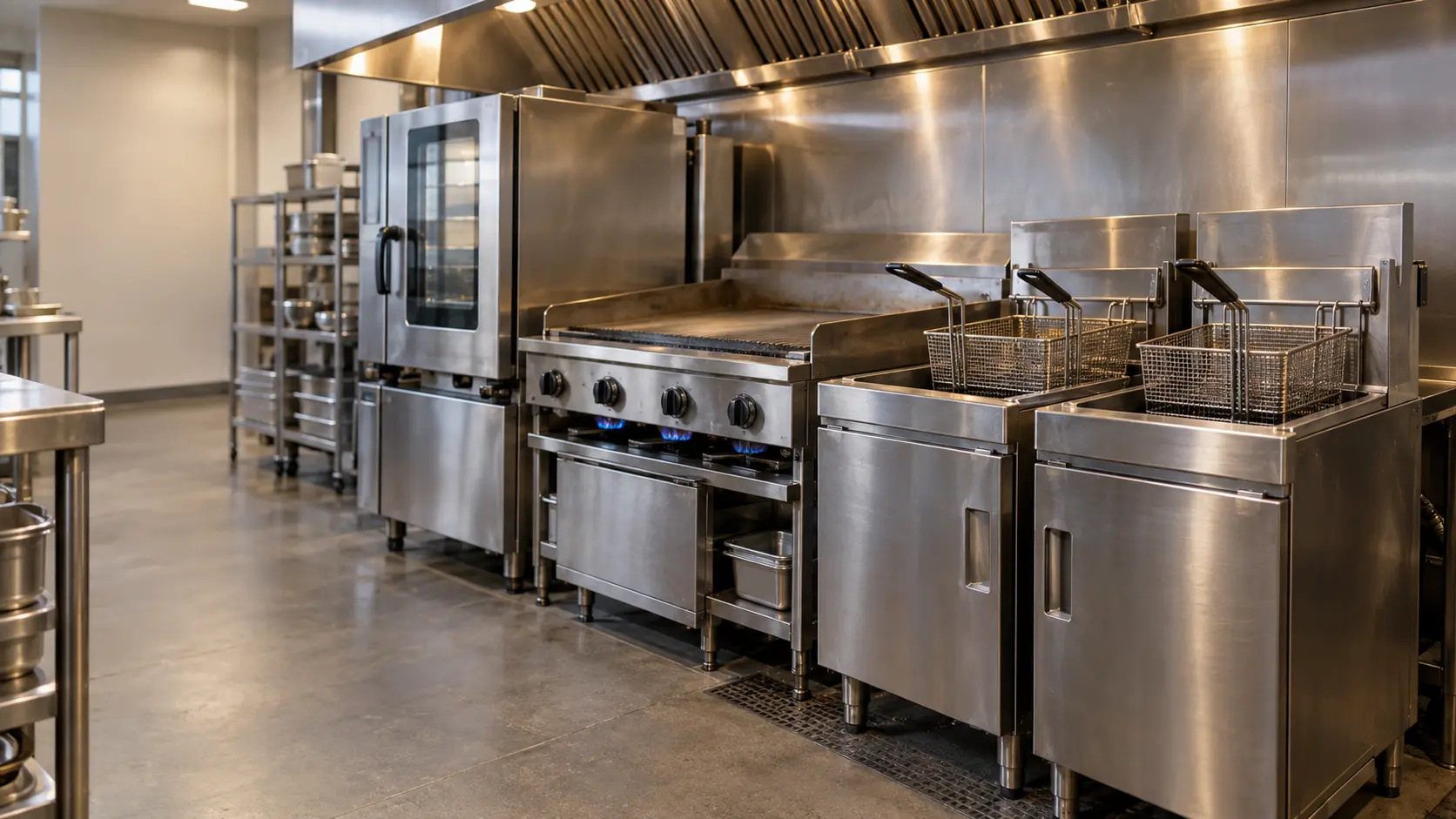
The hot side of a commercial kitchen is a line of heavy equipment set shoulder to shoulder under the hood, and each piece has its own way of making and controlling heat. A gas fryer heats its oil through tubes or an open pot, with a thermostat that holds the setpoint and a separate high-limit that shuts the gas if the oil runs away; many carry a built-in filter pump that returns oil to the vat. Griddles and charbroilers run burners under a steel plate or radiants, and the six-burner restaurant range beside them runs on pilots or spark ignition with an oven below. Convection ovens push air with a blower, and a combi oven adds a steam generator or direct injection, so it roasts, steams or does both, and it needs deliming because hard water scales its boiler. Steamers and kettles share that water problem. Holding cabinets and warmers keep food above 135°F until it goes out. Vulcan, Garland, Southbend, Imperial and Wolf Commercial build much of the line; Pitco, Frymaster and Henny Penny the fryers; Rational, Alto-Shaam, Blodgett and Cleveland the ovens, steamers and kettles; Star and Hatco the griddles, toasters and holding gear. What wears out follows the heat: pilots and thermocouples, thermostats that drift, igniters, blower motors, gaskets, scaled probes and boards cooked by the hood's heat.
 What fails on a piece of commercial cooking equipment
How to tell
The equipment sits under a ventilation hood on a gas manifold or a heavy electrical supply, usually on casters with a restraint cable at the back.
Gas pieces have a quick-disconnect hose behind them and a pilot or ignition window; electric ones carry a thick cord or a hard-wired conduit.
A fryer has a deep vat with baskets and a drain valve at the bottom front; a combi oven has a water line and a drain as well as power.
The rating plate names the maker, the gas type and input in BTU or the kilowatts, and the equipment is built of heavy stainless rather than enamel.
Not yours?Commercial cold storageCommercial dish machinesCommercial laundry equipment
What fails
on this design.
On a piece of commercial cooking equipment: pilots, thermocouples and gas valves, thermostats, high-limits and probes, steam generators and scale, blower motors, door switches and boards.
The problems it showsPilots, thermocouples and gas valves
On a busy line, spills and grease reach the pilot assemblies, and the heat beside the burners ages thermocouples and thermopiles. A burner that will not stay lit, or a fryer that shuts itself off mid-rush, usually traces back to this small group of parts.
Thermostats, high-limits and probes
A fryer thermostat drifting fifteen degrees changes every batch that comes out of it, and a high-limit that trips too early shuts the vat down on a full lunch. Griddle and oven thermostats drift the same way, and a coated probe reads the wrong temperature.
Steam generators and scale
Combi ovens, steamers and kettles boil water all day, and every gallon leaves minerals behind. Scale coats the heating elements and the water level probes, so steam comes slowly or the controller reports a fill or level problem, unless deliming and water treatment keep up.
Blower motors, door switches and boards
Convection and combi ovens depend on a fan to move heat evenly. Bearings wear, door switches stop telling the controller the door is shut, and electronic boards mounted near hot flues fail from years of heat soak.
Getting at it,
and whether to.
If anyone smells gas, shut the gas at the appliance or the main, use no flame or switches, get people out and call the gas utility or 911 from outside.
What repairs costOn the visit
- Let fryer oil cool fully before the visit where you can; nobody should reach into a vat or move a fryer that is still hot.
- Leave room to pull the unit forward on its casters, and keep the restraint cable and the quick-disconnect hose free for the technician.
- Note the maker, model and serial from the rating plate, the gas type, and any code shown on the controller when it stopped.
Repair or replace
Commercial cooking equipment is built to be repaired: nearly every part on a fryer, a griddle or a restaurant range is sold separately, and swapping a thermostat, a pilot assembly or a gas valve costs far less than a new piece plus the gas connection and a hood inspection. Combi ovens and rapid-cook units carry costlier boards and steam generators, so on an older one with a scaled boiler and a failing controller the technician lays out both the repair and the replacement, with how long each keeps the line down.
Book a visit for a piece of commercial cooking equipmentThe problems
it shows.
On a piece of commercial cooking equipment, most often commercial kitchen gas smell along the cooking line: clear the room first.
All problems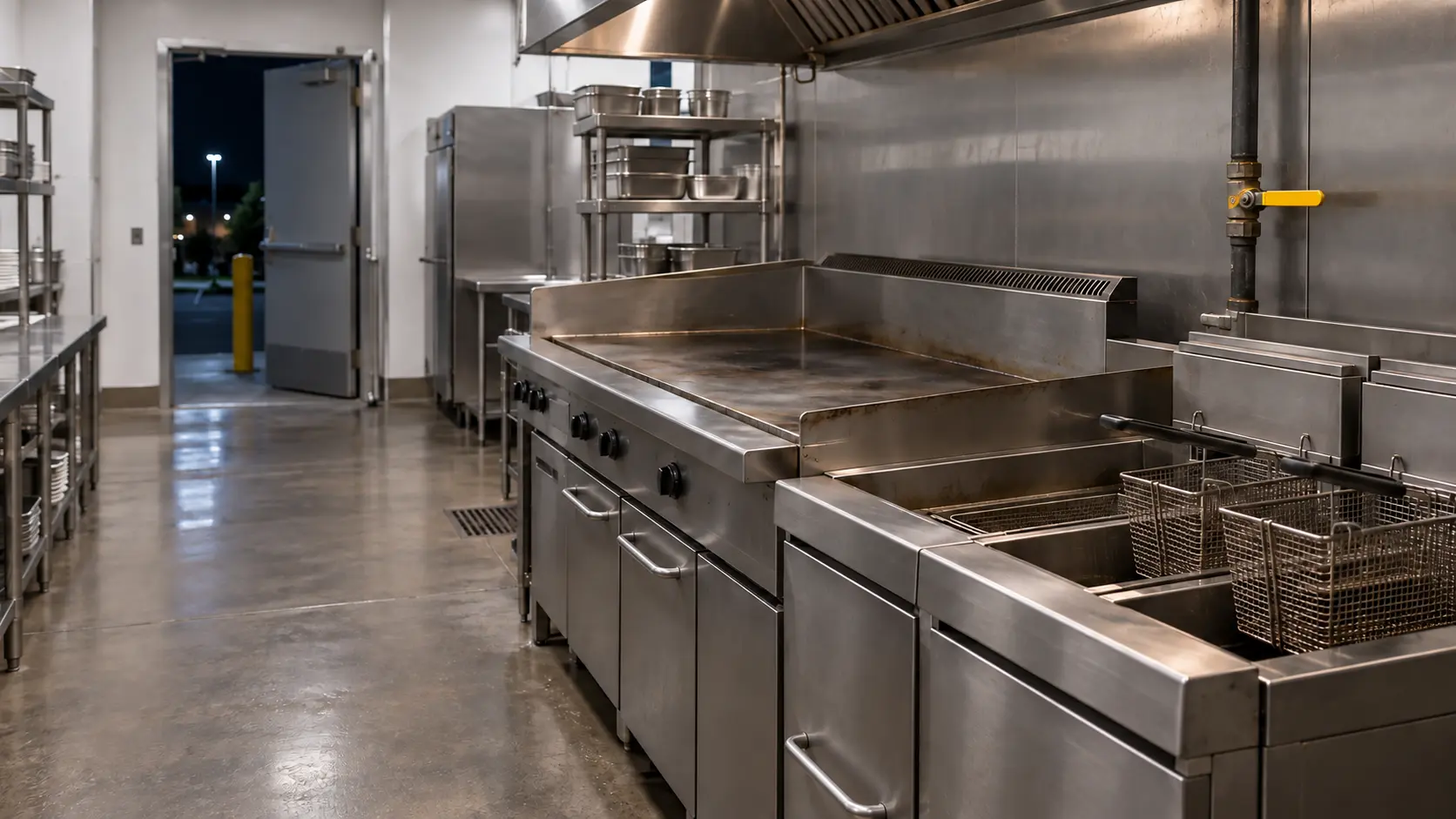
Commercial Kitchen Gas Smell Along the Cooking Line: Clear the Room First
6 causes, cheapest first

Commercial Fryer Fire or Grease Flare Under the Hood
6 causes, cheapest first
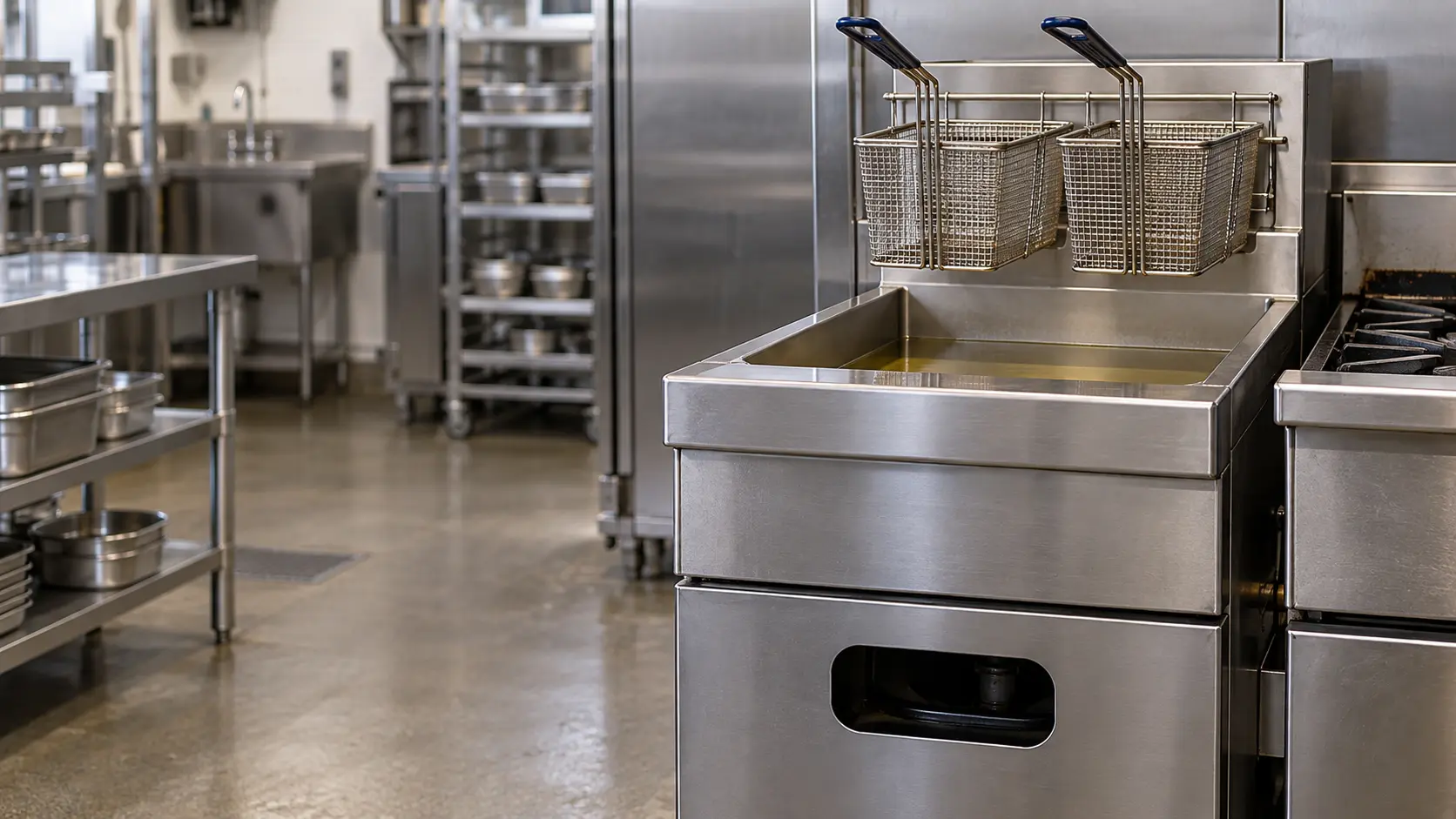
Commercial Fryer Not Heating or Slow to Recover Between Baskets
6 causes, cheapest first

Commercial Convection Oven Baking Unevenly Across the Racks
6 causes, cheapest first

Combi Oven Steam Problem: Weak Steam, Scale or a Dry Cavity
6 causes, cheapest first
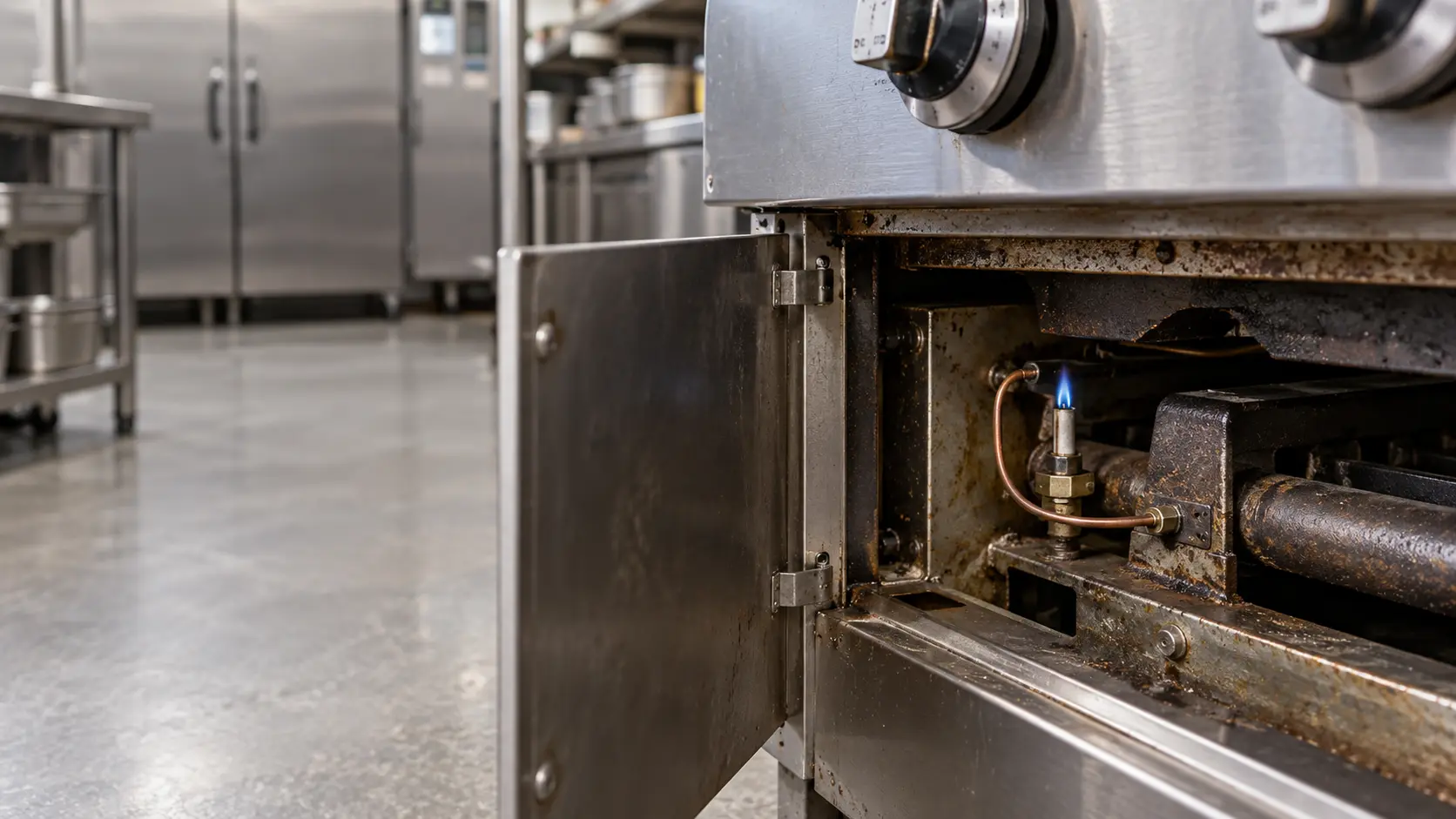
Pilot Won't Stay Lit on a Fryer, Griddle or Steamer on the Line
6 causes, cheapest first

Commercial Appliance Error Code on a Combi, Fryer, Dish Machine or Laundry Display
8 causes, cheapest first
Who builds
a cooking equipment.
24 of the makes on this site build a piece of commercial cooking equipment. Each mark opens that make's own page.
All 35 brandsCommercial cooking equipment repair,
where we come out.
9 metros, each with its own page.
All service areasTampa BayFL · 31 areas
Miami / South FloridaFL · 47 areas
New York MetroNY · 75 areas
HoustonTX · 36 areas
ChicagoIL · 50 areas
Los AngelesCA · 95 areas
San DiegoCA · 31 areas

Questions about
pieces of commercial cooking equipment.
Why does our fryer shut off in the middle of service?
How often does a combi oven need deliming?
Can a gas fryer or griddle be moved to clean behind it?
Back to your everyday
Is it a piece of commercial cooking equipment?
Say so when you book — it changes what the technician brings and how the visit is planned.