
Commercial Dish Machine Repair
Undercounter, door-type and conveyor dish machines with their booster heaters and chemical feeds, the warewashing station that washes and sanitizes every rack before it goes back on the line.
Mon–Sat, 8am–8pm
- 4 things that fail on it
- 3 makes build it
- 5 problems it shows
Book a visit
Three short steps, about a minute.
or call (844) 571-4566
Loading appointment form…
The appointment form couldn’t load. Please try again.
Is yours
a dish machines?
A commercial dish machine does in about a minute what a household unit takes an hour to do, and it has to prove it sanitized every rack. Undercounter models sit under a bar or a small kitchen's counter. Door-type machines, also called hoods, sit between a soiled and a clean table, and the operator lifts the hood to slide a rack in. Conveyor machines pull racks through wash, rinse and final rinse zones on a chain or a pawl bar, and flight-type machines carry dishes on a belt with no racks at all. High-temperature machines sanitize with heat: the wash tank holds around 150–160°F and the final rinse has to reach the temperature on the machine's data plate, commonly 180°F at the manifold, which is why most carry a booster heater. Low-temperature machines sanitize with chemistry instead, dosing chlorine or another sanitizer from a pump at the rinse. Hobart is the name most kitchens know, Miele Professional builds undercounter and door-type machines, and Hatco builds boosters for machines of many makes. What breaks is what water and chemicals attack: tank heaters and booster elements coated in scale, a thermostat or a probe that misreads, wash arms with clogged jets, a drain valve or a pump seal that leaks, and chemical feed tubing that cracks and stops dosing.
 What fails on a commercial dish machine
How to tell
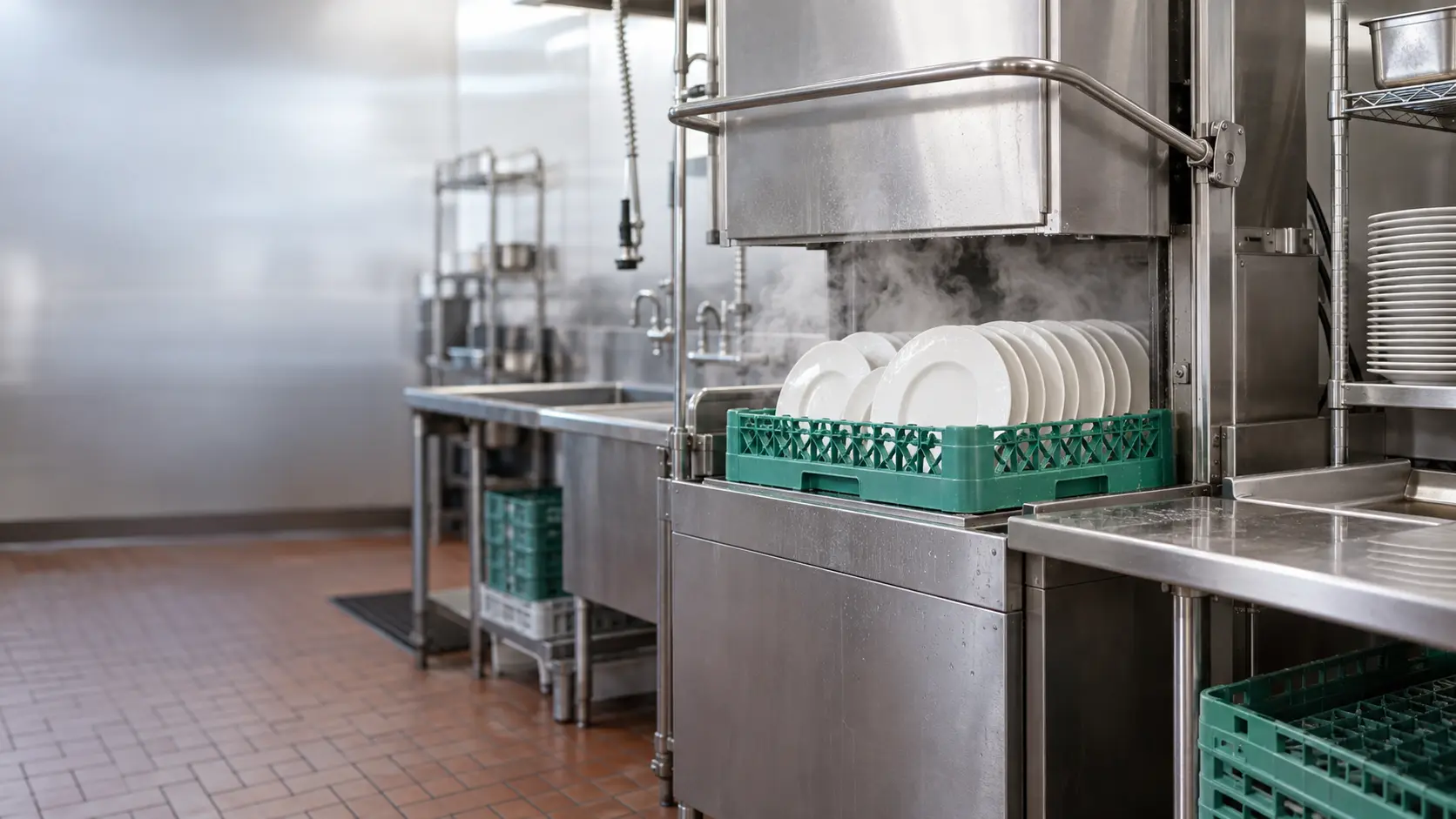
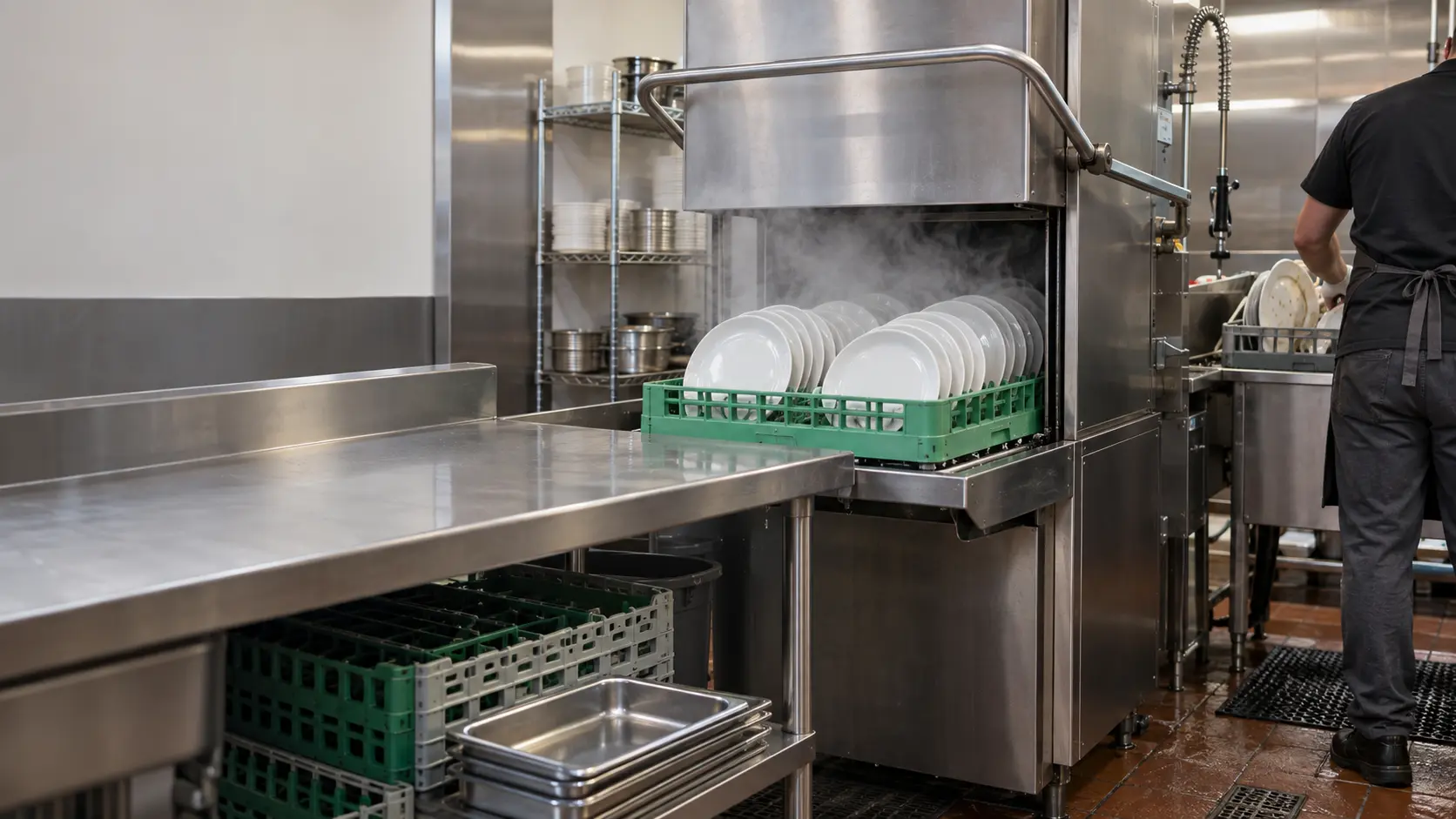
The machine is stainless, fed from the hot water line and a drain, with racks going in on one side and coming out clean on the other.
A door-type machine has a hood that lifts straight up; a conveyor machine is long, with curtains at the ends and racks moving through by themselves.
There are wash and rinse gauges or a display showing temperatures, and small tubes run from chemical containers on the floor into the machine.
A booster heater may sit under the machine or beside it, a separate stainless box with its own power supply and temperature gauge.
Not yours?Commercial cold storageCommercial cooking equipmentCommercial laundry equipment
What fails
on this design.
On a commercial dish machine: tank heaters, boosters and scale, wash arms, pumps and seals, fill valves, drains and float switches, chemical feed pumps and tubing.
The problems it showsTank heaters, boosters and scale
Hard water leaves minerals on every heated surface. A scaled booster or tank element heats slowly and burns out early, and the final rinse falls short of its sanitizing temperature, which is exactly what an inspector checks with a thermometer or a test strip.
Wash arms, pumps and seals
Food scraps and broken glass reach the pump and the arm jets when the scrap screens are not emptied. Pressure falls, dishes come out with film, and a worn pump seal leaks a steady line of water under the machine.
Fill valves, drains and float switches
A fill solenoid that sticks overflows the tank, and one that fails never refills it. Drain valves jam with debris, and float switches coated in grease tell the controller the tank is full when it is not, so the heater waits and the cycle stalls.
Chemical feed pumps and tubing
Detergent, rinse aid and sanitizer pumps run on peristaltic tubing that hardens and cracks. On a low-temperature machine that means dishes that are not sanitized, and a test strip that shows zero where it should show 50 ppm chlorine.
Getting at it,
and whether to.
Switch the machine off at its switch and, if water is on the floor near power, keep staff clear and turn off the breaker from a dry panel.
What repairs costOn the visit
- Drain the tank if the machine will, and empty the scrap screens so the technician can see the pump inlet and the tank floor.
- Keep the chemical containers where they are and tell us who supplies them; the dosing pumps are often the chemical company's equipment.
- Have the wash and rinse temperatures from your log ready, along with the make, model and any code the display shows.
Repair or replace
Most dish machine repairs are worth doing: elements, fill valves, drain valves, pump seals and wash arms are stocked parts, and the stainless tank lasts a long time. A machine whose tank is pitted through, or whose booster and pump motor are both failing, is where replacement enters the conversation, and a lease or a chemical supplier's rental program may change the math. The technician gives you both sides, including the hours the station is down.
Book a visit for a commercial dish machineThe problems
it shows.
On a commercial dish machine, most often dish machine not reaching temperature on the wash or final rinse.
All problems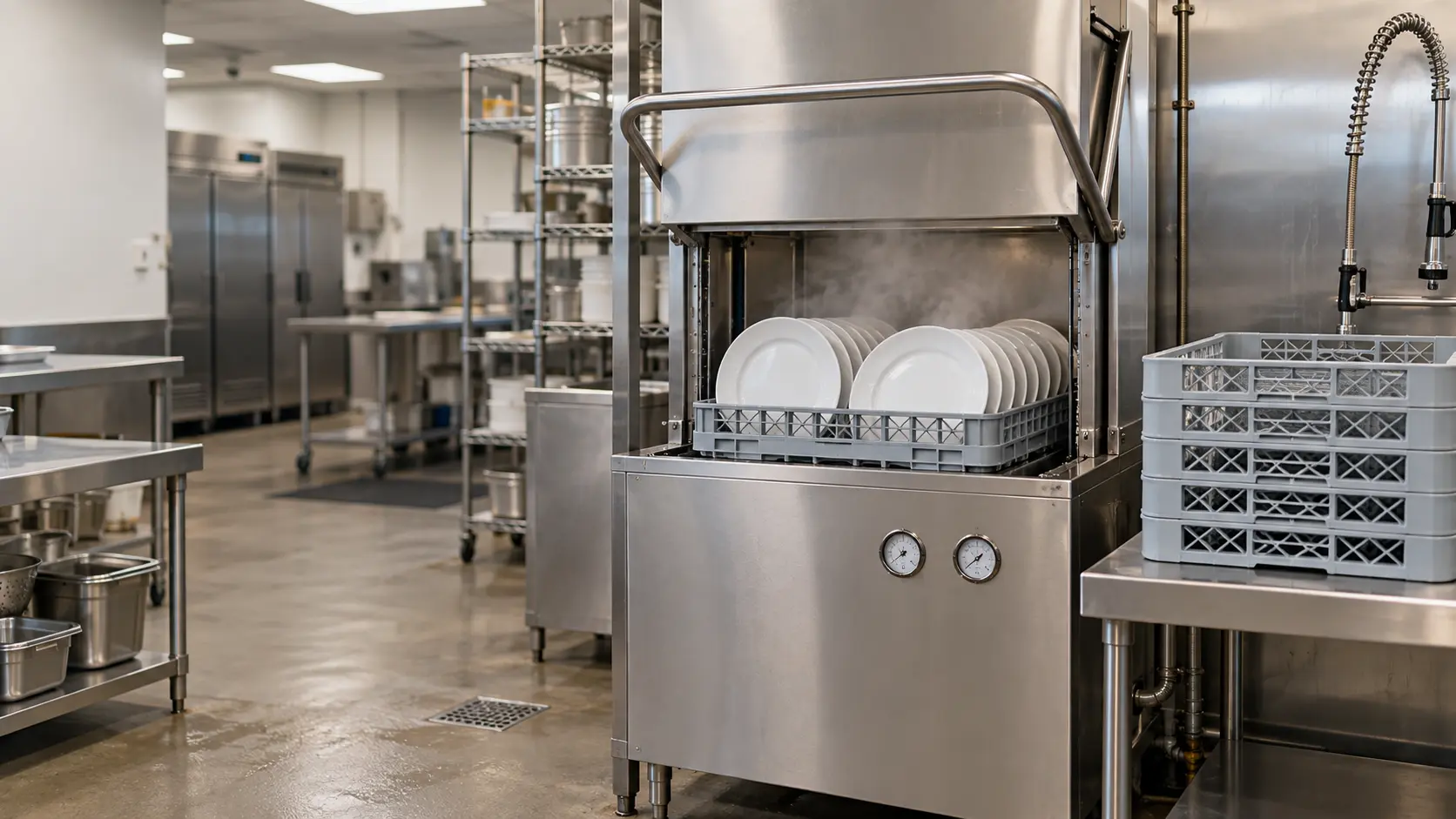
Dish Machine Not Reaching Temperature on the Wash or Final Rinse
6 causes, cheapest first
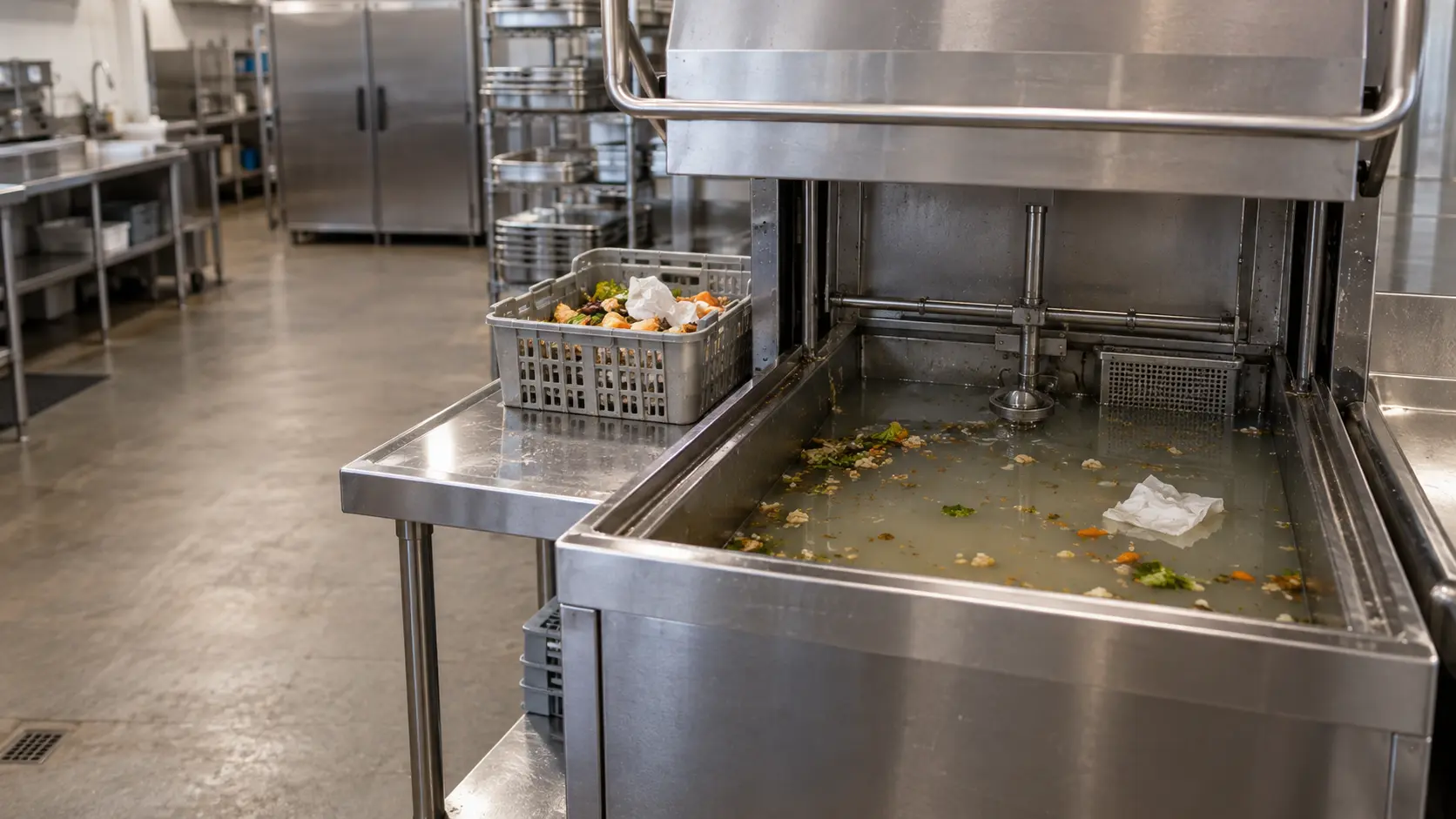
Dish Machine Not Draining: Dirty Water Left in the Tank
6 causes, cheapest first
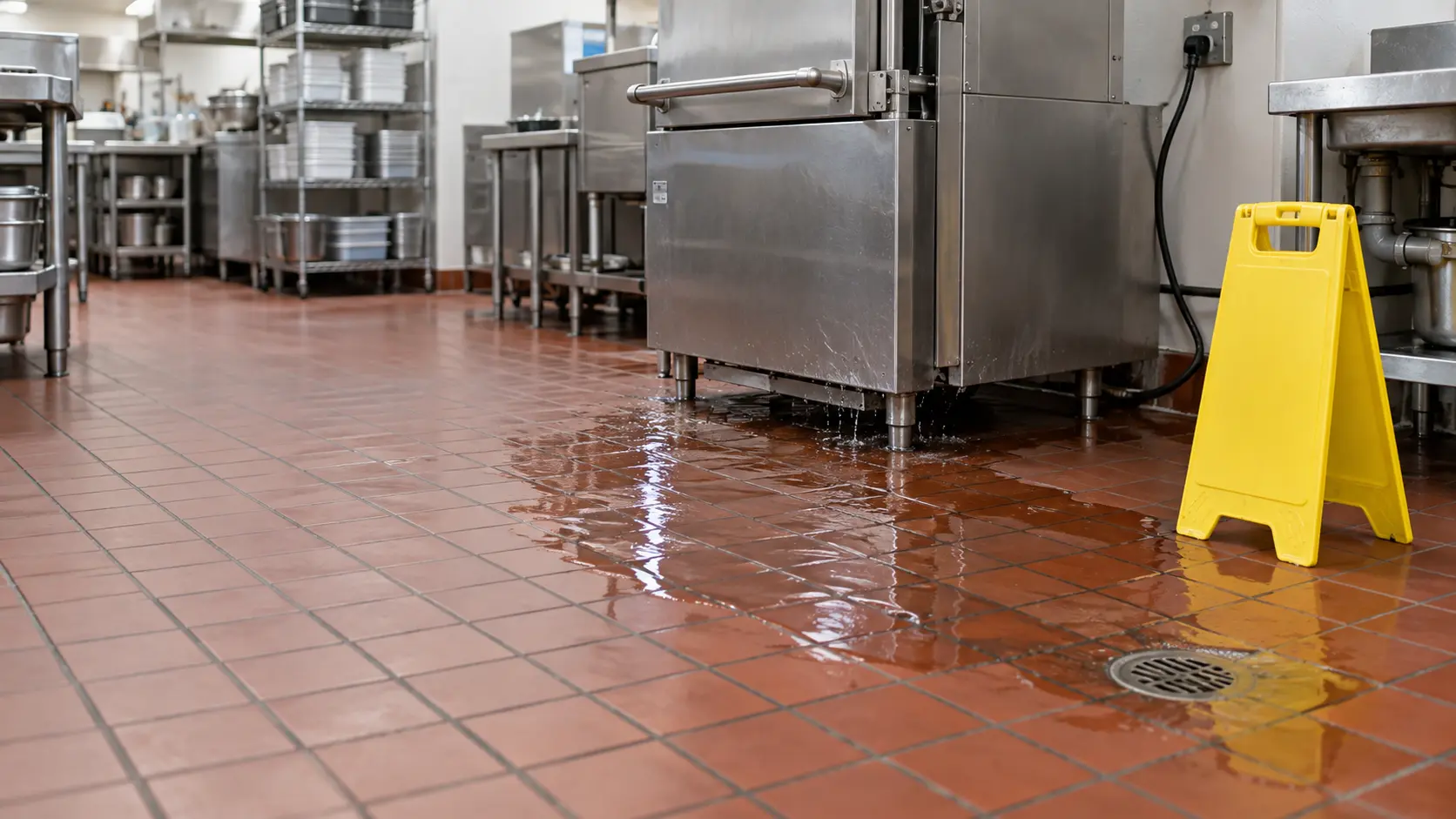
Water on the Commercial Kitchen Floor Near Equipment and Outlets
6 causes, cheapest first
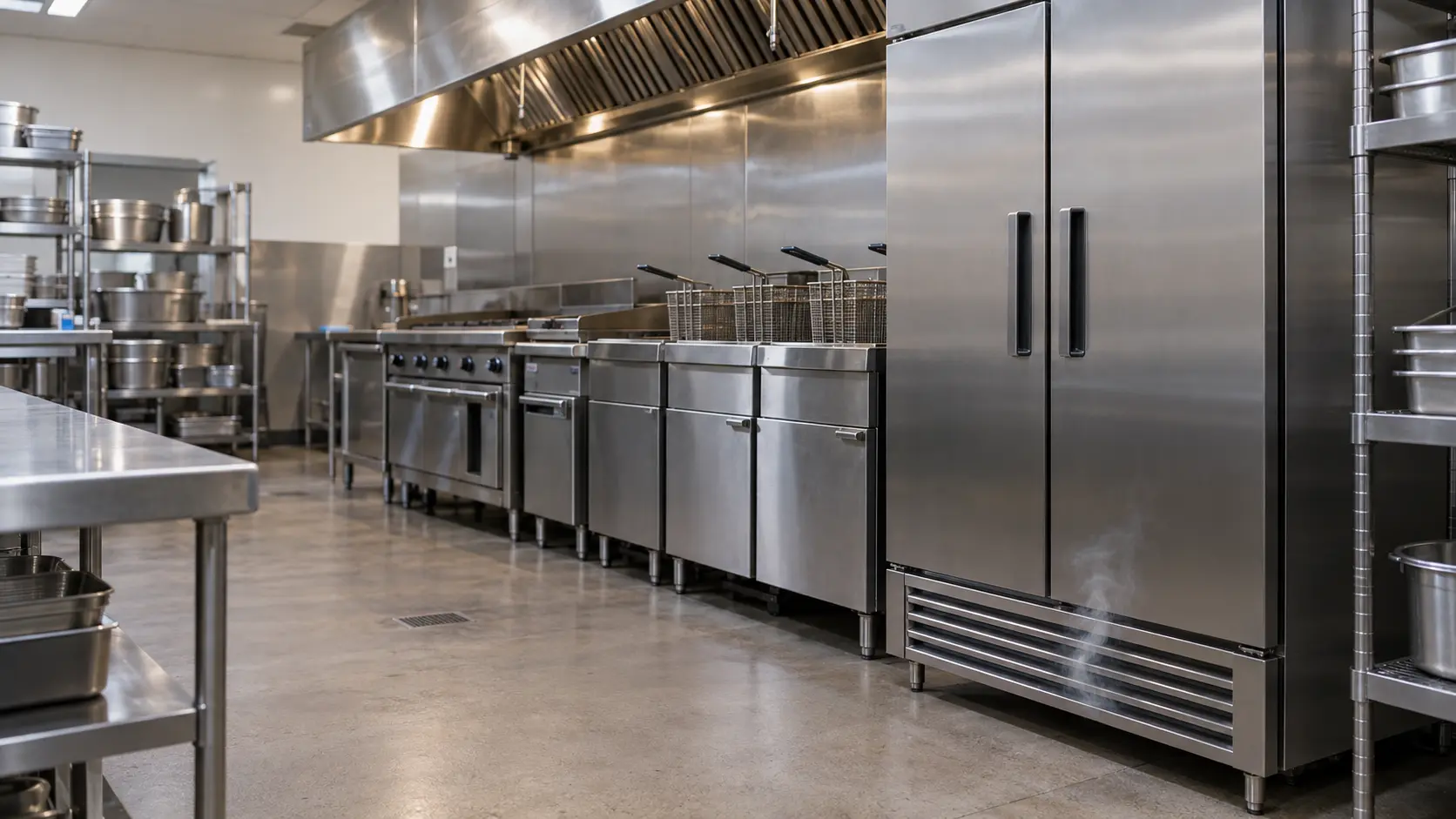
Restaurant Equipment Burning Smell: Scorched Oil, Hot Wiring or Lint
6 causes, cheapest first

Commercial Appliance Error Code on a Combi, Fryer, Dish Machine or Laundry Display
8 causes, cheapest first
Who builds
a dish machines.
3 of the makes on this site build a commercial dish machine. Each mark opens that make's own page.
All 35 brandsCommercial dish machines repair,
where we come out.
9 metros, each with its own page.
All service areasTampa BayFL · 31 areas
Miami / South FloridaFL · 47 areas
New York MetroNY · 75 areas
HoustonTX · 36 areas
ChicagoIL · 50 areas
Los AngelesCA · 95 areas
San DiegoCA · 31 areas

Questions about
commercial dish machines.
What rinse temperature does a high-temp dish machine need to pass inspection?
Why does our dish machine leave spots and film on glasses?
Who fixes the chemical pumps on a dish machine?
Back to your everyday
Is it a commercial dish machine?
Say so when you book — it changes what the technician brings and how the visit is planned.