
Commercial Laundry Equipment Repair
Coin, card and app-paid front-load machines, washer-extractors, stacked units and tumble dryers in laundromats, multi-housing laundry rooms, hotels, gyms and on-premise laundries.
Mon–Sat, 8am–8pm
- 4 things that fail on it
- 5 makes build it
- 6 problems it shows
Book a visit
Three short steps, about a minute.
or call (844) 571-4566
Loading appointment form…
The appointment form couldn’t load. Please try again.
Is yours
a laundry equipment?
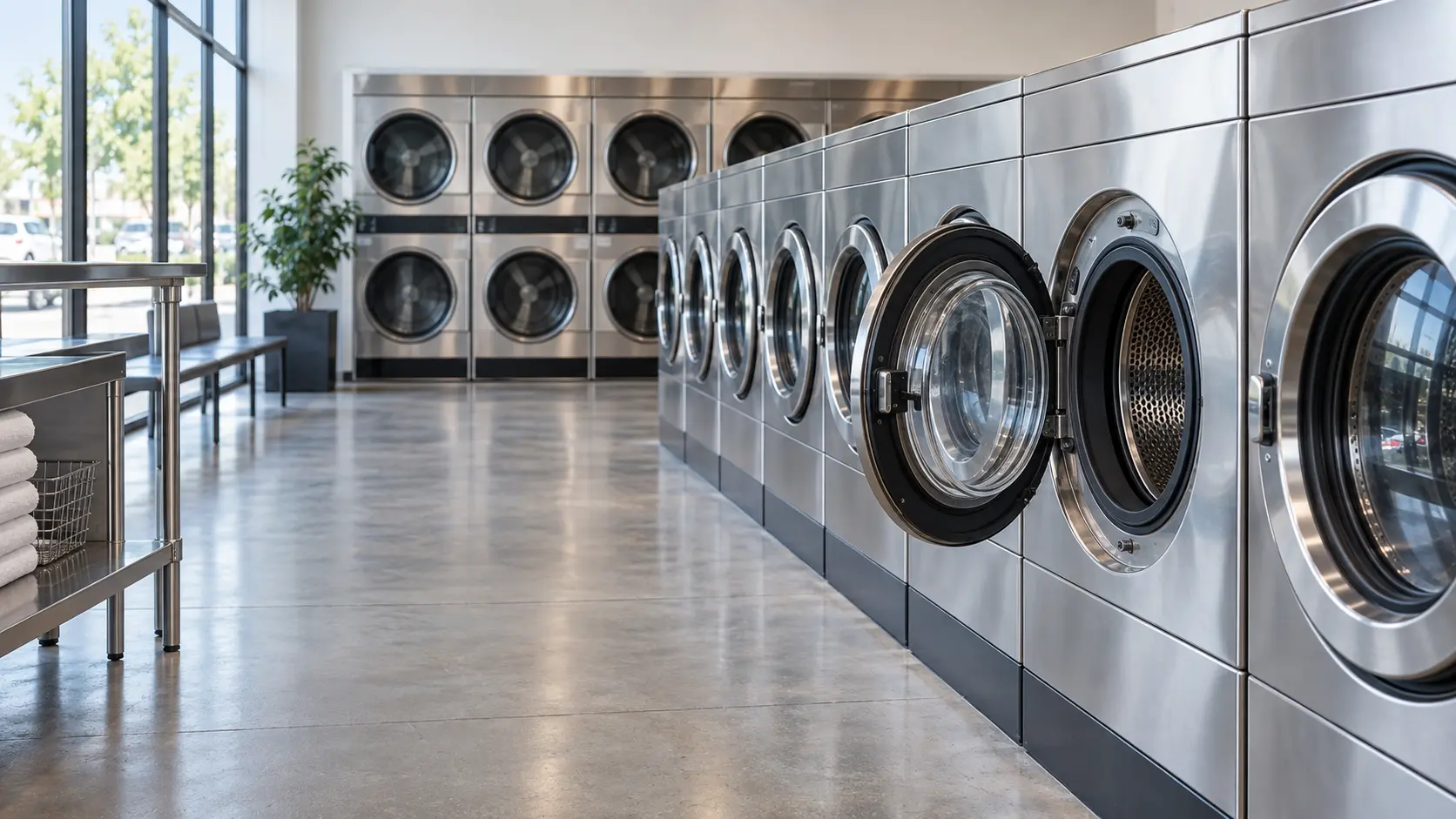
Commercial laundry equipment earns its keep by running cycle after cycle, and it is built differently from anything in a home. A laundromat or an apartment laundry room runs coin, card or app-paid front-load machines and stacked washer-dryer or dryer-dryer units, and every cycle that fails is a refund and a complaint. Hotels, gyms, clinics and restaurants with on-premise laundries run washer-extractors: hard-mount machines bolted to a concrete base, or soft-mount machines on springs and shocks that can spin much faster and sit on an ordinary floor. They take chemicals from injection pumps and are driven by an inverter that ramps the motor through wash and extract. The drying side is the tumbler, a large gas, electric or steam dryer with a burner or coils, a lint screen and a long exhaust run. Speed Queen, UniMac, Huebsch and Dexter build most of what stands in American laundromats and laundry rooms, and Miele Professional builds compact commercial machines for smaller operations. What fails is driven by load and hours: door locks and switches, drive belts, bearings and seals, inverters and motors, drain valves packed with coins and lint, burners and igniters in tumblers, airflow switches that shut a machine down when its exhaust clogs, and coin drops or card readers that stop taking payment.
 What fails on a commercial laundry machine
How to tell
The machine has a coin drop, a card reader or an app sticker on the front, or it is a large extractor bolted to a concrete pad or standing on a spring base.
A washer-extractor has an industrial control panel, a heavy door with a locking handle and chemical supply lines running into its back.
A tumbler has a large round door, a lint drawer at the bottom front and a rigid metal exhaust duct leaving the back or the top.
The rating plate gives a capacity in pounds of dry laundry and a three-phase or higher-voltage electrical rating, well above any home machine.
Not yours?Commercial cold storageCommercial cooking equipmentCommercial dish machines
What fails
on this design.
On a commercial laundry machine: door locks, switches and interlocks, bearings, seals and suspension, inverters, motors and belts, burners, airflow and exhaust.
The problems it showsDoor locks, switches and interlocks
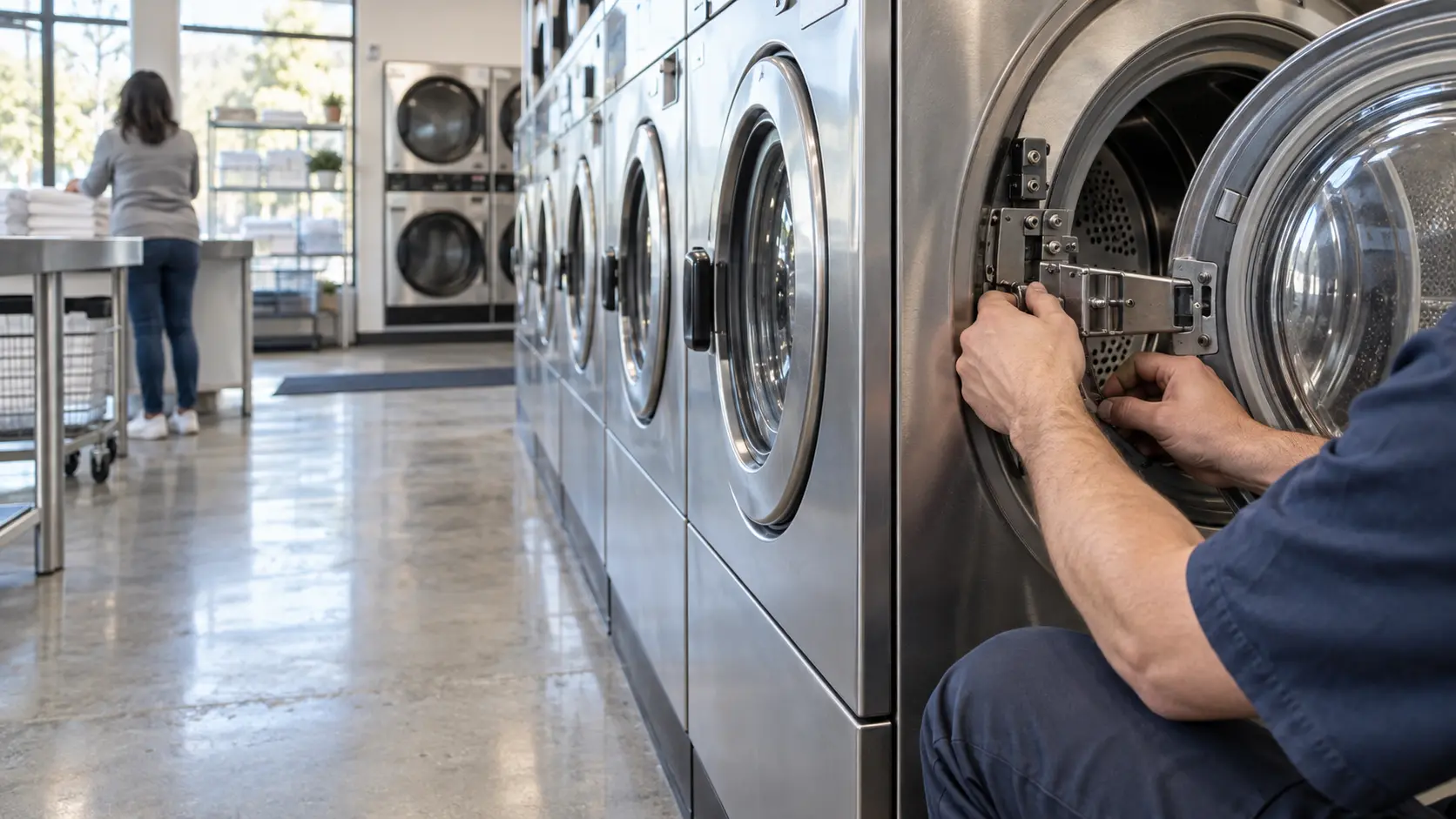
A commercial machine will not start or spin until the door is proven locked. Lock solenoids and switches wear from thousands of cycles, and customers who pull a door mid-cycle speed that up, so a dead machine very often starts at the door.
Bearings, seals and suspension
High extract speeds load the rear bearings and the tub seal. A rumble during spin and a water stain under the machine come first; on soft-mount extractors, worn springs and shocks let the machine walk and trip its out-of-balance switch.
Inverters, motors and belts
The drive inverter turns power into the speed the cycle asks for. Heat, dust and surges take out inverters and motors, and a slipping belt on a tumbler or an older machine leaves loads wet or half dry.
Burners, airflow and exhaust
A tumbler that runs cold usually has lost an igniter, a flame sensor, a gas valve coil or an airflow switch somewhere in its gas train or its exhaust. Lint packed in the duct makes the airflow switch shut the burner down and is also a fire risk.
Getting at it,
and whether to.
Put an out-of-order sign on the machine and switch it off; if water is spreading near power, keep people away and turn the breaker off from a dry panel.
What repairs costOn the visit
- Never reach into a drum that is still turning or coasting, and leave a load that is stuck inside for the technician to remove safely.
- If a gas tumbler smells of gas, shut its gas valve or the main, use no switches, get people out and call the gas utility or 911 from outside.
- Note the machine number, the model and serial from the plate, the code on the display, and whether the payment system is coin, card or app.
Repair or replace
Commercial laundry machines are built to be rebuilt: door locks, bearings, seals, inverters, igniters and payment hardware are all sold as parts, and a laundromat running dozens of the same model can keep them going for many years. Replacement starts to make sense when the drum or shell has cracked, when the maker has stopped supplying the control or inverter, or when a whole row is aging out together and a new payment system is due anyway. We give you the repair and the replacement side by side.
Book a visit for a commercial laundry machineThe problems
it shows.
On a commercial laundry machine, most often commercial laundry machine not spinning: loads left soaking wet.
All problems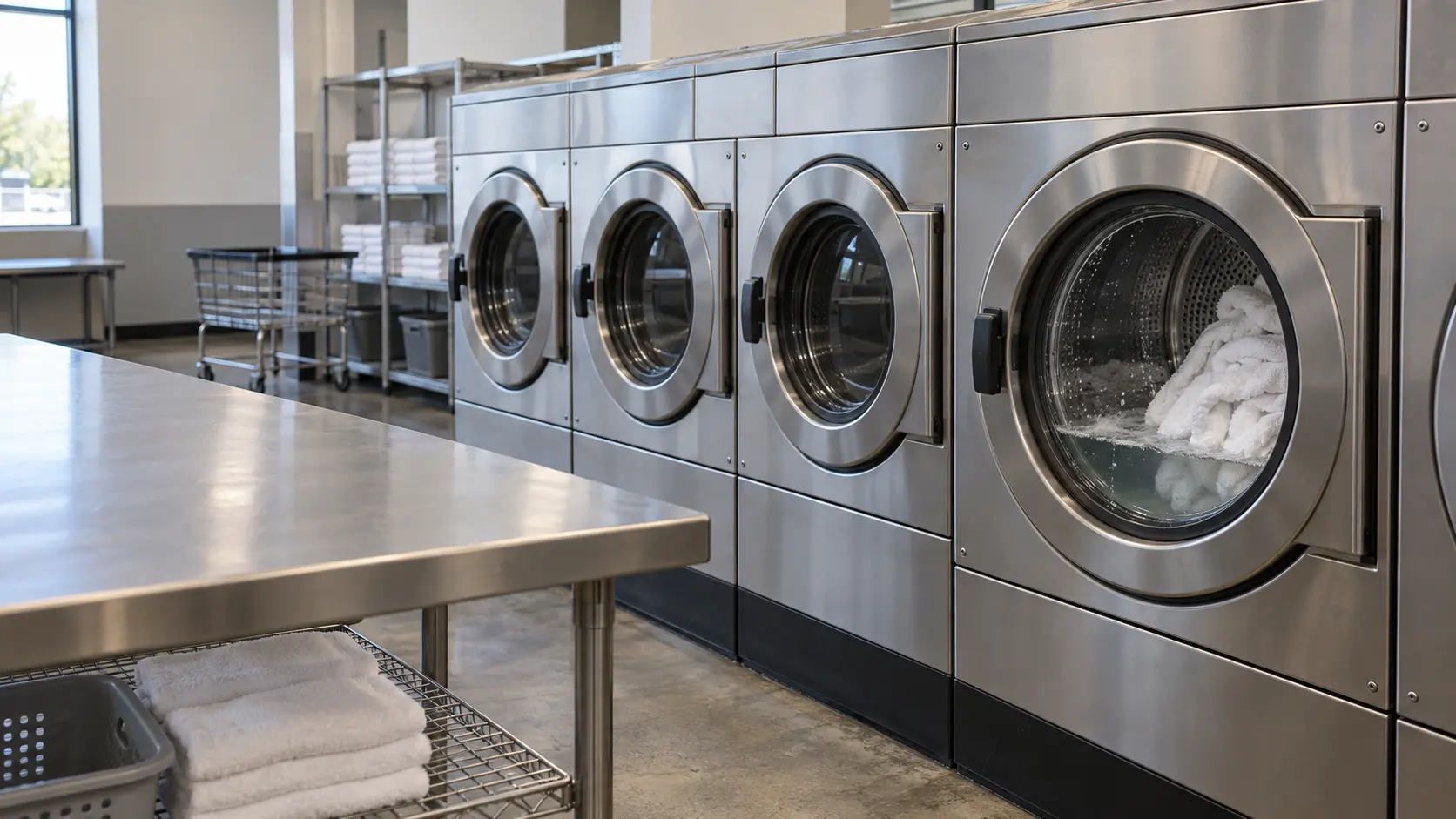
Commercial Laundry Machine Not Spinning: Loads Left Soaking Wet
6 causes, cheapest first

Commercial Laundry Tumbler Not Heating: Loads Still Damp After a Full Cycle
6 causes, cheapest first
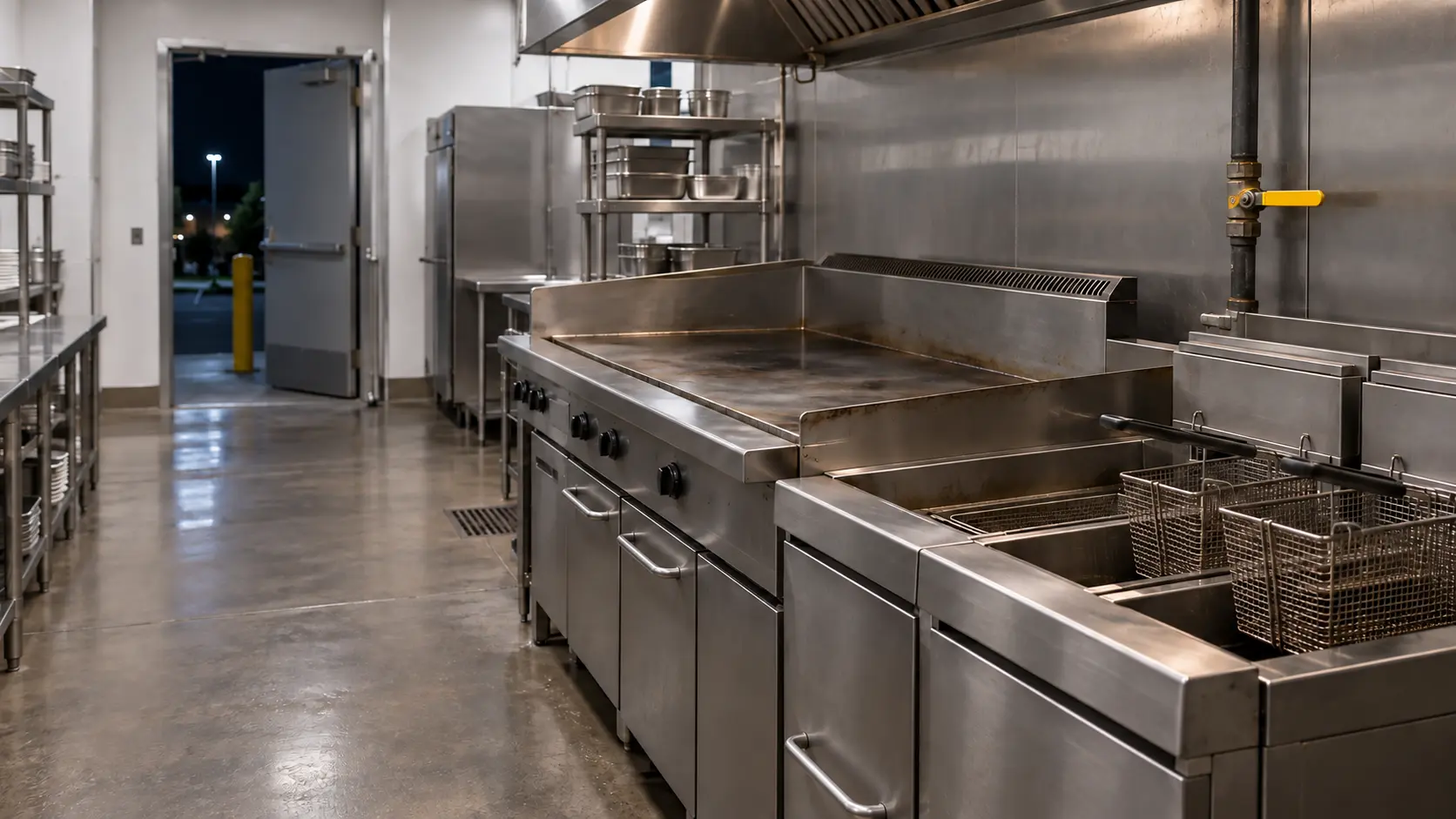
Commercial Kitchen Gas Smell Along the Cooking Line: Clear the Room First
6 causes, cheapest first
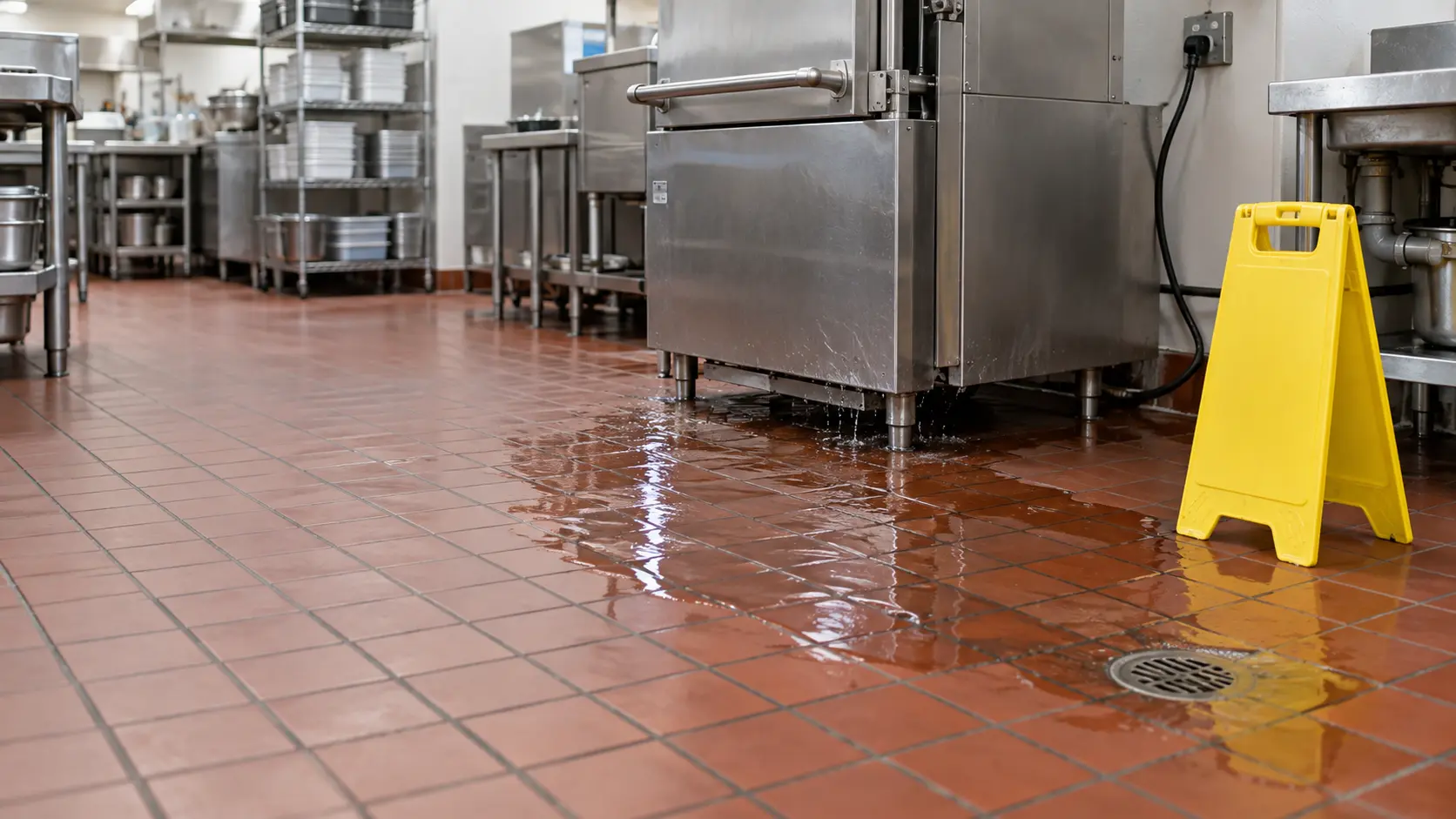
Water on the Commercial Kitchen Floor Near Equipment and Outlets
6 causes, cheapest first

Restaurant Equipment Burning Smell: Scorched Oil, Hot Wiring or Lint
6 causes, cheapest first

Commercial Appliance Error Code on a Combi, Fryer, Dish Machine or Laundry Display
8 causes, cheapest first
Who builds
a laundry equipment.
5 of the makes on this site build a commercial laundry machine. Each mark opens that make's own page.
All 35 brandsCommercial laundry equipment repair,
where we come out.
9 metros, each with its own page.
All service areasTampa BayFL · 31 areas
Miami / South FloridaFL · 47 areas
New York MetroNY · 75 areas
HoustonTX · 36 areas
ChicagoIL · 50 areas
Los AngelesCA · 95 areas
San DiegoCA · 31 areas

Questions about
commercial laundry machines.
Why does a coin laundry machine take payment but not start?
How often should the exhaust run from commercial tumblers be cleaned?
What is the difference between a hard-mount and a soft-mount extractor?
Back to your everyday
Is it a commercial laundry machine?
Say so when you book — it changes what the technician brings and how the visit is planned.