
Commercial Kitchen Gas Smell Along the Cooking Line: Clear the Room First
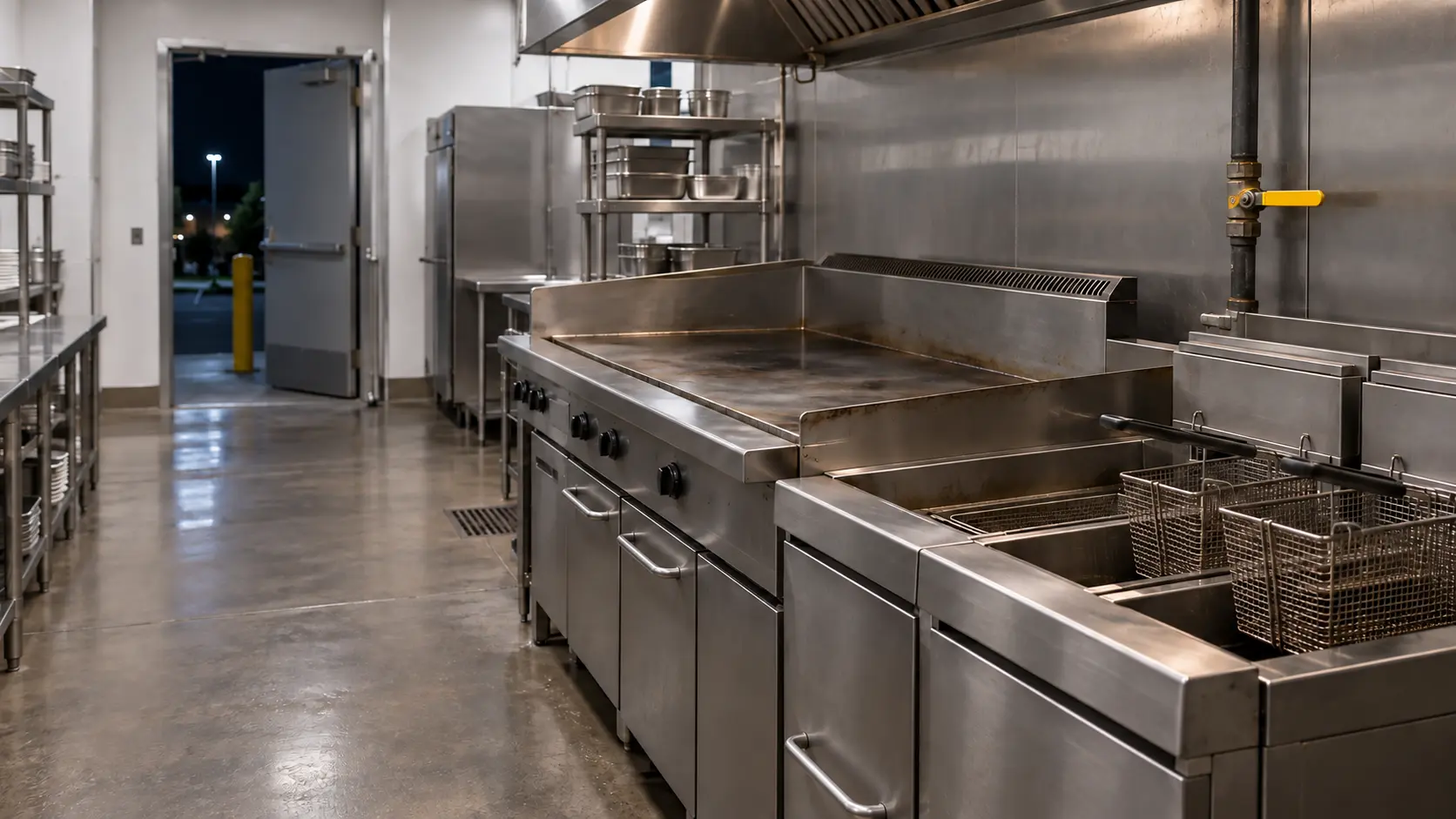
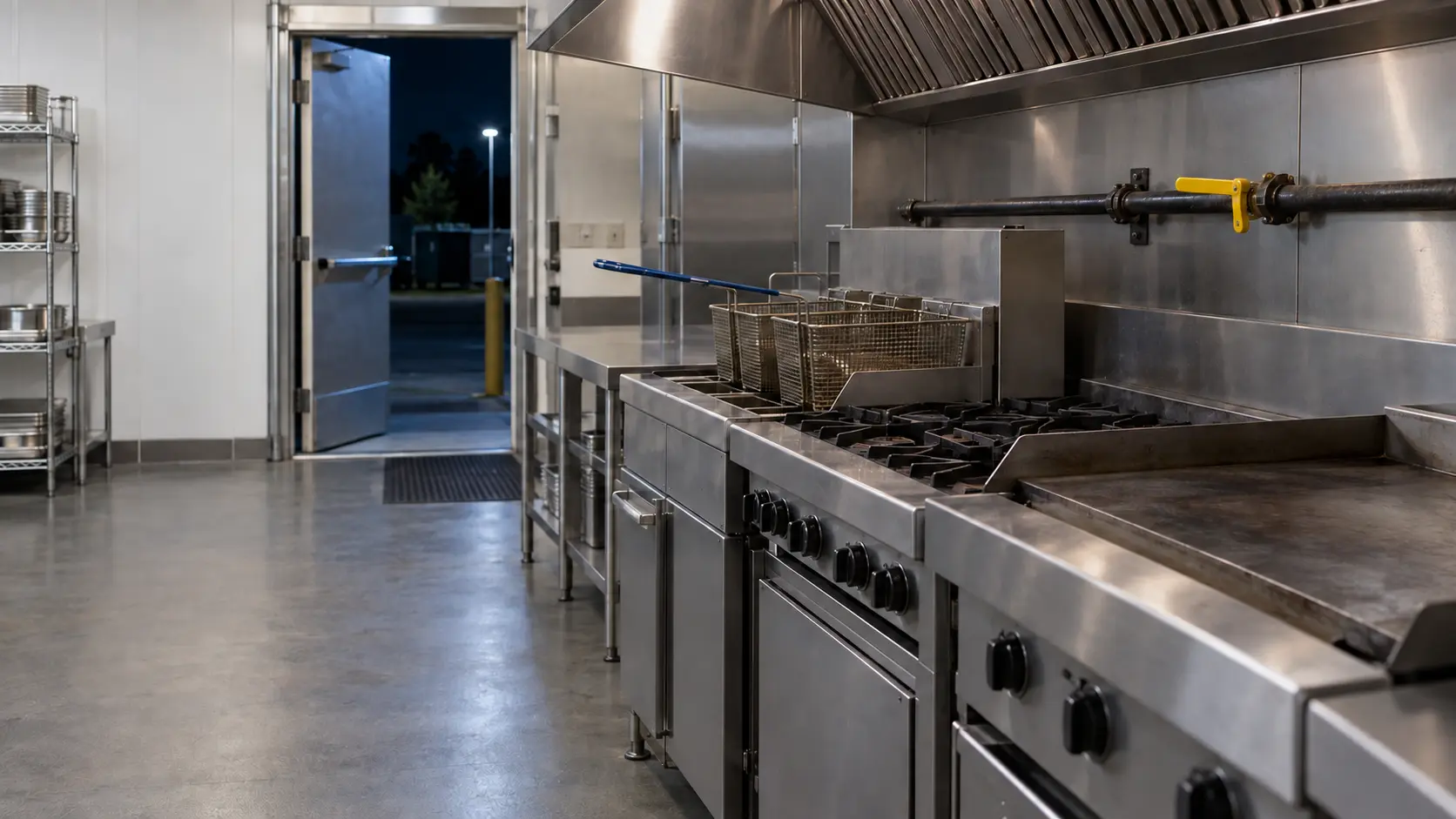
A commercial kitchen gas smell is the rotten-egg odor added to natural gas and propane, picked up behind a fryer bank, at a griddle's quick-disconnect, near a charbroiler or around a gas combi or steamer.
Mon–Sat, 8am–8pm
- Gas, fire, food at risk or water near power
- 5 questions that narrow it
- 6 causes, cheapest first
Book a visit
Three short steps, about a minute.
or call (844) 571-4566
Loading appointment form…
The appointment form couldn’t load. Please try again.
Gas or fire? Everyone out first. Food at risk? Move it
Gas on a cooking line is a same-hour matter. Gas off at the appliance or the main, no flame or switches, doors open, people out, and the utility or 911 called from outside while the odor lasts. The line stays unlit until the supply, the connectors and the valves have been checked.
What it
usually means.
A restaurant line on gas is a chain of shared parts: the building main, a manifold or a pipe run along the back wall, a flexible connector with a quick-disconnect at every appliance, and inside each one a safety valve that stays open only while a pilot or a burner flame is proven. The odorant is there so that a leak anywhere on that chain is noticed early. Kitchens make leaks easy to miss: the hood roars, the fryers smell of oil, and a morning crew walks into a room that sat closed all night. The usual sources are ordinary ones. A burner knob opened that never lit, a pilot that went out on a fryer or a griddle, a quick-disconnect not snapped fully home after the line was pulled out for the nightly clean, a connector stretched because nobody reattached the restraint cable, or a valve stem worn loose after years of heat. The order never changes, whatever the equipment: gas off at the appliance valve or at the main, no flame and no switches, doors open, staff and guests out, and a call to the gas utility or 911 from outside if the odor holds. The fittings themselves are left closed and untouched for the technician.
 The 6 causes, cheapest first
Answer these first
Is the odor strongest at one appliance, along the back wall behind the line, or near the main shutoff?
Was the line rolled out for cleaning last night, or a unit moved or swapped this week?
Did someone turn a burner on that never showed a flame, or has a pilot gone dark?
Does the kitchen run on natural gas from the street or on propane from tanks outside?
With the appliance valve or the main closed and the doors open, does the air clear within minutes?
Check these
before you book.
Commercial kitchen gas smell: 5 checks, and none of them costs anything.
Close the gas at the appliance valve or at the building main, but only if you can get there without standing in the smell.
Strike no flame and leave every switch alone: lights, the hood fan control, igniter buttons, plugs and phones near the line.
Open the doors and walk staff and guests out; if the odor remains with the gas closed, call the gas utility or 911 from outside.
Also worth checking
- Keep the line cold until a technician clears it, even the units that seem fine, because they share one supply.
- Never hunt for the leak with a lighter or loosen a fitting, a connector or a valve; that work is done on a visit with the gas off.
The causes,
cheapest first.
6 things commercial kitchen gas smell along the cooking line: clear the room first turns out to be, from burner knob opened that never caught to seal leaking on a gas combi or steamer burner.
The cost guide-
01 no repair
Burner knob opened that never caught
A cook turns a charbroiler or griddle burner on during a rush and walks off before seeing a flame. Knob off, gas closed, the room aired, and the maker's full wait observed before anyone tries again.
-
02 lowest
Quick-disconnect not seated after the nightly clean
Pulling a fryer or griddle out on its casters means unplugging its gas connector, and a coupling pushed back only halfway can leak. On a visit it is seated properly and every joint to the burner is leak-tested with solution and a detector.
-
03 low to moderate
Connector stretched with no restraint cable
Without its restraint, a unit rolled too far pulls on its hose until the braid or the end fitting gives. The connector is replaced and the cable reattached so the next clean cannot repeat it.
-
04 moderate
Fryer pilot out and its safety valve sticking
Standing-pilot fryers rely on a thermocouple or thermopile to let the safety valve shut when the pilot dies. A valve that hangs open passes gas into a cold burner area under the vat.
-
05 moderate
Manifold cock weeping at its stem
The individual valves on a cooking line manifold dry out under years of heat and start to seep with the handle closed. They are pressure-tested and changed by the technician with the supply shut off.
-
06 moderate to highest
Seal leaking on a gas combi or steamer burner
Gas combis and steamers carry a sealed burner and heat exchanger behind their panels, and a failed gasket or a cracked tube can leak there. The unit stays off until the burner system has been tested on a visit.
What else
it could be.
Most often confused with pilot won't stay lit on a fryer, griddle or steamer on the line, then commercial fryer fire or grease flare under the hood.
All problems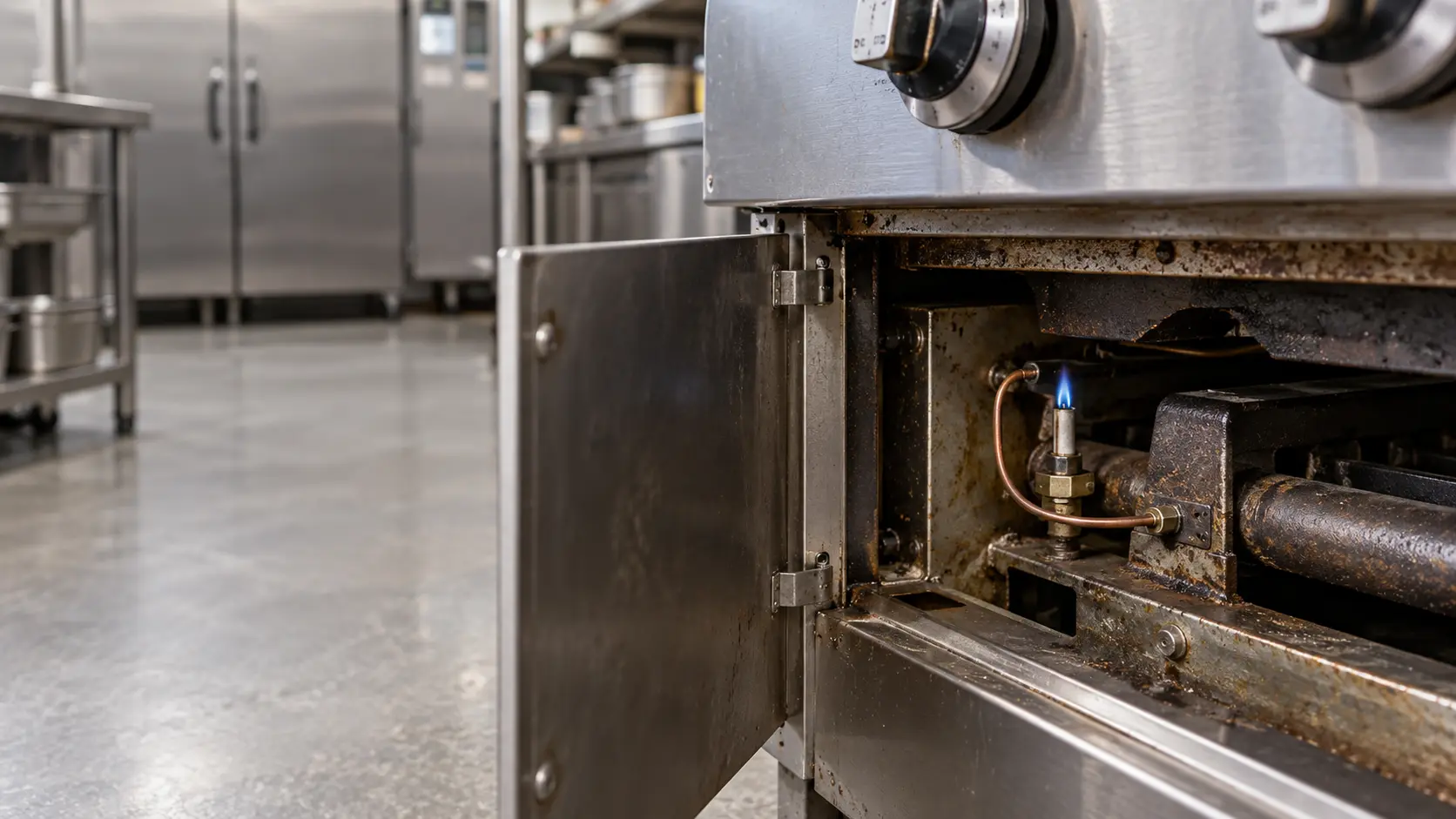

The makes
it happens on.
35 makes on this site; commercial kitchen gas smell along the cooking line: clear the room first can show up on any of them. Each mark opens that make's own page.
All 35 brandsCommercial Kitchen Gas Smell Along the Cooking Line: Clear the Room First,
where we come out.
9 metros, each with its own page.
All service areasTampa BayFL · 31 areas
Miami / South FloridaFL · 47 areas
New York MetroNY · 75 areas
HoustonTX · 36 areas
ChicagoIL · 50 areas
Los AngelesCA · 95 areas
San DiegoCA · 31 areas

Questions about
commercial kitchen gas smell along the cooking line: clear the room first.
The smell is only near one fryer. Can the rest of the line keep cooking?
Should the hood fans be switched off during a gas leak?
Who reconnects the equipment after the gas company has been out?
How can we stop quick-disconnects from leaking after the nightly clean?
Back to your everyday
Still seeing commercial kitchen gas smell along the cooking line: clear the room first?
Book with what you checked above — 5 answers save the technician the first part of the visit.