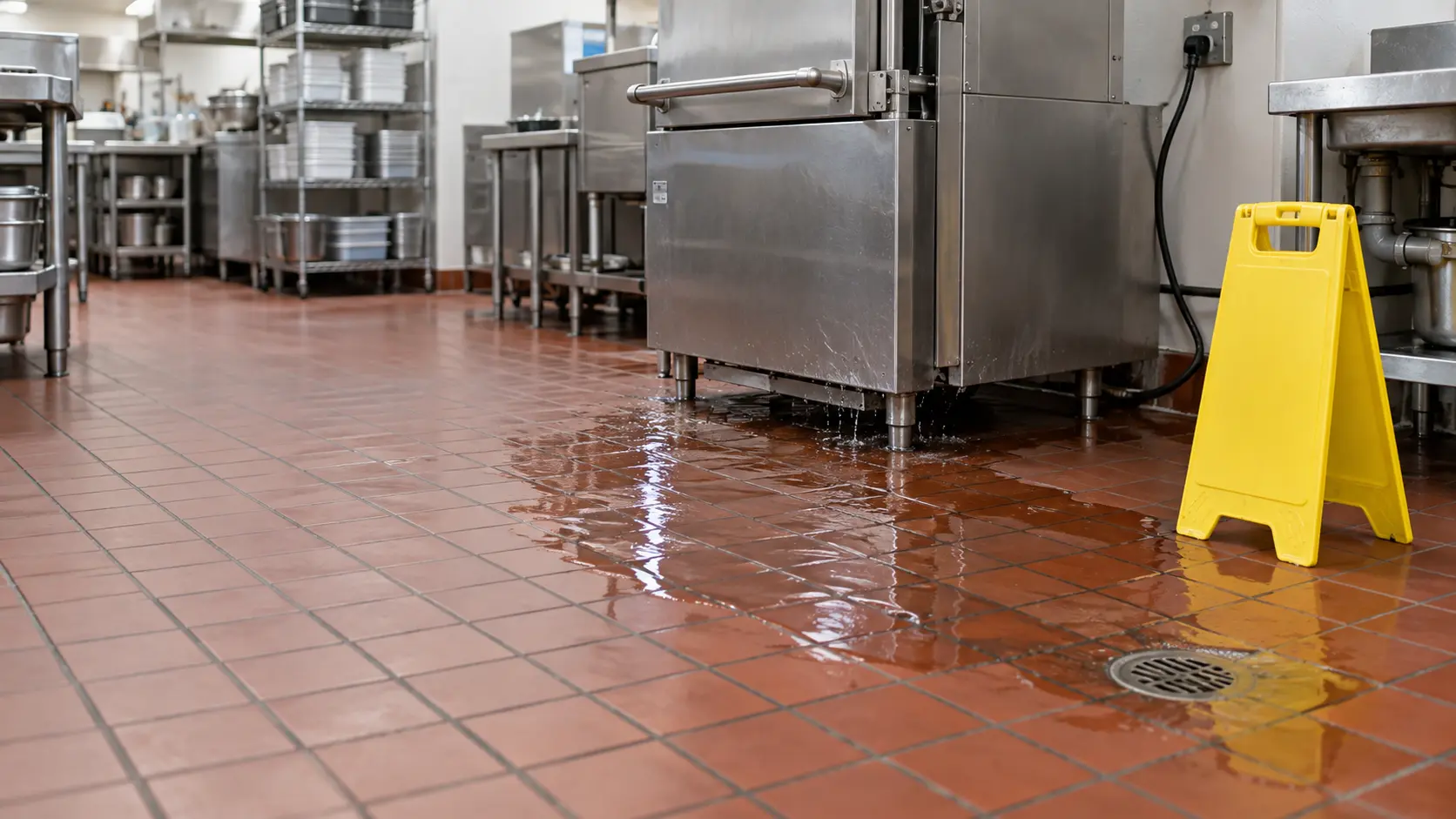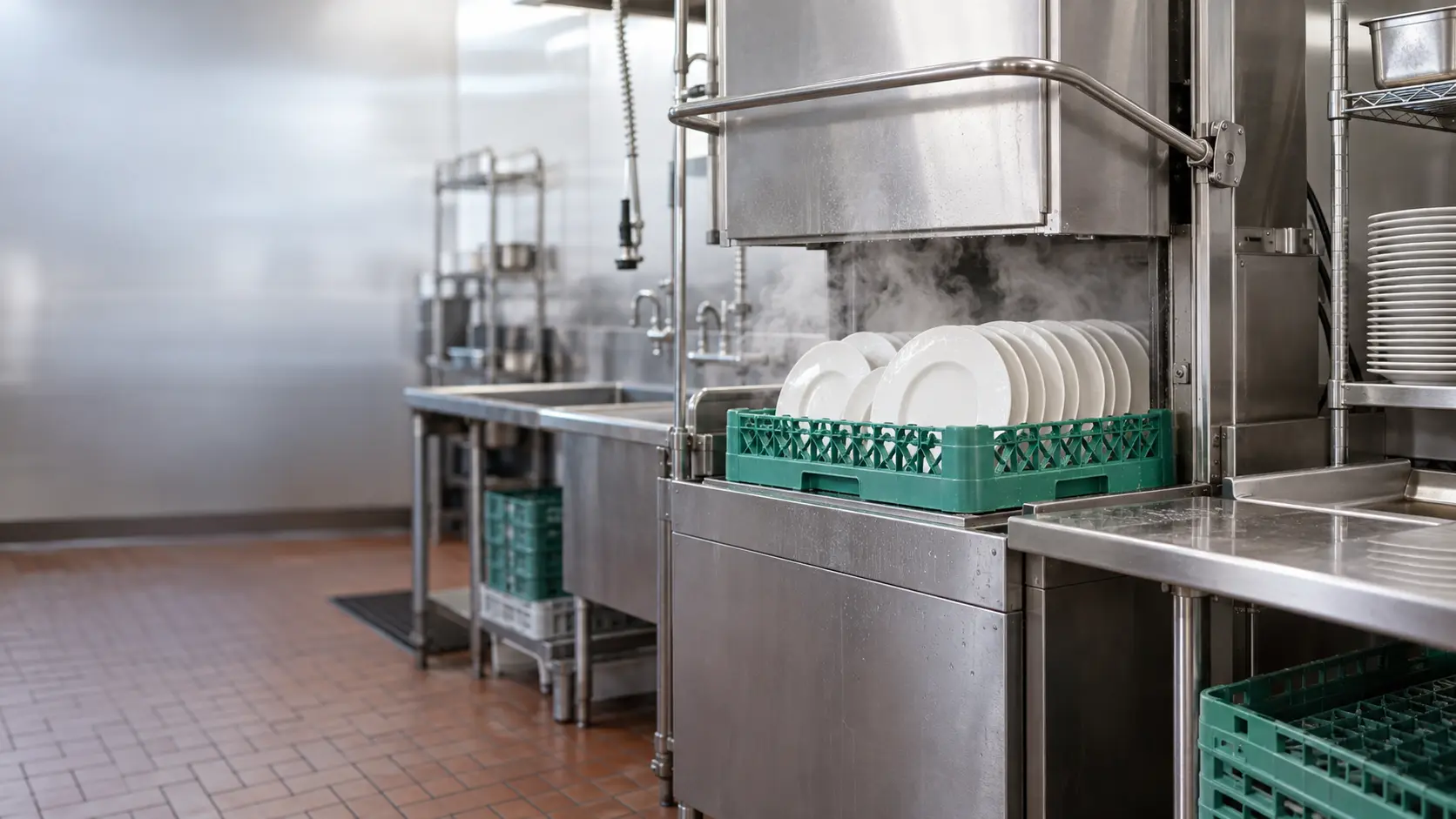
Water spreading across a quarry-tile kitchen floor from under a dish machine.

Start with the symptom

Commercial appliance
problems,
symptom first.

Every symptom we are called out for, traced to the causes that actually explain it — cheapest first. Start from what you are seeing rather than from what you think is broken.

(844) 571-4566

Mon–Sat, 8am–8pm

  • 17 symptoms
  • 5 need a visit now
  • Causes in cost order

Book a visit

Three short steps, about a minute.

or call (844) 571-4566

Needs a visit now

Five problems sit above everything else on this page, because what they threaten is the crew, the guests and the product, not the ticket times. Gas in the air on the cooking line or in the laundry: close the valve at the appliance or the building's main, strike nothing, flip no switch, prop the doors, send everyone outside, and call the gas utility or 911 from there. A fire in a fryer or under the hood: pull the hood suppression system and use the Class K extinguisher the way your staff were shown, never water, and call 911. A walk-in or reach-in reading above 41°F with food inside: move the product to units that are holding, write the times and temperatures in the log, and follow the FDA Food Code and your health department on what must be thrown out. Water spreading toward cords, outlets or a panel: keep people off the wet floor and switch the circuit off from a dry panel. A hot electrical or burning smell: breaker off, cover left closed. In every one of the five, gas fittings, refrigerant lines and live wiring wait for a technician.

Gas, fire, food at risk or water near power

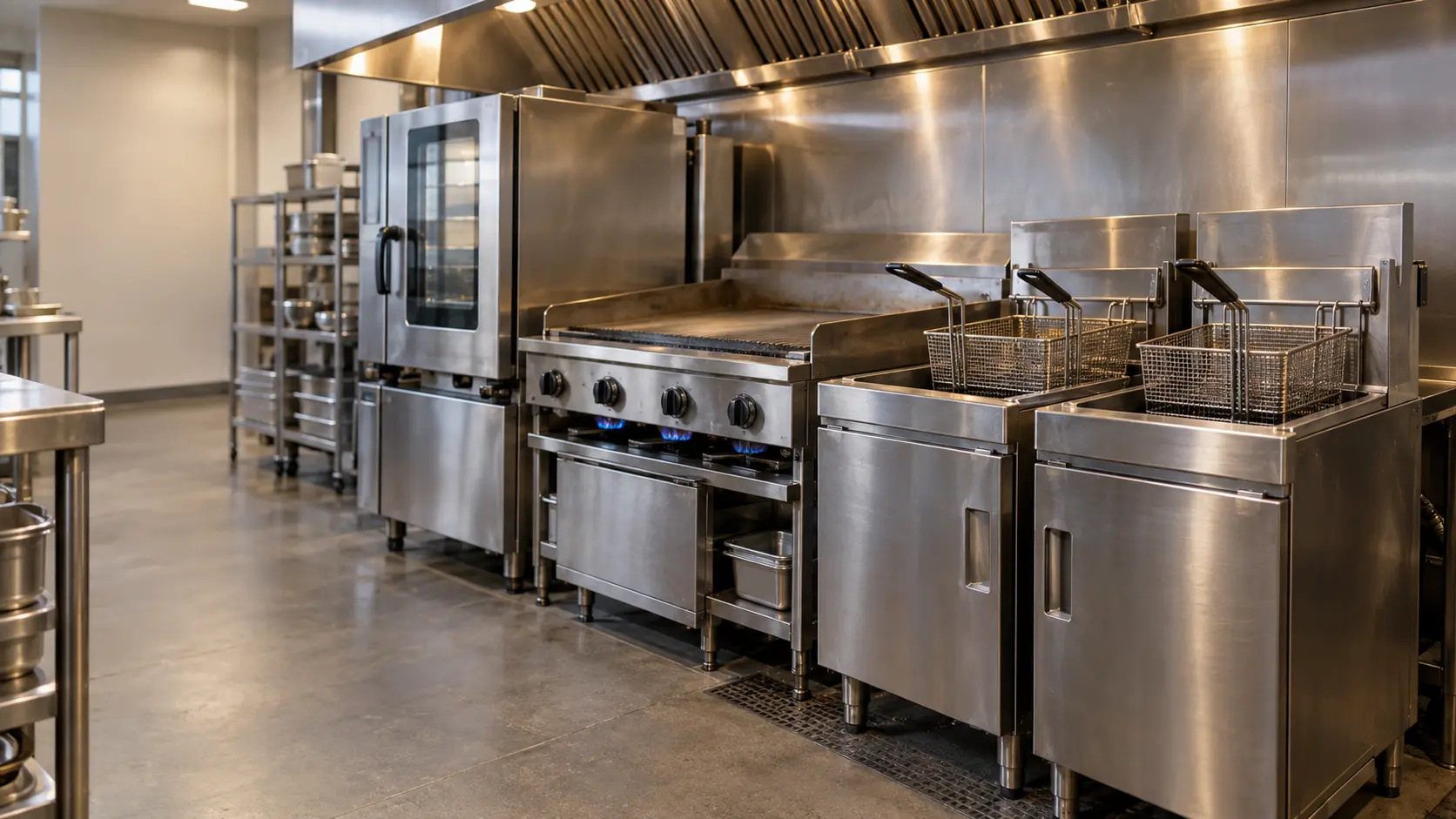
Commercial Kitchen Gas Smell Along the Cooking Line: Clear the Room First

A commercial kitchen gas smell is the rotten-egg odor added to natural gas and propane, picked up behind a fryer bank, at a griddle's quick-disconnect, near a charbroiler or around a gas combi or steamer.

Causes, cheapest first

  1. Burner knob opened that never caughtno repair
  2. Quick-disconnect not seated after the nightly cleanlowest
  3. Connector stretched with no restraint cablelow to moderate
All 6 causes and what to check
Gas, fire, food at risk or water near power

Commercial Fryer Fire or Grease Flare Under the Hood

A commercial fryer fire is burning oil in or around the vat, a flare that climbs into the hood filters, or a blaze that sets off the kitchen's automatic suppression system over the frying station.

Causes, cheapest first

  1. Oil kept in service past its lifeno repair
  2. Oil level left below the fill lineno repair
  3. Charred breading in the cold zone and filterslow
All 6 causes and what to check
Gas, fire, food at risk or water near power

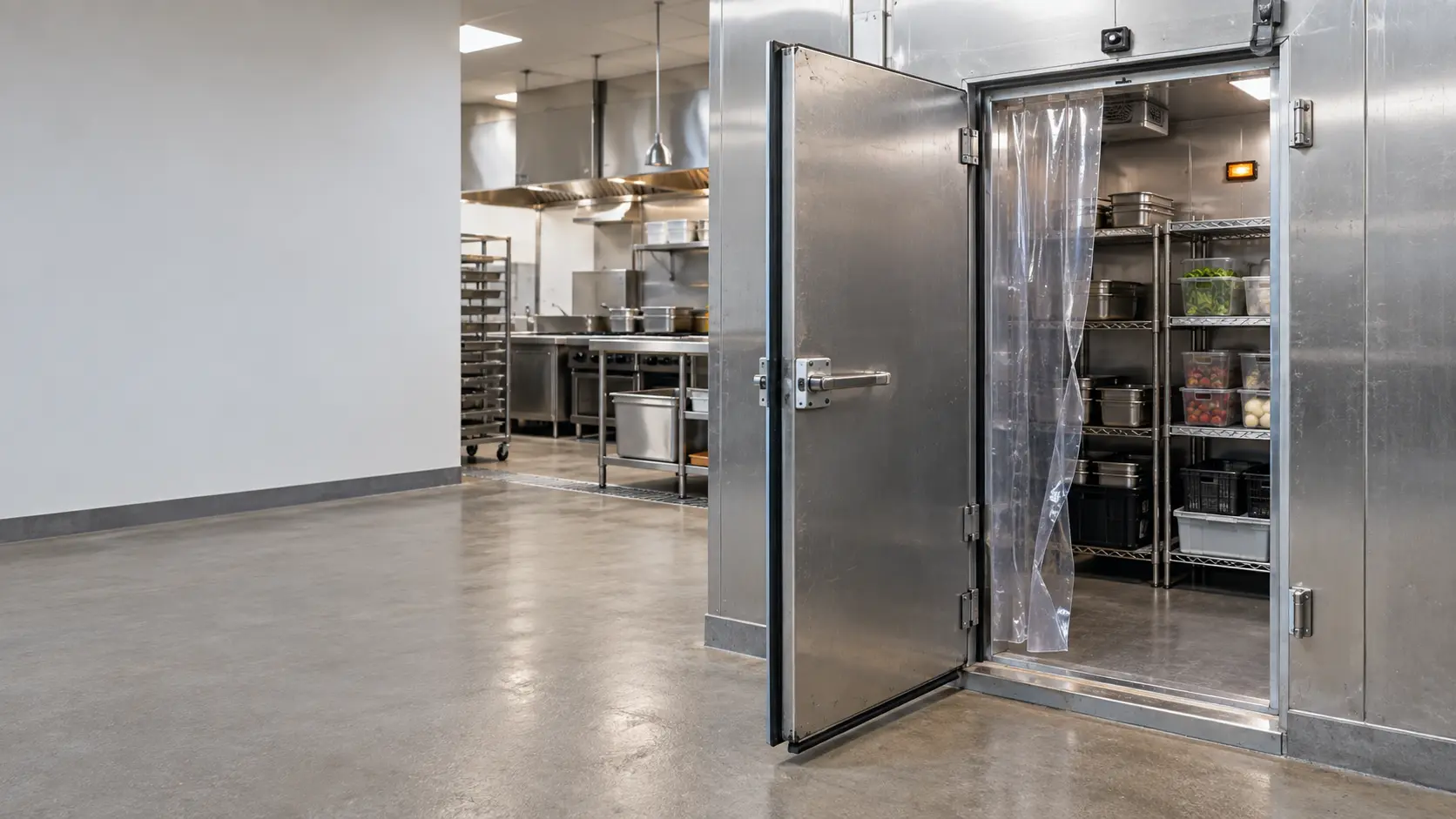
Walk-In Cooler Warm Above 41°F With Food Inside

A walk-in cooler warm above 41°F means the box air or the product probe reads over the cold-holding limit, the evaporator fans blow soft air, or the log shows the temperature creeping up since the last check.

Causes, cheapest first

  1. Door propped open during a deliveryno repair
  2. Strip curtain removed or tied backlowest
  3. Rooftop condenser clogged with grease and debrislow
All 6 causes and what to check
Gas, fire, food at risk or water near power

Water on the Commercial Kitchen Floor Near Equipment and Outlets

Water on commercial kitchen floor tiles near equipment is a spreading puddle under a dish machine, a reach-in, a combi or a walk-in door, or water running toward outlets, cords and machines plugged in close by.

Causes, cheapest first

  1. Standing water left after the nightly hose-downno repair
  2. Reach-in condensate pan overflowinglow
  3. Walk-in evaporator drain line frozen or pluggedlow to moderate
All 6 causes and what to check
Gas, fire, food at risk or water near power

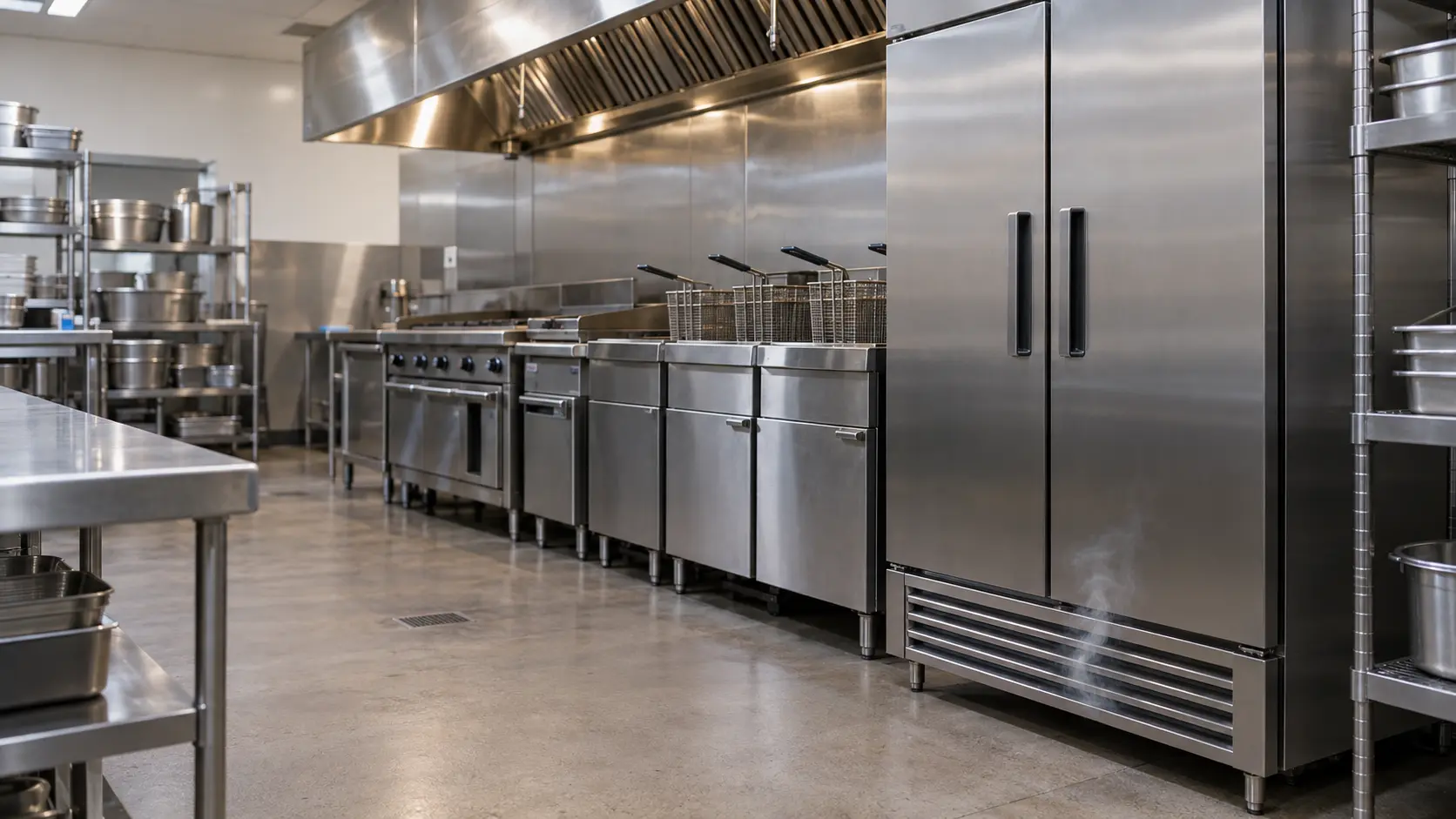
Restaurant Equipment Burning Smell: Scorched Oil, Hot Wiring or Lint

A restaurant equipment burning smell is hot plastic, scorched wiring, a sharp electrical odor or burning lint coming from a reach-in, a fryer, a dish machine booster, a combi or a laundry tumbler.

Causes, cheapest first

  1. Food or a spill scorching on a hot surfaceno repair
  2. Grease or lint packed around a motorlow
  3. Reach-in condenser fan motor overheatinglow to moderate
All 6 causes and what to check

Everything else we are called out for

Nothing else on this list puts a person or a pan of food at risk. A combi may take longer to reach steam than it did at opening, a dish machine may need a second pass on sheet pans, a prep table may run a degree warm during the lunch push, a tumbler may leave towels damp at the seams, or a pilot may need relighting after a delivery door stood open, and each of those can wait for a scheduled visit. Every page lists what a manager can check with the unit off, the gas closed and the breaker down before anyone is sent.

Reach-In Cooler Not Holding Temperature Through a Shift

A reach-in cooler not holding temperature starts the morning at 38°F and ends the lunch rush above 41°F, reads warmer on the top shelf, or never fully recovers after a heavy door-opening period.
6 causes

Walk-In Freezer Icing Up on the Coil, Floor and Door Frame

A walk-in freezer icing up shows as a white block on the evaporator coil, frost on the ceiling and boxes, an icy ridge on the floor inside the door, or a door frozen to its frame.
6 causes

Prep Table Running Warm in the Top Rail and the Base

A prep table running warm lets the sliced tomatoes, cut greens and deli meats in its top rail read above 41°F by mid-shift, while the base below holds or drifts up with it.
6 causes

Commercial Fryer Not Heating or Slow to Recover Between Baskets

A commercial fryer not heating stays cold after it is switched on, heats but never reaches its set point, or drops so far after each basket that fries come out pale and greasy during the rush.
6 causes

Commercial Convection Oven Baking Unevenly Across the Racks

A commercial convection oven uneven baking pattern shows as sheet pans browned dark at the back and pale at the door, one rack done early, or cookies spreading one way on the tray.
6 causes

Combi Oven Steam Problem: Weak Steam, Scale or a Dry Cavity

A combi oven steam problem shows as a dry cavity in steam mode, vegetables that come out underdone, a delime prompt that keeps returning, scale around the generator, or water where it should not be.
6 causes

Dish Machine Not Reaching Temperature on the Wash or Final Rinse

A dish machine not reaching temperature shows a wash or final rinse gauge below its mark, fails a thermolabel test, leaves plates greasy, or makes the inspector note a sanitizing problem.
6 causes

Dish Machine Not Draining: Dirty Water Left in the Tank

A dish machine not draining holds gray, greasy water in its tank at the end of a cycle or the shift, overflows onto the floor, or leaves a film on glassware that should come out clear.
6 causes

Commercial Laundry Machine Not Spinning: Loads Left Soaking Wet

A commercial laundry machine not spinning ends its cycle with towels dripping wet, stops partway with water still in the drum, or tries to spin, shakes, and gives up.
6 causes

Commercial Laundry Tumbler Not Heating: Loads Still Damp After a Full Cycle

A commercial laundry tumbler not heating runs and turns but blows cool air, leaves loads damp after a full cycle, or takes two cycles to finish what used to take one.
6 causes

Pilot Won't Stay Lit on a Fryer, Griddle or Steamer on the Line

A commercial kitchen pilot won't stay lit when a fryer, griddle, charbroiler or steamer pilot lights and then dies as the knob is released, or burns for a while and goes out during service.
6 causes

Commercial Appliance Error Code on a Combi, Fryer, Dish Machine or Laundry Display

A commercial appliance error code appears as letters or numbers on a combi, fryer, reach-in controller, dish machine or laundry machine display, or as a flashing light or an alarm tone.
8 causes

Not every commercial appliance
breaks the same way.

Commercial cold storage keeps product at safe holding in reach-ins, prep tables and walk-in boxes; commercial cooking equipment covers fryers, griddles, charbroilers, convection and combi ovens, steamers and holding cabinets; dish machines wash and sanitize racks at set temperatures in a door-type, undercounter or conveyor frame; and commercial laundry equipment means washer-extractors and tumblers, from a laundromat's coin row to a hotel's on-premise laundry. Which group is the unit that stopped?

All commercial appliance types

Familiar brands. Expert care.

For the brands
in your back of house.

Independent repair service. Not affiliated with, authorized or endorsed by any manufacturer. Brand names and model numbers are the property of their respective owners and are used here for identification only, to describe the appliances we service.

The repairs behind the symptoms

Most people arrive knowing what they are seeing, not what is wrong. These are the jobs a visit usually turns out to be.

diagnostic

Commercial appliance diagnostic visit

One visit finding why a cooler, fryer, oven, dish machine or laundry machine stopped earning its keep.

moderate to highest

Walk-in cooler repair

Walk-in coolers and freezers back to temperature: evaporators, fans, defrost, drain heaters, condensing units and doors.

moderate

Reach-in and prep table repair

Reach-ins, pass-throughs, prep tables and blast chillers: gaskets, hinges, fans, thermostats, condensers and compressors.

low to moderate

Commercial fryer repair

Gas and electric fryers back on the line: pilots, ignition, thermostats, high-limits, elements and filter pumps.

moderate to highest

Commercial oven and combi oven repair

Convection, combi and rapid-cook ovens, steamers and kettles: blowers, steam generators, probes, igniters and controllers.

low to moderate

Commercial cooking line gas repair

Griddles, charbroilers, restaurant ranges and hot tops: pilots, burners, orifices, valves and hoses, leak-checked after.

moderate

Dish machine repair

Undercounter, door-type and conveyor dish machines: tank heaters, boosters, wash pumps, fill and drain valves.

moderate

Commercial laundry machine repair

Coin, card and on-premise laundry machines and tumblers: door locks, bearings, inverters, burners and payment hardware.

moderate

Commercial controls and board repair

Controllers, touch panels, relays, contactors and interlocks tested, and replaced only when the evidence says so.

lowest

Commercial preventive maintenance plan

Scheduled visits across cold, cooking, warewashing and laundry: coils, gaskets, calibration, gas checks and a written log.

A restaurant team working a busy commercial kitchen line.
For the heart of your home.

Questions about
the problems.

The trouble on our unit is not listed. Can we still book?
Yes. The list follows what operators call about most often, and anything else is welcome. Describe what the crew saw, heard or smelled in the notes, and the technician starts from there.
The prep table runs warm and the walk-in iced up the same week. Which page first?
Open the page for whichever the crew noticed first. Two cold units failing together often share a cause, such as a hot, airless kitchen, a heat wave loading every condensing unit, or dirty coils, and each page links its related problems at the bottom.
Which commercial equipment problems need a visit today?
Five: a gas smell on the line, a fryer or grease fire, a walk-in or reach-in above 41°F with food inside, water on the floor near power, and a hot electrical or burning smell. Those pages carry a flag; a slow combi, a damp load or a griddle with a cool corner can wait for the booked day.
The walk-in sat warm for a few hours. What has to be thrown out?
The FDA Food Code sets the rule for cold holding at 41°F or below, and your local health department decides how it is applied. Record the temperatures and times, move product to units that hold, and discard what the time and temperature rules call for; when in doubt, call the health department before serving it.

Back to your everyday

Let’s get your commercial appliance working again.

Three short steps online, or one call. Tell us what you are seeing and pick a window that works.

(844) 571-4566 Schedule a repair