

Dish Machine Repair
Undercounter, door-type and conveyor dish machines: tank heaters, boosters, wash pumps, fill and drain valves.
Mon–Sat, 8am–8pm
- Moderate cost band
- 5 steps on the visit
- 5 problems it answers
Book a visit
Three short steps, about a minute.
or call (844) 571-4566
Loading appointment form…
The appointment form couldn’t load. Please try again.
What the dish machine repair
involves.
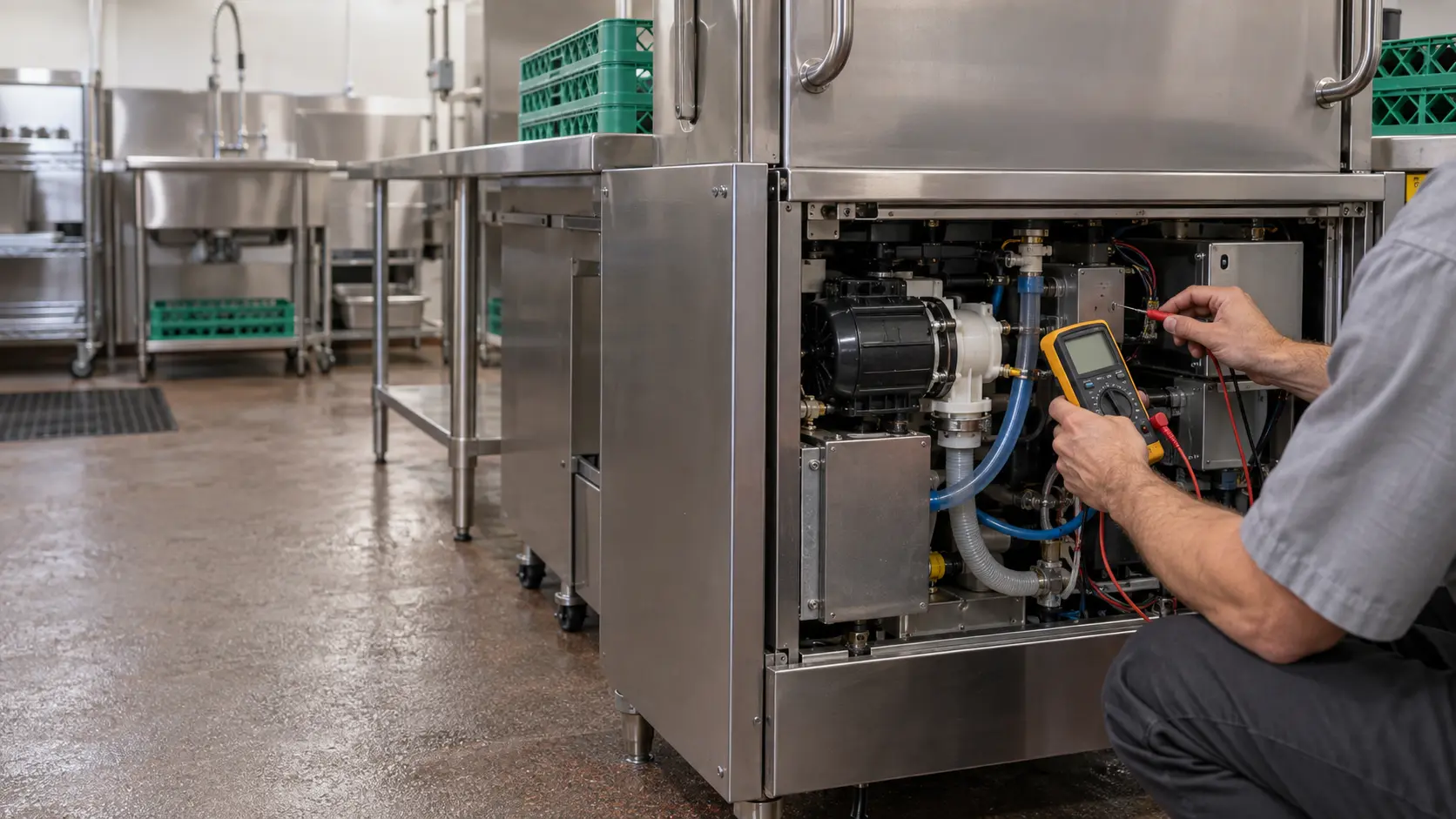
A dish machine has one job an inspector can measure: wash clean and sanitize every rack, by heat on a high-temperature machine or by chemistry on a low-temperature one. Repair starts with those numbers. The technician runs a rack and reads the wash tank temperature, the final rinse at the manifold and the surface temperature of the dishes, or the sanitizer concentration on a low-temp machine, then works back from whichever falls short. On the heat side that means tank heaters, the booster heater and its elements, thermostats, contactors and low-water cutoffs, and the scale that coats all of them. On the water side it means the fill solenoid, the rinse arms and jets, the float switches that tell the controller the tank is full, the drain valve, and the wash pump and its seal. Conveyor machines add the drive motor, the conveyor chain or pawl bar, the curtains and the door interlocks. The machine's controller and its codes are read wherever the maker provides them. Chemical dosing pumps often belong to the chemical supplier, and the finding says plainly when the trouble sits there. After a repair, the machine runs a full cycle and the temperatures are written down so your log shows the machine back within its data plate figures.
How the visit goesWhat it usually costsModerate · Dish machine tank heater or booster element, thermostat, fill valve, float switch, drain valve, wash pump seal or motor, conveyor drive
A fill valve, a float switch or a drain valve is the small end. A tank heater, a booster element or a pump seal is a step up, and a wash pump motor, a booster tank or a conveyor drive on a long machine is the top of the band.
Answers 5 problemsDish Machine Not Reaching Temperature on the Wash or Final Rinse
Dish Machine Not Draining: Dirty Water Left in the Tank · Water on the Commercial Kitchen Floor Near Equipment and Outlets · Restaurant Equipment Burning Smell: Scorched Oil, Hot Wiring or Lint · Commercial Appliance Error Code on a Combi, Fryer, Dish Machine or Laundry Display
Comes up most onCommercial dish machines
Codes that lead hereE01 · E34 · E57 · E105
Alto-Shaam E01: the roll-in combi's steam generator is low on water.
Dish machine repair,
step by step.
Replace the failed part, run a full cycle, and write the temperatures down for your log and the next inspection.
Run a rack and read the wash, final rinse and dish surface temperatures, or the sanitizer strength on a low-temp machine.
Test tank heaters, the booster, thermostats, contactors and low-water cutoffs, and check them for scale.
Check the fill valve, floats, rinse and wash arms, the wash pump and seal, and the drain valve.
On conveyor machines, check the drive motor, the chain or pawl bar, curtains and door interlocks, and read the controller.
Replace the failed part, run a full cycle, and write the temperatures down for your log and the next inspection.
The problems
it answers.
5 of them, from dish machine not reaching temperature on the wash or final rinse to commercial appliance error code on a combi, fryer, dish machine or laundry display.
All problems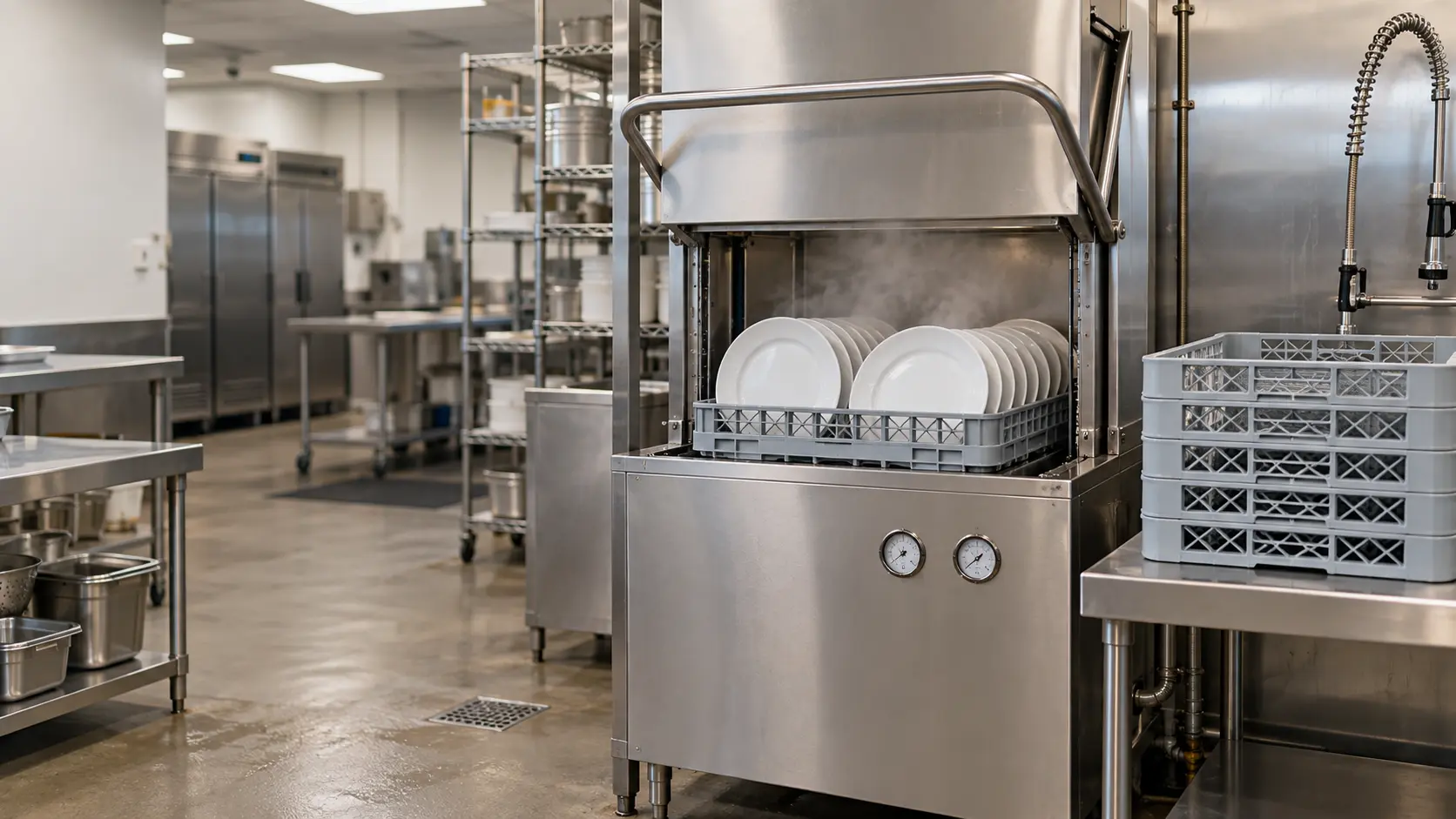
Dish Machine Not Reaching Temperature on the Wash or Final Rinse
6 causes, cheapest first
Before you call
Tell us this when you book
- Whether it is an undercounter, door-type or conveyor machine, and high-temperature or chemical-sanitizing
- The wash and rinse temperatures on the log, and whether the trouble is heat, cleaning, filling, draining or a leak
- Whether a booster heater serves the machine and who supplies and services the chemicals
- The make, model and serial, any code on the display, and when the machine was last delimed
It also answers
- Dish Machine Not Draining: Dirty Water Left in the Tank6 causes
- Water on the Commercial Kitchen Floor Near Equipment and Outlets6 causes · gas, fire, food at risk or water near power
- Restaurant Equipment Burning Smell: Scorched Oil, Hot Wiring or Lint6 causes · gas, fire, food at risk or water near power
- Commercial Appliance Error Code on a Combi, Fryer, Dish Machine or Laundry Display8 causes
Moderate,
on the site's scale.
A fill valve, a float switch or a drain valve is the small end. A tank heater, a booster element or a pump seal is a step up, and a wash pump motor, a booster tank or a conveyor drive on a long machine is the top of the band.
Read the full cost guideWhere it
comes up most.
Most bookings: Commercial dish machines.
All commercial appliance types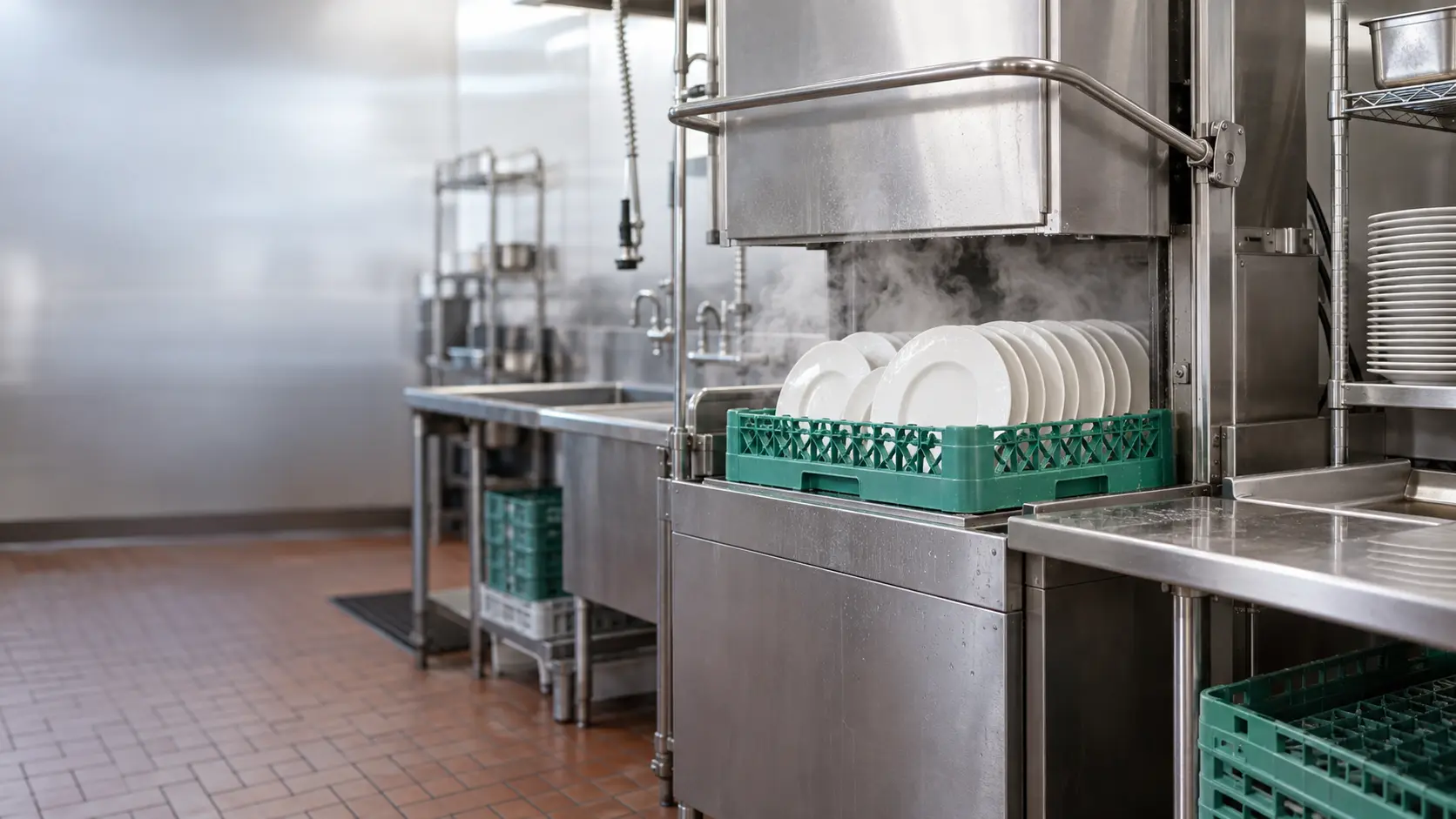
The makes
we see it on.
35 makes on this site, and the dish machine repair on any of them. Each mark opens that make's own page.
All 35 brandsDish machine repair,
where we come out.
The business, the climate and the building all change how the dish machine repair goes. These notes are about that, metro by metro.
All service areasTampa BayFL · 31 areas
Tampa Bay's hard water crusts dish machine heaters and rinse arms with scale, and a machine that stops reaching its final rinse temperature often has a limed booster heater or a plugged rinse nozzle, which the technician clears before the next inspection.
OrlandoFL · 30 areas
Orlando hotel and park-area kitchens push rack after rack through conveyor dish machines from dawn to midnight, and a stalled conveyor or a wash pump that gives out at peak stops the whole kitchen, so repairs there move fast and include a check of the chemical feeds.
Miami / South FloridaFL · 47 areas
South Florida dish machines work in humid dish rooms on hard water, where scale and corrosion build on heaters, pumps and chemical lines, so a repair there often renews a pump seal and descales the tank to bring the wash temperature back.
New York MetroNY · 75 areas
In New York's small basement dish rooms, undercounter and door-type machines drain into floor sinks that clog easily, and a machine that will not drain often has a blocked drain line or pump, cleared by the technician without flooding the room.
HoustonTX · 36 areas
Houston dish rooms turn stifling in summer, and a machine's booster heater, pumps and controls run hot all day, so a repair there checks electrical connections and heater elements along with the wash and rinse temperatures on the gauges.
ChicagoIL · 50 areas
Chicagoland dish machines take in near-freezing water in winter, and a booster heater that barely makes final rinse temperature in January may need a new element or a thermostat adjustment to keep the sanitizing temperature where the code expects it.
Los AngelesCA · 95 areas
Los Angeles dish rooms fight mineral scale in tanks, heaters and rinse arms, and chemical feed pumps clogged with deposits give weak sanitizing, so a repair there cleans and checks both the machine and its chemical lines.
San DiegoCA · 31 areas
San Diego hotel and brewery dish machines run long hours on hard water, and a repair there often includes a descale, a thermometer check of the rinse and confirmation that a low-temperature machine is drawing the right sanitizer strength.
San Francisco Bay AreaCA · 74 areas
Many Bay Area dish machines run on soft municipal water, so their failures lean toward pumps, drains and chemical feeds more than scale, and the technician logs the rinse temperatures after a repair for the kitchen's own records.

Questions about
the dish machine repair.
Our dish machine shows 180°F on the gauge but the heat strips fail. Why?
Can we keep running the dish machine if the rinse is not reaching temperature?
How often should a dish machine be delimed?
Back to your everyday
Ready to book the dish machine repair?
Have these to hand: whether it is an undercounter, door-type or conveyor machine, and high-temperature or chemical-sanitizing, the wash and rinse temperatures on the log, and whether the trouble is heat, cleaning, filling, draining or a leak, whether a booster heater serves the machine and who supplies and services the chemicals, the make, model and serial, any code on the display, and when the machine was last delimed.