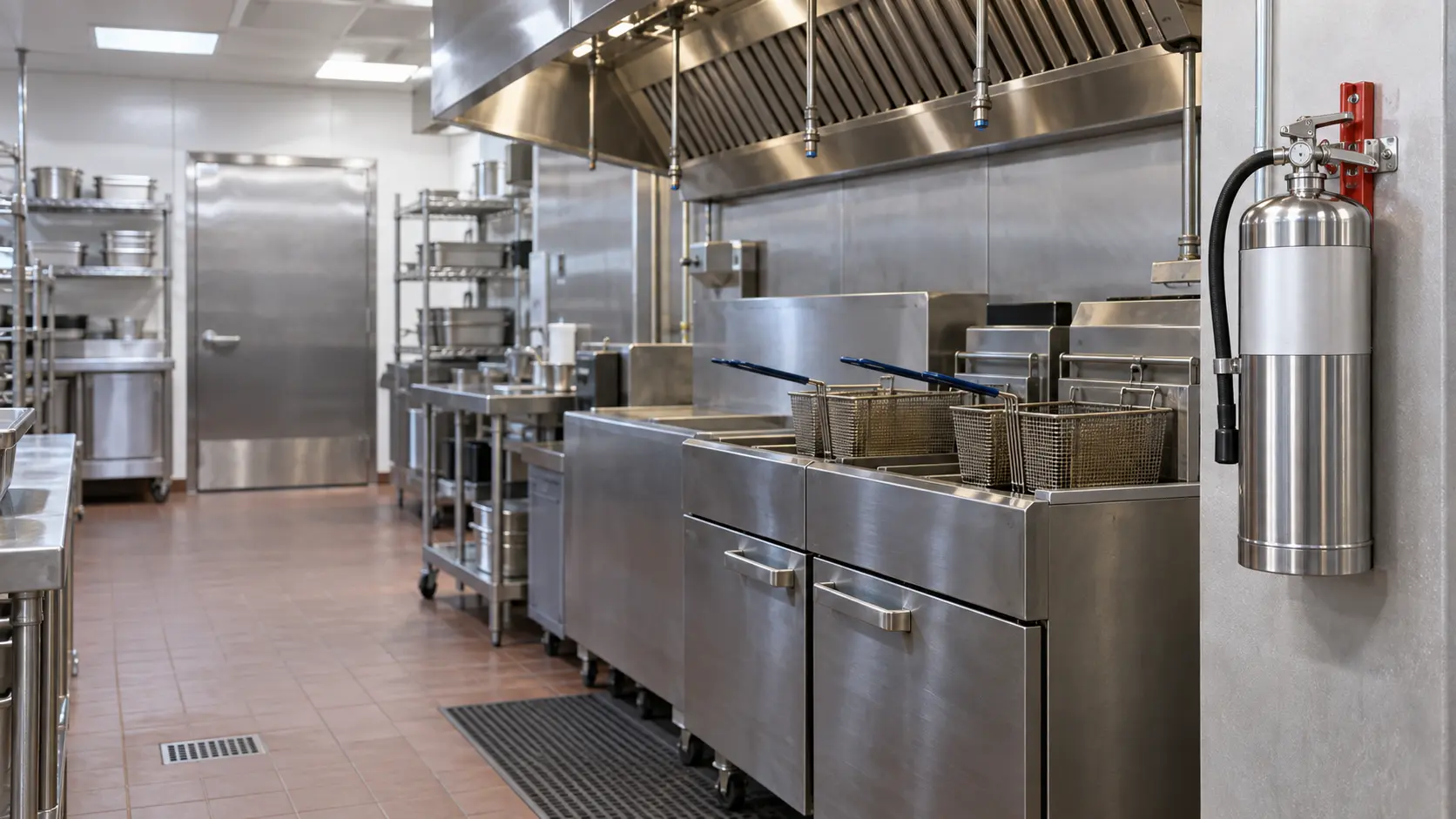

Why a busy kitchen hides a gas leak
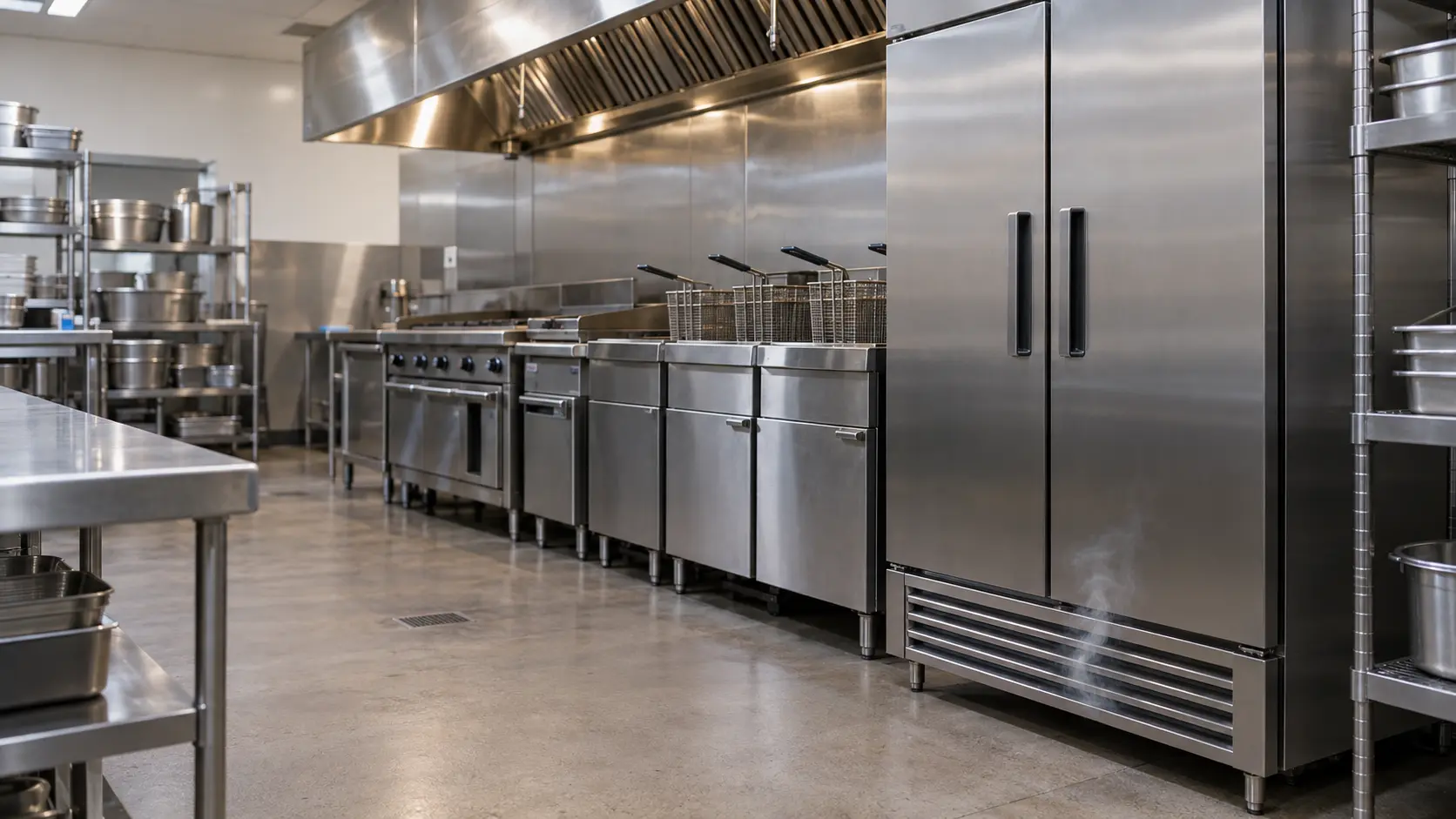
Natural gas and propane carry an added odorant precisely so that people notice them, yet a commercial kitchen works against the nose. The exhaust hood pulls thousands of cubic feet of air past the line, diluting a small leak and carrying it away before anyone at the pass smells it. Fryer oil, charred fat and cleaning chemicals mask what is left, and cooks who have worked the station for hours stop registering background odors altogether.
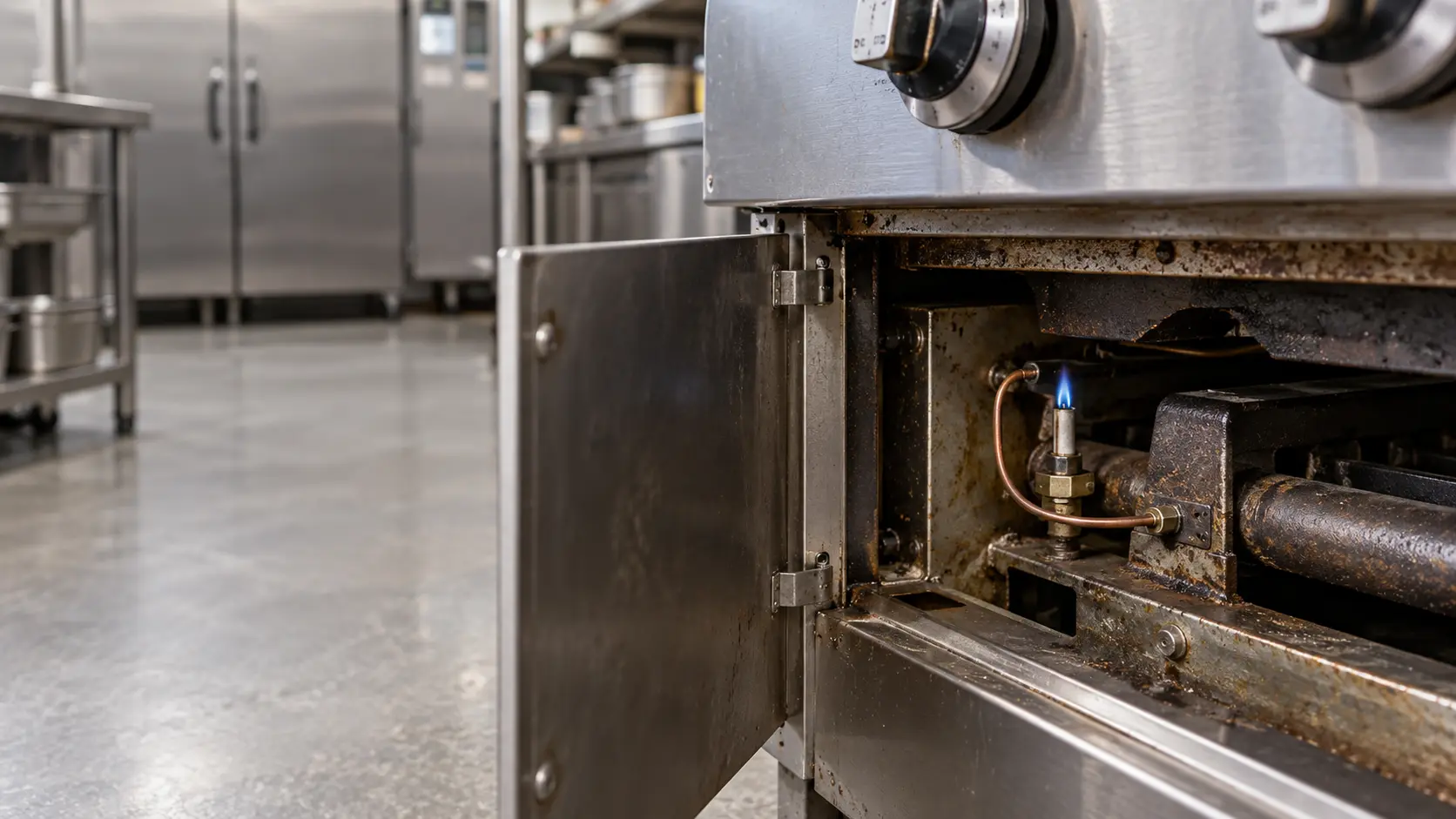
The gas side of the line is also longer than it looks. A pipe or manifold runs behind the equipment, and each fryer, griddle, charbroiler, oven or steamer hangs off it through its own valve, connector and fittings, with pilots and burner valves inside the cabinet. Leaks tend to start where something moves or gets hot: a hose flexed every night when the line rolls out, a coupling not fully seated, a valve stem that has cycled through years of heat.
Opening, rush and close each hide it differently
The opener walks into a room that sat sealed all night with the hood off, so even a slow leak has had hours to build; that first breath inside the door is the most useful moment of the day, and the lights and hood stay off if it smells wrong. During the rush the usual culprit is a burner knob opened on a station that never lit. At close, the risk moves to the equipment that was rolled out for cleaning and pushed back against the wall.
The first two minutes after someone smells gas
The makers print the same core moves in their warnings. Vulcan's gas fryer manual says to shut down units at the main shutoff valve and contact the local gas company or supplier; Southbend adds that the supplier's emergency number should be called immediately. Frymaster's list goes further: shut the gas at the main valve or the bottle, put out every open flame, do not operate any electrical appliance in the area, ventilate, and contact the gas company.
Those manuals were written for one operator standing at one unit. A restaurant has a crew and a dining room, so the order works best when each role is settled before the day it is needed. One person closes the valve if it can be reached without walking through the strongest smell, one clears the guests and staff out through the nearest door, and whoever gets outside first makes the call. Nobody waits for a manager's permission to leave.
Where the main shutoff is, and who knows it
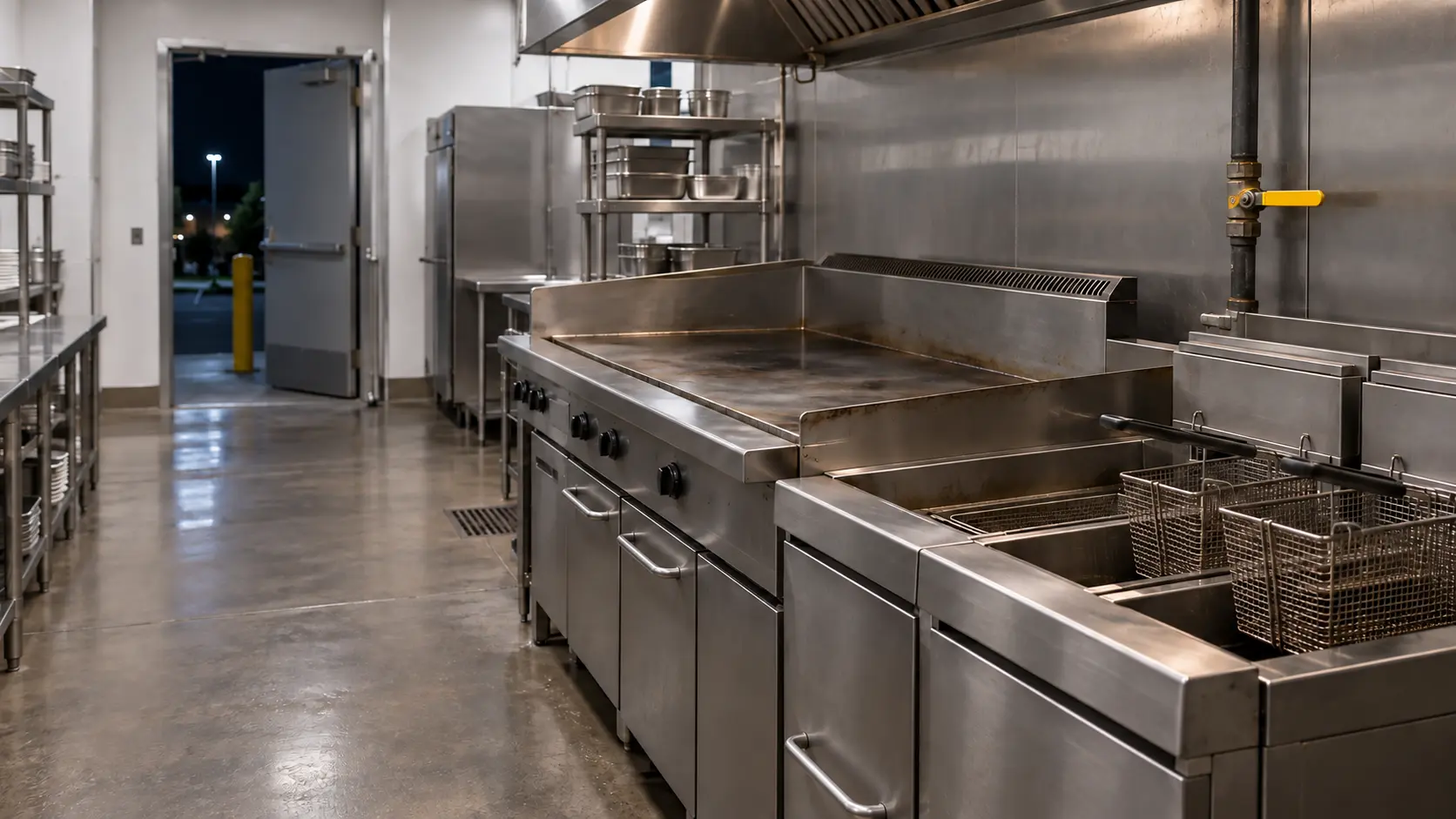
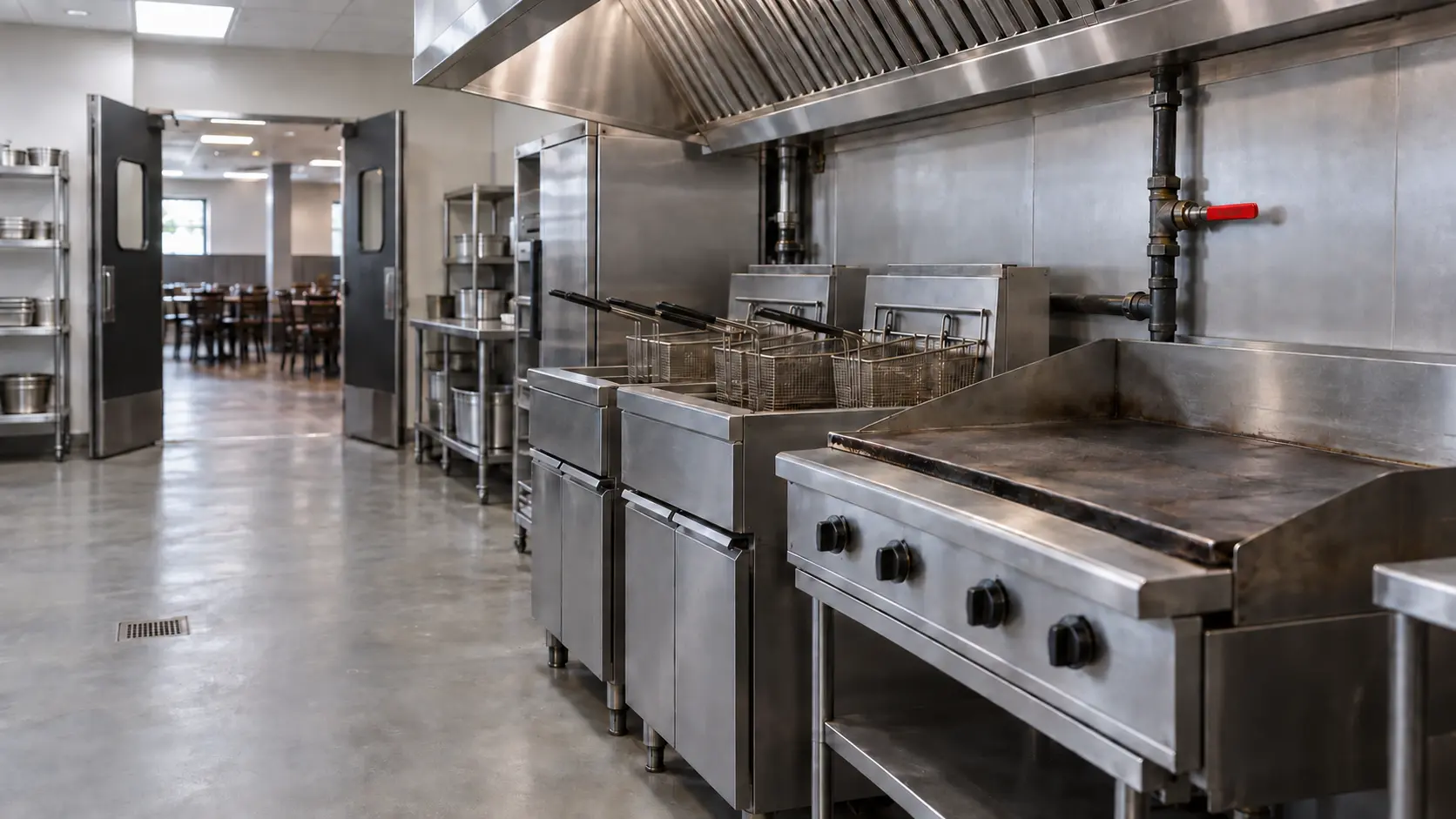
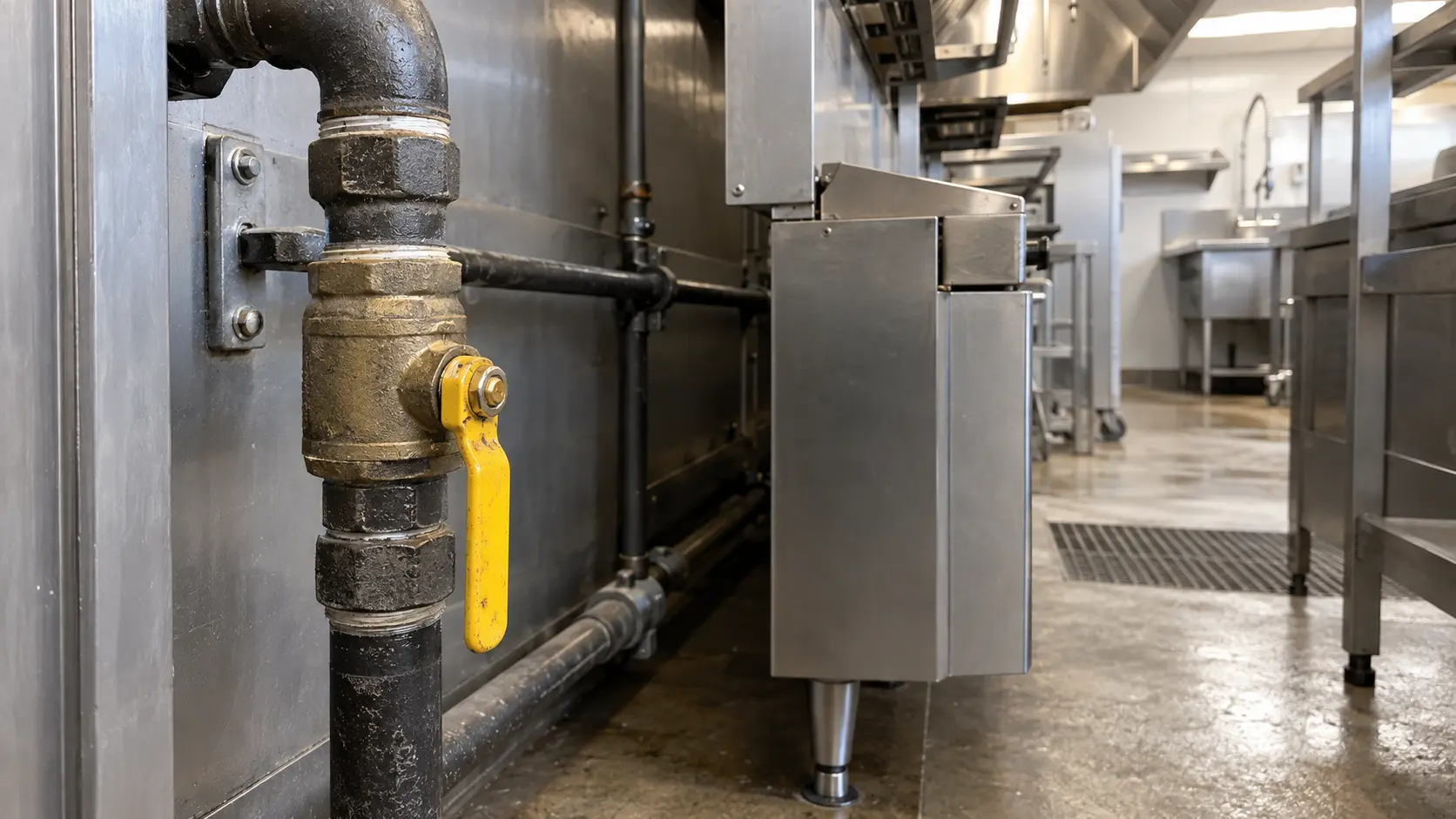
Most lines have a manual valve on the gas pipe where it enters the kitchen or feeds the manifold, usually with a lever handle that sits in line with the pipe when open and crosswise when closed. Every opening and closing manager should be able to walk to it in the dark. Keep it clear of stacked cases and mop buckets, and make sure the crew knows it by sight rather than by description.
- Valve closer: the nearest trained person, only if the valve is reachable without passing through the smell
- Room clearer: moves guests and staff out through the closest exit and keeps them away from the doors
- Caller: the first person outside, using a phone once clear of the building
- Door keeper: stops deliveries, late staff and customers from walking back in
Source: Vulcan — VHG Series gas fryers installation and operation manual (F-47678) — In the event a gas odor is detected, shut down units at the main shutoff valve and contact the local gas company or supplier; Frymaster — OCF FPGL30 gas fryer installation, operation and maintenance manual — Never use matches, candles or any ignition source to check for leaks; if gas odors are detected shut off the gas at the main valve, extinguish open flames, do not operate electrical appliances, ventilate and contact the gas company; after a second burn-back close the valve and do not use the appliance until a technician declares it safe; Southbend — Platinum Series restaurant range owner's manual — Shut down equipment at the main gas shut-off valve and call the gas supplier's emergency number; turning off the manual shut-off valves extinguishes the pilots; improper ventilation can cause headaches, drowsiness and nausea; the purchaser must post gas-smell instructions from the local supplier
Switches, the hood and the pilots while gas is in the air
A light switch, a hood control, an equipment power button or a phone can all make a small spark, which is why the rule is to leave every switch exactly where it is. If the hood is already running, it keeps running; if it is off, nobody turns it on to clear the air. Doors and windows opened by hand do the ventilating instead.
Pilots on the rest of the line are open flames sitting in the same room. Closing the main is the safe way to put them out: Southbend's manual notes that turning off the manual shutoff valves on the gas supply extinguishes the pilots. Nobody should walk the line blowing out flames or turning knobs one at a time while the smell hangs in the air.
The danger that has no smell
Pitco reminds operators that incomplete combustion produces carbon monoxide, a clear and odorless gas, and Southbend warns that poor ventilation can cause headaches, drowsiness and nausea. If several people on the line feel that way at once, treat it like a leak even though nobody smells gas: get everyone outside into fresh air and call 911.
Source: Southbend — Platinum Series restaurant range owner's manual — Shut down equipment at the main gas shut-off valve and call the gas supplier's emergency number; turning off the manual shut-off valves extinguishes the pilots; improper ventilation can cause headaches, drowsiness and nausea; the purchaser must post gas-smell instructions from the local supplier
The instruction sheet the makers want on your wall
Pitco, Garland, Wolf and Southbend each put the same duty on the purchaser: post, in a prominent location, the steps to follow if an operator smells gas, and get those steps from the local gas supplier. It is one of the few requirements in an installation manual that is aimed squarely at the owner rather than the installer, and a missing sheet is easy to spot on a walk-through.
Put a copy beside the main shutoff and one near the staff exit, and cover it during onboarding so a new cook has heard it before seeing it. If your crew works in more than one language, ask the supplier whether they publish the sheet in each of them.
- The utility's emergency number, written out in full
- Where the main shutoff is and which way closes it
- No switches, no flames, no phones inside
- The meeting point outside and who counts heads
- Who is allowed to let people back in
Source: Southbend — Platinum Series restaurant range owner's manual — Shut down equipment at the main gas shut-off valve and call the gas supplier's emergency number; turning off the manual shut-off valves extinguishes the pilots; improper ventilation can cause headaches, drowsiness and nausea; the purchaser must post gas-smell instructions from the local supplier; Pitco — gas fryer installation and operation manual (L20-378) — Post in a prominent location the instructions to follow if an operator smells gas, obtained from the local gas supplier; carbon monoxide is a clear, odorless gas; never use an open flame to check for leaks; Garland — Master Series gas convection oven installation, operation and maintenance manual — Post in a prominent location the instructions to follow if the user smells gas, obtained from the local gas supplier; Wolf — Challenger XL Series gas restaurant range installation and operation manual — Post gas-smell instructions from the local gas supplier in a prominent location; if ignition fails, turn the knob off and wait 5 minutes before relighting
Before anyone relights the line
The utility or the fire department decides when the building is safe to enter. That is not the same as the line being ready to cook: the leak still has to be found, repaired and every joint tested before the gas is opened again. A smell that fades once the valve is closed only proves the leak sits downstream of that valve.
When the line is relit, it happens one appliance at a time and by each maker's lighting instructions. Wolf tells staff to turn a knob off and wait 5 minutes after a failed ignition before trying again, and Frymaster says that a burner that burns back to the jet twice must be shut off and left unused until a technician declares it safe.
What the technician will want to hear
Details from the crew shorten the search. Write them down while the event is fresh, before the next shift overwrites everyone's memory.
- Where the smell was strongest and who noticed it first
- Whether equipment was moved, swapped or cleaned behind in the last day
- Any burner that failed to light or any pilot found out
- Whether the kitchen runs on utility gas or on propane from tanks
Source: Frymaster — OCF FPGL30 gas fryer installation, operation and maintenance manual — Never use matches, candles or any ignition source to check for leaks; if gas odors are detected shut off the gas at the main valve, extinguish open flames, do not operate electrical appliances, ventilate and contact the gas company; after a second burn-back close the valve and do not use the appliance until a technician declares it safe; Wolf — Challenger XL Series gas restaurant range installation and operation manual — Post gas-smell instructions from the local gas supplier in a prominent location; if ignition fails, turn the knob off and wait 5 minutes before relighting