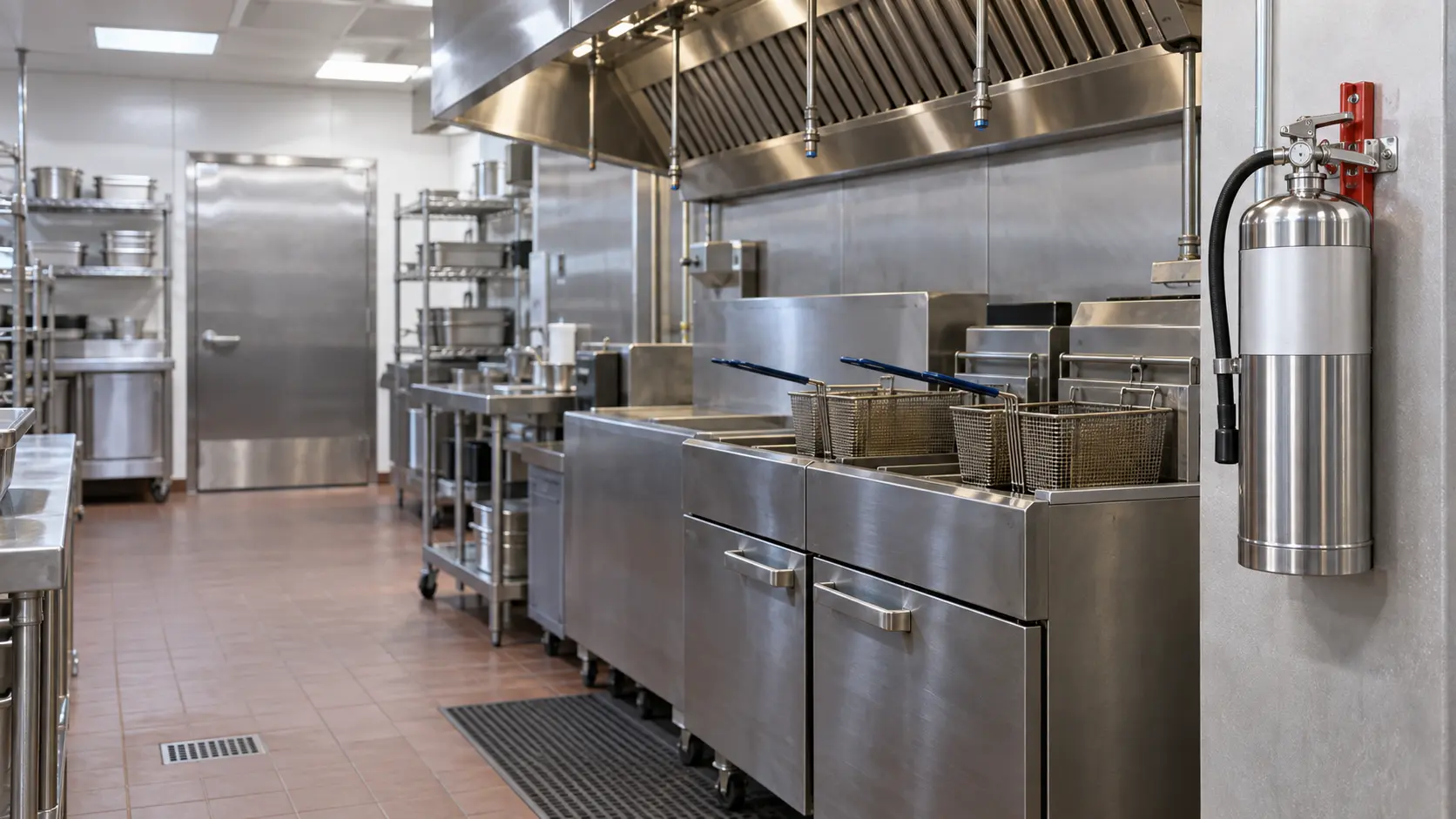

Gas, fryer fires, safe holding and the health inspector
Gas, fire and food safety
guides.
What to do about a gas smell on the cooking line, a fryer or grease fire, a walk-in or reach-in that climbed above 41°F with food inside, and what a health inspector expects to see in the logs.
Mon–Sat, 8am–8pm
- Three guides
- Read before you book
- Says where to stop
Book a visit
Three short steps, about a minute.
or call (844) 571-4566
Loading appointment form…
The appointment form couldn’t load. Please try again.
Gas, fire and food safety,
guide by guide.
A commercial kitchen keeps three hazards within a few steps of each other: a gas supply feeding every burner on the line, vats of oil held hot for hours, and a cold side full of product that turns unsafe once it warms. This section is for the moments when one of them goes wrong, and for the quieter work that keeps those moments rare.
All 18 guides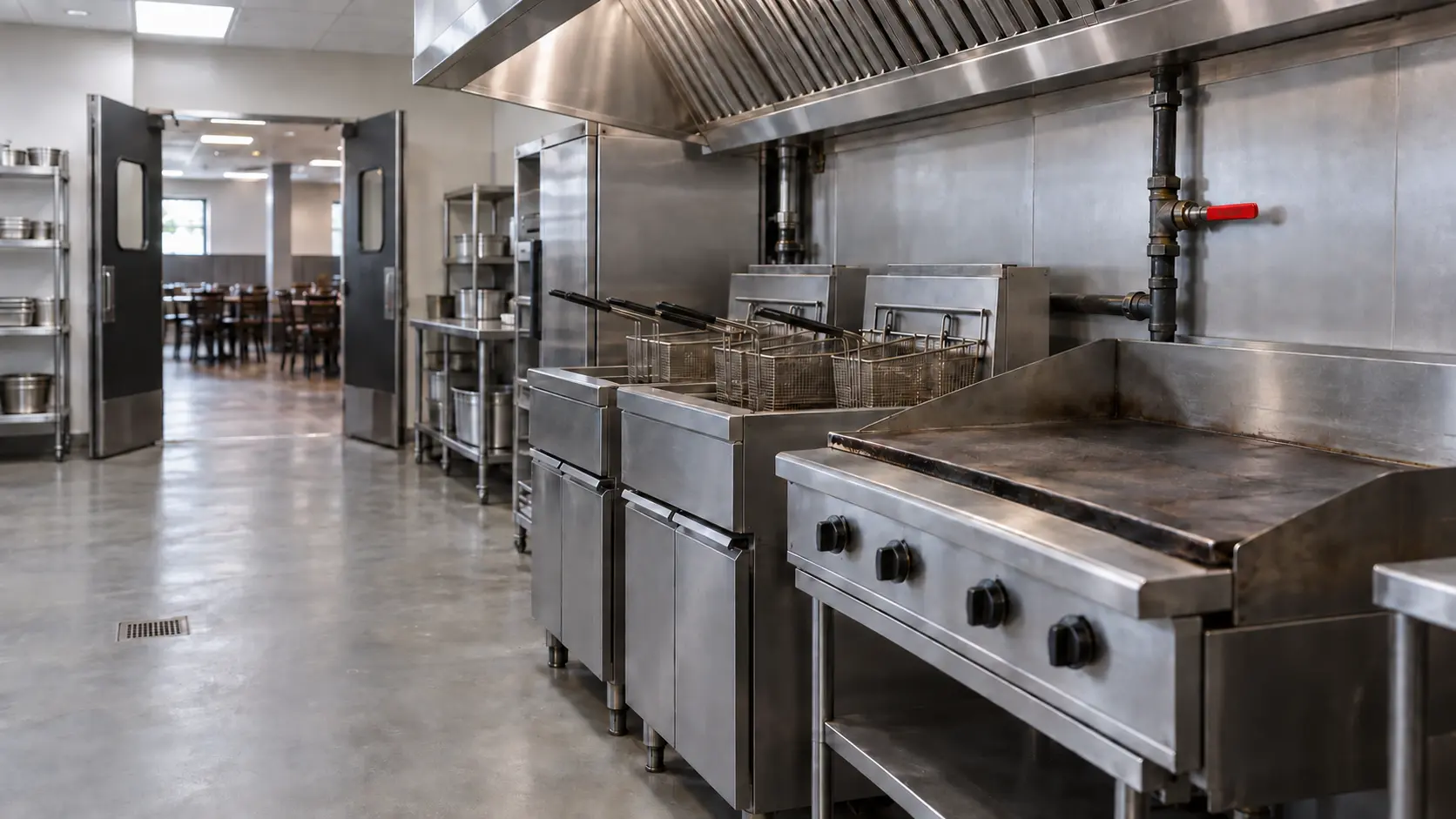

Gas, fryer fires, safe holding and the health inspector.
Each guide gives the order of moves before any talk of repair. A gas odor means closing the valve, touching no switches and calling from outside. A fryer fire means the hood suppression system first and the Class K extinguisher second, never water. A cold box that has drifted above 41°F means probing the product, moving what still reads cold and leaving the verdict on the rest to the FDA Food Code and your county or city inspector.
The instructions are drawn from the manuals the fryer, oven and cold-storage makers publish, NFPA's guidance on commercial cooking operations, OSHA's restaurant pages and the FDA Food Code, and every guide links the pages behind its numbers. Where the rules put a decision in the hands of the fire marshal or the health department, the guide says so rather than guessing on their behalf.
Owners and general managers should read all three, and the opening and closing managers should know them well enough to act without the page in front of them. Each guide also marks where the crew's part ends: gas fittings, refrigerant piping and energized panels stay closed, and no hand goes into a fryer vat.
Not sure where to start?The short answerGas odor along a restaurant cooking line: who closes the main, who clears the room, who calls
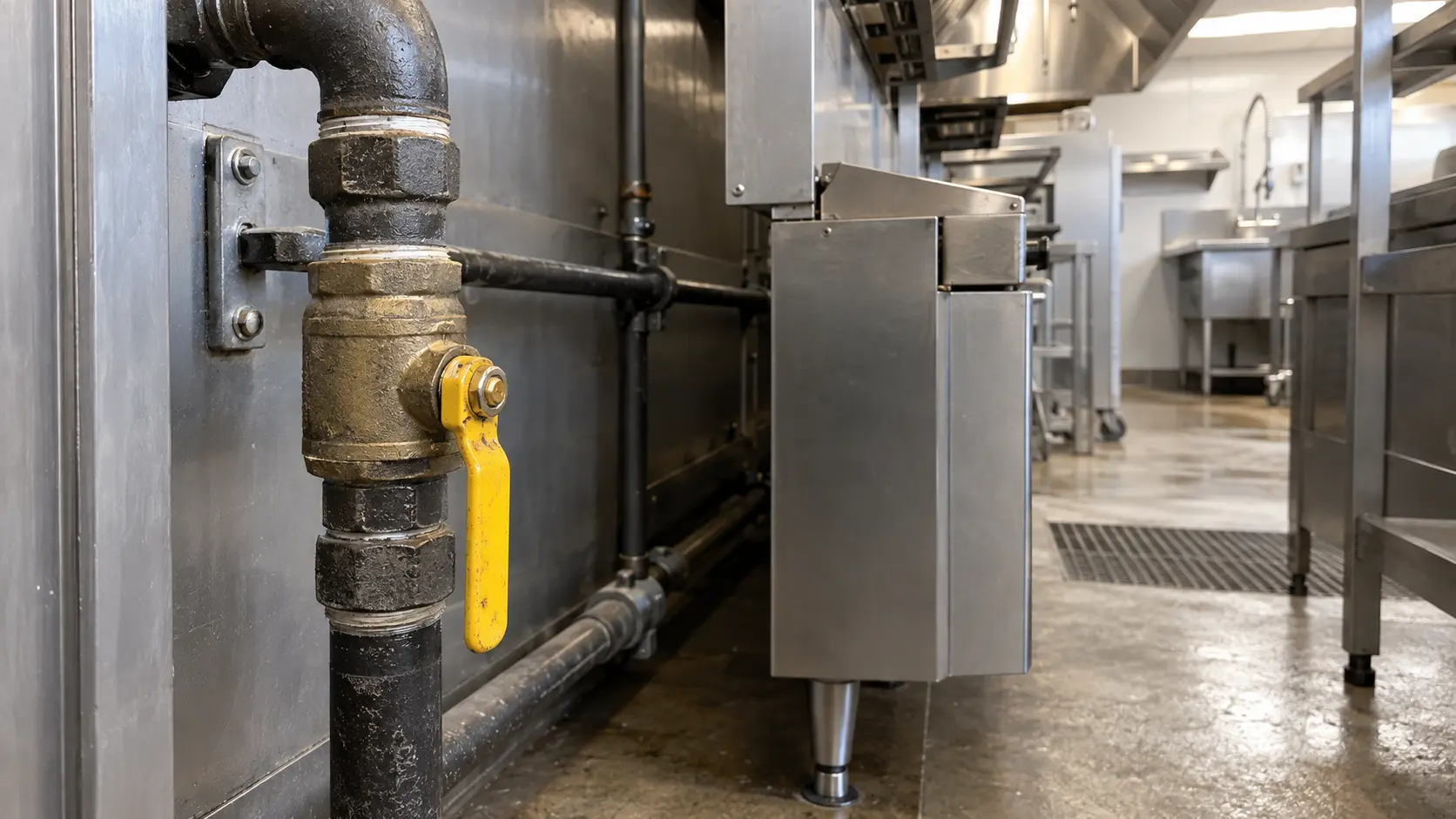
A gas smell on the cooking line calls for the same order every time: shut the valve for that appliance or the line's main shutoff when someone can reach it without walking into the odor, light nothing and flip no switches, move staff and guests outside, and ring 911 or the utility's gas emergency line once outdoors.
The short answerFryer fires and the hood suppression system: pull station first, Class K second, water never
When a fryer catches fire, the hood fire suppression system comes first: pull the manual station if it has not tripped on its own, sound the alarm and call 911, and reach for the Class K extinguisher only after the system has discharged.
The short answerKeeping food safe when cold storage fails: the 41°F line, the clock and the health department
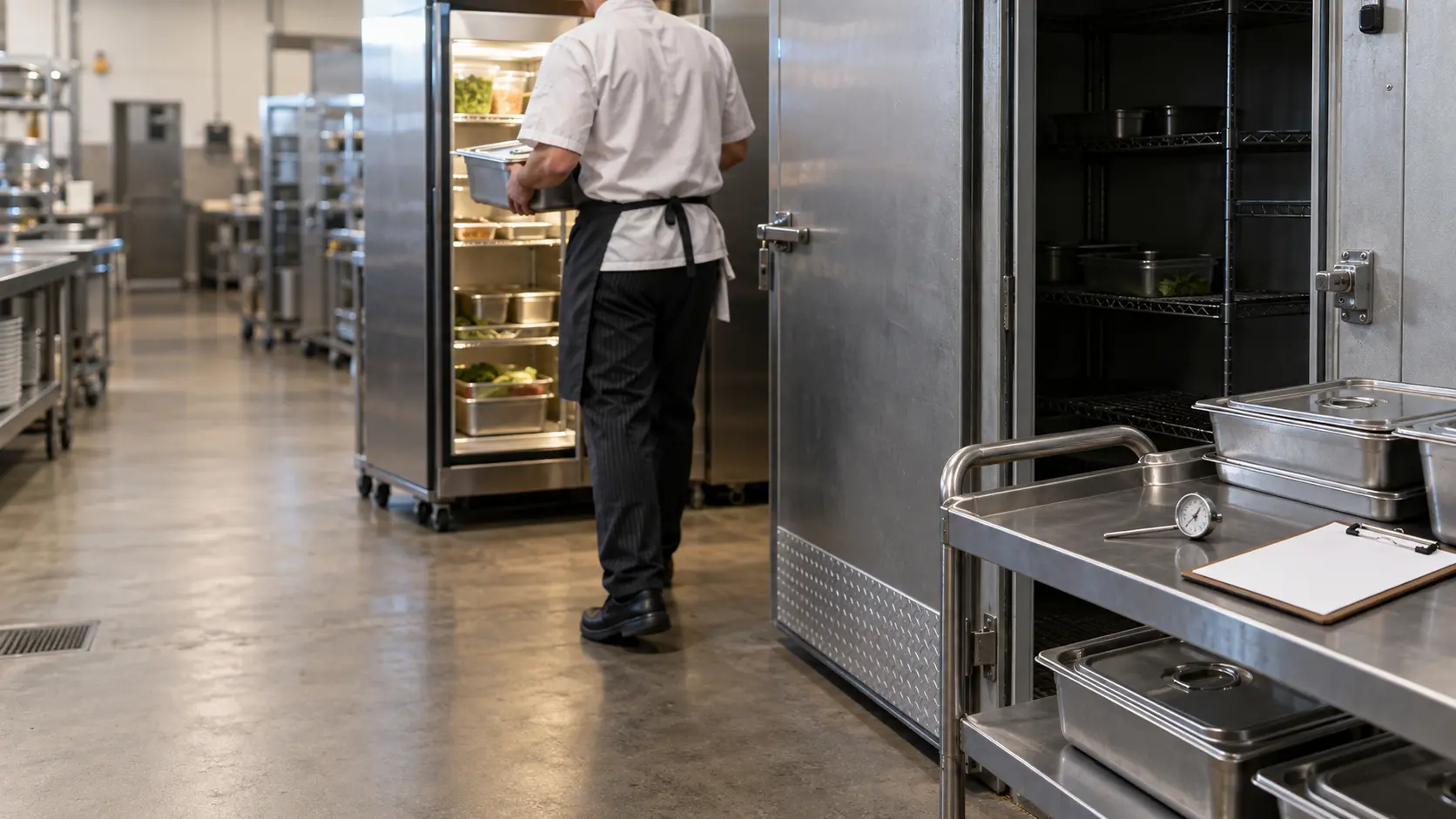
Food safety when cold storage fails turns on two readings: the product temperature against the FDA Food Code's 41°F cold-holding limit, and how long it has been above that line.
When reading
is not enough.
If the checks in these guides did not settle it, the visit picks up from there, stop by stop.
What repairs cost- 01Safety and supply before anything else
- 02The cause, and what it costs
- 03Parts that ride along
- 04Proved under load before we leave
The problems
these answer.
Each has a page of its own, with the causes in the order worth checking.
All 17 problems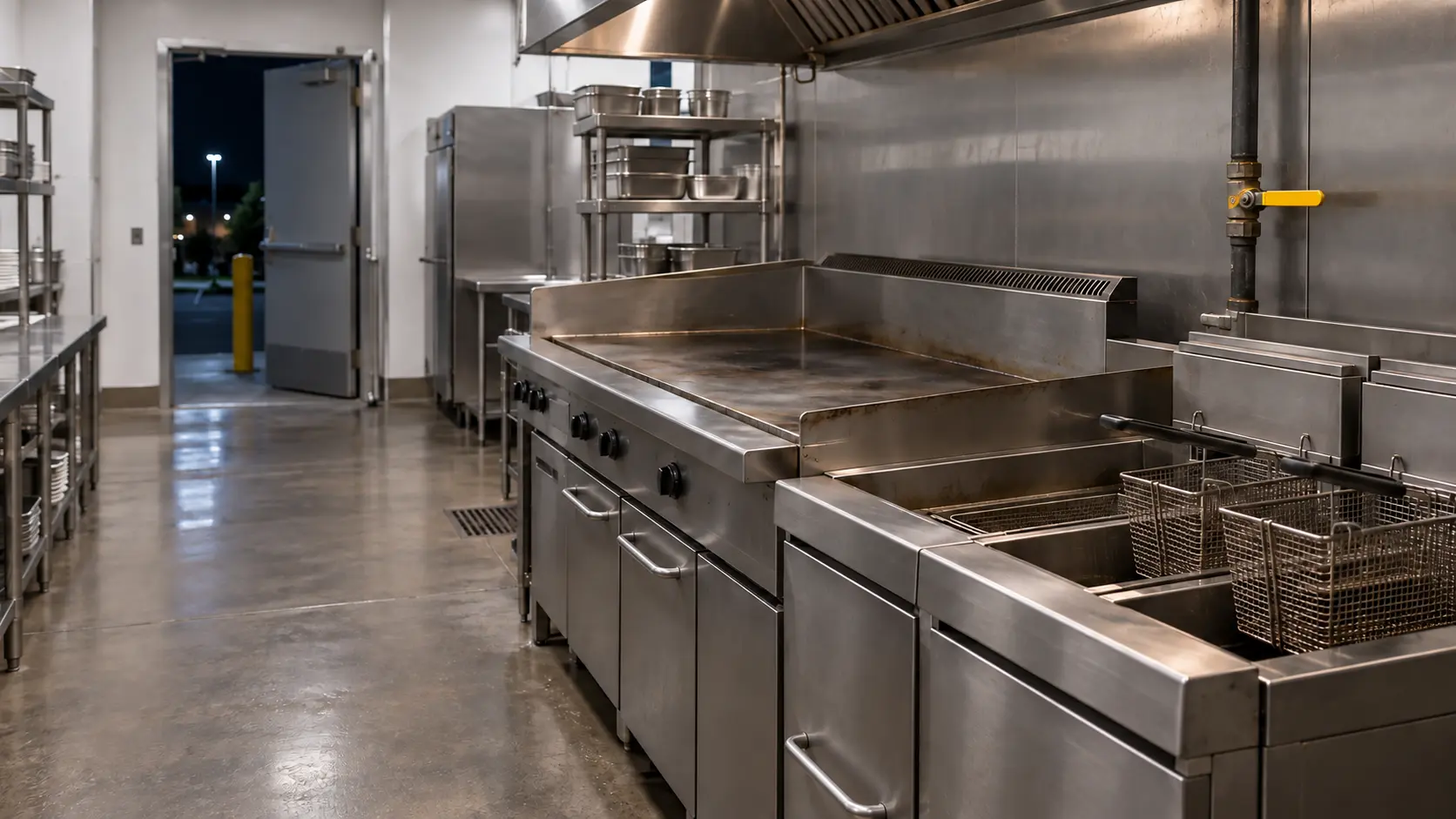
Commercial Kitchen Gas Smell Along the Cooking Line: Clear the Room First
6 causes, cheapest first
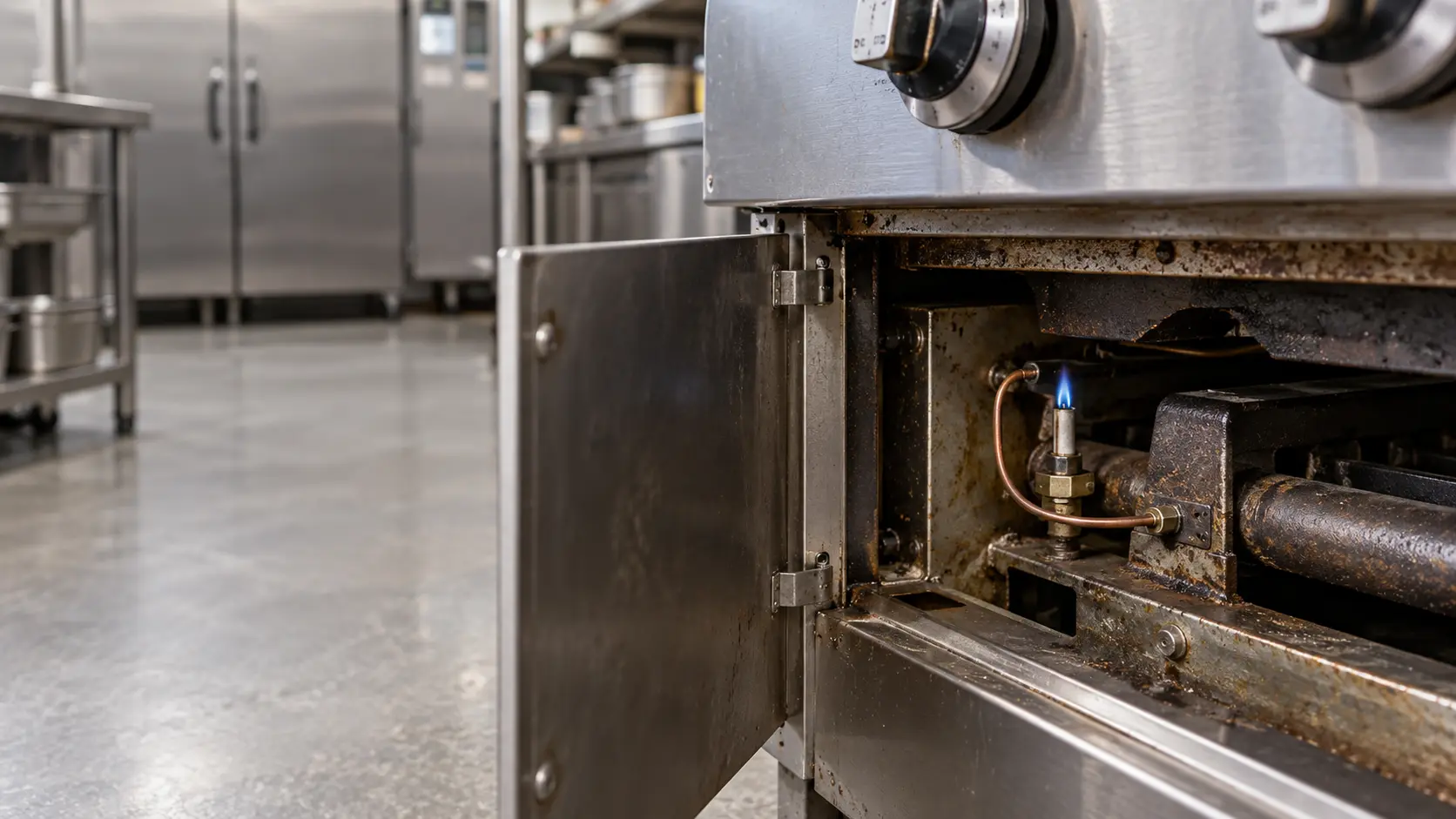
Pilot Won't Stay Lit on a Fryer, Griddle or Steamer on the Line
6 causes, cheapest first
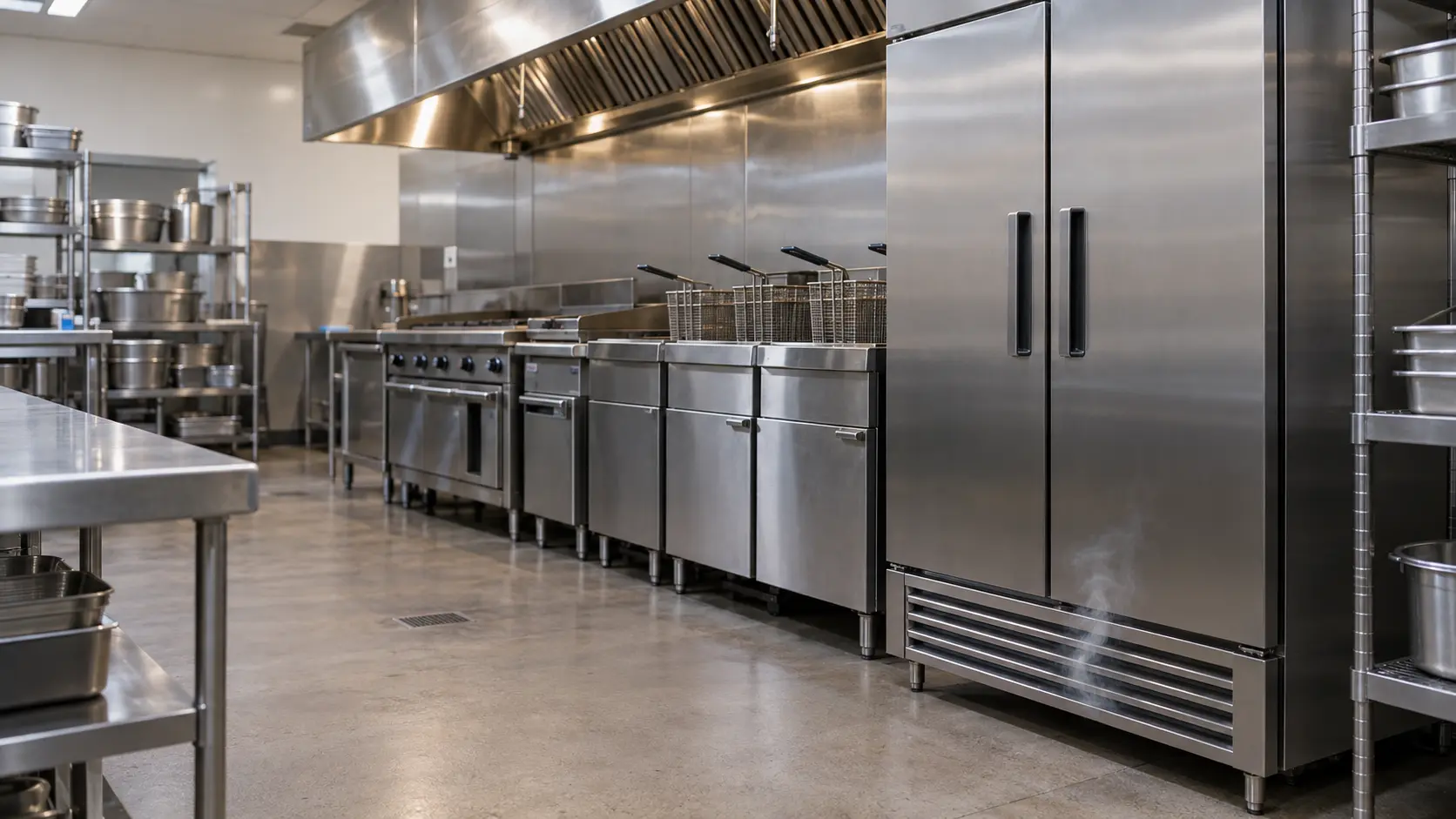
Restaurant Equipment Burning Smell: Scorched Oil, Hot Wiring or Lint
6 causes, cheapest first

Commercial Fryer Fire or Grease Flare Under the Hood
6 causes, cheapest first

Questions about
gas, fire and food safety.
What should a new cook learn first about gas on the line?
Who services the hood suppression system, the kitchen or a contractor?
Is 41°F the limit for every item in the walk-in?
When does the health department need a call?
The other
sections.
Split by what you are trying to find out rather than by which part of the appliance it concerns.
All guides
Common problems

Troubleshooting

Maintenance and prevention
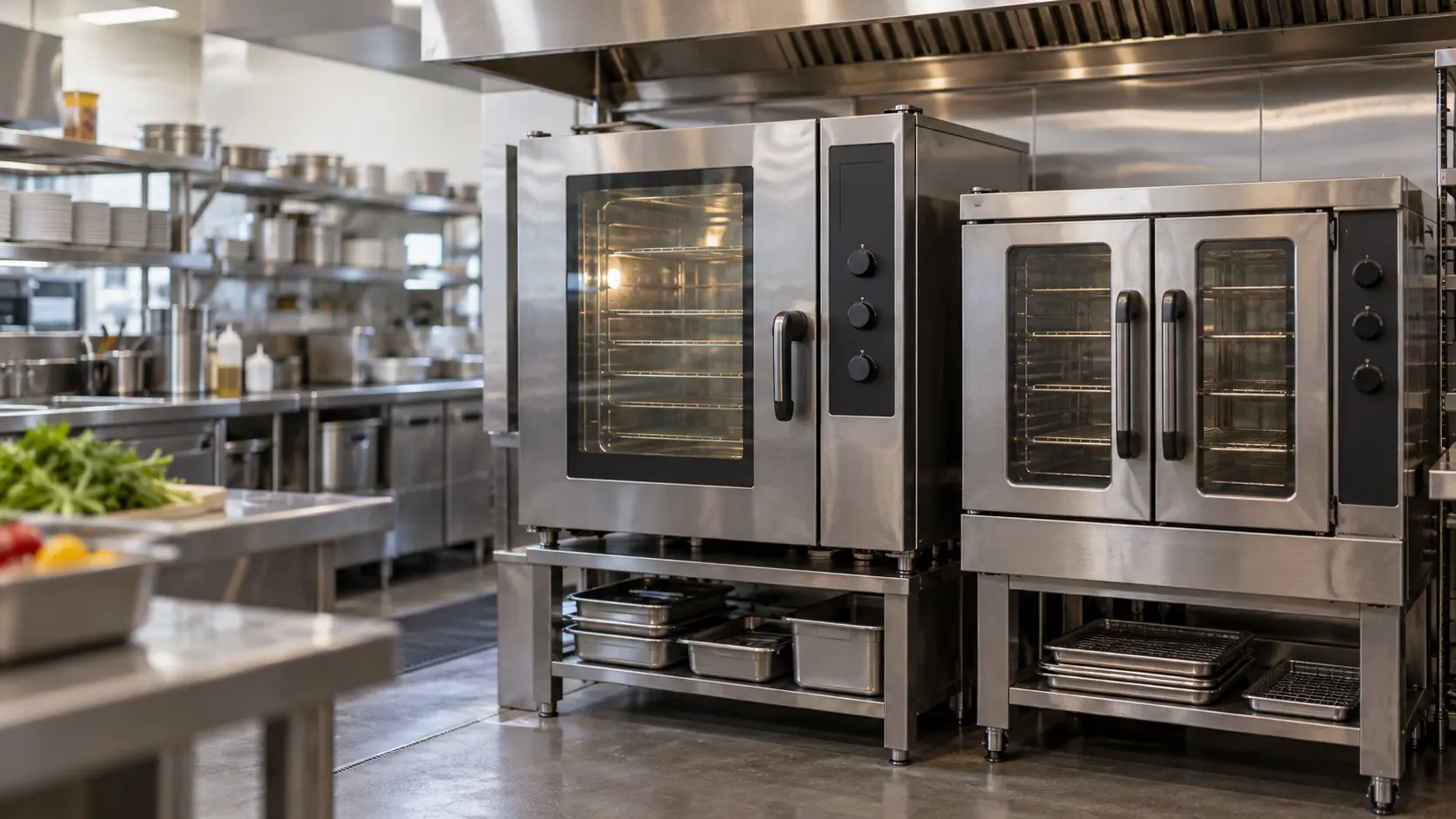
Choosing and comparing
Installation and setup
Start from your question
The four questions most visits start with, each with the guide that answers it.
18 guidesWhere to start Where to startBack to your everyday
Let’s get your commercial appliance working again.
Three short steps online, or one call. Tell us what you are seeing and pick a window that works.