The 41°F line and the foods it covers
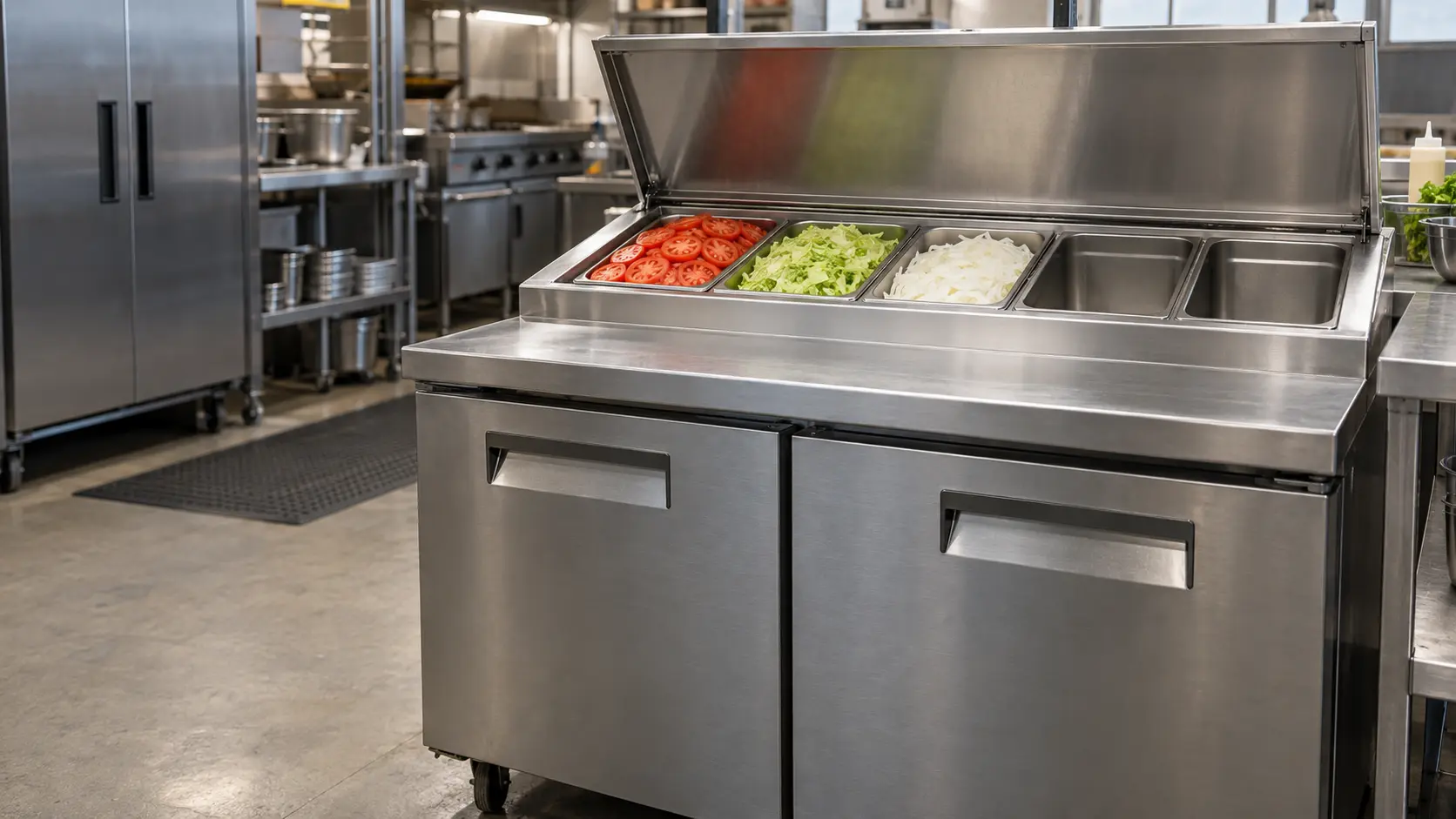
The Food Code's cold-holding rule applies to what it calls time/temperature control for safety food: the items that support bacterial growth once they sit warm. In a typical kitchen that means dairy, cooked rice, pasta and vegetables, cut melons and tomatoes, cut leafy greens, raw and cooked meat, poultry and seafood, eggs and anything made from them. Those must be held at 41°F or below.
Plenty of stock in a walk-in or reach-in never needed the cold to be safe: sealed cases of canned goods, whole uncut produce, bottled beverages and dry stock kept cold for convenience. Sorting those out first shrinks the pile that needs a decision and frees shelf space in the units that still work.
The items to probe first
Start where the risk and the value are highest, and where a warm reading is most likely.
- Cooked foods from yesterday's prep, especially rice, beans and sauces in deep containers
- Raw poultry, ground meat and seafood
- Dairy, liquid eggs and anything made with them
- Cut fruit, cut tomatoes and cut leafy greens
- Product on the top shelves and nearest the door, which warms fastest
Source: FDA — Food Code 2022, cold holding, time control, cooling and discard — Cold holding at 41°F or less (3-501.16); time as a public health control needs written procedures, a 41°F start, a 4-hour mark and discard of unmarked or expired food (3-501.19); cooling from 135°F to 70°F within 2 hours and to 41°F within 6 hours (3-501.14); unsafe food is discarded or reconditioned by an approved procedure (3-701.11)
Why time, not only temperature, decides what stays
The Food Code does allow food to leave temperature control for a limited time, but only under conditions set before the fact. Its time-as-a-public-health-control rule requires written procedures kept on site, food that starts at 41°F or below, a mark showing when 4 hours will have passed, and cooking, serving or discarding by that mark. Anything unmarked or past the mark goes.
A box that drifted warm overnight meets none of those conditions: nobody wrote down when each item left 41°F, so nobody can say how long it has been out. That is why the log from the last good check matters so much. Food that is unsafe, the Code says, is discarded or reconditioned only by a procedure the regulatory authority has approved, so the gray cases are a call to the local health department, not a judgment made at the walk-in door.
Cooked food that was still cooling
Last night's stock or braise may still have been working through the Food Code's cooling limits when the box failed: from 135°F to 70°F within 2 hours, and on to 41°F within 6 hours in total. A walk-in that stopped pulling heat stretches those windows without anyone noticing. Probe these batches first, and treat any that missed either limit as out of compliance, whatever the box reads now.
Source: FDA — Food Code 2022, cold holding, time control, cooling and discard — Cold holding at 41°F or less (3-501.16); time as a public health control needs written procedures, a 41°F start, a 4-hour mark and discard of unmarked or expired food (3-501.19); cooling from 135°F to 70°F within 2 hours and to 41°F within 6 hours (3-501.14); unsafe food is discarded or reconditioned by an approved procedure (3-701.11)

Saving the product that is still at 41°F
Everything that probes at 41°F or below can still be protected. Spread it across the reach-ins, prep rails and any second box on the premises, but do not pack a working unit so full that its own air cannot move; a reach-in stuffed to the doors can start drifting too. A neighboring business or a supplier with space in a cold truck is worth a call on a big failure.
Keep the failed box shut between trips. Every opening lets in warm air, and a closed box holds the product left inside for longer than one that is being walked in and out of while people debate what to do.
- Probe and move the coldest high-risk items first, so they stay below the line
- Label moved product with where it came from and the reading on arrival
- Pack pans in ice in a hotel pan when shelf space in working units runs out
- Keep raw proteins below ready-to-eat food in the borrowed space, as in the original box
- Hold warm product separately and clearly marked until the decision is made
Power outages and the call to the health department
When the cause is the building rather than the box, the Food Code treats it as a possible imminent health hazard. A permit holder facing an extended interruption of electrical service is to stop operations and notify the regulatory authority, although areas of the business the outage does not affect may keep going. Once operations stop, they restart only with the authority's approval.
There is one exception, and it has to be arranged before the lights go out. The regulator may let a business keep operating through an outage if a written emergency operating plan was approved in advance, corrective action starts immediately, and the authority is told when the plan goes into effect. The Code's annex describes that pre-approval as the tool that keeps food businesses open during a crisis.
What a written emergency operating plan usually covers
Your health department sets what it wants to see; these are the questions most plans answer.
- Who decides to close, and who calls the regulatory authority
- Which thermometers are used and where the logs are kept
- Where product goes, and which supplier delivers ice or backup cold space
- What the menu shrinks to while the cold side is short
- How the business confirms the equipment is holding before restocking
Source: FDA — Food Code 2022, imminent health hazards and thermometers — Discontinue operations and notify the regulatory authority on an extended interruption of electrical service unless a written emergency operating plan was approved (8-404.11); approval needed before resuming (8-404.12); food temperature measuring devices must be provided and readily accessible (4-302.12)
Records the inspector and the insurer will ask for
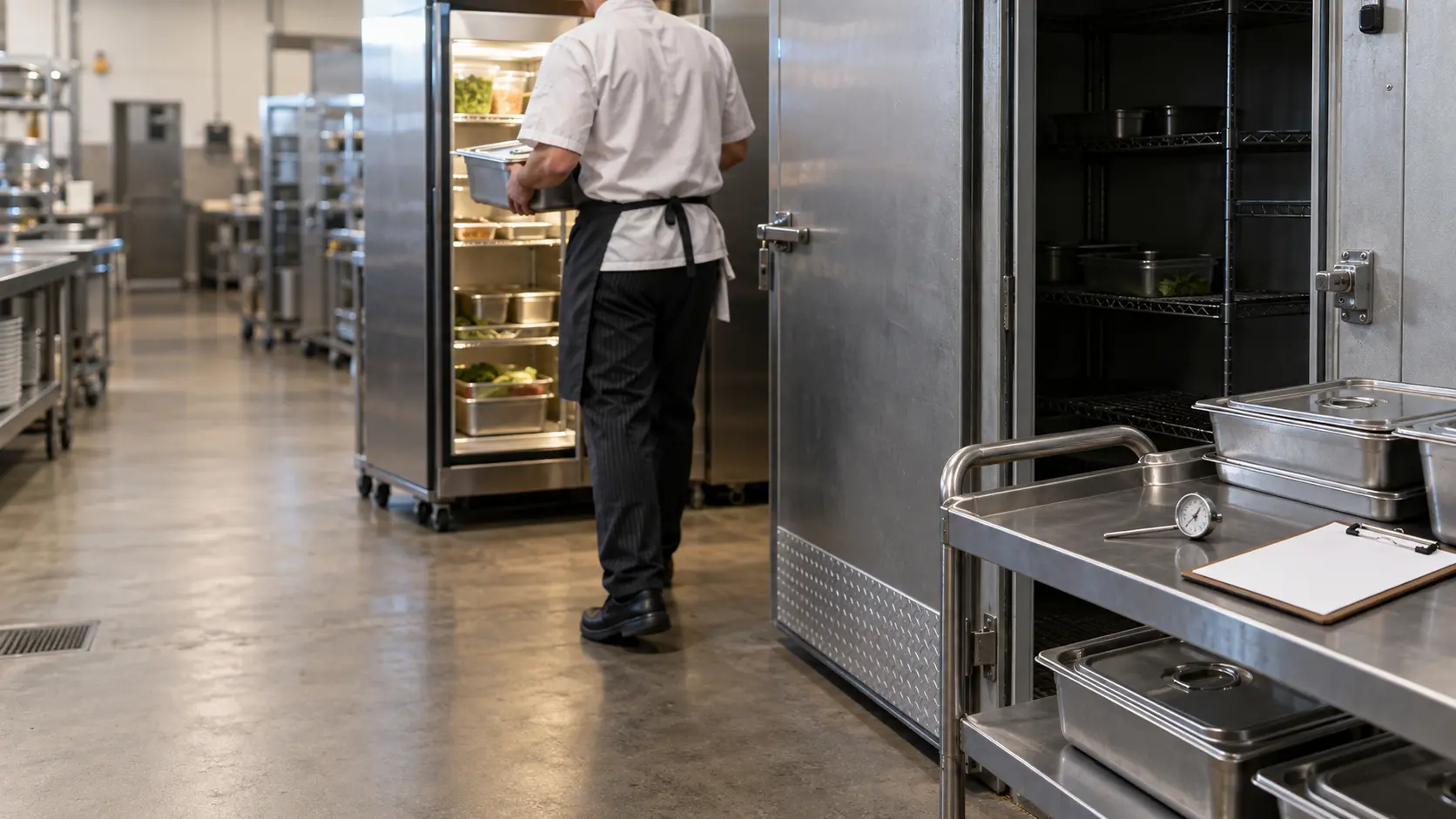
Once the product decisions are made, write down what was discarded, how much, its last reading and when. Photograph the discard before it leaves the building and keep the repair invoice with the log, since together they show both what happened and when the box was restored. The Food Code also requires food thermometers to be provided and readily accessible, and an inspector reading the log will expect it to have been kept with one.
Do not restock the moment the technician packs up. Run the repaired unit empty until your own probe thermometer, not only its display, shows the air holding at or below the line through a few door openings, then load it in stages rather than all at once.
Source: FDA — Food Code 2022, imminent health hazards and thermometers — Discontinue operations and notify the regulatory authority on an extended interruption of electrical service unless a written emergency operating plan was approved (8-404.11); approval needed before resuming (8-404.12); food temperature measuring devices must be provided and readily accessible (4-302.12)