
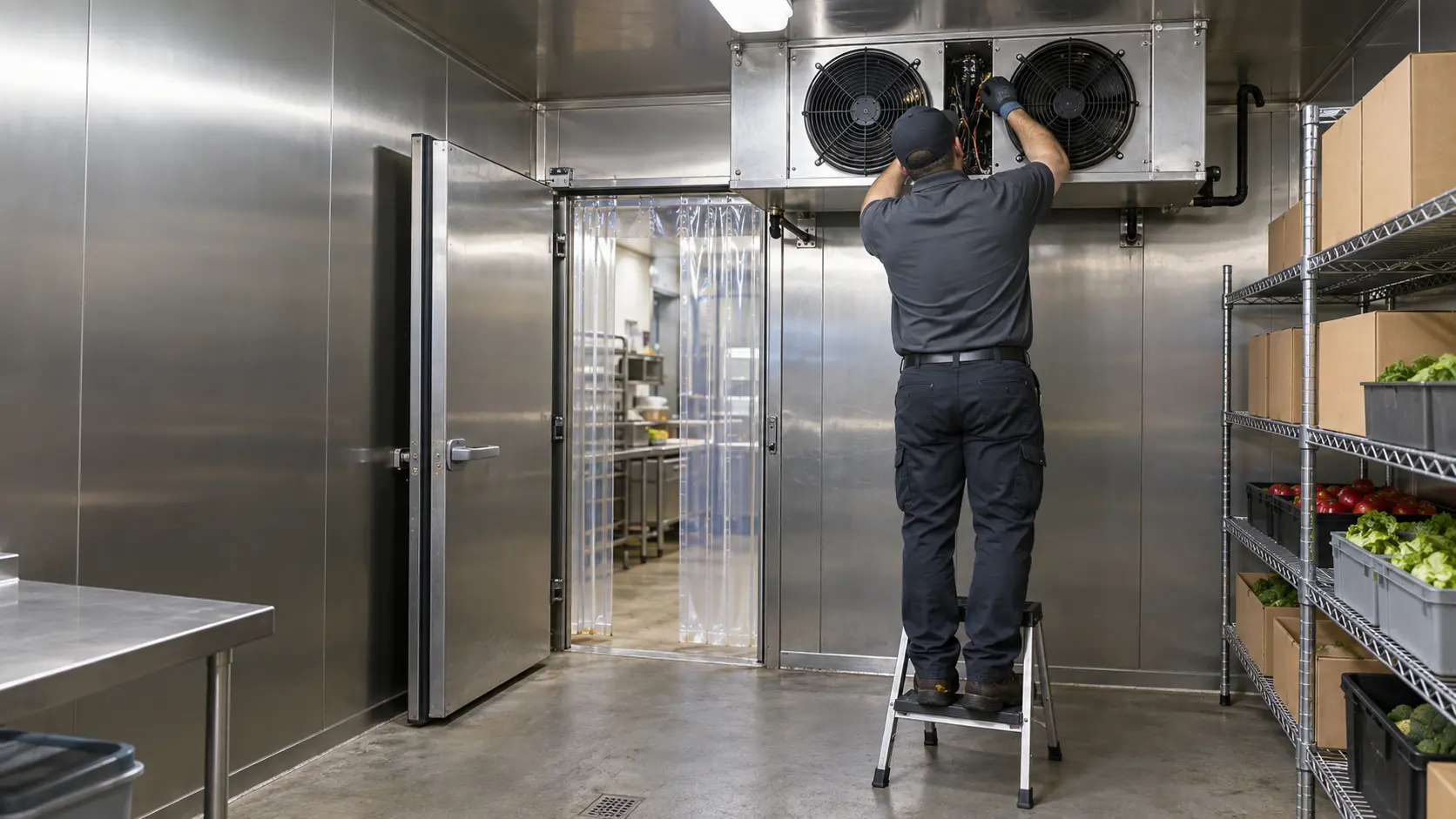
The first hour after a warm reading in the walk-in cooler
Before anyone looks for a cause, find out how warm the food is, not just the air. The dial on the shelf post reads the air near the door, which swings with every trip inside; a probe pushed into a pan of cooked rice or a gallon of milk at the back tells you whether product has crossed the 41°F line the FDA Food Code sets for cold holding. Air recovers in minutes after a delivery, while a full case of product warms and cools slowly.
If product is above 41°F, the box has stopped being storage for the moment. Move the riskiest items first, cooked foods, dairy, cut produce and raw proteins, into reach-ins, prep-table rails or a second walk-in with space, and write down each item with its reading and the time. That record is what the health inspector and your insurer will want to see, and it lets a manager make discard decisions under the Food Code and local rules rather than by feel.
What goes on the temperature log
- When the warm reading was first noticed, and by whom
- Air temperature at the door and at the back shelf
- Probe readings from three or four products on different shelves
- Where each batch was moved and what it read on arrival
- What the controller display and the outdoor unit were doing at the time
Source: FDA — Food Code 2022 — Cold holding at 41°F or less (3-501.16); the sensor reads the warmest part of a cold unit (4-204.112); doors, seals and hinges kept intact, tight and adjusted (4-501.11)
Door, gasket and strip curtain: where warm boxes usually start
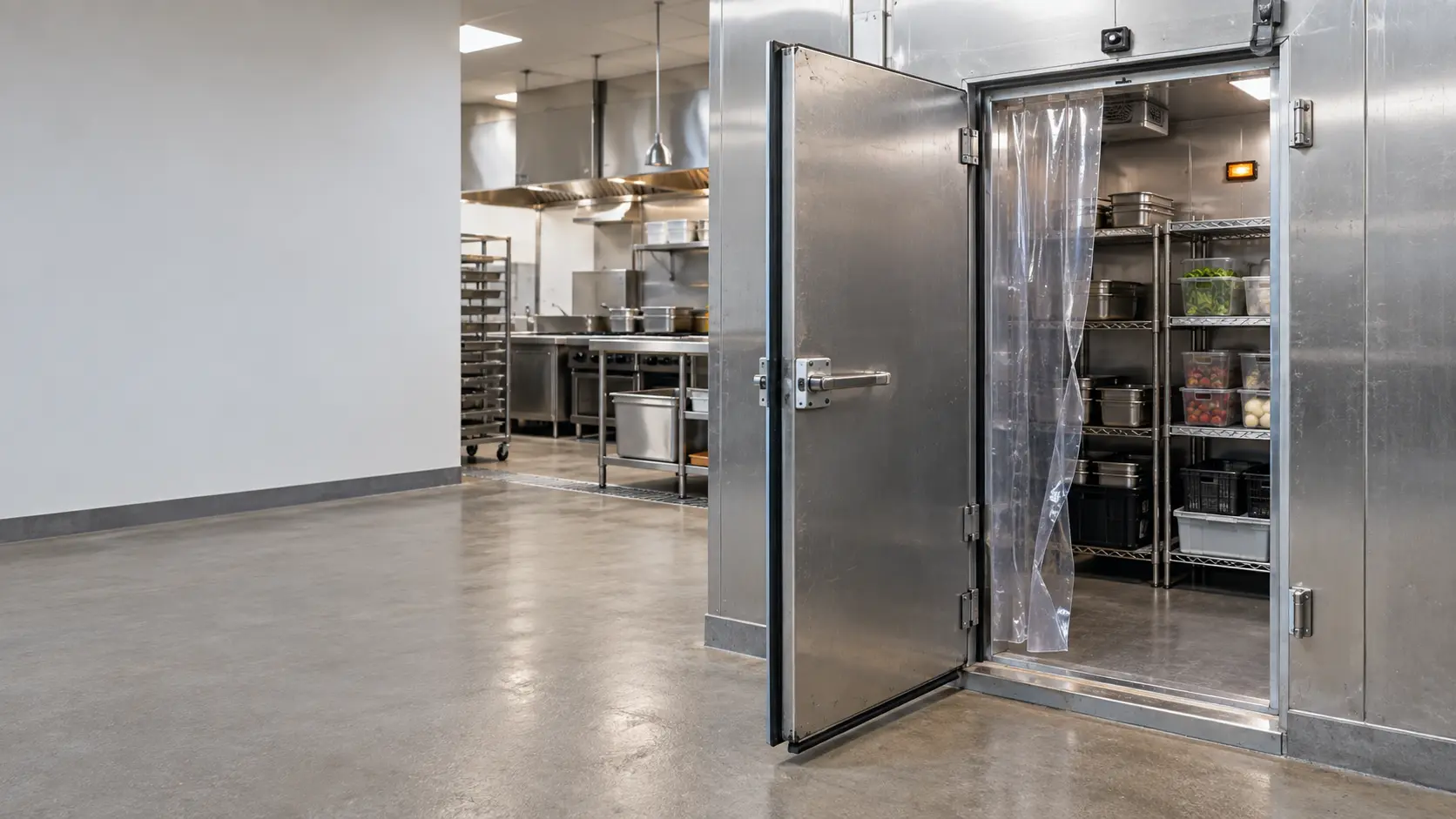
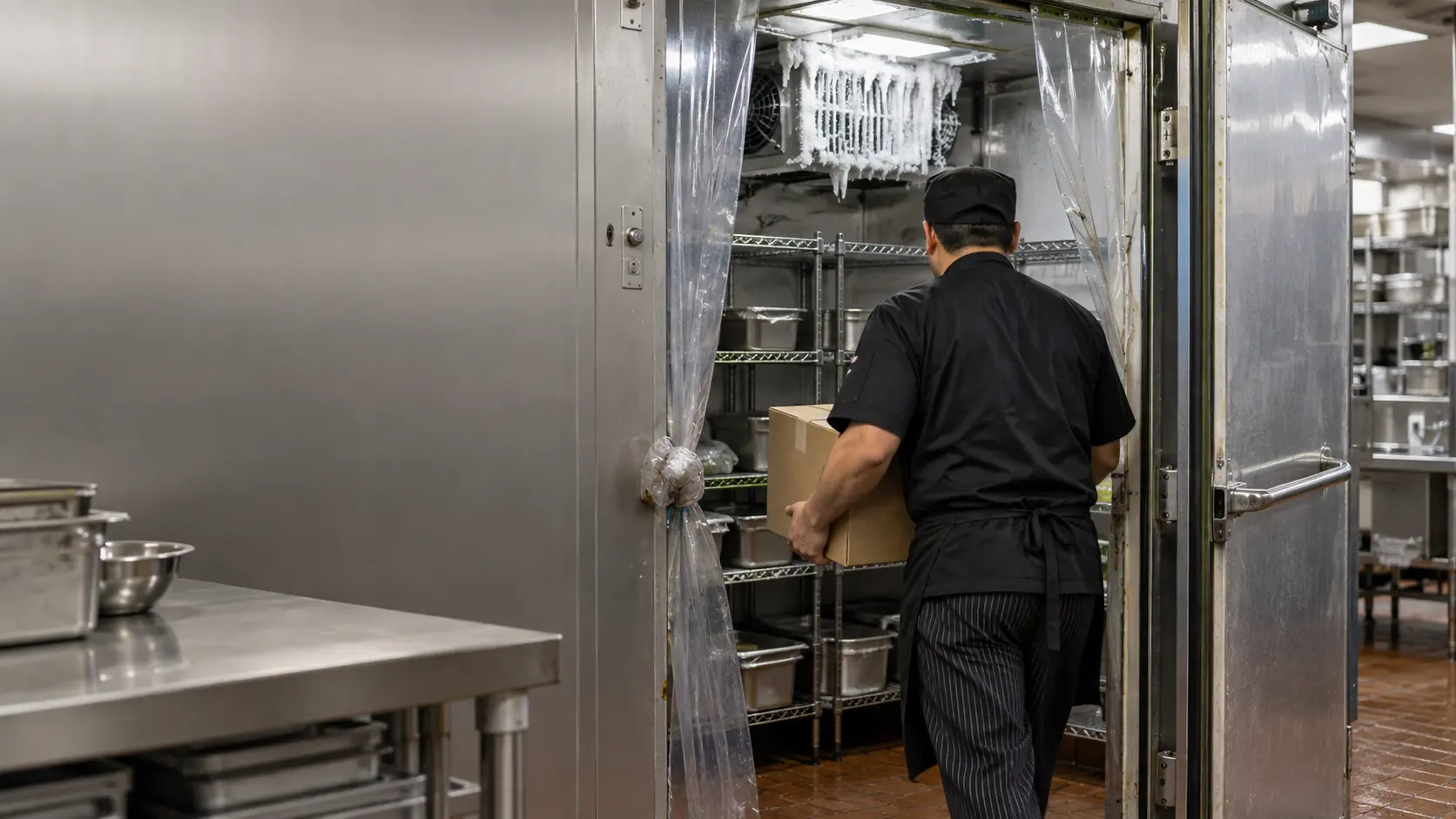
Since 2009, federal energy rules have required every new walk-in cooler to have automatic closers that pull the door shut from within an inch of closing, and strip doors or another way to limit the air that pours in while the doorway stands open. Both take a beating in a busy kitchen. A closer that has lost its spring, a curtain with half its strips torn off or knotted aside, or a door wedged with a milk crate through a long delivery can defeat a perfectly healthy system.
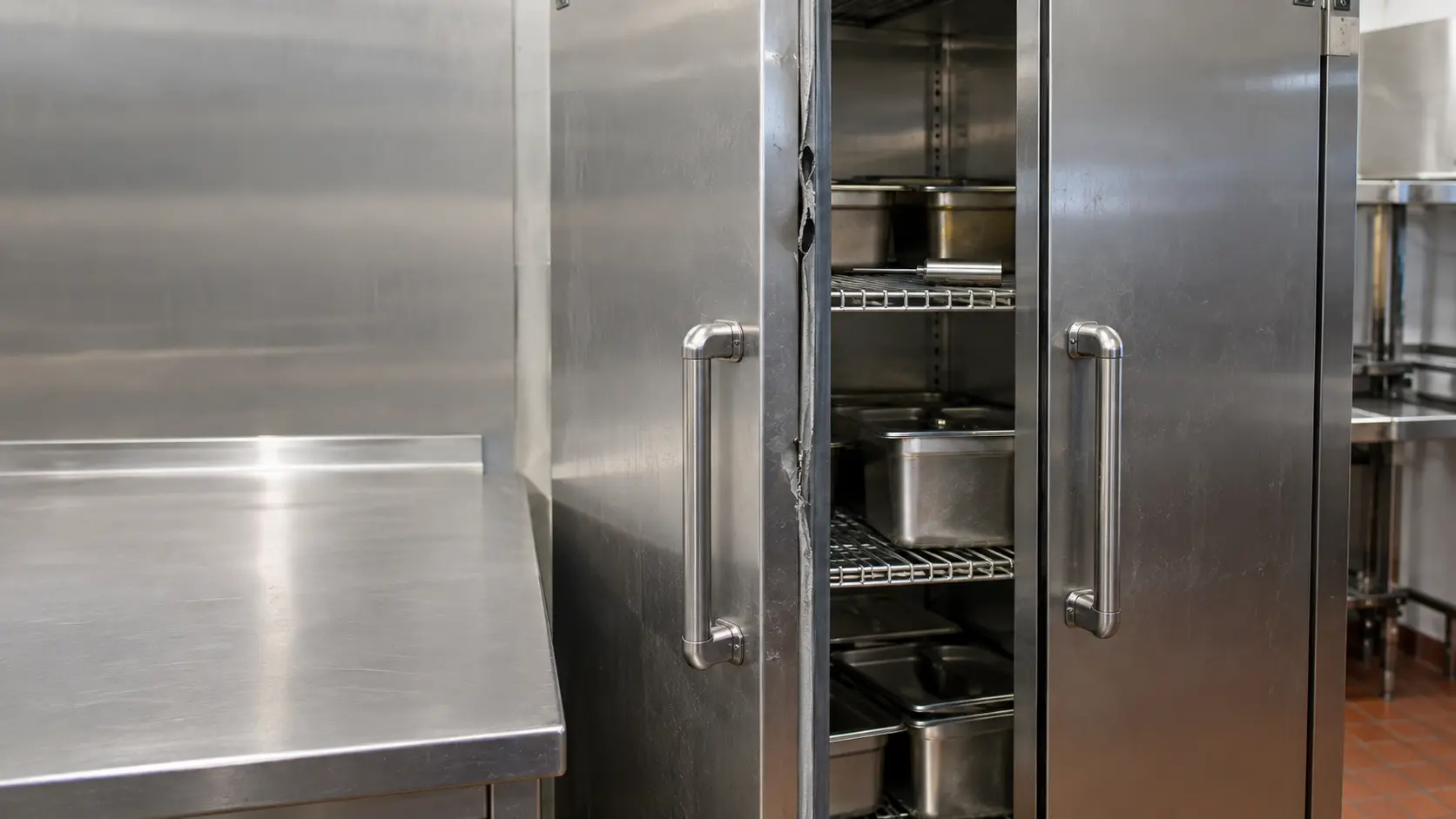
Walk the gasket with your eyes and hands, looking for split corners and flattened runs, then shut the door on a sheet of paper at several points around the frame. Paper that slides out with no drag marks a gap. The Food Code expects doors, seals and hinges to be kept intact, tight and adjusted to the maker's specifications, so a torn gasket is an inspection note as well as a cold leak.
Frost or sweat on the frame
White frost or beads of water along the door frame and threshold mean damp kitchen air is getting in and meeting cold metal. Many boxes run a heater wire inside the frame to keep that edge dry. If the frame feels icy, the door sticks shut or the threshold puddles, the gasket, the hinges or that heater needs a technician, and nobody should force the door or chip at the ice.
Source: FDA — Food Code 2022 — Cold holding at 41°F or less (3-501.16); the sensor reads the warmest part of a cold unit (4-204.112); doors, seals and hinges kept intact, tight and adjusted (4-501.11); eCFR — 10 CFR 431.306, walk-in cooler and freezer standards — Walk-ins made on or after January 1, 2009 need automatic closers for doors within 1 inch of closure and strip doors, spring-hinged doors or another way to minimize infiltration

Ice on the evaporator coil inside the box
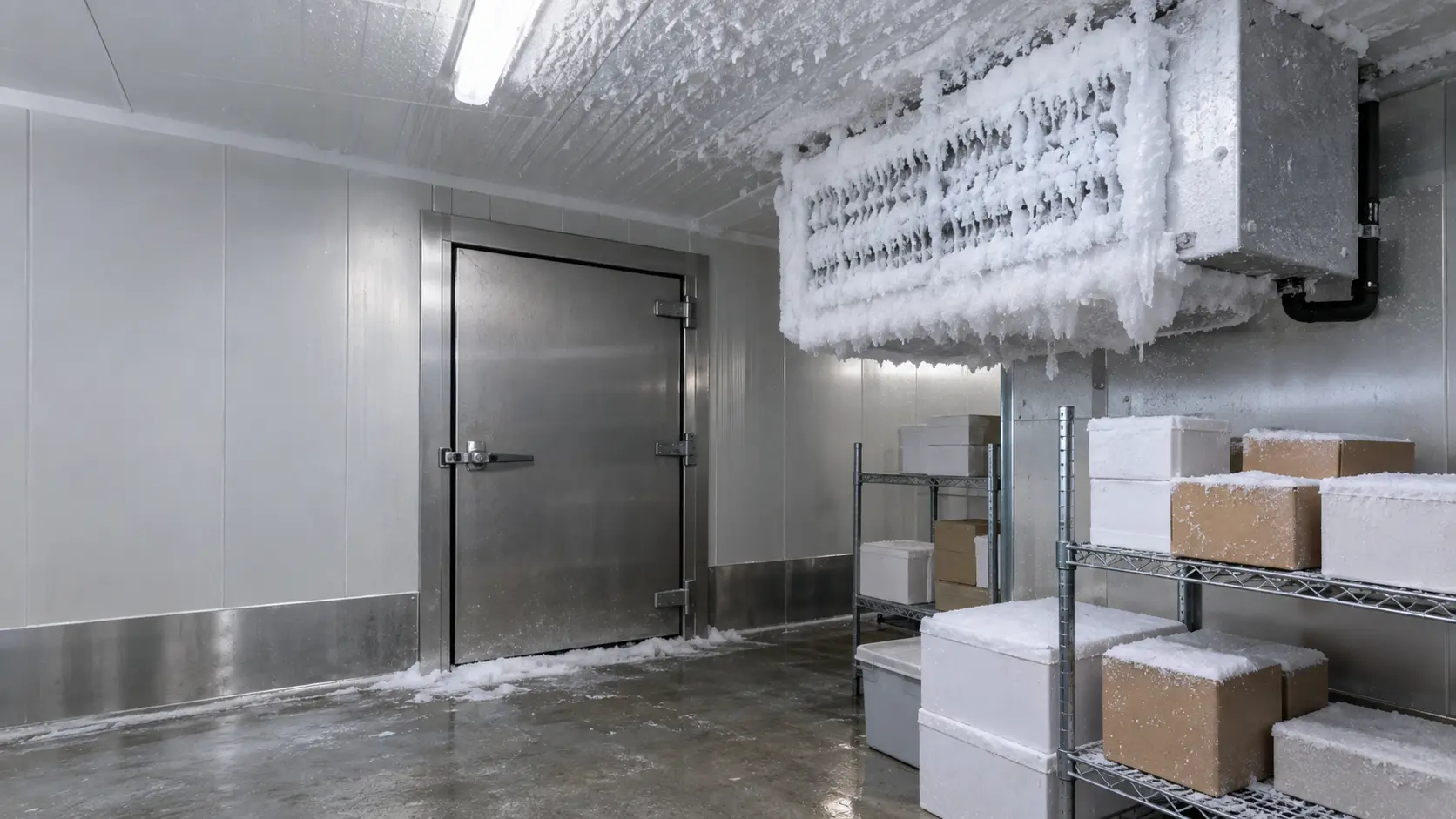
The evaporator is the finned coil with fans, usually hung high on the back or side wall. Healthy fins look like bare metal with, at most, a thin dusting of frost. A coil packed in white or clear ice cannot pass air, so the fans spin, the compressor runs and the box still warms, often gradually across a day or two.
Ice builds when defrost stops doing its job, when humid air keeps flooding in past a leaking door, or when the drain under the coil freezes and meltwater refreezes on the fins. True's control guide says every unit needs defrost events to keep its evaporator clear of frost and ice; on a walk-in that work falls to a timer or controller and to heaters or hot gas at the coil. Do not chip the ice away, because the fins and tubes behind it carry refrigerant and one gouge turns a defrost problem into a leak.
While you wait for the visit
- Keep the door shut and group trips into the box
- Leave the evaporator fans running and never cover them
- Pull cases stacked in front of the coil so air can reach it
- Photograph the coil and note whether the pan below is dripping or frozen
Source: True — Commercial Refrigeration General Control Guide (811072, Rev. C) — Every appliance requires a defrost event to keep the evaporator coil clear of frost and ice
The condensing unit on the roof or behind the building
Heat pulled out of the box has to leave somewhere, and on most walk-ins it leaves through a condensing unit on the roof, on a pad out back or in a mechanical room. When that coil is matted with grease from the kitchen exhaust, cottonwood fluff or plain dust, or when stock is piled against an indoor unit, the compressor runs hot and the box drifts up in the afternoon and recovers overnight.
Traulsen calls regular condenser cleaning the most important thing an owner can do for a long, reliable service life, and Victory tells owners to unplug the cabinet and brush and vacuum the coil whenever it looks dusty. Those manuals are written for self-contained reach-ins. A remote condensing unit works the same way, but reaching it, switching it off at its disconnect and cleaning it belong to the service visit or a preventive maintenance plan.
Signs that point at the outdoor unit
- The box warms on hot afternoons and catches up after dark
- The unit starts and stops every few minutes
- The coil face looks gray and felted instead of showing metal fins
- The fan is still while the compressor hums
Source: Traulsen — R-Series owner's manual (owner's manuals page) — Regularly cleaning the condenser coil is the most important thing for long, reliable service life; disconnect power first; Victory — RS/RSA reach-in installation and operation manual — Unplug the unit, then brush and vacuum dust and lint from the condenser coil if it is dusty
Loading, traffic and hot food going into the box
A walk-in is sized to keep cold product cold, not to chill hot food. Stock pots of soup, sheet pans straight from the oven or an entire warm delivery shelved at once can push the box past its limit for hours, especially when cases are stacked tight against the evaporator. Cool cooked food first by the methods in your food safety plan, and leave a hand's width between shelving and walls so air can circulate.
Door traffic counts just as much. A cooler opened constantly through morning prep behaves nothing like the same box on a quiet Monday. If the warm readings line up with the busiest shifts, look at propped doors, a torn curtain and how the crew fetches ingredients before blaming the equipment.