


What the box, the vat and the drum are telling you
Common problems
guides.
What commercial equipment means when a walk-in drifts warm, an evaporator ices over, a fryer is slow to recover, a combi throws a steam alarm or a dish machine never reaches its rinse heat.
Mon–Sat, 8am–8pm
- Three guides
- Read before you book
- Says where to stop
Book a visit
Three short steps, about a minute.
or call (844) 571-4566
Loading appointment form…
The appointment form couldn’t load. Please try again.
Common problems,
guide by guide.
These guides start from what a manager hears on a busy shift: the walk-in reads 44°F after lunch, the fries come up pale and greasy, plates return from the dish room with film on them. Each one explains what the equipment is doing, ranks the likely reasons by how often each proves to be the answer, and shows which ones the crew can settle before the end of the shift.
All 18 guides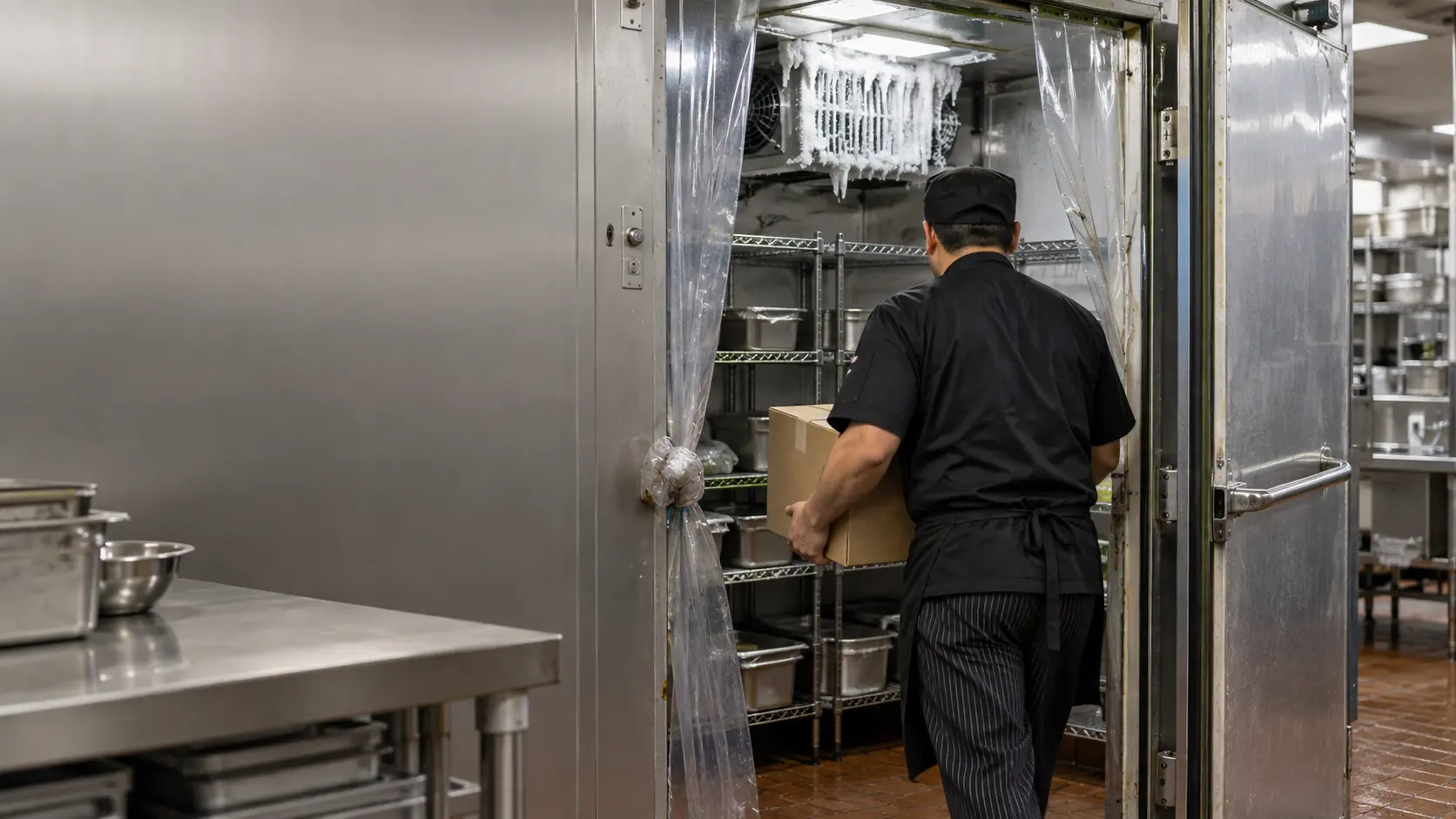
What the box, the vat and the drum are telling you.
They are written for the person who answers for downtime, the health inspection and the repair budget, not for a technician. Every guide therefore begins with the food and the service: what to move, what to log and what to switch to while the unit is out, then turns to the machine itself.
The cheap causes come first because they are the common ones: a door propped through a delivery, a basket overloaded with frozen product, a strainer nobody emptied. Figures such as the 41°F cold-holding limit, dish machine rinse temperatures or a fryer's recovery time come from the FDA Food Code and the makers' US manuals and are credited under the paragraph that uses them.
Where a pattern leads into refrigerant, gas, wiring behind a panel or hot oil, the guide says so and stops there. Nobody on the crew loosens a gas connection, cuts into refrigerant tubing or lifts the cover off a powered panel, and no one puts a hand into a fryer vat or a laundry drum to see what is wrong; that is where a visit takes over.
Not sure where to start?The short answerWhen the walk-in cooler runs warm: the doorway, an iced coil and a condensing unit short of air
A walk-in cooler running warm usually has one of three causes: a door that has stopped sealing or keeps getting propped open, an evaporator coil wrapped in ice, or a condensing unit with a clogged coil or no room to breathe.
The short answerWhy a fryer will not hold temperature: slow recovery, tired oil and a probe that reads wrong
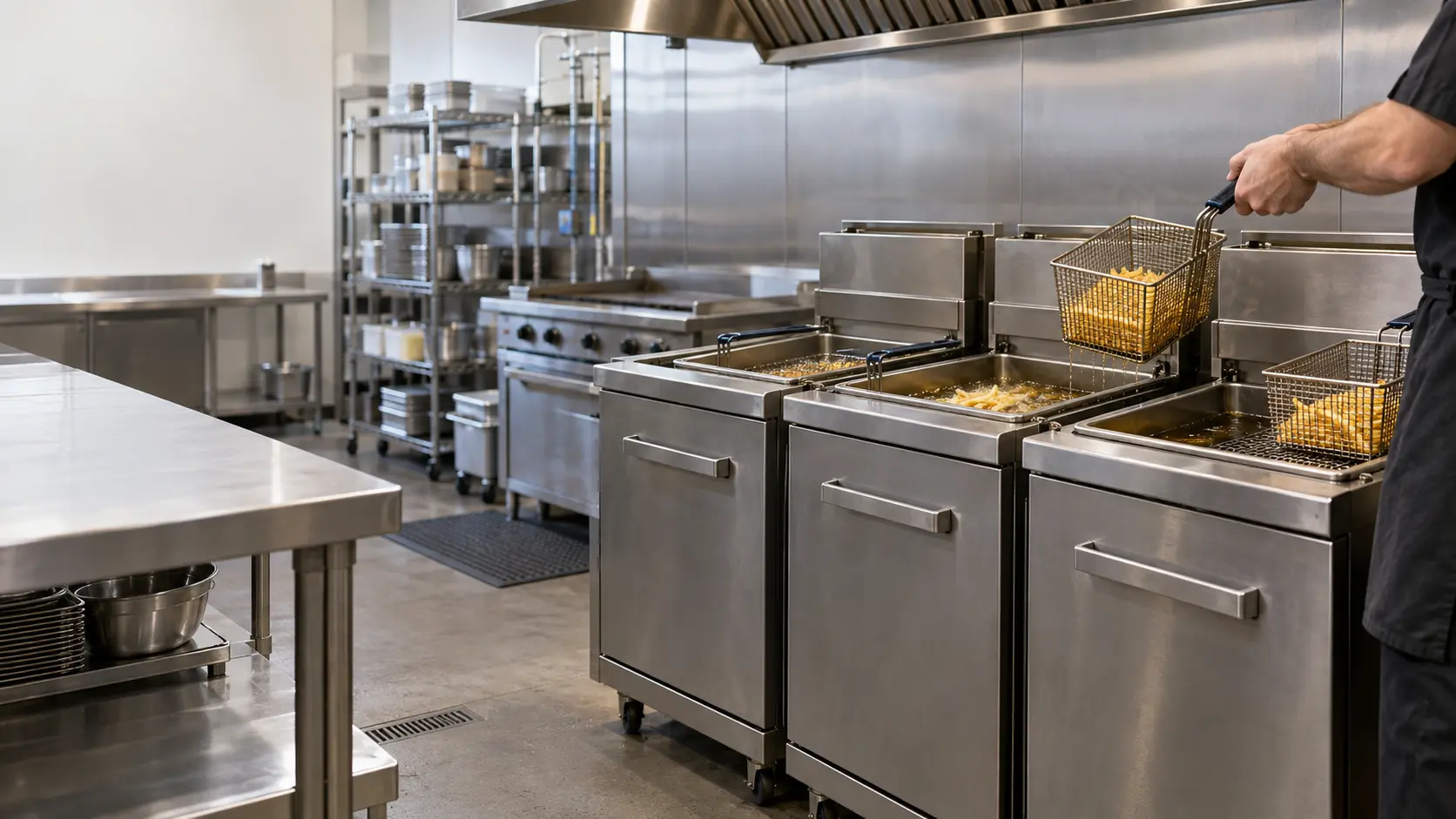
A fryer not holding temperature is most often overloaded baskets, frozen product dropped in too large a batch, tired oil, a fan or flue disturbing the burners, or gas pressure shared with a busy line.
The short answerWhy a dish machine leaves dishes dirty: strainers, wash arms, heat and chemistry
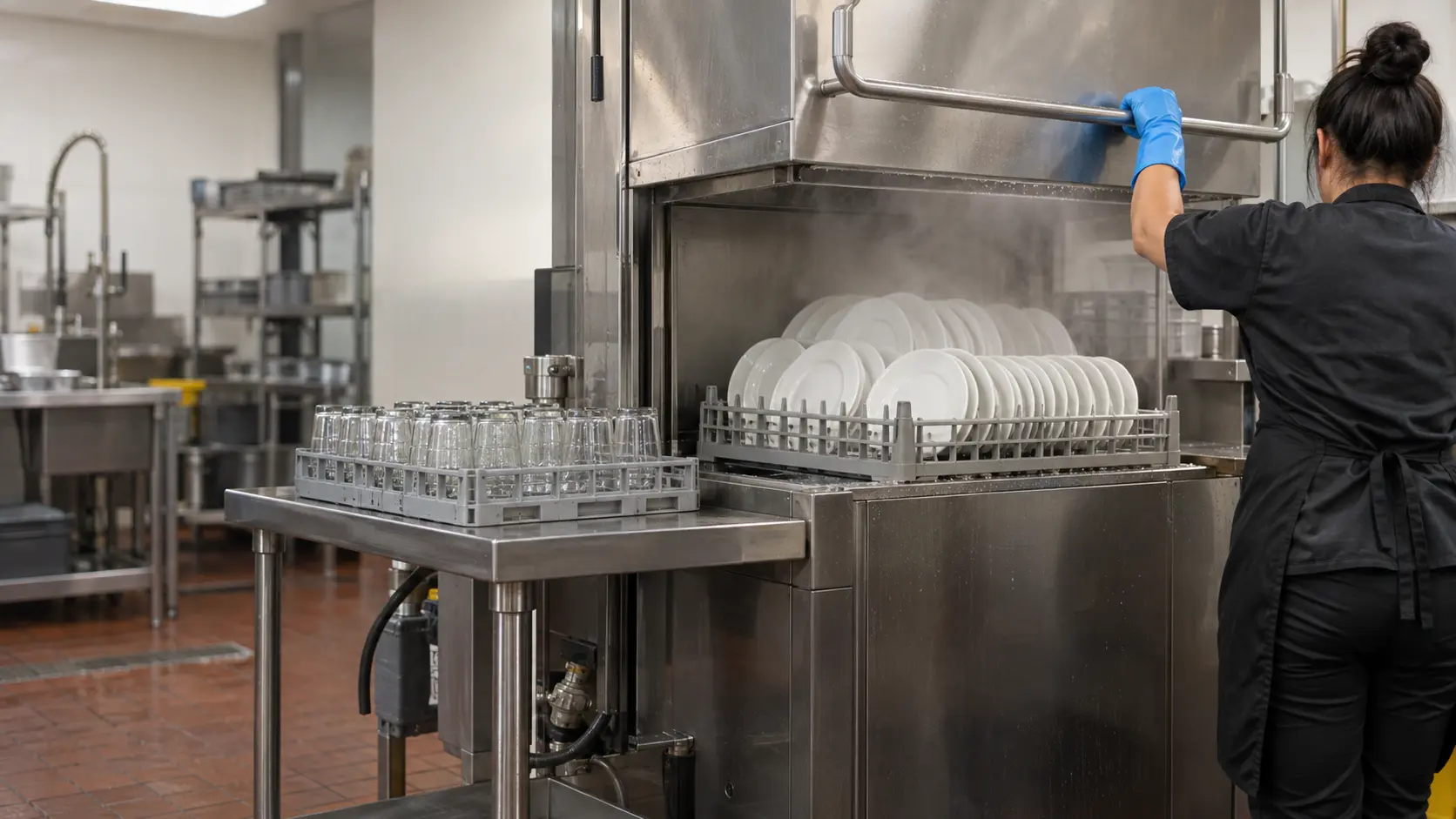
A dish machine not cleaning dishes most often has a clogged strainer, wash arms that are blocked or no longer spin, wash water under its minimum temperature, an empty or air-locked detergent line, hard water, or racks loaded too tight.
When reading
is not enough.
If the checks in these guides did not settle it, the visit picks up from there, stop by stop.
What repairs cost- 01Safety and supply before anything else
- 02The cause, and what it costs
- 03Parts that ride along
- 04Proved under load before we leave
The problems
these answer.
Each has a page of its own, with the causes in the order worth checking.
All 17 problems
Walk-In Cooler Warm Above 41°F With Food Inside
6 causes, cheapest first
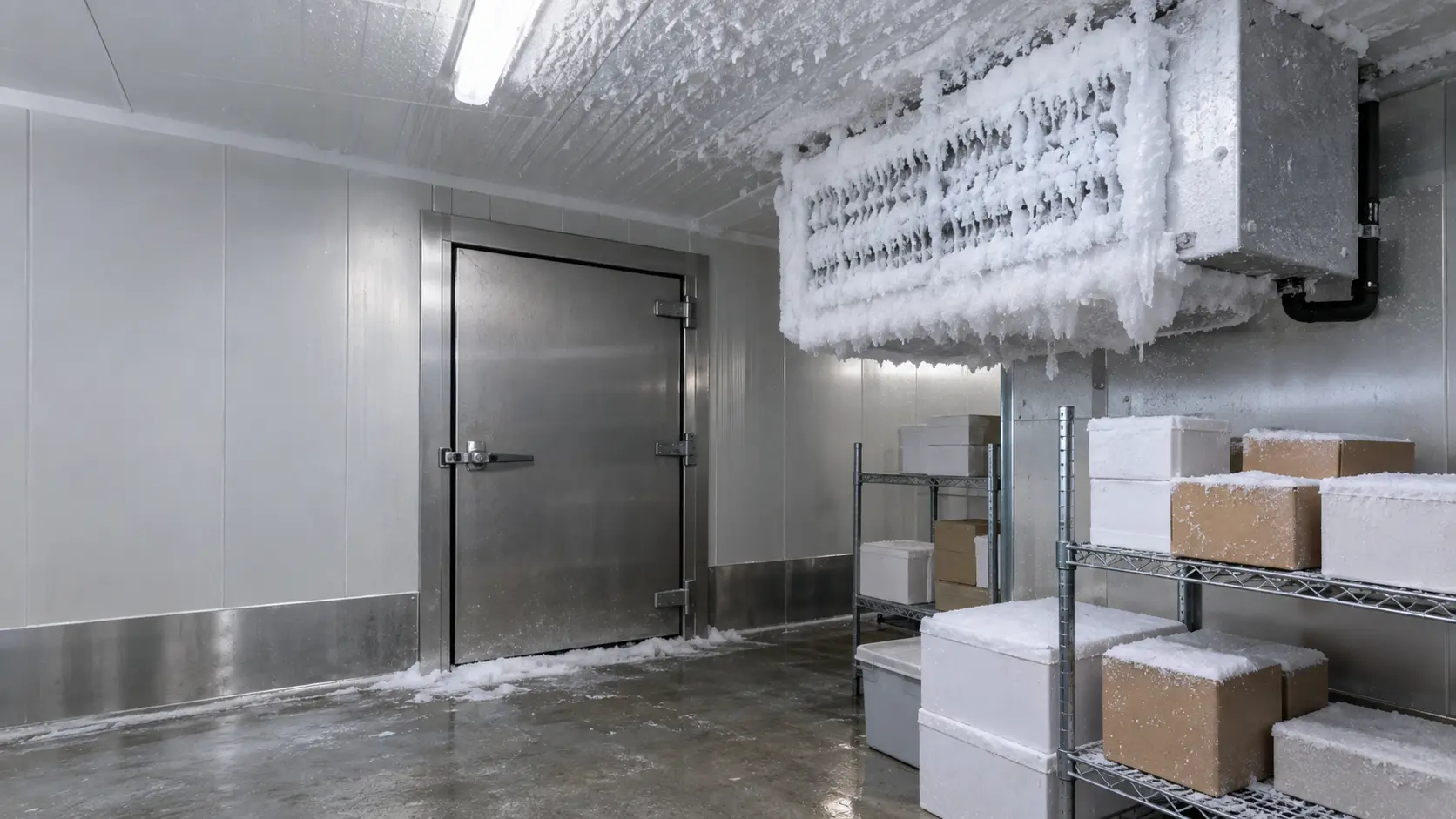
Walk-In Freezer Icing Up on the Coil, Floor and Door Frame
6 causes, cheapest first
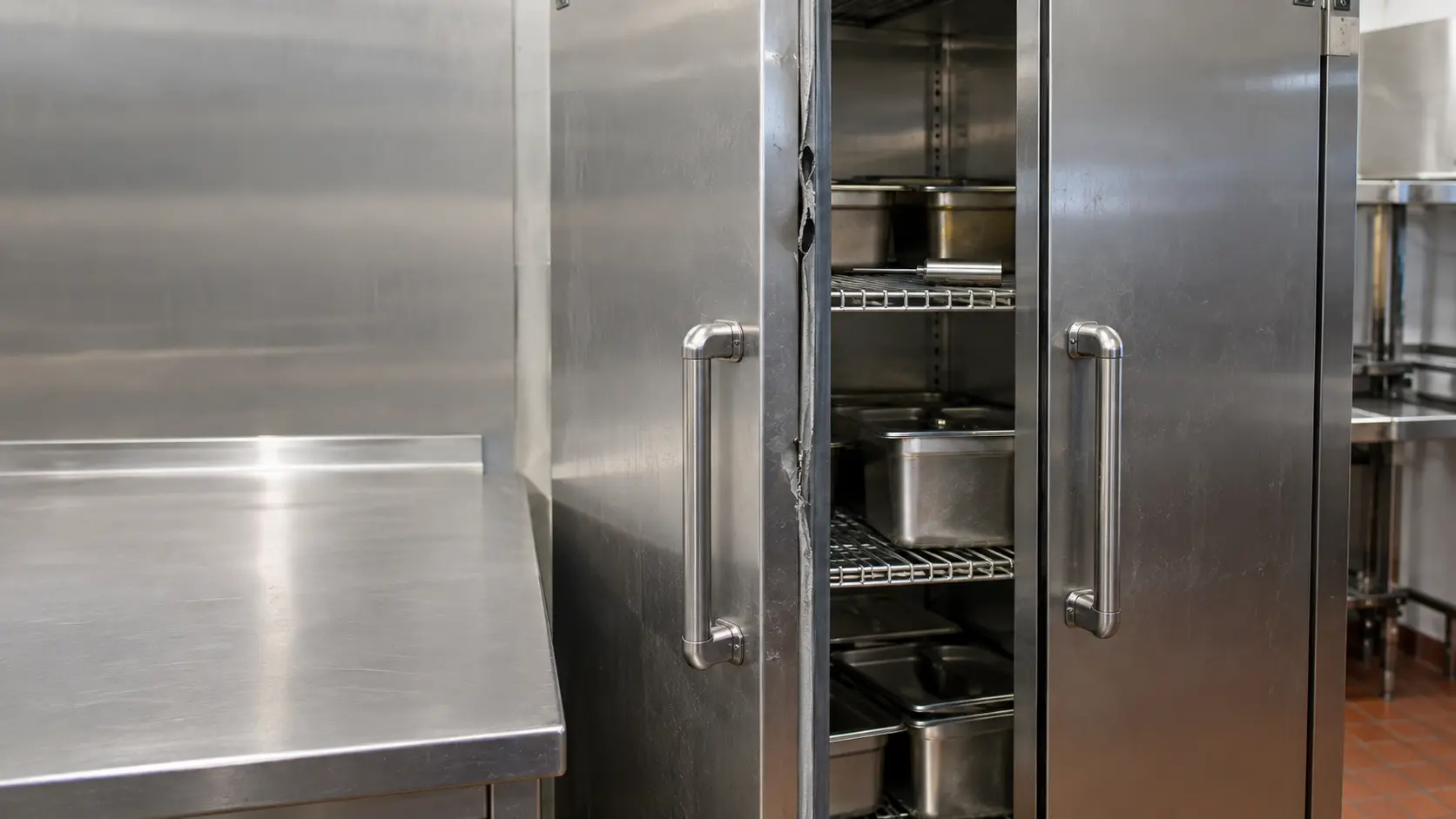
Reach-In Cooler Not Holding Temperature Through a Shift
6 causes, cheapest first
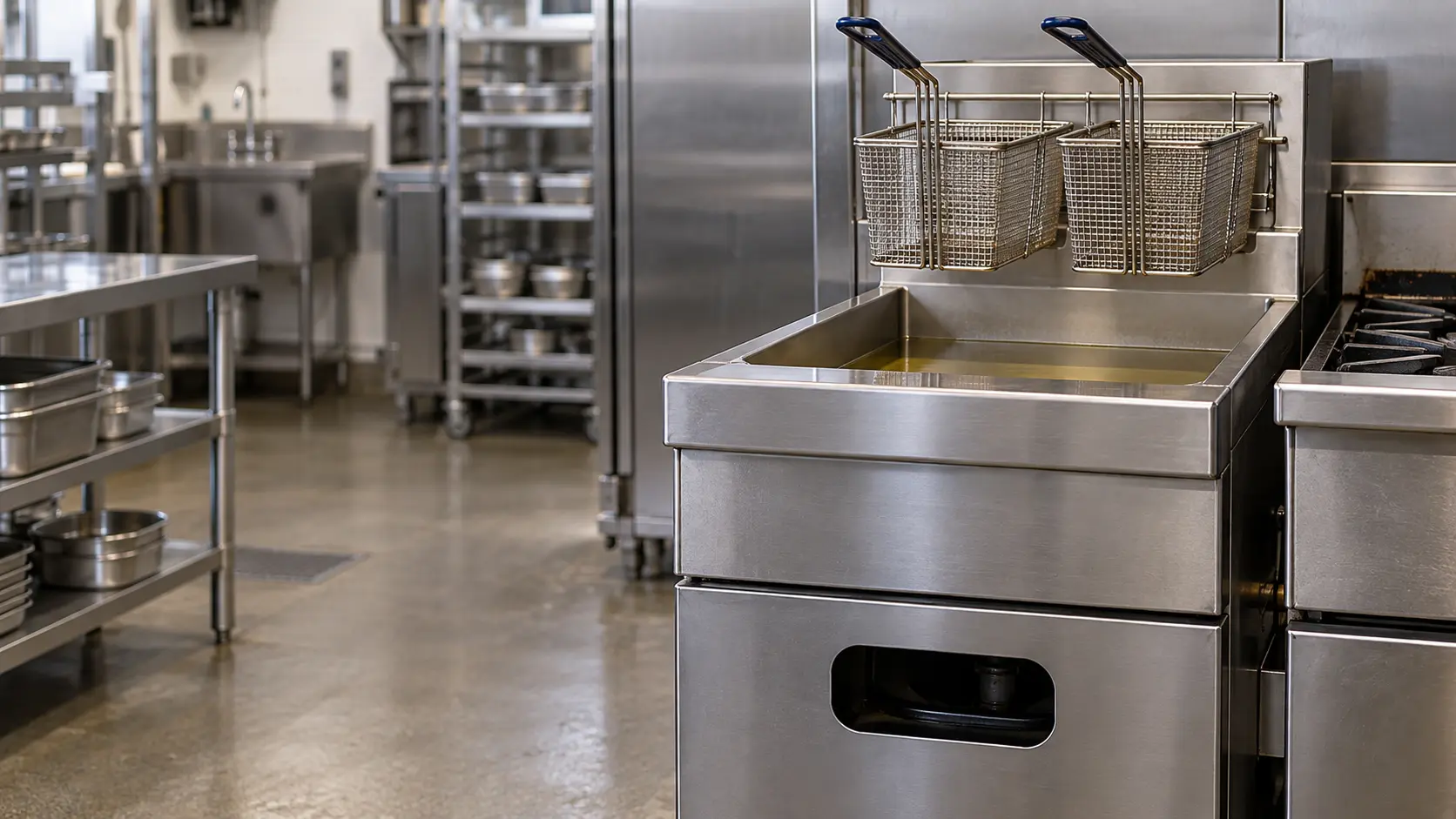
Commercial Fryer Not Heating or Slow to Recover Between Baskets
6 causes, cheapest first

Questions about
common problems.
Which guide fits a problem that touches more than one unit?
Are these guides tied to one make of equipment?
Can the crew work through these during service?
What makes a service visit shorter once it is booked?
The other
sections.
Split by what you are trying to find out rather than by which part of the appliance it concerns.
All guides
Troubleshooting

Maintenance and prevention
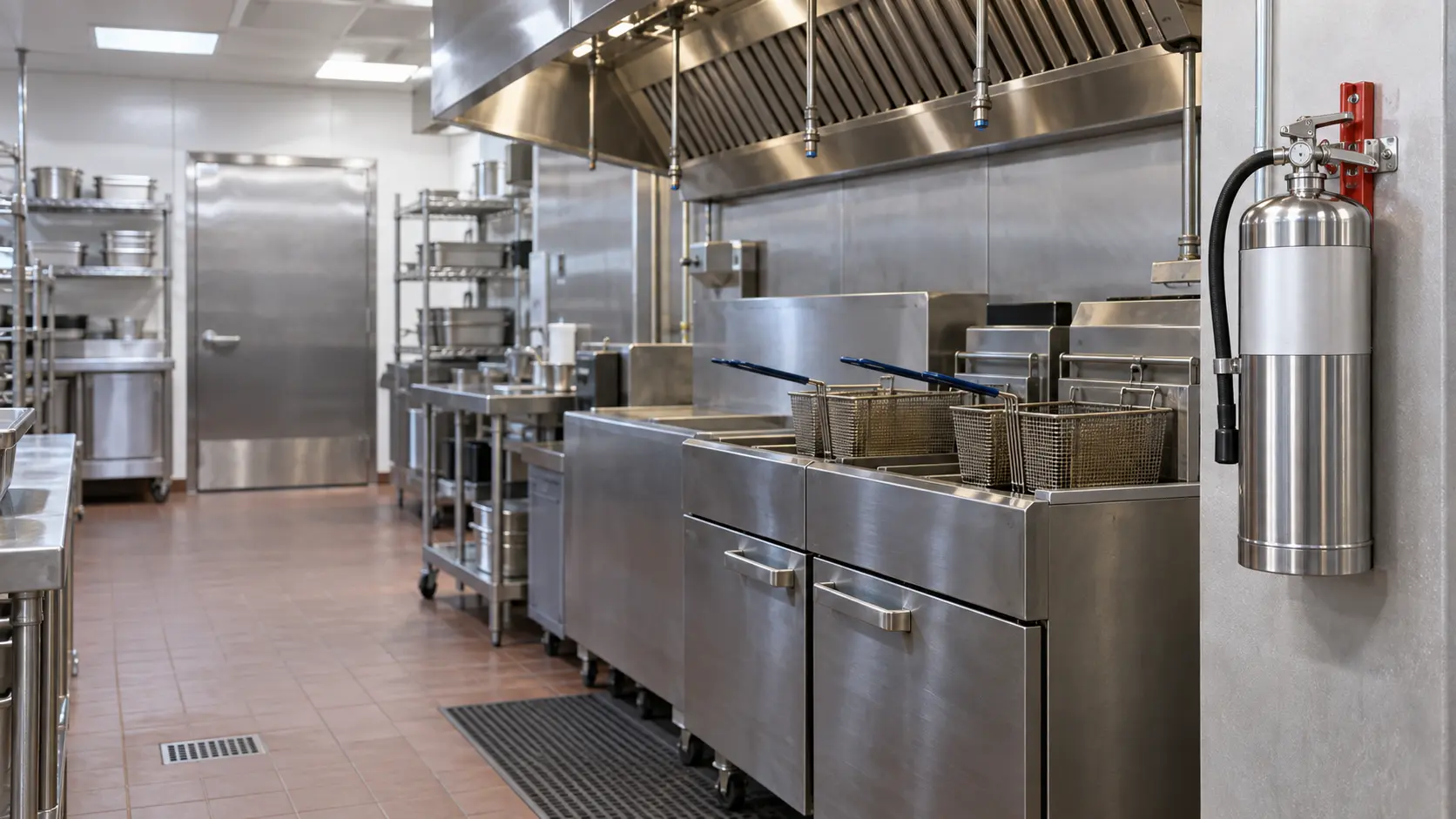
Gas, fire and food safety
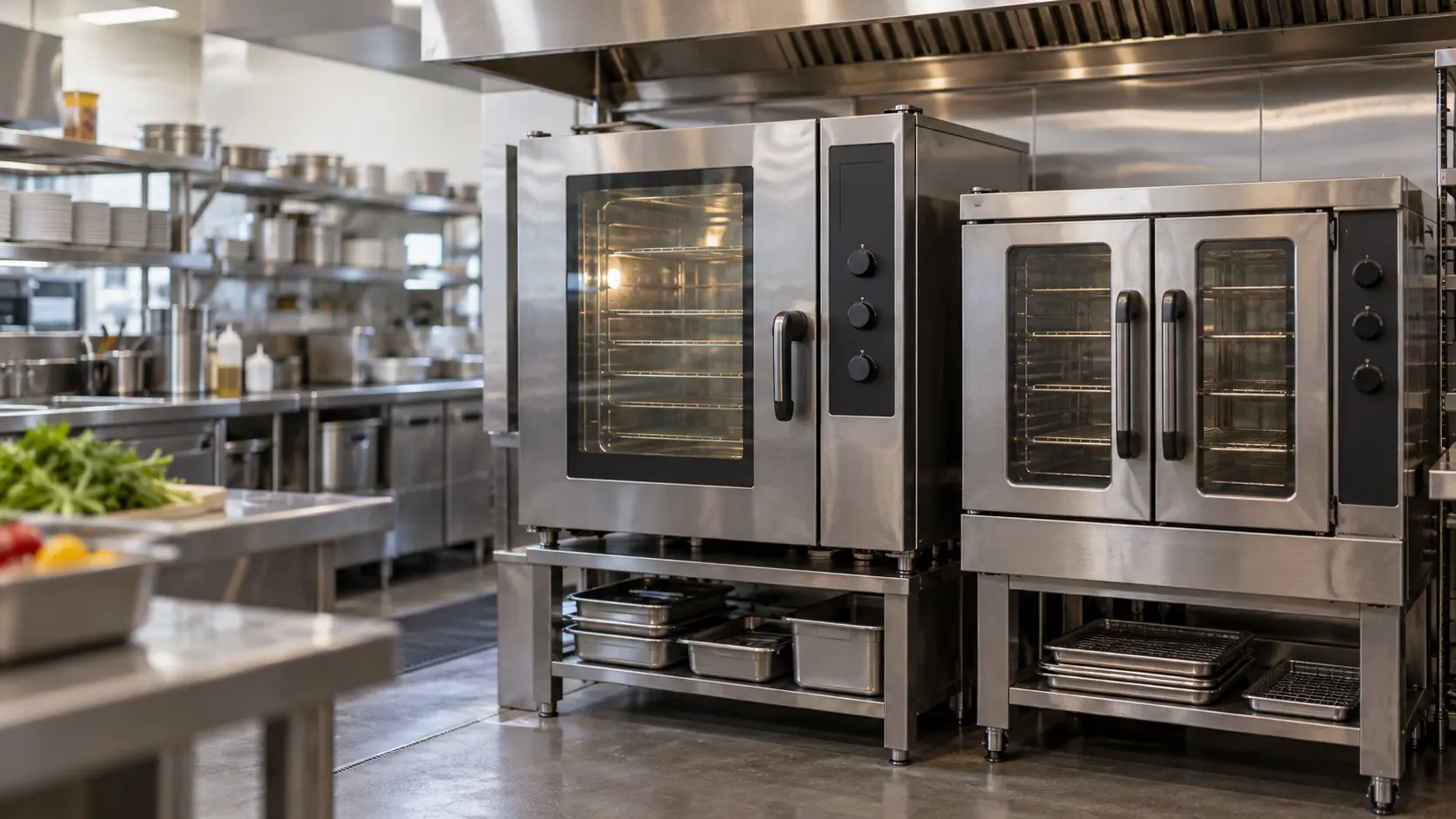
Choosing and comparing
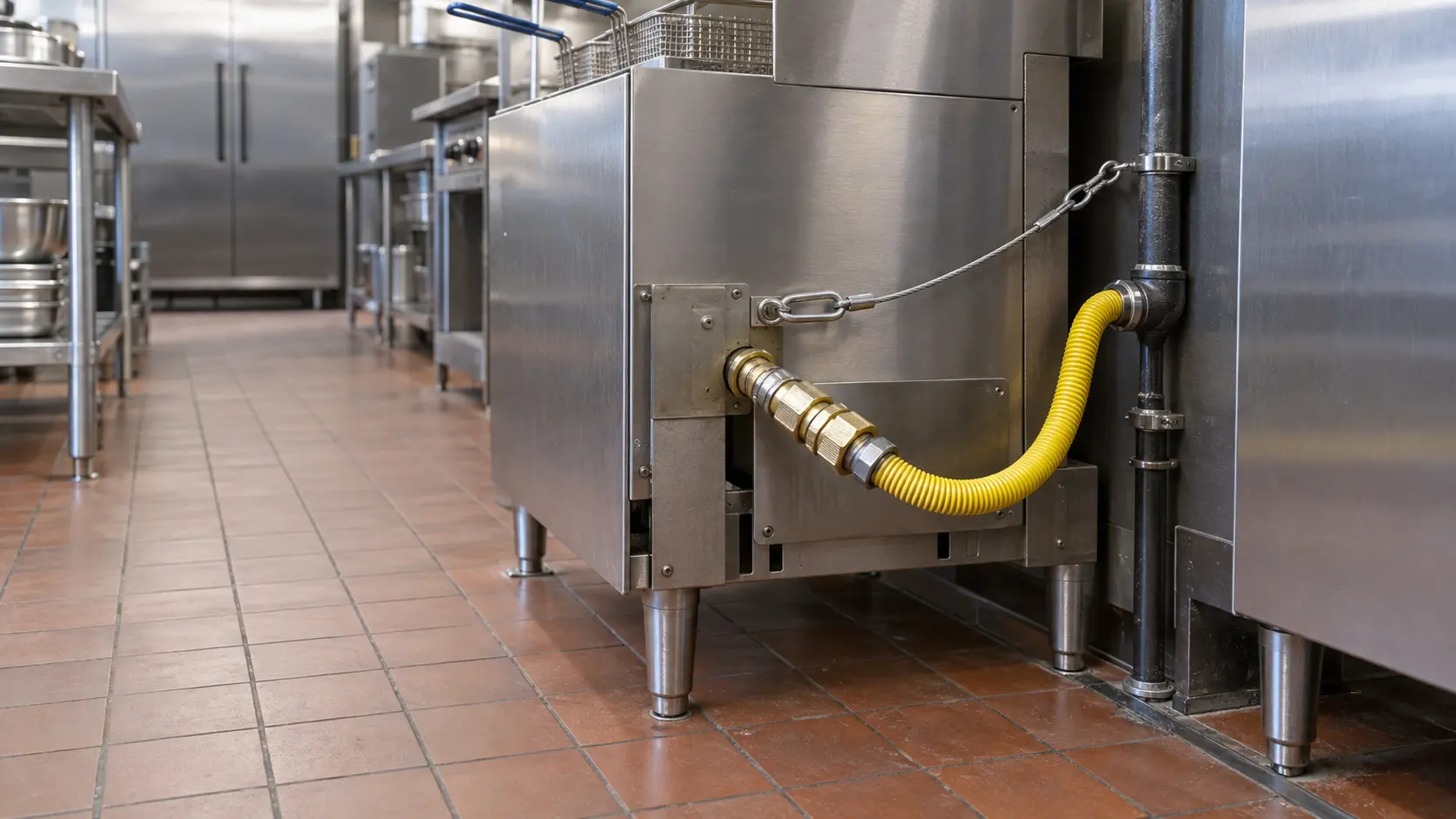
Installation and setup
Start from your question
The four questions most visits start with, each with the guide that answers it.
18 guidesWhere to start Where to startBack to your everyday
Let’s get your commercial appliance working again.
Three short steps online, or one call. Tell us what you are seeing and pick a window that works.