What an agreement usually buys
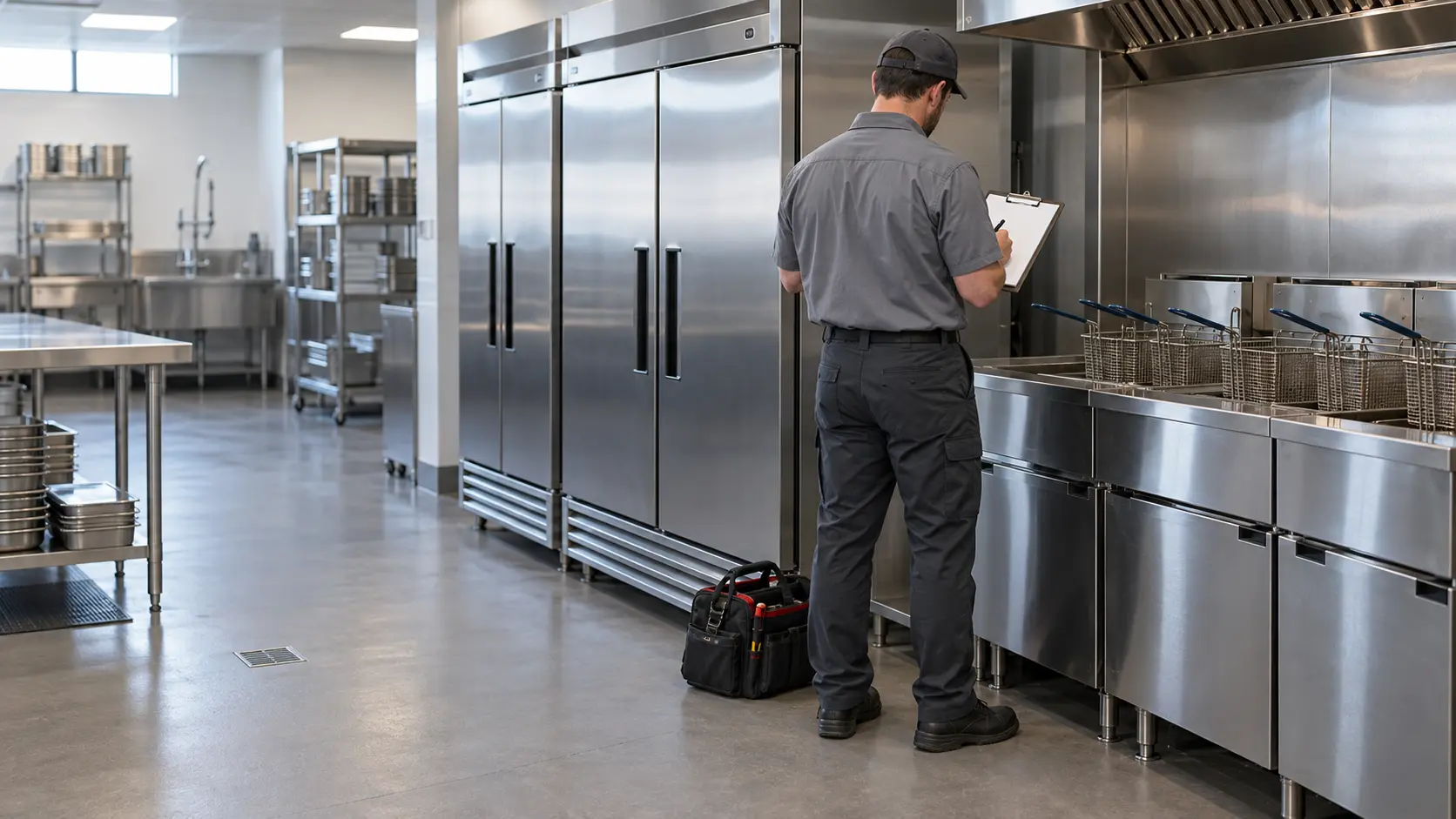
Service agreements come in two broad shapes. A planned maintenance agreement pays for scheduled visits, with a written checklist done on each unit, and bills repairs found along the way separately. A fuller agreement adds some or all of the repair labor and parts, and usually a promised response time.
Neither shape is better in general. A commercial equipment service contract is worth what its visits match: the tasks your particular units need, done at the intervals their manuals set, with a response promise that covers the hours your business actually opens.
Visits the makers ask for anyway
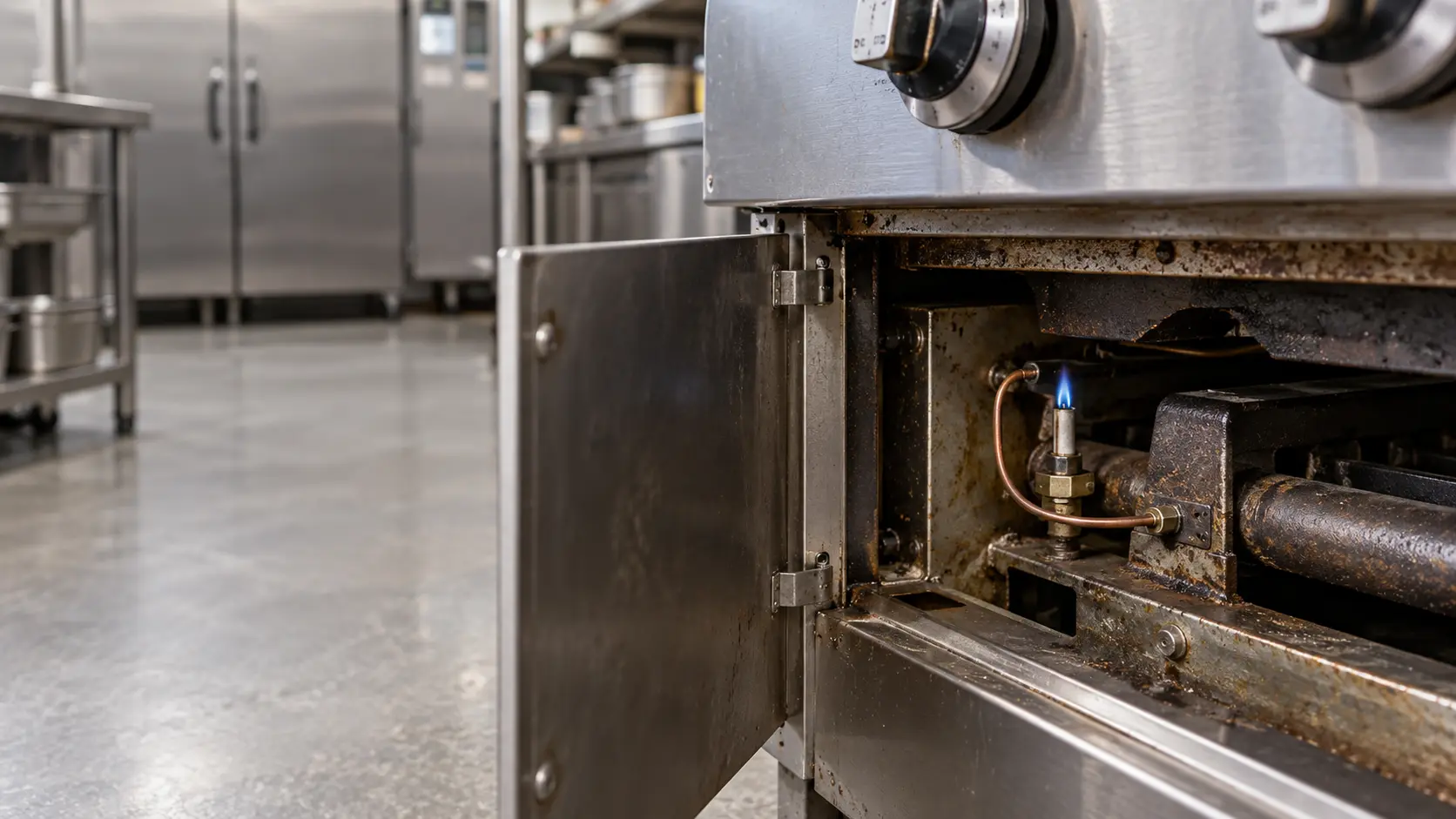
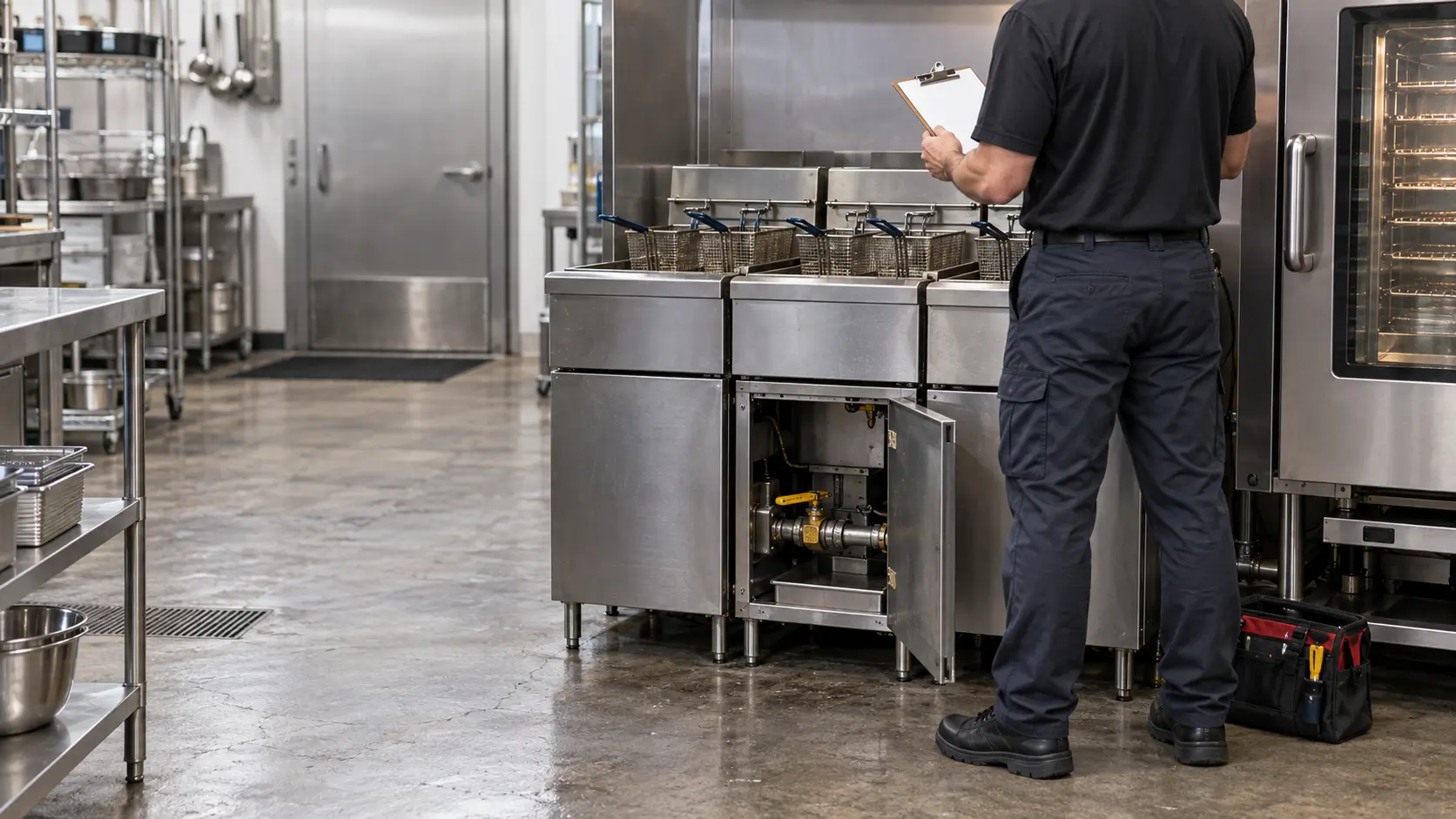
Several makers write a yearly visit into their manuals. Frymaster recommends an inspection at least annually by qualified service personnel, covering burners, gas connections for leaks, manifold pressure against the rating plate, high-limit probes and the built-in filter system. Pitco recommends a yearly check of its gas fryers by a qualified technician, and Rational says its iCombi Pro must be serviced at least once per year by its own service partner network.
If most of your line carries a yearly requirement like these, those visits will be booked one way or another. Folding them into one scheduled round is often simpler than chasing each unit separately.
When paying per visit makes sense
Call-by-call repair suits a business whose equipment is simple, electric and backed up. Two reach-ins where one can hold the other's product for a day, a countertop convection oven, a spare hand sink and a three-compartment sink behind a small dish machine: none of that needs a standing appointment.
It also suits an operator with a capable maintenance person who already cleans condenser coils, changes fryer filter pads and keeps the logs. In that case a contractor adds most value on the jobs the crew should not touch: gas, coolant and live wiring.
- Few units, mostly plug-in electric.
- Spare capacity inside the building while one unit is down.
- In-house staff already running the daily and monthly routines.
- No maker requirement for a yearly inspection on the units you own.

When a standing agreement earns its keep
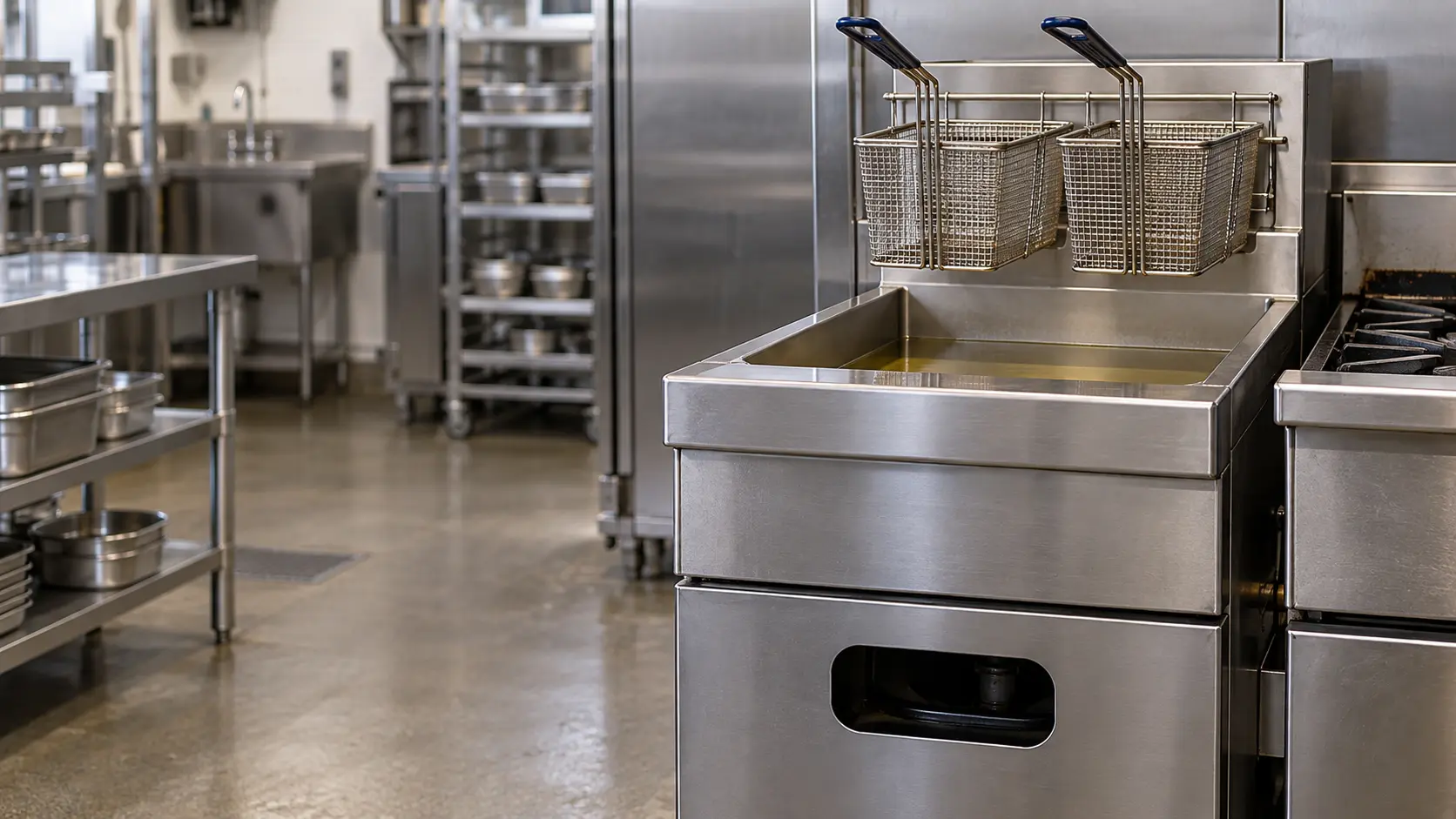
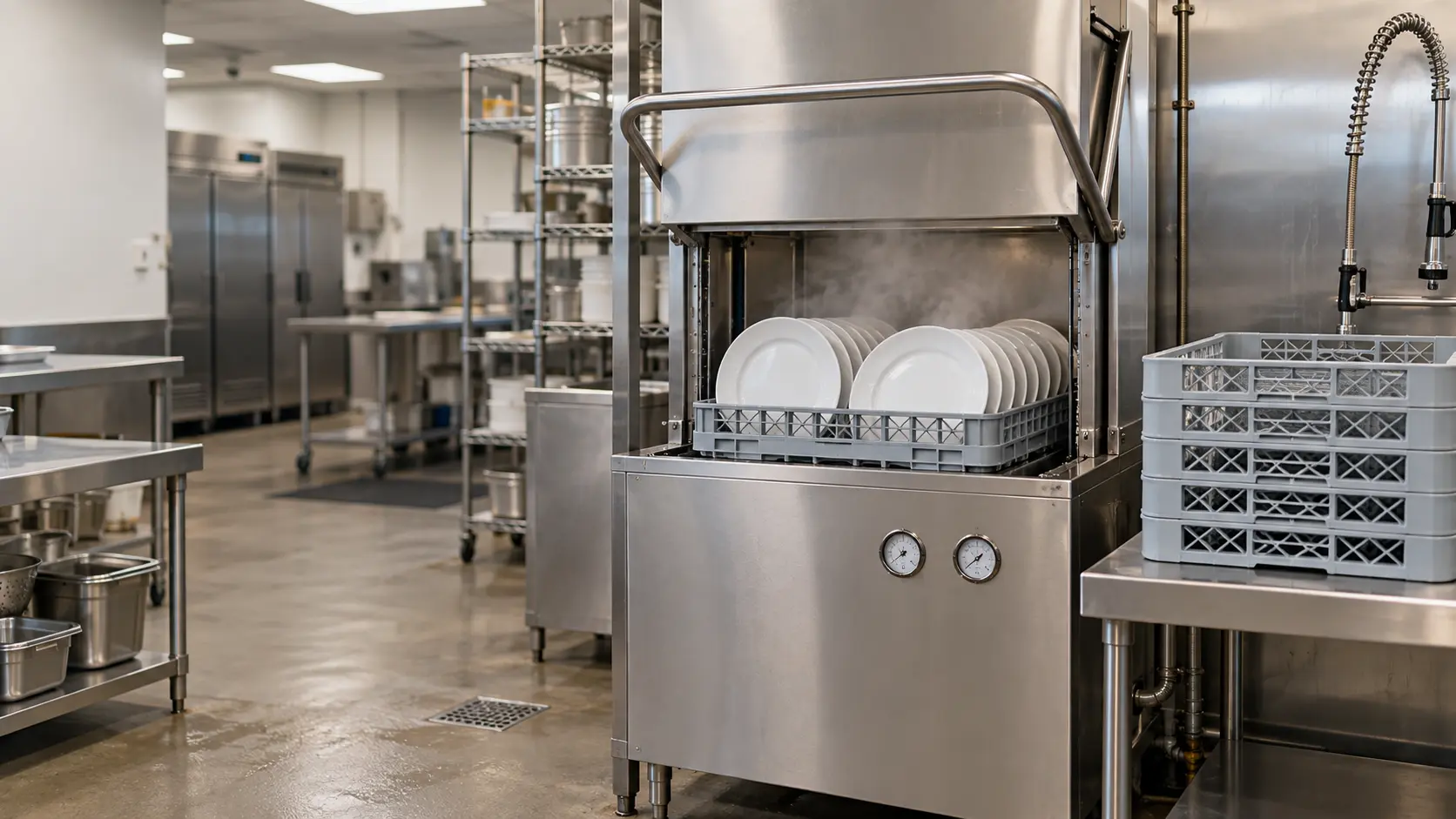
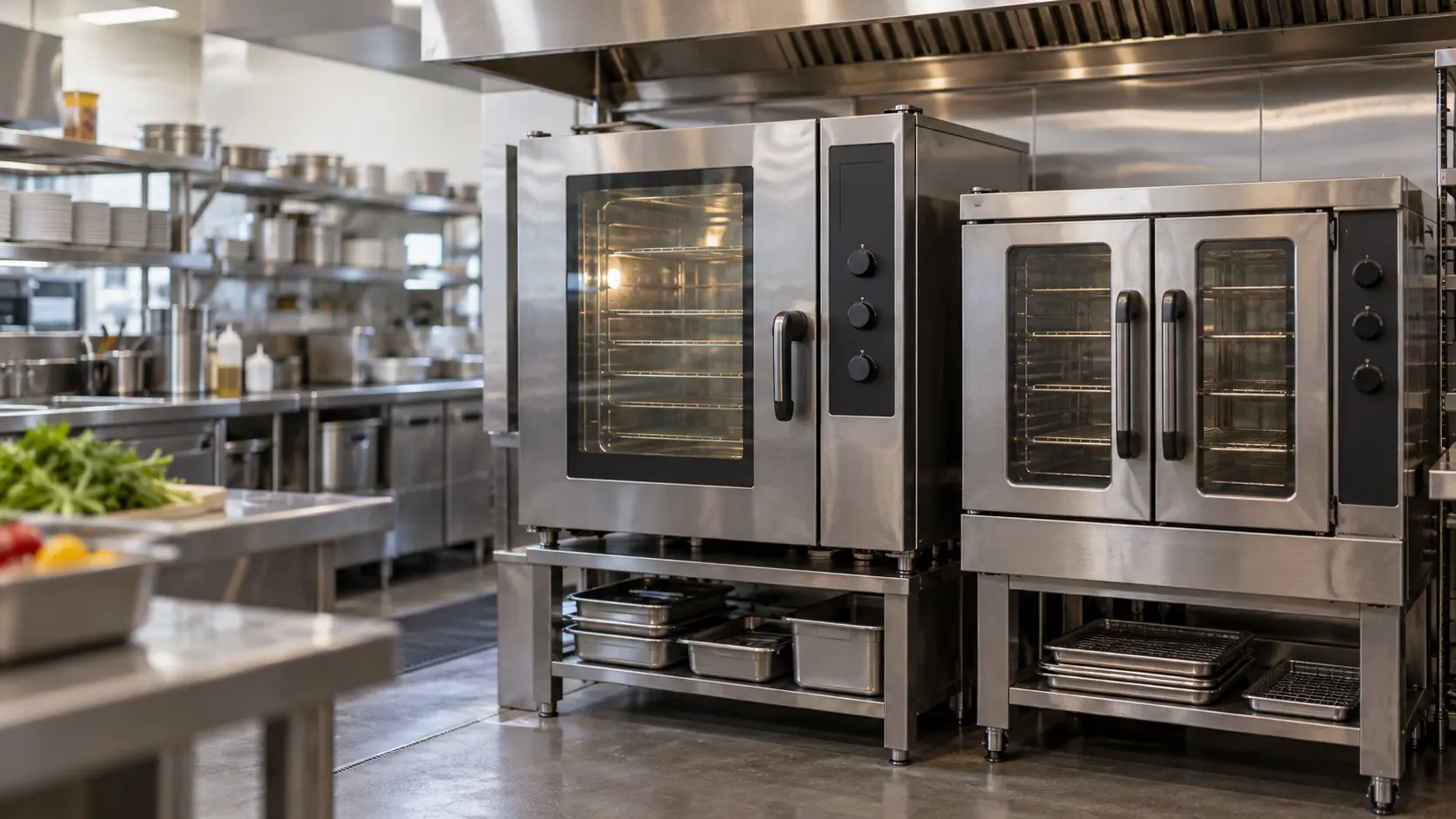
The case for an agreement grows with gas, water and hours. A fryer bank, a combi oven, a steamer, a conveyor dish machine and a row of card-operated laundry machines all build up grease, scale or lint on a timetable, and each one stops a revenue stream when it goes down.
Hobart's own dish machine manual notes that long-term service contracts are offered on its equipment, which says something about how the makers see high-use machines. An operation open seven days, with no second unit behind the one that fails, is where a guaranteed response window is worth reading closely.
Several locations under one owner
Groups with more than one site gain the most from a single agreement: one checklist, one set of records, and a technician who learns how each kitchen is laid out. It also makes it easier to spot a model that keeps failing across locations before buying more of it.
Laundromats and on-premise laundry rooms
Laundry machines follow the same logic with different wear parts. Alliance Laundry Systems asks for the lint filter on its commercial tumblers to be cleaned daily and for the cabinet interior and exhaust duct to be cleaned periodically by qualified service personnel. A store that runs its own daily lint routine but has nobody to clear ducts, check door locks and look at drive belts and bearings gets real value from a scheduled round, while the coin boxes and card readers usually stay with the route operator or the payment provider.
Source: Hobart — LXn and LXGn series dish machine instructions (F41243) — Long-term service contracts are available on this and other Hobart products.
Reading an agreement before signing
Ask for the checklist that will be done on each type of unit, not a general promise of maintenance. Then read how exclusions are worded. The maker's own coverage usually leaves out wear items; Alto-Shaam, for example, excludes light bulbs, rubber gaskets, grease and air filters, racks and glass from its combi oven coverage, and a service agreement may draw the same lines.
Questions to settle in writing
Get the answers on paper, so the person who calls on a Saturday night knows what was agreed.
- How fast someone arrives, during which hours, and on which days.
- Which units and which systems of each unit are included.
- Whether gas checks, coil cleaning, descaling and fryer inspections are on the visit checklist.
- Which parts are excluded, and how parts not in stock are handled.
- What written report each visit leaves behind.
- How the agreement ends, and what happens if you replace a unit mid-term.
Source: Alto-Shaam — Combitherm CT PROformance operator's manual (MN-35948), archived copy — The warranty does not apply to light bulbs, rubber gaskets, grease filters, air filters, racks, jet plates or glass.
Keep one log whichever you choose
The FDA Food Code asks that equipment be kept in good repair and adjusted to the maker's specifications, including doors, seals and hinges. A health inspector judges that by looking at the unit, but a log of visits, readings and repairs shows the pattern behind it and speeds up the next diagnosis.
A simple page per unit is enough: date, who came, what was checked or replaced, and any display codes seen. The same page serves a contract technician, a per-visit technician and the maker, if you ever file a warranty claim.
- Unit name, model and serial number from the data plate.
- Date, who came, and whether the visit was planned or a callout.
- What was checked, cleaned, adjusted or replaced.
- Any display codes, alarms or temperature readings at the time.
- The next task due, and its date.
Source: FDA — Food Code 2022, section 4-501.11 — Equipment shall be maintained in good repair; doors, seals, hinges, fasteners and kick plates kept intact, tight and adjusted to the manufacturer's specifications.