
Dish Machine Not Reaching Temperature on the Wash or Final Rinse
A dish machine not reaching temperature shows a wash or final rinse gauge below its mark, fails a thermolabel test, leaves plates greasy, or makes the inspector note a sanitizing problem.
Mon–Sat, 8am–8pm
- 5 checks before you book
- 5 questions that narrow it
- 6 causes, cheapest first
Book a visit
Three short steps, about a minute.
or call (844) 571-4566
Loading appointment form…
The appointment form couldn’t load. Please try again.
What it
usually means.
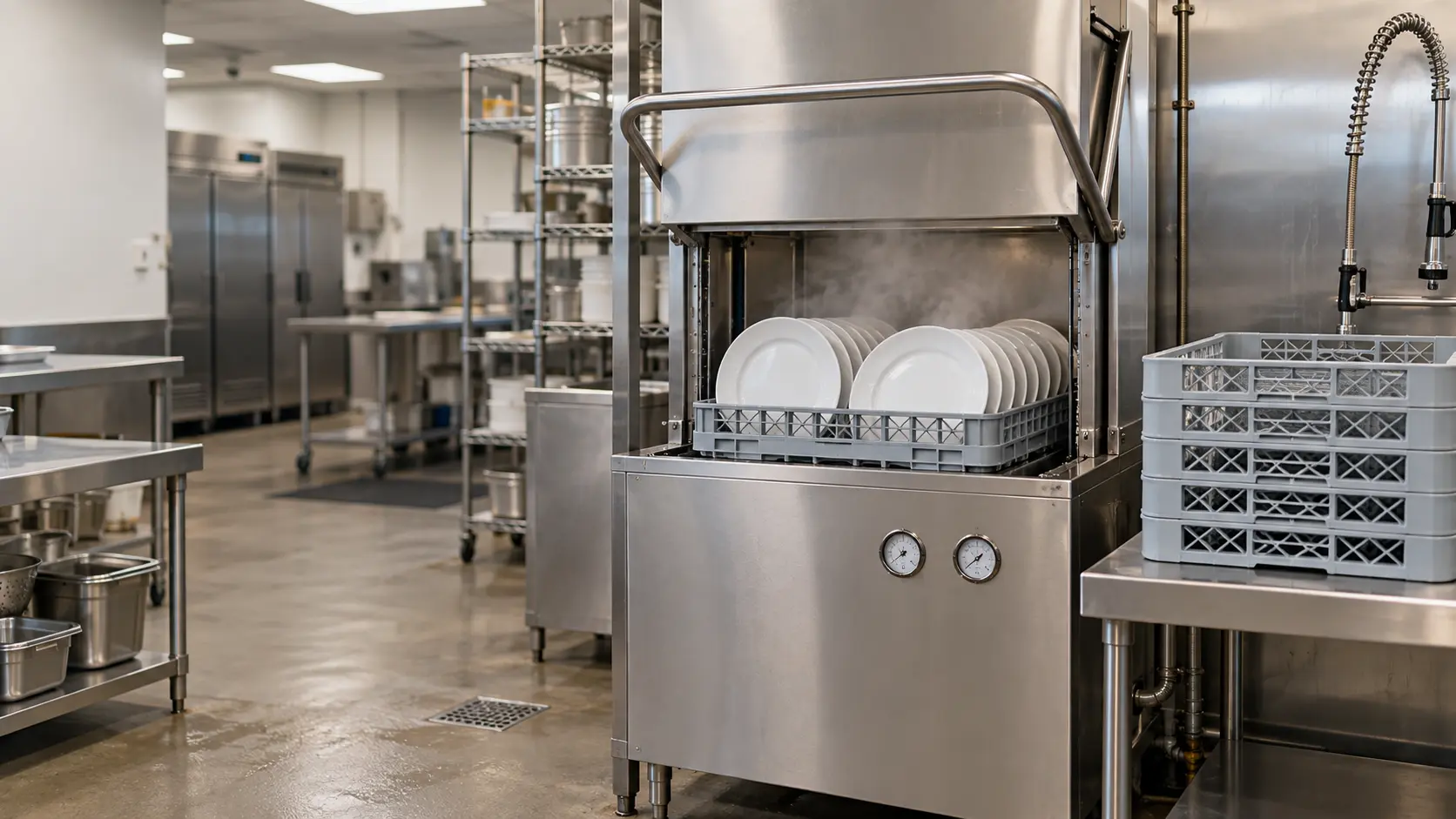
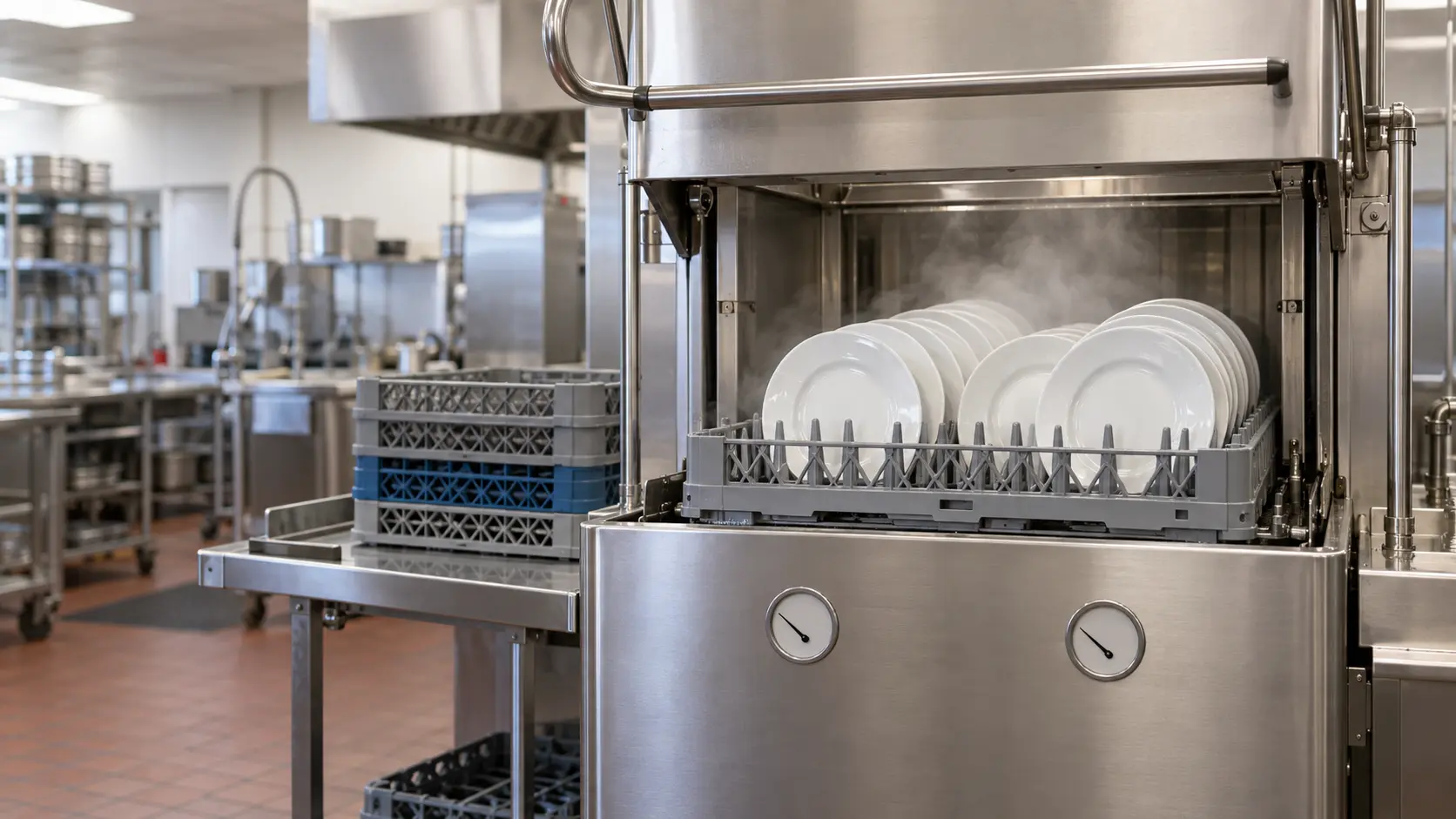
A dish machine sanitizes in one of two ways. A high-temperature machine uses hot water: the wash tank holds its own temperature with a heater, and a booster heater raises the final rinse to the level the data plate states, often around 180°F at the manifold under the FDA Food Code, with some single-temperature door types allowed a lower figure. A low-temperature machine rinses cooler water and relies on a chemical sanitizer pumped in at a set strength. In both, what the health inspector wants is proof that dishes were sanitized, read from the gauges, a thermolabel or a test strip. When the temperatures fall short, the causes run from the building to the machine. Hot water coming in cooler than the machine was designed for leaves the booster unable to catch up. Racks run through back to back during a Friday rush do not give the tank time to recover. On a low-temperature machine, an empty sanitizer container or a chemical pump that has lost its prime leaves the rinse without its sanitizer. Inside the machine, a tank heater or its thermostat fails, a booster element scales and burns out, or a gauge reads wrong.
 The 6 causes, cheapest first
Answer these first
Is it a high-temperature machine with a booster, or a low-temperature machine using chemical sanitizer?
What do the wash and final rinse gauges read during a cycle, compared with the data plate?
Does a thermolabel run through on a plate turn, or does a test strip show sanitizer?
Is the building hot water feeding the machine at its usual temperature?
Does the problem appear only during a rush, or from the first rack of the day?
Check these
before you book.
Dish machine not reaching temperature: 5 checks, and none of them costs anything.
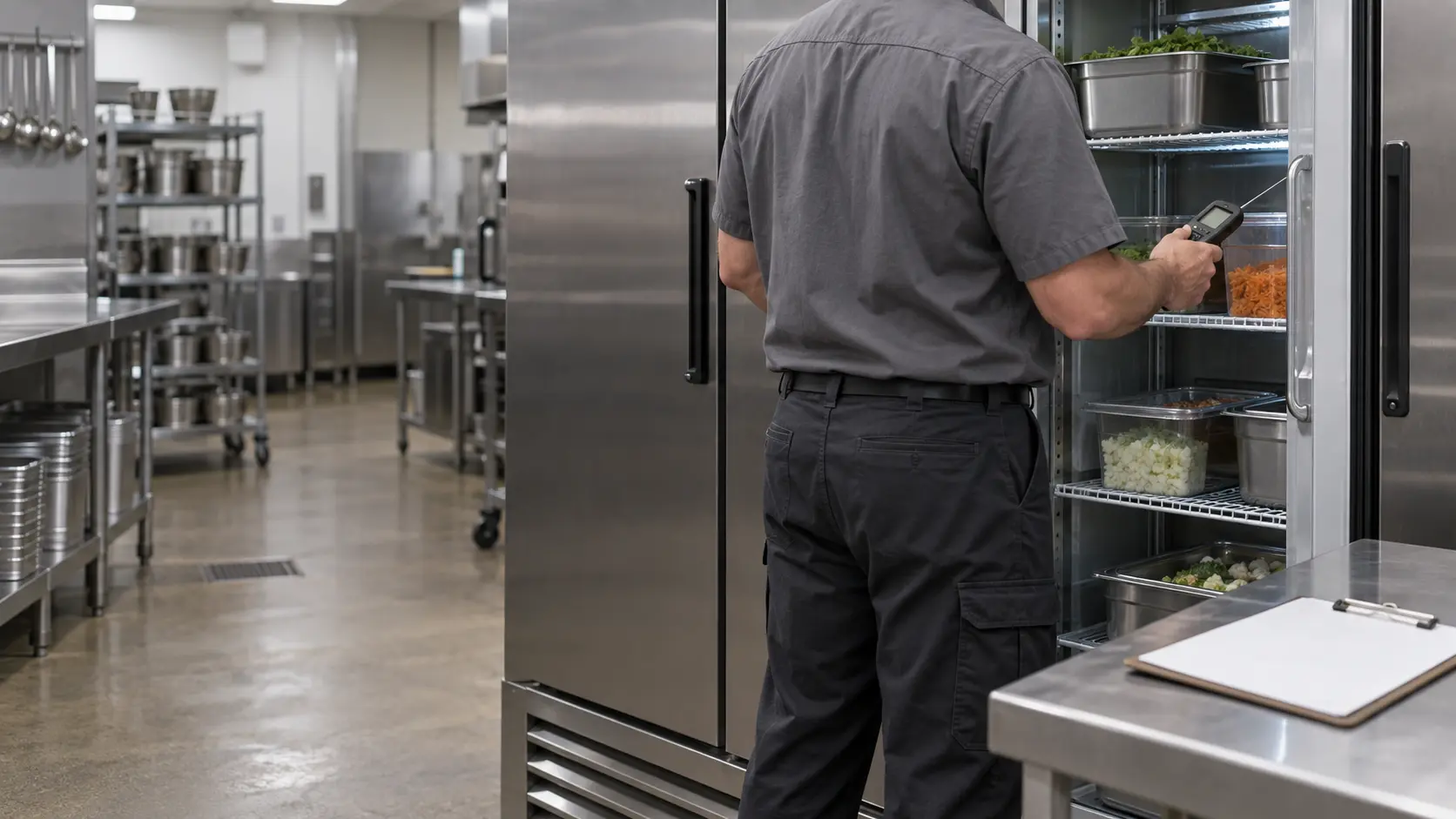
Read the wash and final rinse gauges during a full cycle and write down both numbers with the time.
Run a thermolabel on a plate on a high-temperature machine, or test the rinse with a strip on a low-temperature one.
On a low-temperature machine, look at the sanitizer container and its pickup tube for an empty jug or a loose line.
Also worth checking
- Until the machine is sanitizing again, use a three-compartment sink as your health department allows.
- Leave the booster, the heaters and the electrical box to the technician.
How soon does it need a visit?
A machine that is not sanitizing puts dishes back into service unsafe, so kitchens book the same or next day and switch to the three-compartment sink meanwhile. One that runs slightly cool only during a rush can wait for a booked visit within a few days.
The causes,
cheapest first.
6 things dish machine not reaching temperature on the wash or final rinse turns out to be, from racks run back to back faster than the tank recovers to incoming hot water too cool for the booster.
The cost guide-
01 no repair
Racks run back to back faster than the tank recovers
On a rush the wash water and booster fall behind when racks go in without a pause. Waiting for the ready light, or the gauges, between racks lets the heat catch up.
-
02 no repair
Sanitizer container empty on a low-temperature machine
The chemical pump draws from a container on the floor, and an empty one leaves the rinse unsanitized. It is replaced and primed, and your chemical supplier checks the strength.
-
03 lowest
Rinse or tank gauge reading wrong
A gauge that reads low makes a working machine look like it fails, and one that reads high hides a real problem. It is checked against a reference and replaced if it is off.
-
04 moderate
Wash tank heater or its thermostat failed
Without its heater, the wash water cools with every rack until grease stays on the plates. The heater or the thermostat is tested and replaced.
-
05 moderate to highest
Booster heater scaled or its element burned out
Hard water coats the booster element until it cannot heat, then burns it out. The element is replaced, the tank descaled, and water treatment suggested.
-
06 varies
Incoming hot water too cool for the booster
A booster is sized to lift water from a set starting point; if the building's water heater supplies cooler water, it cannot reach final rinse. The visit measures the supply and says where the shortfall is.
What else
it could be.
Most often confused with dish machine not draining: dirty water left in the tank, then restaurant equipment burning smell: scorched oil, hot wiring or lint.
All problems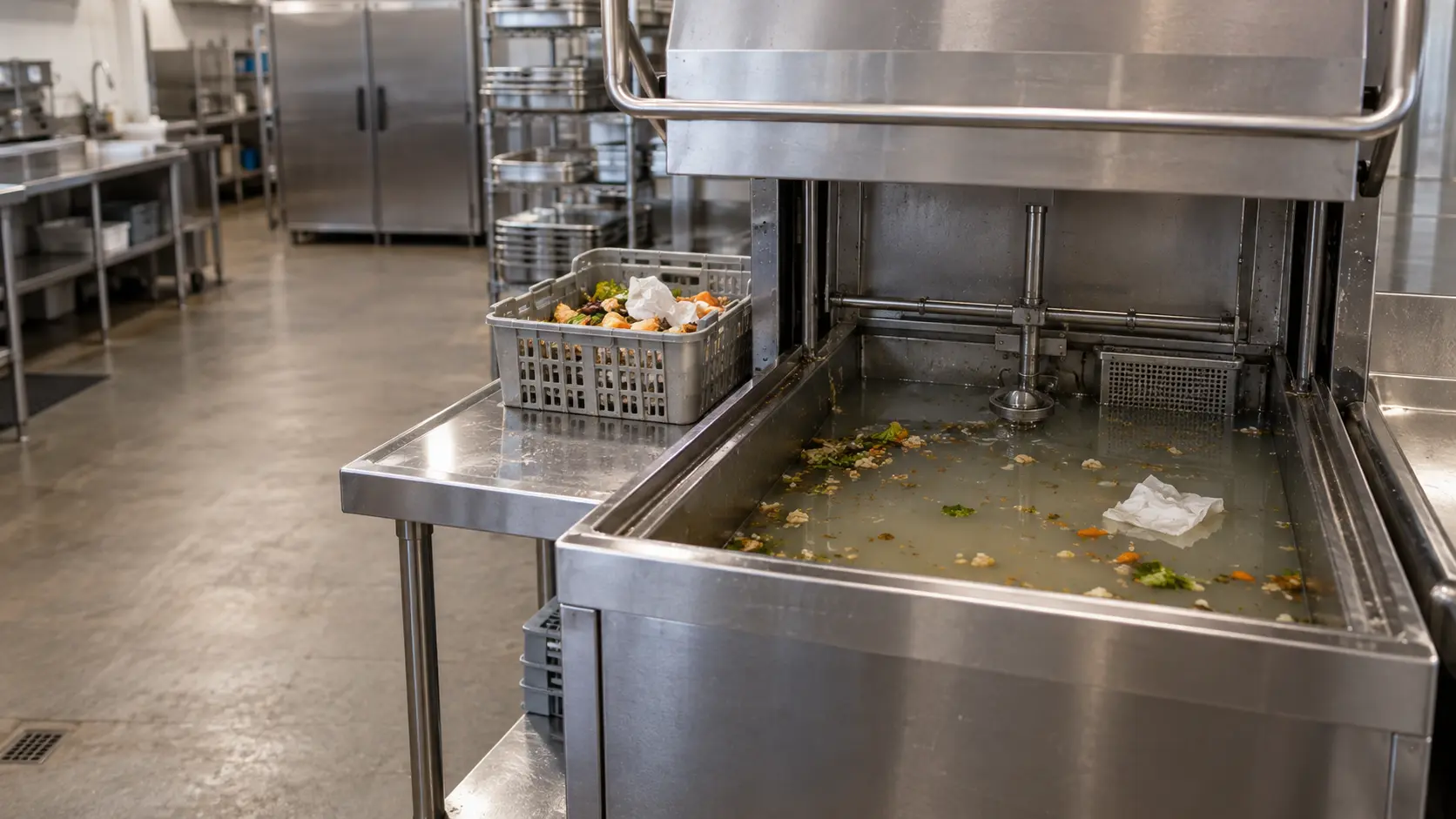
The makes
it happens on.
35 makes on this site; dish machine not reaching temperature on the wash or final rinse can show up on any of them. Each mark opens that make's own page.
All 35 brandsDish Machine Not Reaching Temperature on the Wash or Final Rinse,
where we come out.
9 metros, each with its own page.
All service areasTampa BayFL · 31 areas
Miami / South FloridaFL · 47 areas
New York MetroNY · 75 areas
HoustonTX · 36 areas
ChicagoIL · 50 areas
Los AngelesCA · 95 areas
San DiegoCA · 31 areas

Questions about
dish machine not reaching temperature on the wash or final rinse.
What final rinse temperature does the health inspector look for?
Can we raise our building water heater to help the booster?
Our low-temperature machine passes the temperature but fails the test strip. What now?
Is a thermolabel better than the gauge?
Back to your everyday
Still seeing dish machine not reaching temperature on the wash or final rinse?
Book with what you checked above — 5 answers save the technician the first part of the visit.