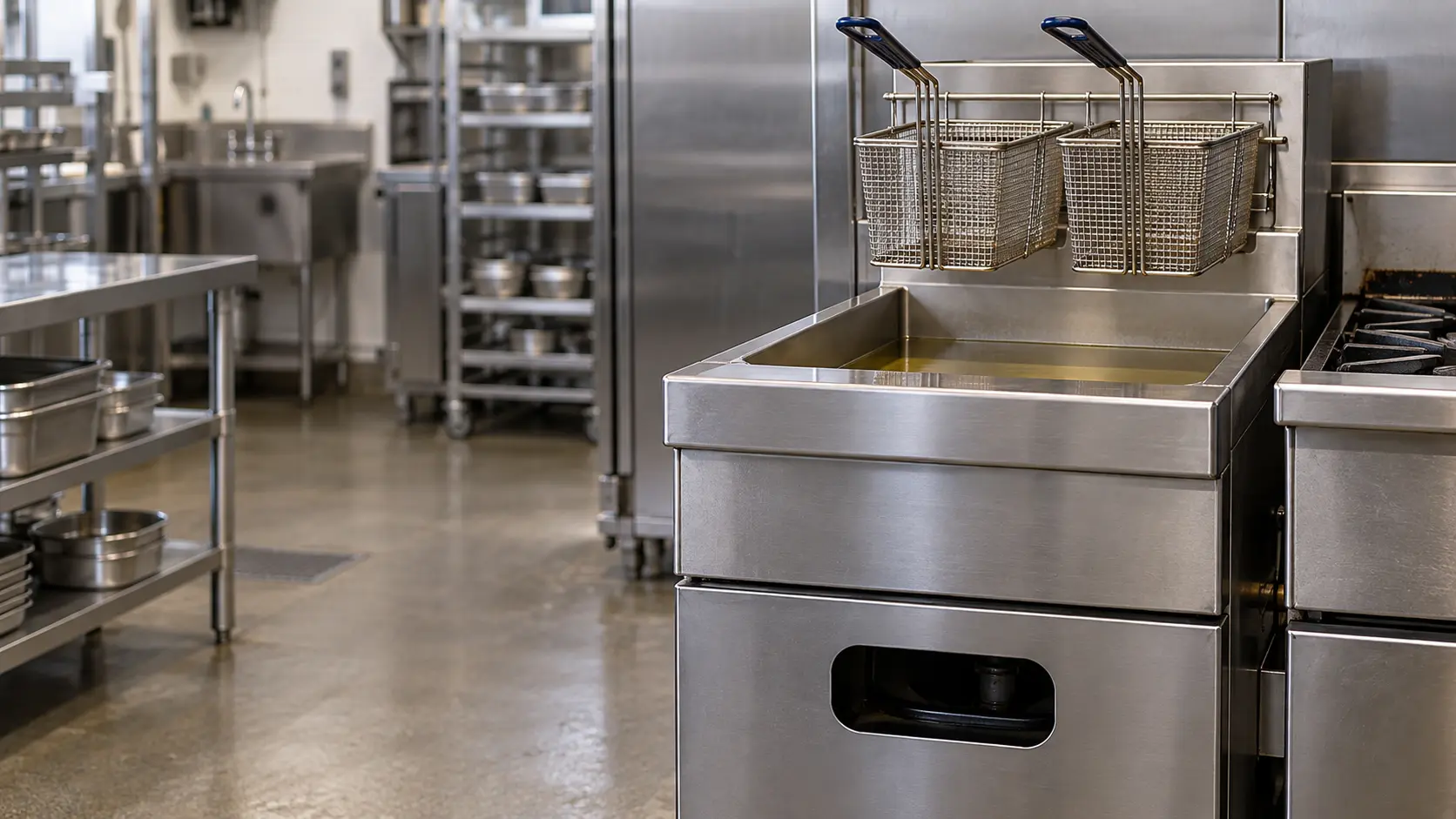


What should be checked first when a fryer is not heating?
Check what feeds the fryer before touching the fryer: the gas or power supply, the oil level and the controller setting. A surprising share of calls end here, and every item takes under a minute.
Gas or electric supply
On a gas fryer, check that the shutoff valve on the line is open and that other gas equipment on the same line works. A line crew that finds the range burners weak has found a supply issue, not a fryer issue. On an electric unit, check the breaker and look at the cord and plug on a caster-mounted unit.
Oil level and position
Never run a fryer with the oil below the minimum line, and know that some models have a low-oil sensor that stops the heat until the vat is filled; the owner's manual says whether yours does. Make sure the drain valve is fully closed; a half-open valve on a vat in the middle of service loses oil quietly.
Controller setting
A controller moved to a melt cycle, to a different product setting or to standby will look like a fryer that is not heating. Read the display before anything else, and check what controller alarms on commercial equipment are asking for if a message is showing.
Why will the pilot not stay lit?
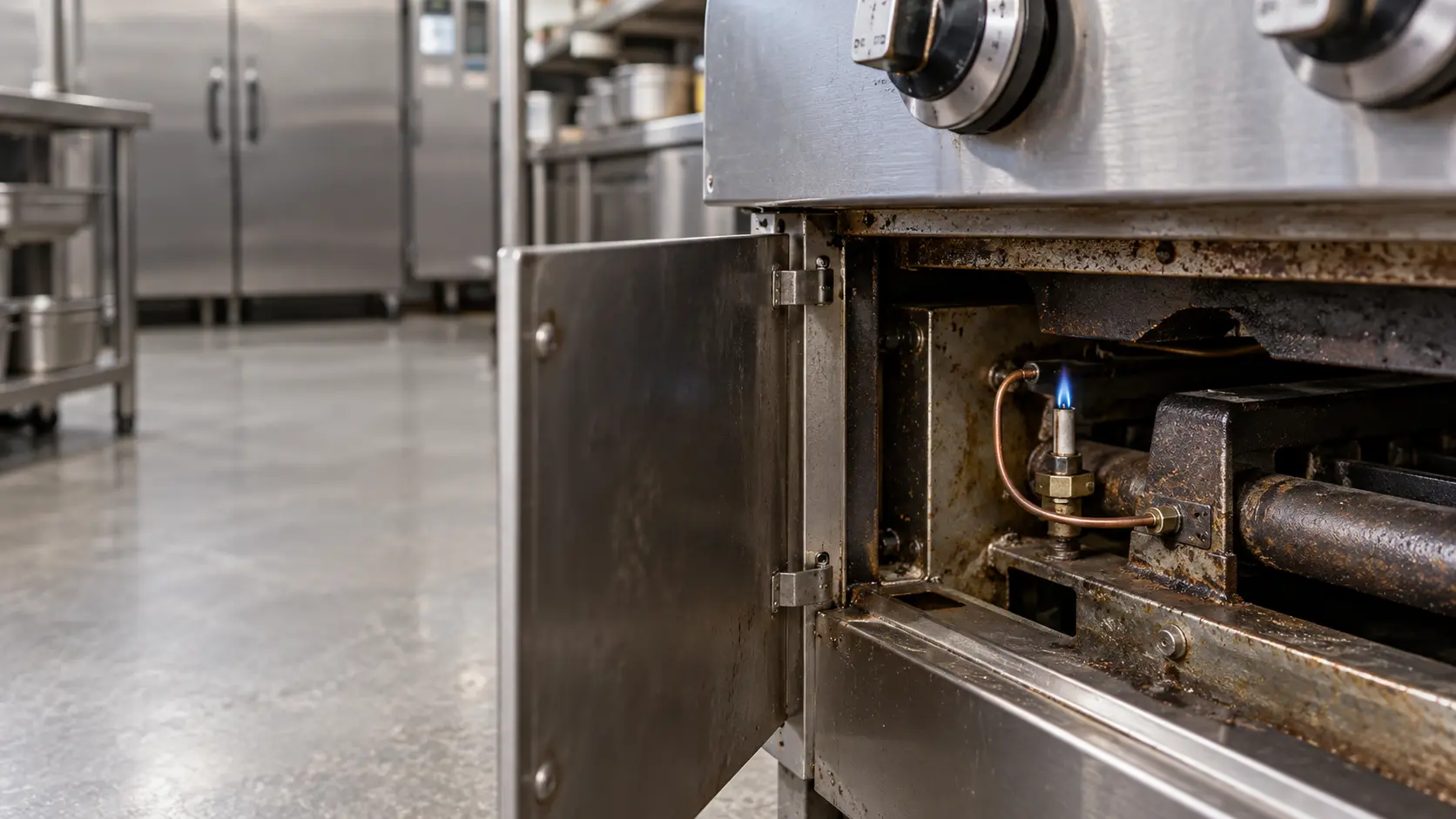
A pilot goes out for three common reasons: air movement, a dirty or worn pilot assembly, or a safety device that no longer proves the flame. The first is something you can see; the other two need a technician.
- Look for a draft: a door propped open, an exhaust fan that has been changed, a makeup-air vent pointed at the fryer.
- Look at the flame through the pilot window; a weak, lazy or yellow flame points to a dirty orifice.
- Note how long it holds; a pilot that lights and drops in seconds suggests the flame-proving device is not sensing it.
- Do not attempt relights over and over; each attempt can release gas into the cabinet.
Follow the relight steps on the fryer's own data plate or in the owner's manual for your model, and wait the full purge time the plate lists before lighting. A pilot that will not hold after two careful attempts goes to a technician. The pilot that will not stay lit page covers what the visit includes.

What does the high-limit reset do, and how often should it be pressed?
The high-limit is a separate safety switch that cuts the heat if the oil gets far hotter than the thermostat setting, and many fryers have a small reset button on it. Pressing it once after a trip is reasonable; pressing it again and again hides a real problem.
Where it sits
On many models the reset is a small button behind the cabinet door near the thermostat, or on the controller panel. The owner's manual for most models shows the spot. Let the oil cool first; on many units the reset will not hold until the limit has cooled, and a hot unit can trip again at once.
What a trip tells you
A single trip means the oil got hotter than it should, most often because the thermostat or probe let it run past the setting. A trip that returns, or one that happens while the oil is not very hot, means the thermostat, the probe or the high-limit itself is failing. Treat the high-limit as a safety device that is doing its job.
| Symptom | Most likely area | What you can do |
|---|---|---|
| No heat, no flame | Supply, pilot, gas valve | Check valve, oil level, relight once |
| Heats slowly | Burners, thermostat, load | Thermometer check, smaller loads, a boil-out |
| Heats, then cuts out | High-limit or probe | Reset once, then call |
| Oil hotter than the setting | Thermostat or probe | Shut it down |
How do I check whether the thermostat is telling the truth?
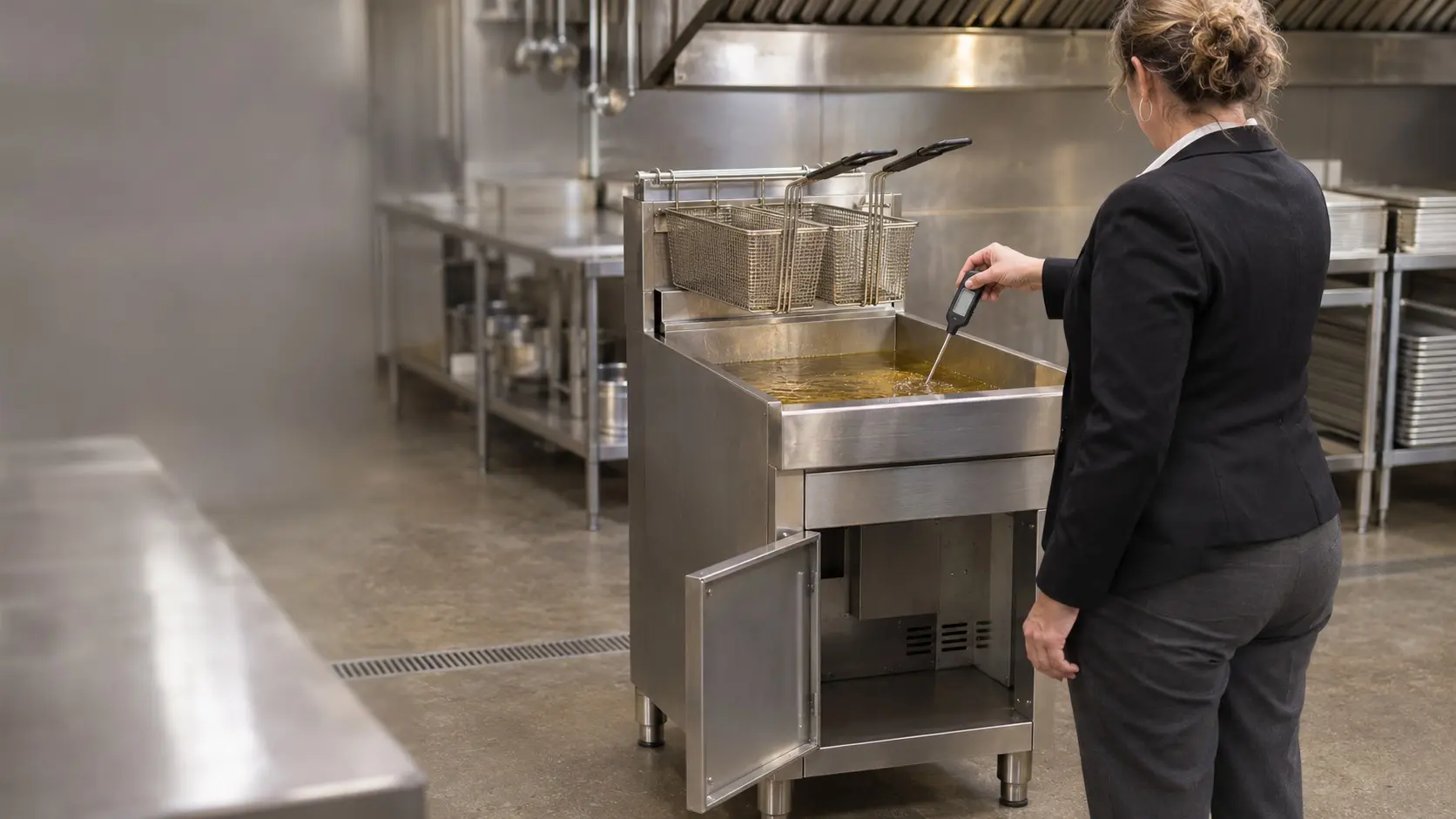
Put a calibrated thermometer in the oil next to the probe and compare it with the controller. There is no published tolerance for this check, so use your own records: a gap that is large enough to change how the food cooks, or one that grows from week to week, is worth a repair visit, and the owner's manual for many models gives the calibration steps a technician follows.
- Heat the oil to the setting and let it hold for five minutes.
- Hold a thermometer in the oil beside the probe, not touching the vat wall.
- Read both values at the same time and note the difference.
- Repeat after a load of product to see how fast the unit recovers.
A fryer that reads right at idle and falls well behind under load usually has weak burners or a heat-exchange surface coated with baked-on oil, which a fryer boil-out removes. Our guide on why a fryer will not hold temperature goes through slow recovery, tired oil and a probe that reads wrong in more depth.
When should the manager stop and call for a technician?
Call as soon as a check points to the gas train, the wiring, the high-limit or the probe, or when you have already tried the safe resets and the result has not changed. Many service visits are shorter when the line crew can say exactly what was tried and when.
Have this ready: the model and serial number from the data plate (the guide to finding the data plate shows where it hides), what the display says, what you reset and how many times, and whether the oil level was correct. Then book commercial fryer repair and keep the fryer out of service until it has been seen. A gas smell is a different case, and the guide on a gas smell on the cooking line sets out who does what.
What not to do in the meantime
Do not bypass the high-limit, jumper the thermostat or prop the pilot with a piece of wire. Do not drain hot oil to move the fryer. Do not leave a fryer filled with cold oil switched on and unattended after repeated trips.