
What does a commercial fryer need before it is delivered?
A new fryer needs the right fuel connection, the right space and the right place under the hood, and each of them is easiest to settle before the unit is on the floor. Read the data plate or the spec sheet first, and measure the spot on the line.
Fuel and power
Check whether the unit is built for natural gas or propane, the BTU input and the gas connection size listed. Many gas fryers also need a small electrical supply for controls, blowers or a filtration pump, and electric units need a circuit sized to the unit's load. Ask your gas fitter and electrician to confirm both against the plate.
The path to the spot
Measure doors, hallways and the kitchen route, and plan for the unit's weight. A full-size floor fryer is heavy and tall, and tipping it onto its back can damage the gas train and the legs.
How does the gas supply need to be set up?
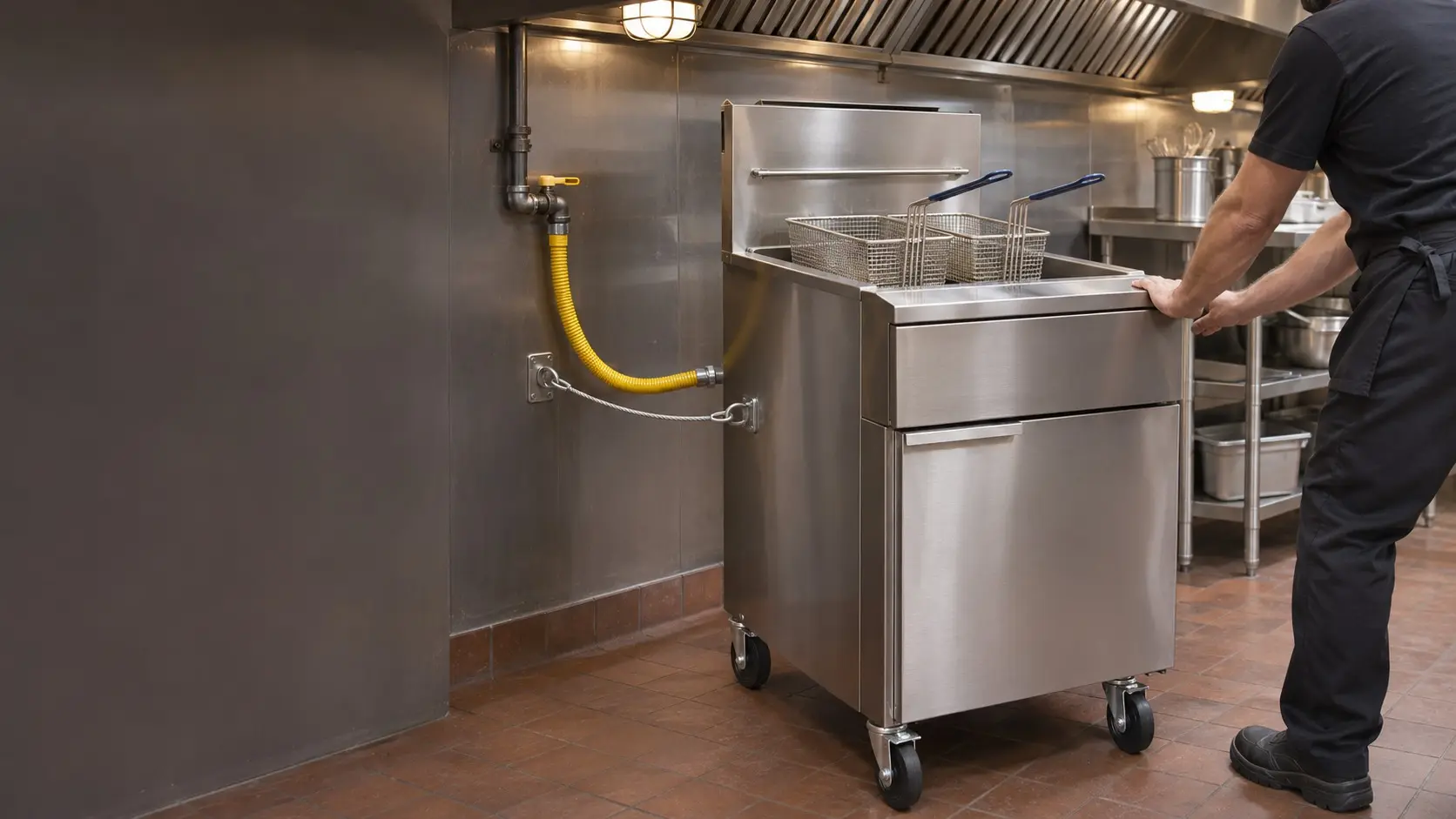
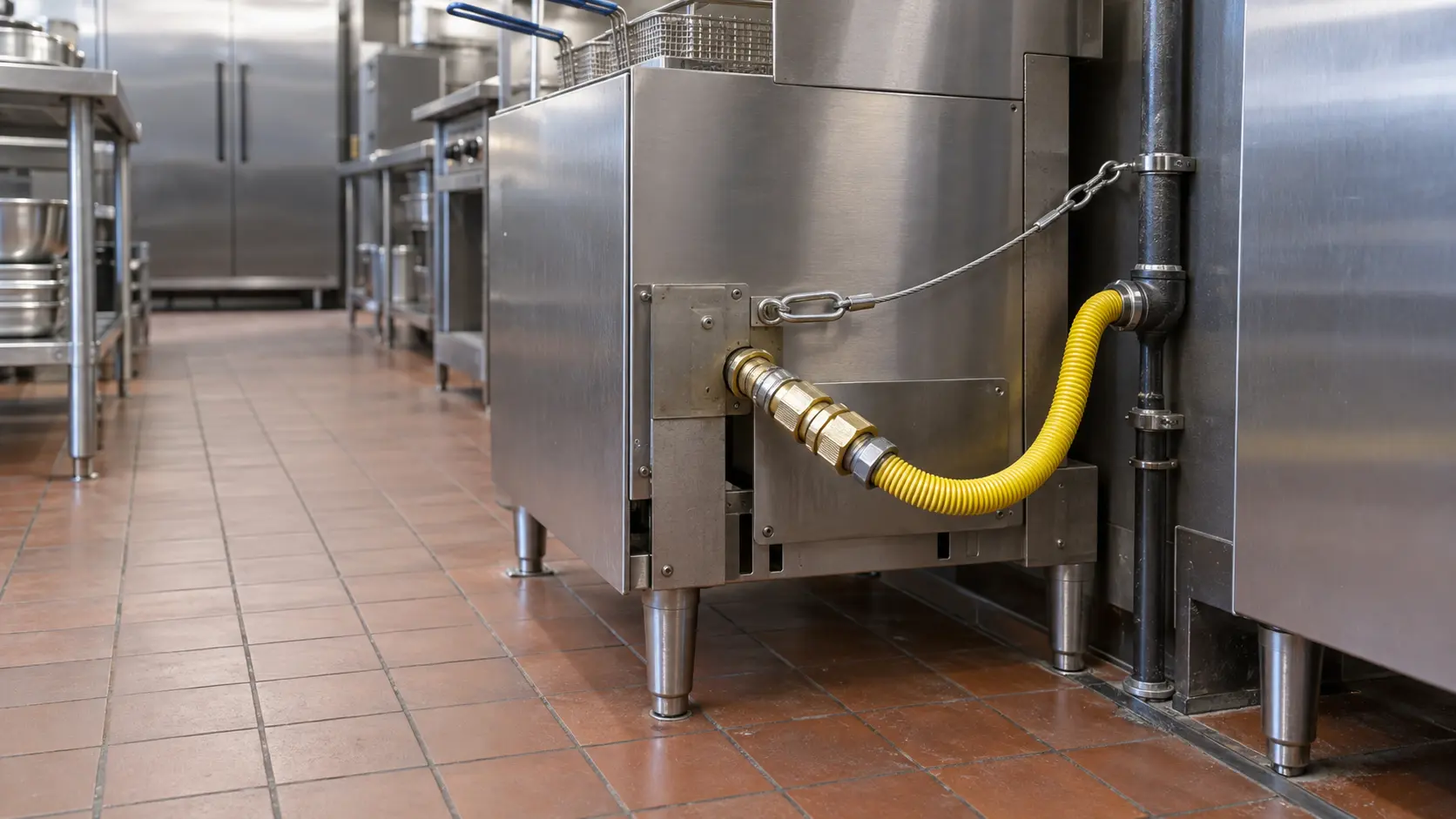
A gas fryer needs a supply line sized for its input, a shutoff valve within reach, a regulator set for the fuel and a connection that lets the unit move for cleaning without stressing the pipe. Gas work on the supply side belongs to a gas fitter, not to the kitchen.
- Confirm the supply pressure and the manifold pressure the data plate lists, and have the fitter test them with the unit running.
- Use a shutoff valve that staff can reach without moving the fryer.
- Connect a caster-mounted unit with a flexible gas connector made for commercial cooking equipment, rated for the load and the fuel.
- Attach a restraint cable so the connector cannot be pulled tight when the unit is rolled out.
- Test every joint for leaks before anyone lights the burners.
Our guide on gas quick-disconnects, hoses and restraint cables covers how these parts fit together and the inspection points for each. Anything involving the gas line itself is the kind of work a team that does commercial cooking line gas repair handles every day.

What clearances and hood position does a fryer need?
A fryer needs the clearances to combustible surfaces that its data plate lists, and it must stand under a hood that is sized for the cooking line, with suppression nozzles aimed at the vat. Even a short move can take the vat out of what the nozzles cover.
Clearances
The data plate or manual lists the distance to walls and to other equipment, and some models need more room on the sides or at the back for the flue. Leave room for the cabinet door to open, for the filter drawer and for a person to clean the floor behind the unit.
Under the hood
Put the fryer fully under the hood, with the vat in the capture area. The hood's fire suppression system has nozzles placed for each appliance, and the contractor aims them at the cooking surface. If a fryer is replaced with a different size, or moved, ask the fire-protection contractor to check the nozzles before use. The guide to fryer fires and the hood system explains why the order of response depends on this system.
| Item | What to confirm | Who does it |
|---|---|---|
| Gas supply and pressure | Size, shutoff, regulator | Gas fitter |
| Electrical supply | Circuit and plug for controls | Electrician |
| Connector and restraint | Commercial hose, cable anchored | Gas fitter |
| Clearances | Distances on the data plate | Installer, manager |
| Hood and nozzles | Fryer in the capture area, nozzles aimed | Fire-protection contractor |
How should the first fill and test go?
Fill the vat with oil before anything is lit, test the burners and the high-limit with the unit empty of product and keep the first heat-up supervised. A new fryer is easy to damage in its first hour.
- Check that the drain valve is closed and the vat is clean and dry; rinse out any shipping film as the manual describes.
- Fill with oil to the marked line, and never fire a vat that is empty or only part full.
- Light the unit by following the lighting steps on the data plate, and watch the burner flames for an even blue pattern.
- Bring the oil up slowly, and compare the controller with a thermometer in the oil at the working temperature.
- Leave the test of the high-limit and the safety shutoffs to the installing technician; do not try to trip them yourself.
Make a note of the first-fill date, the thermometer readings and the data plate numbers, so the next visit starts with facts; the guide on finding the data plate shows where to look. A unit that will not hold a pilot or heat on day one may have a gas pressure or connection issue, and the pilot that will not stay lit page lists what the visit covers.
What should be handed over at the end of an installation?
At the end of the job, the manager should hold a short list of what was done, who did it and what was tested. That record makes later service calls faster and helps with an inspection.
What to ask for
- The measured gas pressure and the leak test result from the fitter.
- A note from the fire-protection contractor that the nozzles were checked for the new position.
- The model and serial number, the date of the first fill and the controller settings.
- The location of the gas shutoff, the hood pull station and the extinguisher, shown to the crew.
Teach the crew the daily routine from the first shift. A commercial fryer repair visit is easier to book later when the install notes are in the binder and the shutoff location is known to everyone.