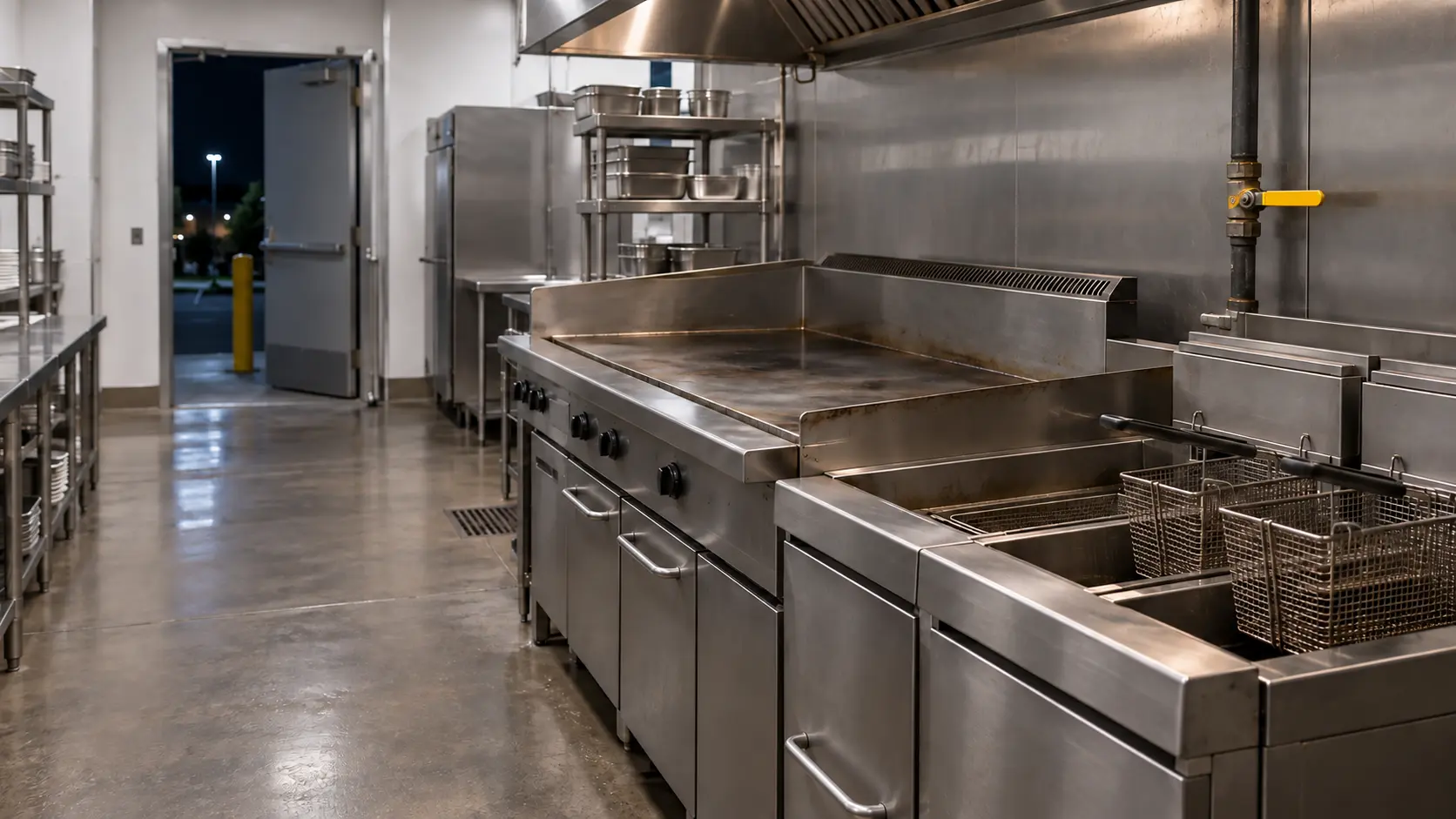

What should be ready before the unit arrives?
The data plate on the unit and the manual's installation page set the list; the site has to match them, not the other way around. Whether it is one range or a whole battery of ranges, griddles and fryers, commercial stove installation starts with the model's installation sheet, gathered before delivery, and a walk along the line with it in hand.
- The gas type on the plate (natural gas or propane) against what the building supplies
- The total input rating of the unit against what the supply line and meter can deliver alongside everything else on the line
- Where the gas stub, shutoff valve and electrical outlet sit relative to the rear of the unit
- The path from the door to the line, and the floor's ability to take the weight
- Any electrical need on the plate, such as a plug-in ignition or a blower, and an outlet that matches it
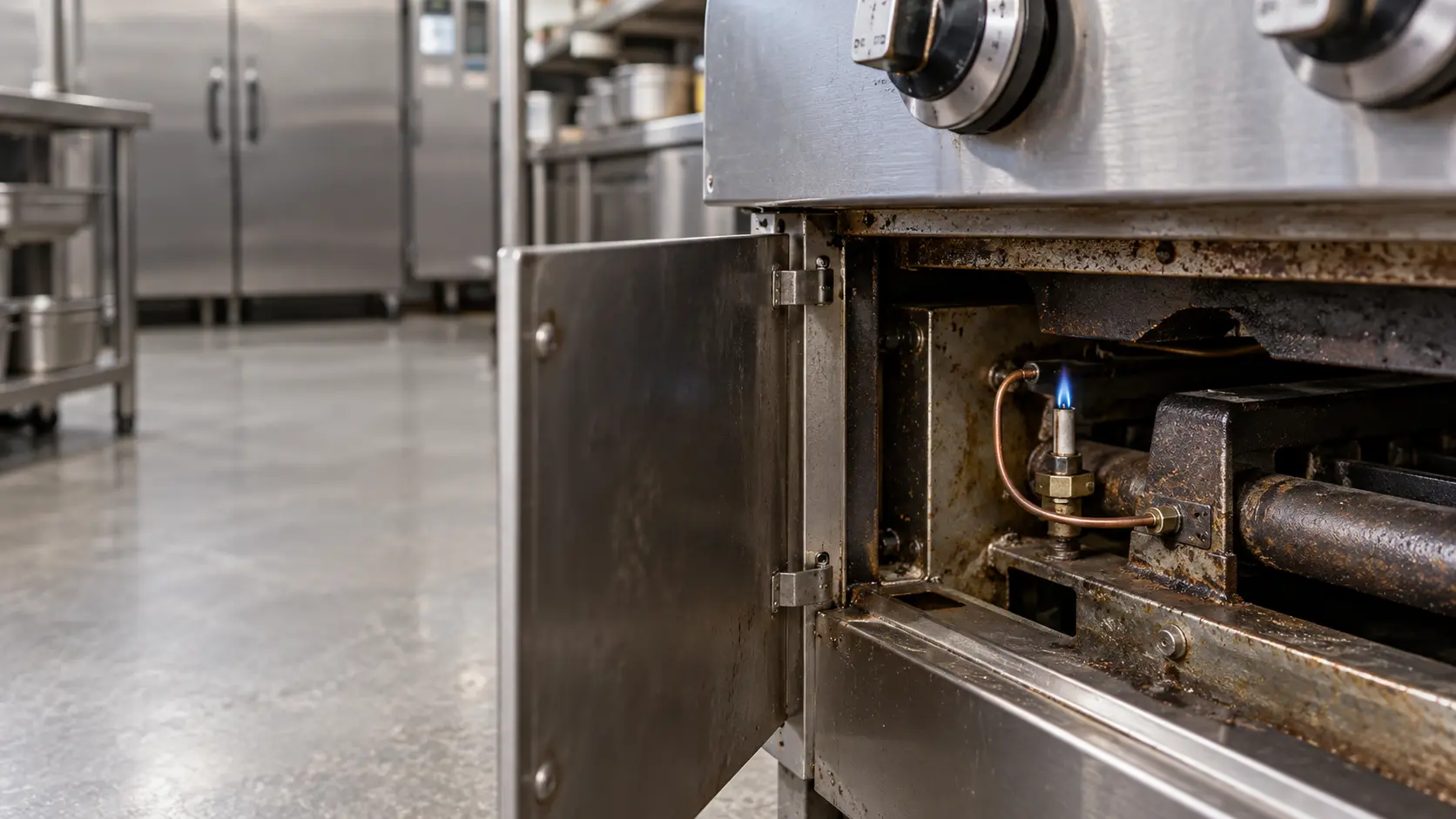
The data plate guide shows where the rating and listing marks are on most units. Bring a photo of it to any discussion with the gas utility or installer, because they size the pipe from that number.
Why the load matters more than the size of the pipe
Each unit's plate gives its input rating in BTU per hour and the gas pressure it is built for, usually in inches of water column. A line that cooks fine on its own can starve when every burner on the row is lit. The question is not whether one valve opens, but whether the pipe, meter and regulator can deliver the combined rating of every appliance on the run at the pressure the manual states. A qualified gas installer works that out and sets the regulator; guessing it from the stub's diameter is how a new line ends up with yellow flames and a pilot that will not stay lit.
How much hood overhang and clearance does the line need?
The hood has to extend past the cooking surface on the sides and front by the amount its own listing and the local code state, and the unit has to keep the clearances on its plate from combustible and limited-combustible material. Both are measured from the finished installation, not the drawing.
Checks to make with a tape
- Overhang of the hood past the front and each side of the cooking surface, as the hood's listing requires
- Distance from the back and sides of the unit to any wall, shelf or panel that is not noncombustible
- Space above the unit to the hood's lower edge and to any filters
- Room to open every door and pull every drawer without hitting a neighbor
If the hood was sized for a smaller line, the fix is a hood change, which is a fire-code matter and not a trim job. The hood's fire suppression system matters as much: its nozzles are aimed at specific appliances, so a new, larger or rearranged unit needs the suppression contractor to confirm coverage before the line is used. Hood and suppression work is done by those trades and inspected locally, and the fire marshal decides what the site needs. The fryer fire and hood system guide explains why grease and heat make that overhang non-negotiable. A fire marshal reading a mismatch will ask for a correction before the line is used.

How is the gas connection made safely?
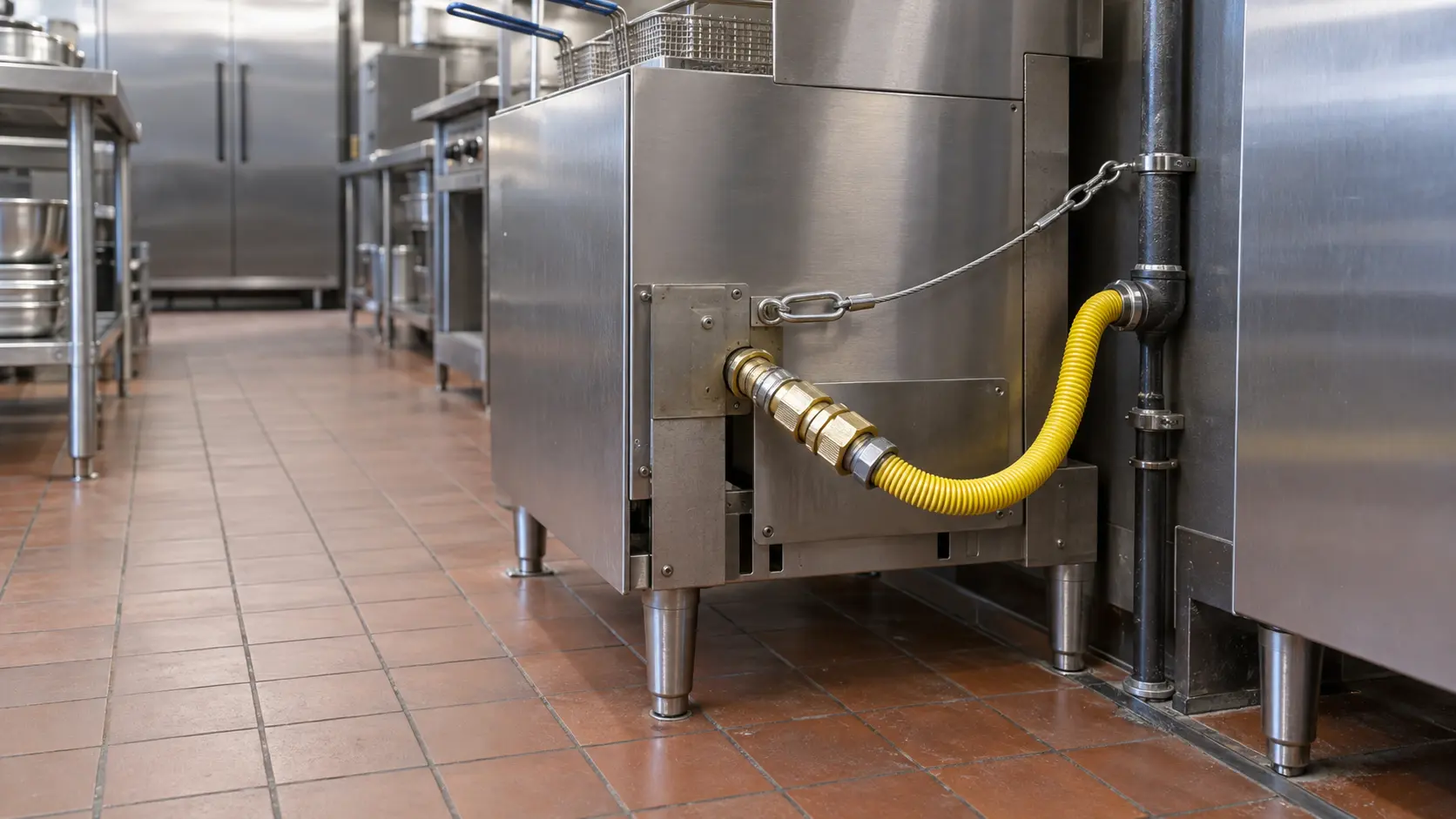
A unit on casters is normally connected with a hose listed for movable commercial equipment, with a quick-disconnect and a shutoff valve within reach, and a restraint anchored to the building and shorter than the hose, so the unit cannot pull the hose when it is moved. A fixed unit on legs may be hard-piped instead. The manual and the local gas code decide which applies.
The gas connections and quick disconnects guide covers what a good connection looks like and what a worn one looks like. The work itself, including the leak test after connection, belongs to a qualified gas installer or the gas utility, not to the kitchen crew or the delivery driver.
The leak test and the first light
After connection, the installer tests the joints, purges the line and lights the pilots. If a pilot will not hold afterward, the cause may be pressure, an air pocket or a weak thermocouple, and the cooking line gas repair service is where that diagnosis goes. A smell of gas at any time means leaving the kitchen without touching switches or flames and calling the gas utility or 911 from outside, as in the gas smell on the cooking line guide.
How do casters and leveling work on a heavy unit?
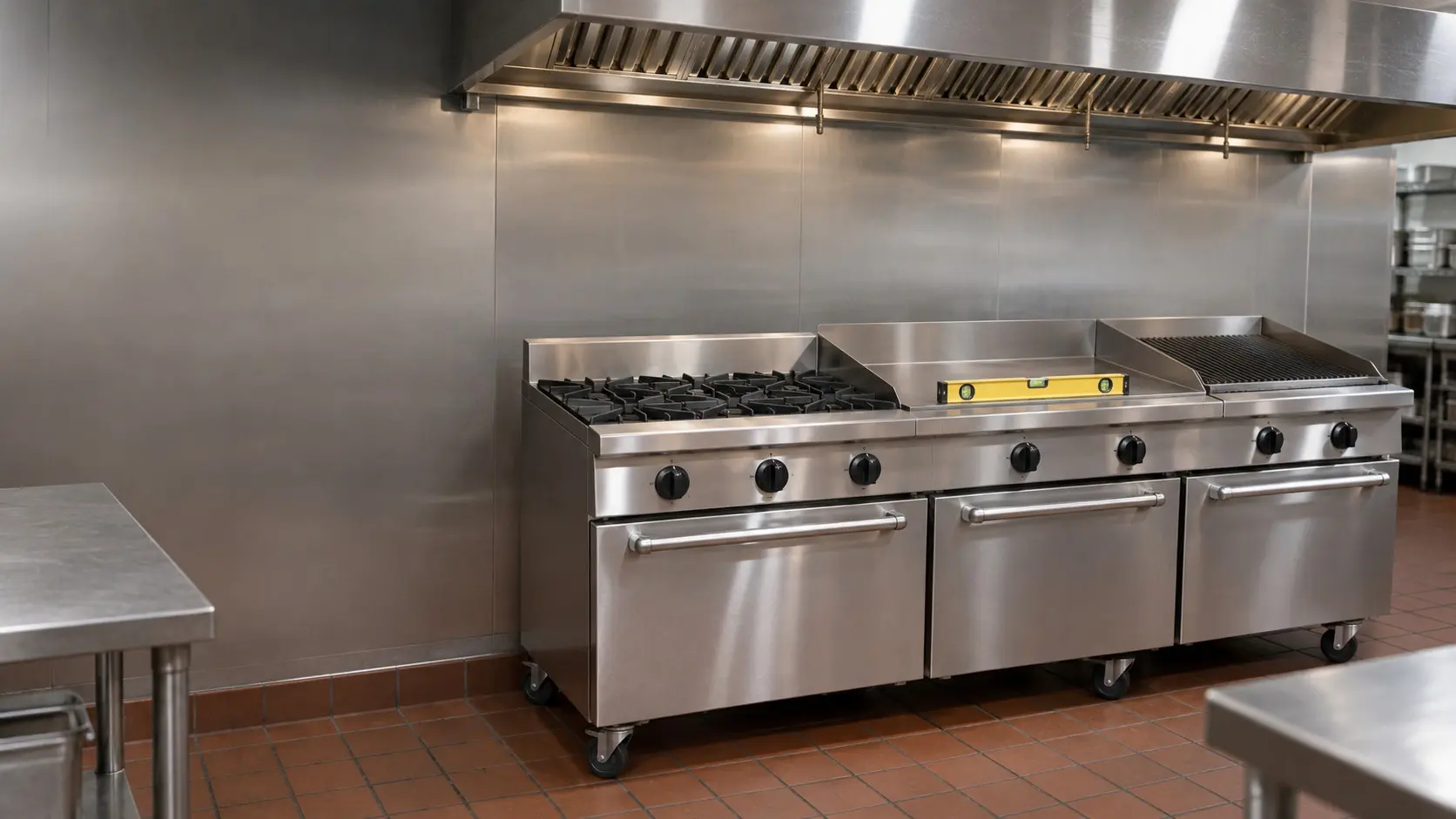
A level unit cooks evenly, drains grease to the right place and keeps its doors aligned. A unit that rocks is a unit that eventually strains its gas hose.
| Set-up | What to check | Why |
|---|---|---|
| Adjustable legs | Level front to back and side to side with a level on the cooking surface | Even heat, grease runs to the trough |
| Casters with locks | Locks set after positioning, restraint cable slack just enough to roll | Cannot creep against the hose |
| Equipment stand or curb | Fixed and level before the unit is set | A sloped stand tilts the whole line |
Set the level on the actual cooking surface, not on the body panel, and recheck after the unit has heated once, because a floor can settle under weight. Seams between units on a battery should line up without a gap that collects grease.
What does a good install-day checklist look like?
A short written list, signed off by whoever sets the unit, prevents most callbacks. Include the gas test result, the hood overhang measurement, the suppression coverage sign-off, the clearance check, the level check and the restraint anchor. If something fails, a diagnostic visit can sort out whether the unit or the site is the problem before it is blamed on the equipment.
Related reading on this site: the commercial cooking equipment repair page lists what we service on a cooking line.