
How do high-temp and low-temp dish machines sanitize differently?
A high-temp machine sanitizes with heat, and a low-temp machine sanitizes with a chemical, and that one difference explains almost everything else in this comparison. Both kinds of commercial dish machine clean with a wash cycle first; the sanitizing step comes at the final rinse.
High-temp machines
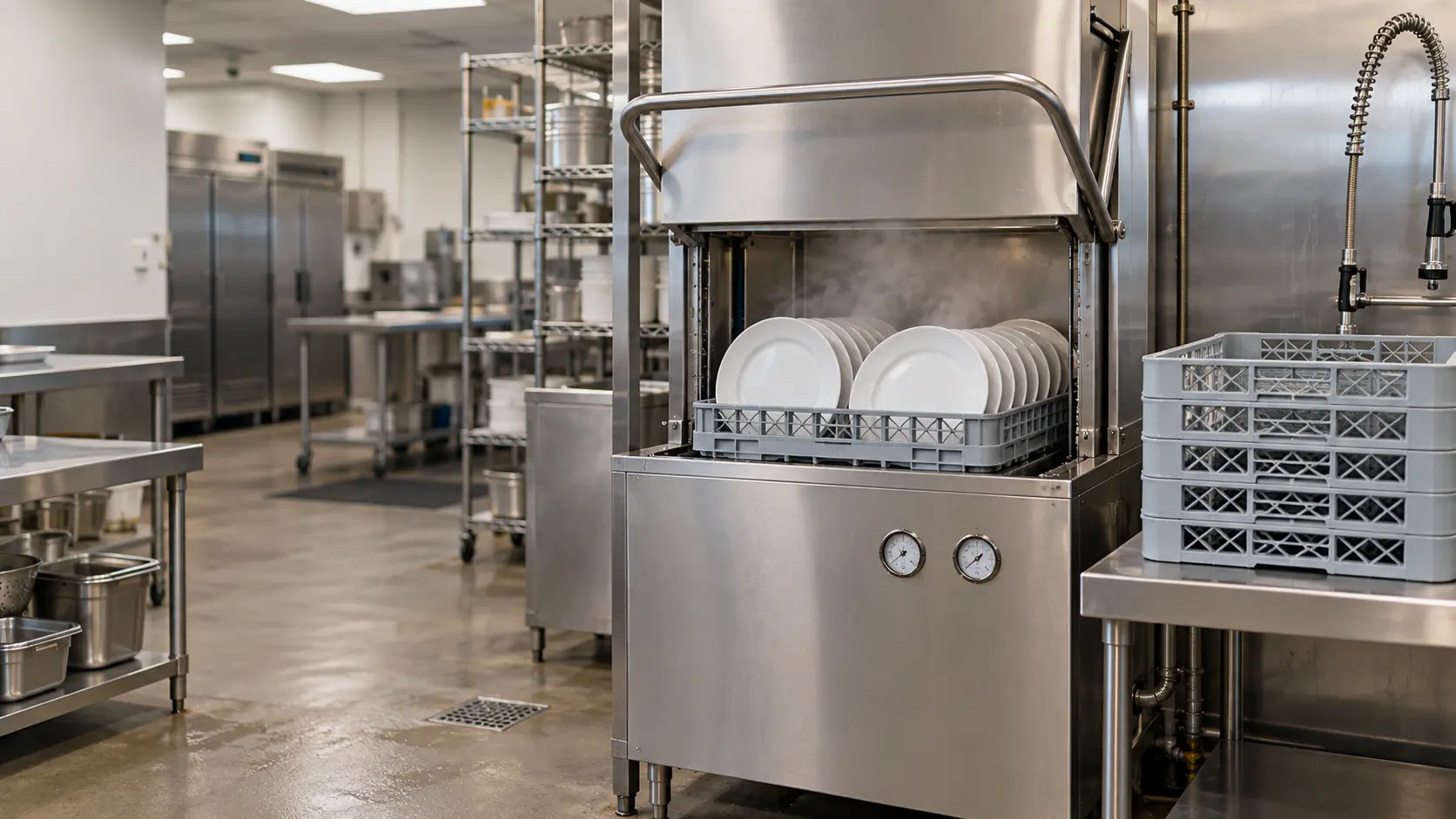
The final rinse is heated well above the tank temperature, usually by a booster heater near the machine. The heat on the dish surface does the sanitizing. The FDA Food Code requires the final rinse to enter the manifold at 180°F or more on most machines (165°F on a stationary-rack, single-temperature machine) and no hotter than 194°F, and the dishes themselves must reach a surface temperature of 160°F, measured with an irreversible registering thermometer or label. The data plate lists the tank and rinse temperatures for your model.
Low-temp machines
The machine runs on water at around the temperature a normal hot water heater delivers, and a pump feeds a chemical, most often chlorine, into the final rinse. The chemical has to reach the concentration on its label, and staff check it with test strips.
Source: FDA Food Code 2022 — section 4-501.112 sets the hot-water rinse temperatures at the manifold, and section 4-703.11(B) the 160°F utensil surface temperature for hot-water mechanical sanitizing
What does a high-temp machine need to work?
A high-temp machine needs a hot water supply sized for it, a booster heater that works and a way to remove steam from the room. The price of fast drying is the supporting equipment.
- Hot water feed at the temperature the data plate calls for, at the pressure it lists.
- A booster heater, built into the machine or mounted beside it, with its own power supply.
- Ventilation or a hood over the unloading end, because the steam load is real.
- A thermometer on the rinse line that staff read and log at each shift.
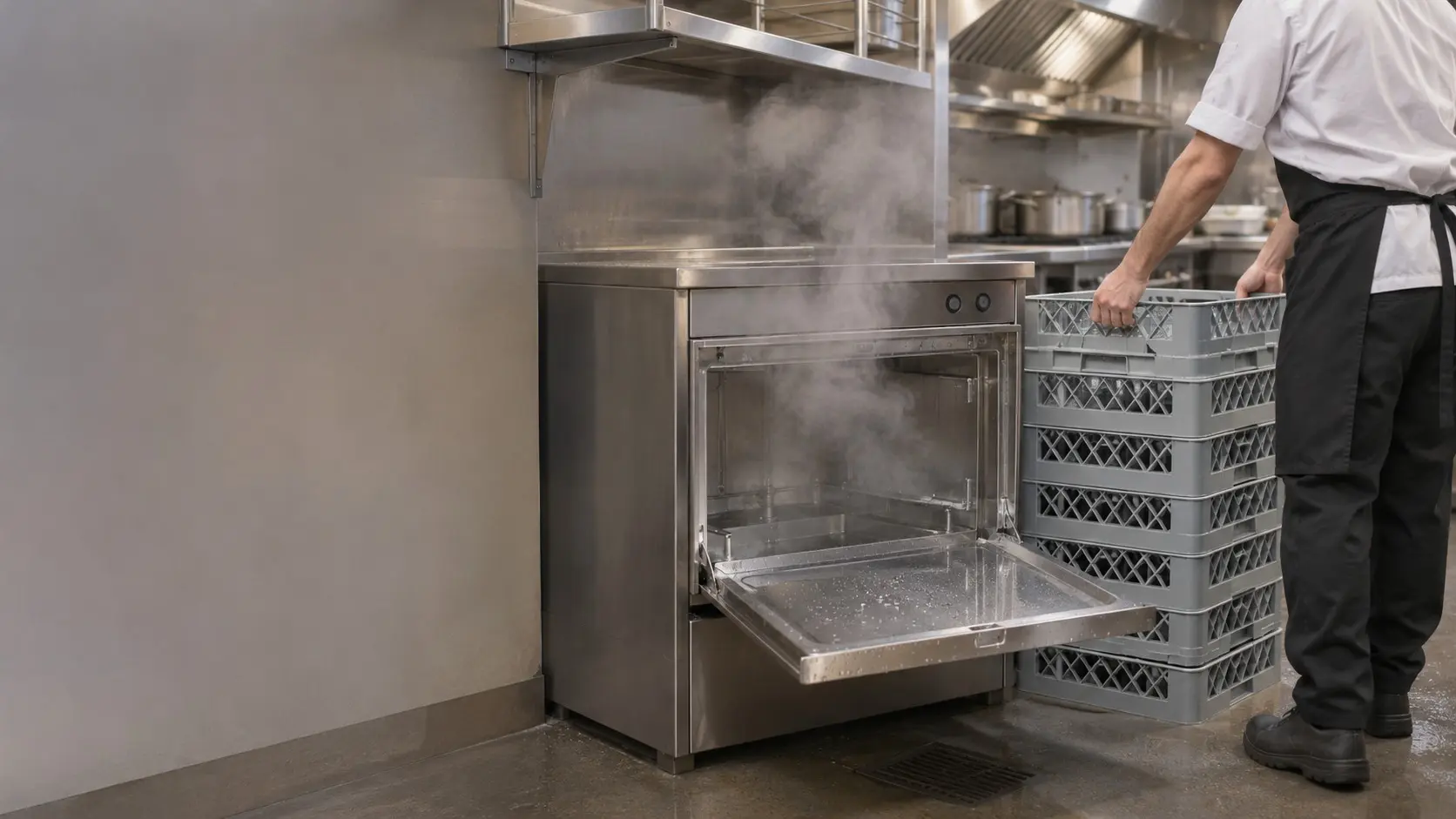
Dishes come out hot and dry in the air within seconds, which is a plus on a busy line. The hot surface also means staff wait or use gloves when handling them. A booster that cannot lift the water to temperature is a frequent reason a high-temp machine fails a check, and the dish machine not reaching temperature page covers what a technician will test.

What does a low-temp machine need to work?
A low-temp machine needs a dependable chemical feed, a supply of the sanitizer and a routine of testing it. It saves on energy and on venting but depends more on staff attention.
Chemical supply
The sanitizer comes in a jug, and a small pump pulls it into the rinse. The jug runs out, the tube kinks or the pump loses prime, and the machine keeps running with no sanitizer in the rinse. A low-level alarm on the supply helps, and test strips at the start of each shift catch the rest.
Drying and water
Dishes come out warm rather than hot and often air-dry more slowly, with a film of water that can leave spots in hard water. A rinse aid helps, and very hard water can mean scale on the heating elements and in the spray arms. Chlorine can also be hard on some metals and on rubber parts over time.
| Feature | High-temp | Low-temp |
|---|---|---|
| Sanitizing step | Final rinse heat | Chemical in final rinse |
| Booster heater | Usually needed | Not needed |
| Venting | Needed for steam | Less demanding |
| Drying | Fast, hot dishes | Slower, warm dishes |
| Daily check | Rinse temperature | Sanitizer strength |
What fails most often on each type?
On a high-temp machine the weak points are the booster heater, its thermostat and the heating elements in the tank, and on a low-temp machine they are the chemical pump, its tubing and the sensors that signal an empty jug. Both share wash arms, strainers, curtains and seals.
- Booster or tank element burned out, so the rinse never reaches temperature.
- Scale on elements from hard water, which slows heating and shortens life.
- Chemical pump tubing worn or kinked, so the dose drops without notice.
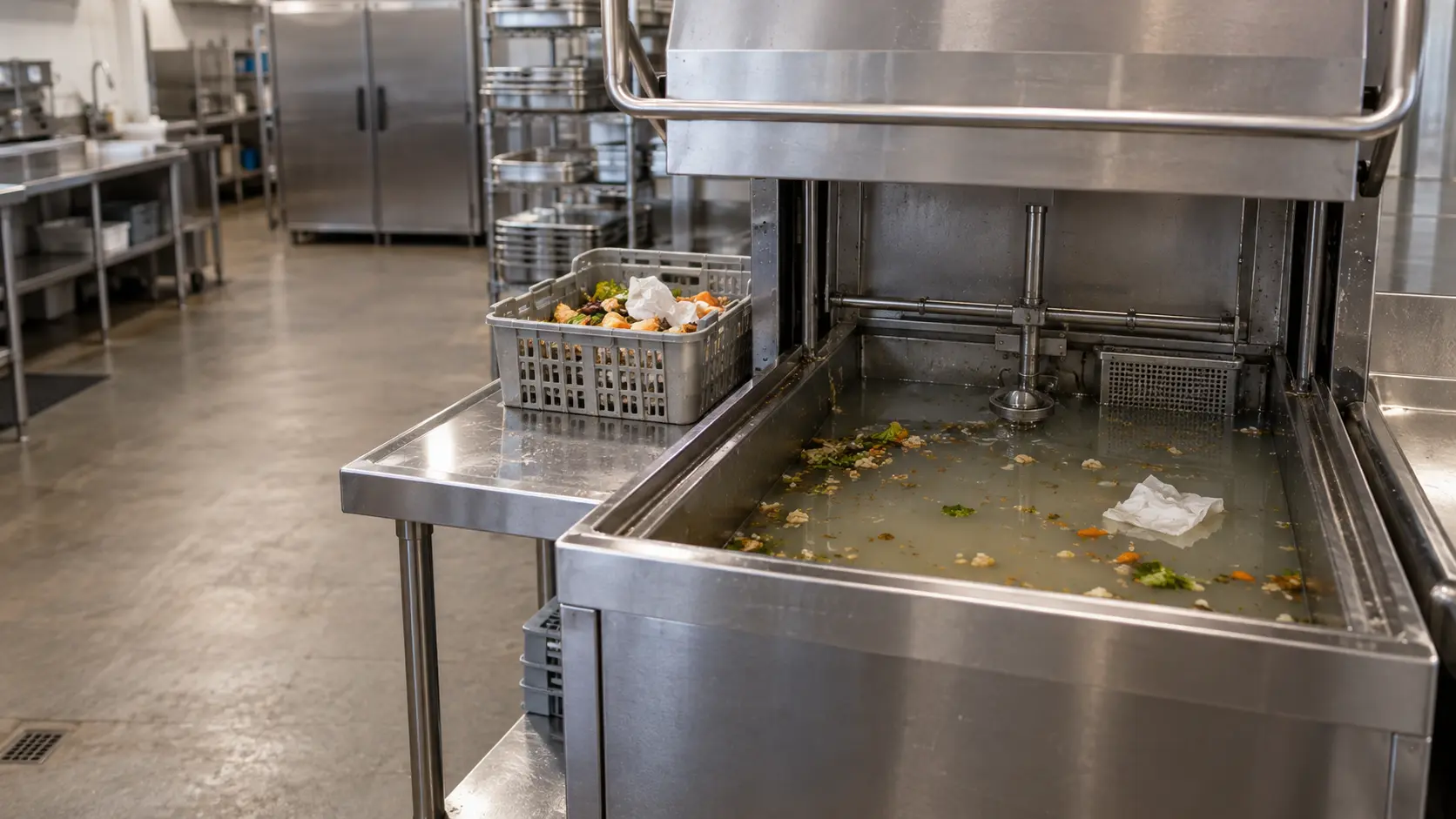
- Clogged wash arm nozzles and strainers, which leave dishes dirty on either type.
- Door seals and drain problems, which leave water on the floor.
For dirty dishes on either type, our guide on why a dish machine leaves dishes dirty walks through strainers, wash arms, heat and chemistry. A machine that fails the temperature check or loses its chemical feed belongs with dish machine repair, and the deliming schedule for steam equipment shows the same approach to scale that a hard-water dish machine needs.
Which type fits your kitchen?
Choose high-temp if you have the hot water, power and venting to support it and want fast, dry dishes; choose low-temp if you want lower energy use and cannot supply a booster or steam removal. The wrong choice is usually the one the room cannot support.
Questions to ask before you buy
- Can the existing water heater deliver the flow and temperature the data plate asks for?
- Is there power for a booster heater, and is there a place to vent the steam?
- Who orders the sanitizer, tests it and logs it, and who replaces the pump tubing?
- What does your health department accept, and what does it ask staff to record?
Ask the vendor for the installation needs in writing before you decide, and keep the data plate where staff can read it. A machine that was right for the old kitchen can be wrong for a new one, and repair or replace commercial equipment offers a way to weigh the cost of a failing unit against a change of type.