
What really differs between the two kinds?
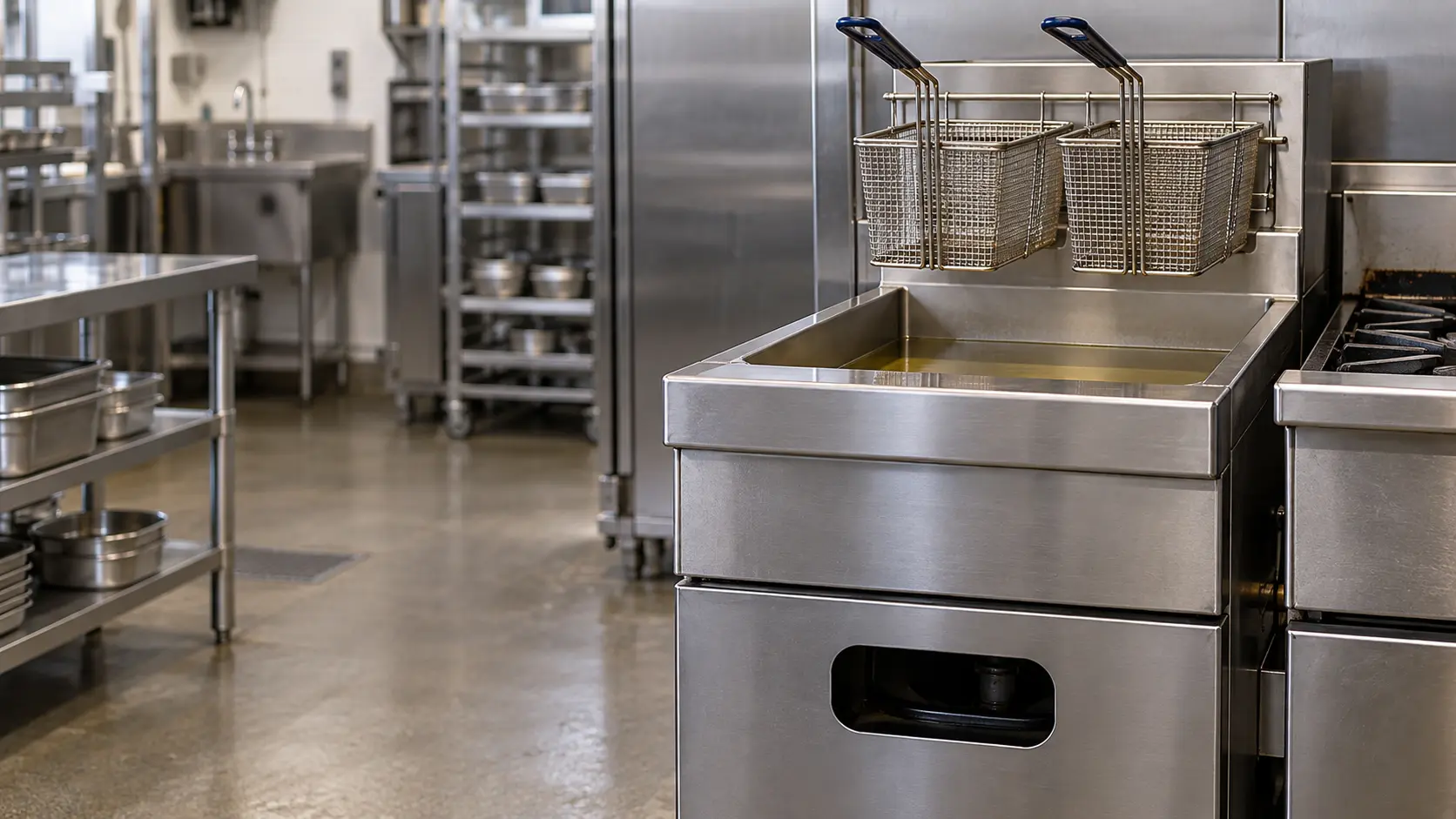
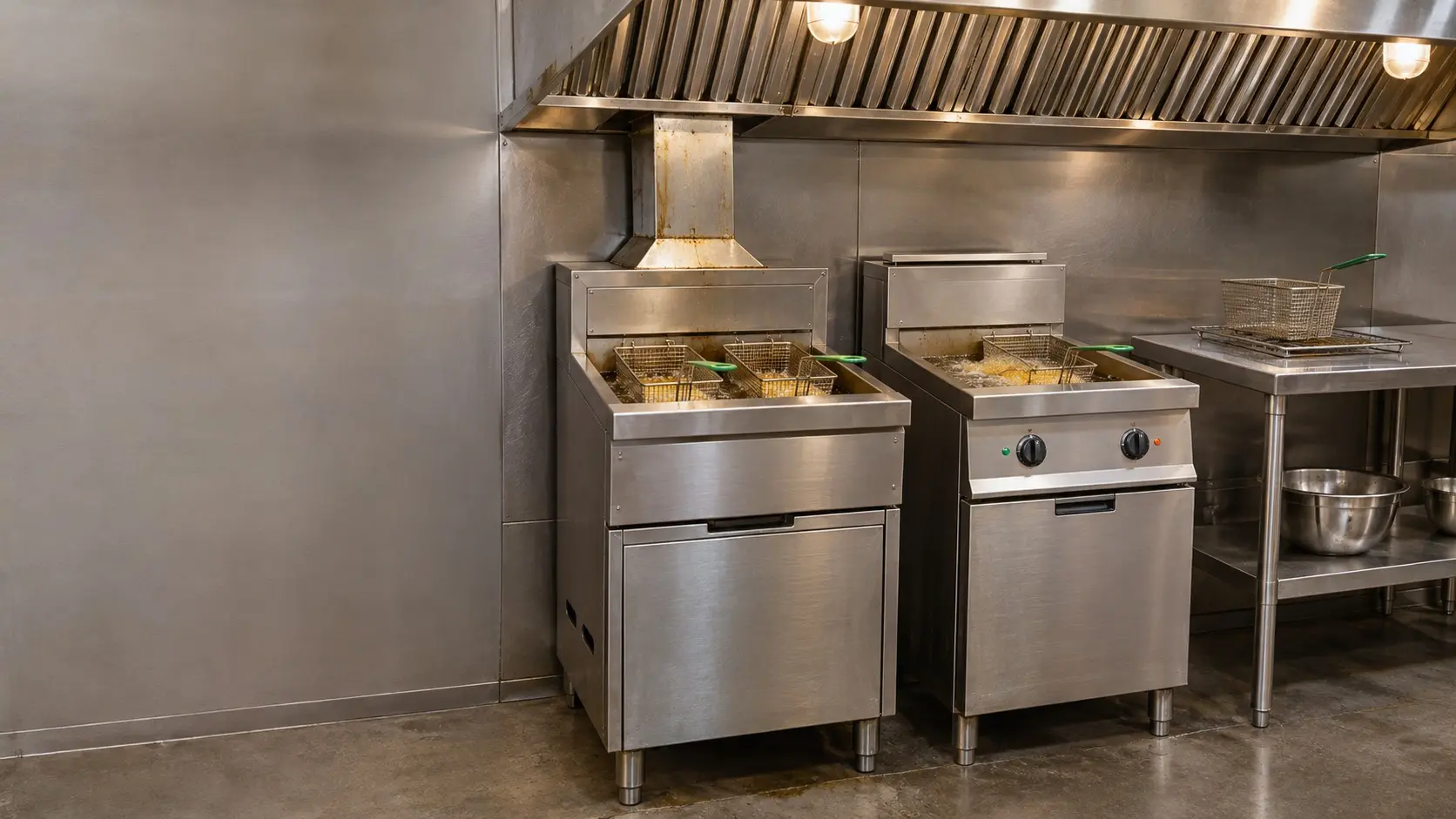
A gas fryer burns fuel in tubes or burners under the vat and sends the exhaust up a flue; an electric fryer heats the oil with elements, either immersed in it or wrapped around the pot. Everything else on the machine is shared: the pot, the drain, the basket hanger, the filter system and a probe that reads the oil.
That difference sets what fails, what the building has to supply and what upkeep looks like. It also sets who touches the machine. A gas fryer involves a fuel supply, venting and combustion, so a gas problem is never a casual repair. An electric fryer involves high current in a small cabinet, which is just as unforgiving.
The parts only a gas fryer has
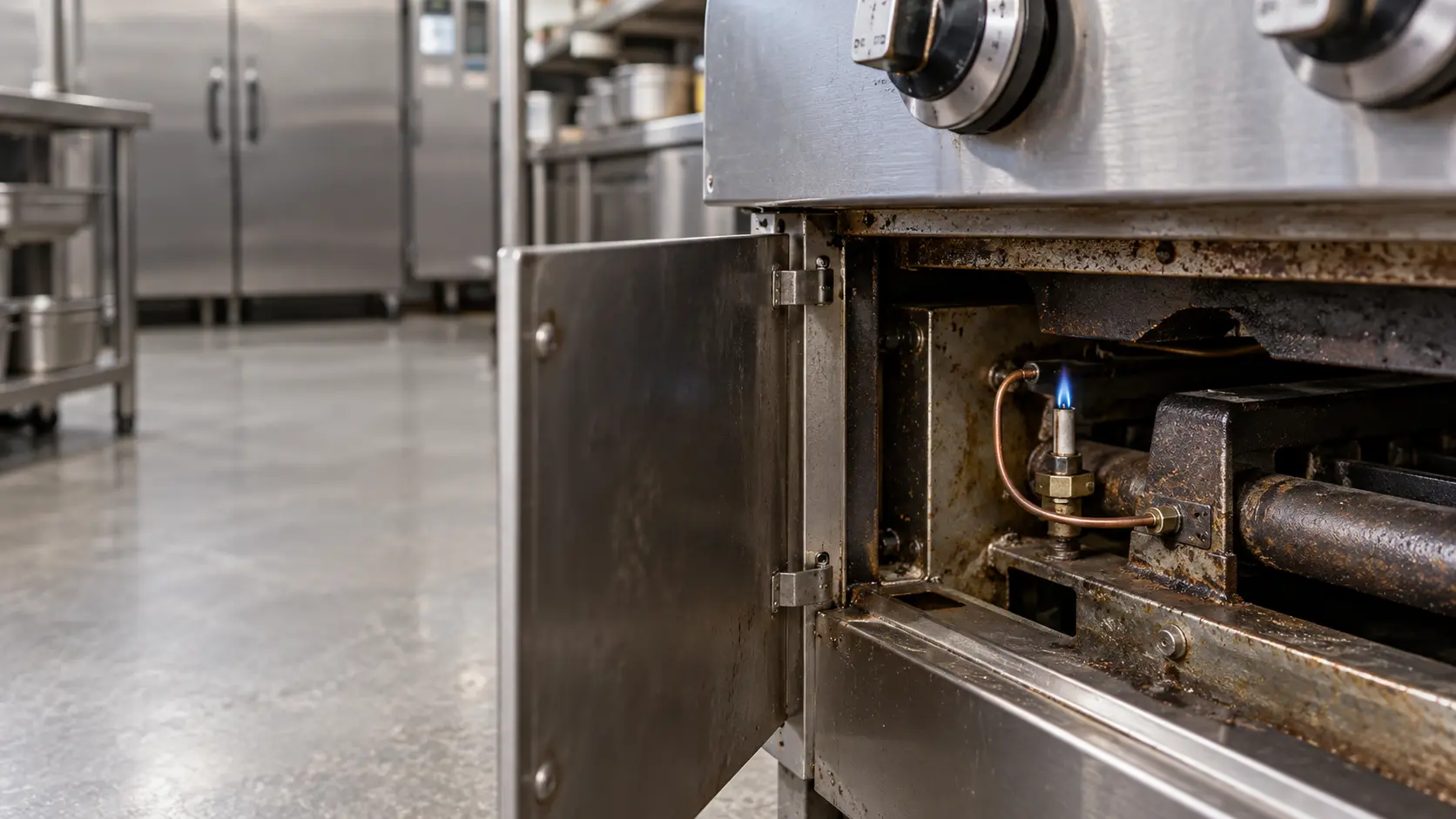
A gas fryer carries a gas valve, a pilot or electronic igniter that lights the burners, a flame sensor of some kind, burner tubes or ceramic burners, a heat exchanger inside the vat and a flue. On a standing-pilot model a small flame stays lit all day and the sensor keeps the valve open.
The parts only an electric fryer has
An electric fryer carries elements, one or several contactors that switch heavy current, a high-limit control and, in many models, a lift-out element frame so the pot can be cleaned. There is no flame, flue or fuel line, but the machine needs the correct voltage, phase and wire size from the building.
Which parts fail on each kind?
Gas fryers fail mostly in ignition and combustion; electric fryers fail mostly in elements and switching. Both share probe, high-limit and controller problems, because those parts sit between the oil and the heat source.
| Area | Gas fryer | Electric fryer |
|---|---|---|
| Ignition and flame | Pilot, igniter, flame sensor, gas valve | Not applicable |
| Heat source | Burner tubes, clogged or sooted heat exchanger | Elements, burned or scaled with carbon |
| Switching | Gas valve coils, control board | Contactors, relays, wiring terminals |
| Measuring | Probe or thermostat, high-limit | Probe or thermostat, high-limit |
| What the building supplies | Gas at the right pressure, a flue path, makeup air | Correct voltage, phase and conductor size |
A gas fryer that will not hold its heat is often a combustion or airflow problem rather than a failed part. The installation manual for many gas fryers warns never to connect a blower directly to the flue openings, because the airflow can cause poor recovery and poor ignition and can put out the pilot, and says the gas line has to supply every appliance without losing pressure. If it also will not heat at all, see a commercial fryer not heating. Our fryer temperature guide walks through those checks.
An electric fryer's early warning is different: a vat that heats unevenly, a breaker that trips when the fryer starts, or oil that takes much longer to come up than it used to. Those point at an element, a contactor or a connection rather than at the oil.

What does the kitchen have to supply?
A gas fryer needs a gas line that can feed every appliance on the line at full demand, plus a flue path; an electric fryer needs the exact electrical service printed on its data plate. Check the plate before anything else, because a fryer ordered in the wrong fuel or voltage cannot be fixed with an adapter.
Before any comparison, collect these from the data plate and the building:
- The fuel or the voltage and phase the unit was built for.
- The rated input, in BTU per hour for gas or kilowatts for electric.
- Which breaker, regulator or shutoff feeds this unit and who can isolate it.
On a gas model, the plate names the gas the fryer was built for, and the supply has to match it. The manual for many models says the line must supply all appliances without losing pressure. A new fryer added to a full line can look fine on its own and still starve the burners at 6 p.m. when every other burner is lit. Fryers on casters also need a restraint, the subject of the gas quick-disconnects and restraint cable guide.
On an electric model, the manual points the operator to the data plate inside the fryer door for the correct power supply. That plate gives the voltage and phase the breaker, wire and disconnect must match. Replacing a gas fryer with an electric one is therefore an electrical project, not a swap, and the hood and fire suppression system may also need review. The fryer fires and hood suppression guide explains why moving or changing a fryer under a hood is never a casual change.
How does upkeep compare?
Daily and monthly upkeep is almost the same on both: filter the oil, empty the crumb basket, and boil out the pot. The difference is the yearly inspection.
Makers publish a routine of filtering the oil daily, emptying the crumb basket into a fireproof container and boiling out the pot on a schedule; take the intervals from your own model's manual. The manual for many models recommends a yearly inspection by a qualified service technician, which a commercial fryer repair visit can cover. The FDA Food Code also expects equipment components to be kept intact, tight and adjusted in accordance with the manufacturer's specifications. The preventive maintenance plan guide shows how those intervals fit alongside the rest of the kitchen.
What a boil-out protects
A film of carbonized oil builds on the pot walls and on elements or heat tubes. On a gas fryer it slows heat transfer into the oil; on an electric one it bakes onto the element surface and insulates it. In both, it can coat the probe so it reads an oil temperature that is not true. The boil-out lifts that film.
What changes the yearly check
On a gas fryer the technician looks at flame quality, burner cleanliness, the flue and manifold pressure. On an electric fryer the work shifts to element condition, contactor contacts, terminal tightness and wiring insulation. Neither inspection is a cleaning visit: it is a measurement against the maker's figures.
Source: FDA — Food Code 2022 — section 4-501.11: equipment components kept intact, tight and adjusted in accordance with the manufacturer's specifications
How do you decide between them?
Choose on the supply you already have, the heat the line puts out and who can service it, and weigh repair history as part of the decision. Ask the same four questions of either machine.
- What does the building already provide: gas at the right pressure or the right electrical service?
- Is there a flue path, hood coverage and makeup air for a gas unit?
- What repair history does the current model have, and does it point at the fuel or at the controls?
- Who in your area, for commercial cooking equipment, carries parts and can service this brand quickly?
If the failed fryer is a gas unit that keeps losing pilots or igniters, the cause may be the draft and gas supply around it and not the fryer, so changing fuel will not necessarily help. If the unit's repairs are spread across probes and controllers, the fuel is not the issue either. The repair or replace guide covers how to weigh a repair against a new unit.