
Why does a prep table run warm during service?
A prep table runs warm during service because the cold air that protects the rail is being let out faster than the unit can make it. The cabinet below is a normal cold box, but the rail on top is an open window that depends on a thin blanket of air, and every disturbance to that blanket shows up as a rising pan temperature.
What the rail is built to do
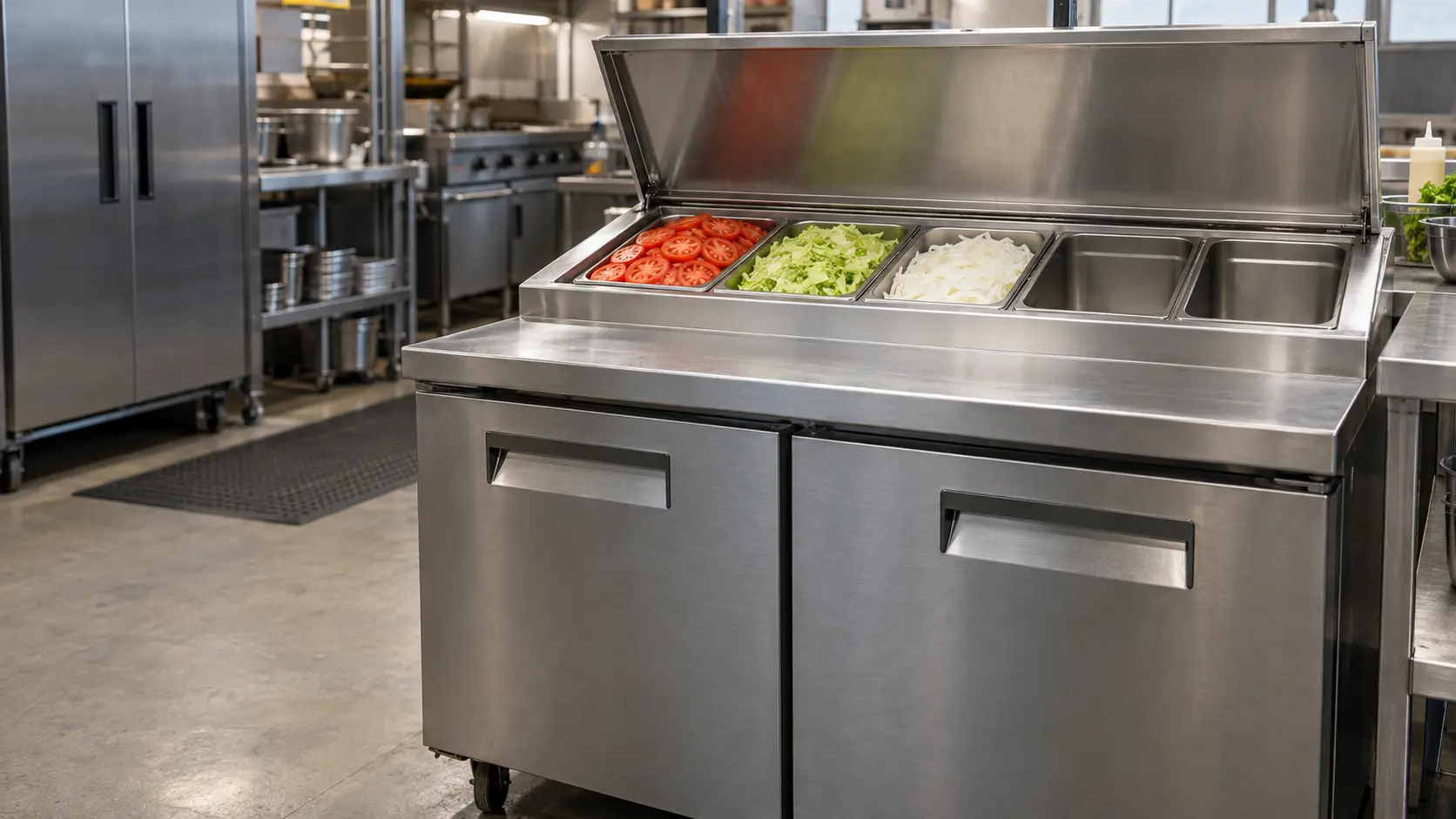
A pan rail is cooled by cold air that flows from the evaporator under the pans, rises around them and is pulled back down at the rear. Pans sit in a well, and the lid, when closed, seals the top. With the lid open the rail depends entirely on that air flow, so it has less margin than a closed cabinet.
Why the middle of service is the weak point
At open the product is cold, the lids are closed and the kitchen is quiet. At peak the lids stay up, pans are topped off and replaced with warmer product, and the line behind the table is at full heat. That combination is why many tables pass the morning check and fail the lunch one.
What does an open lid and a full pan do to the rail?
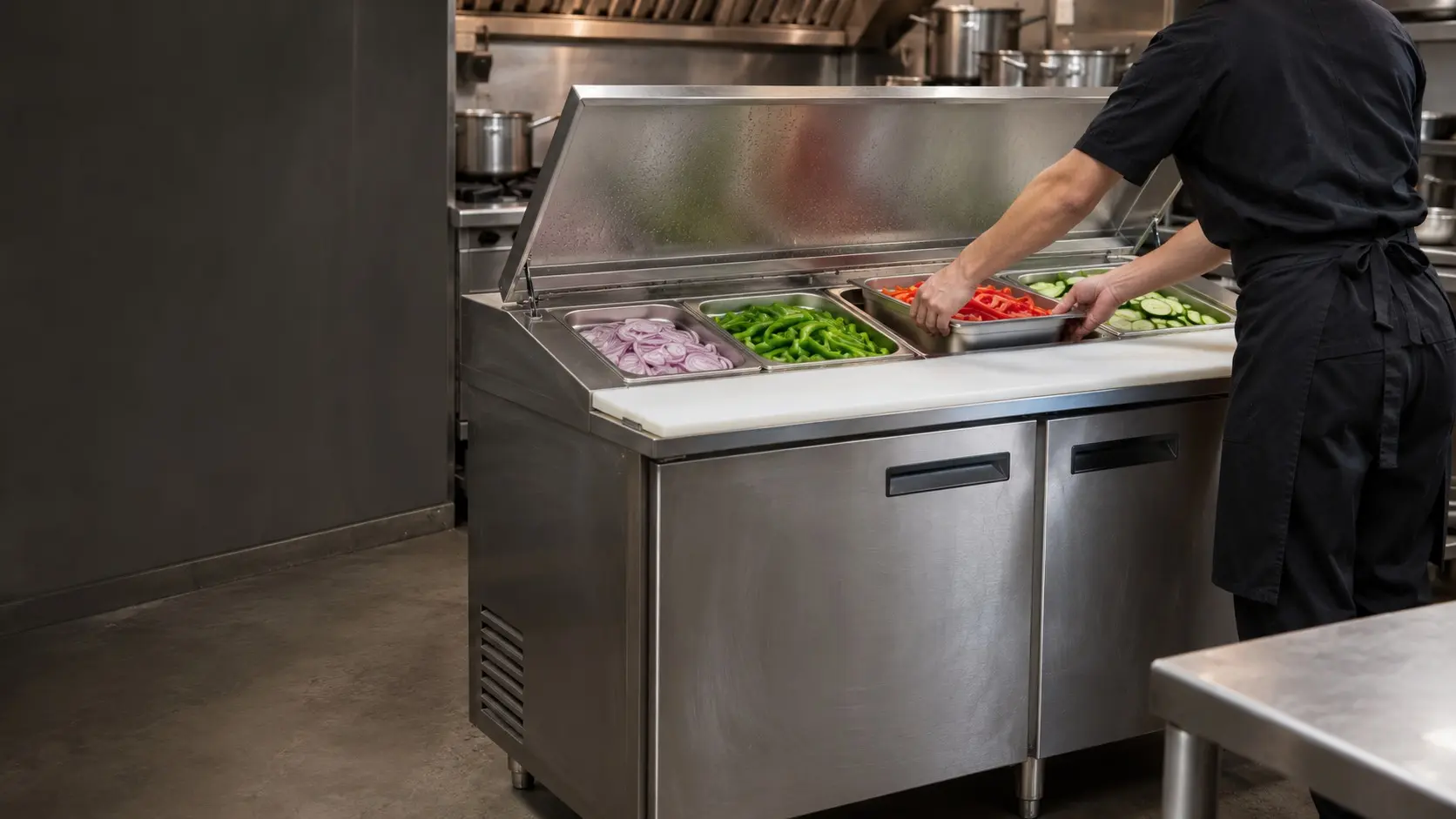
An open lid lets the cold air spill into the room, and a pan filled above the rail line sits in warm air instead of cold. Both are quick to see and quick to fix, so they come first on any check.
- Close the lid between orders; it costs a second and keeps the rail at temperature.
- Keep product below the pan rim, inside the cold air of the well, not heaped above it.
- Use the pan size the well was built for; a smaller pan in a larger opening leaves gaps where air escapes.
- Keep a cutting board off the rail unless it is a rail-rated board that leaves the air channels open.
- Do not stack a second layer of pans on the rail to hold extra product.
Product that was warm when loaded will not cool on the rail. A pan of tomatoes that came off the counter at room temperature warms the rail around it, and the table gets blamed. Chill product in the cabinet or walk-in before it goes up.

Where does the airflow get blocked?
The air that cools the rail and the air that cools the condenser both need open paths, and a table pushed against a wall or loaded to the back of the cabinet loses both. Check the following before calling for service.
Inside the cabinet
Look for the vent slots at the rear of the pan well and under the shelves. A sheet of plastic wrap, a tray of food or a box set on the floor of the cabinet can cover them. Liquid spilled into the well and frozen into a sheet can do the same.
Around the condensing unit
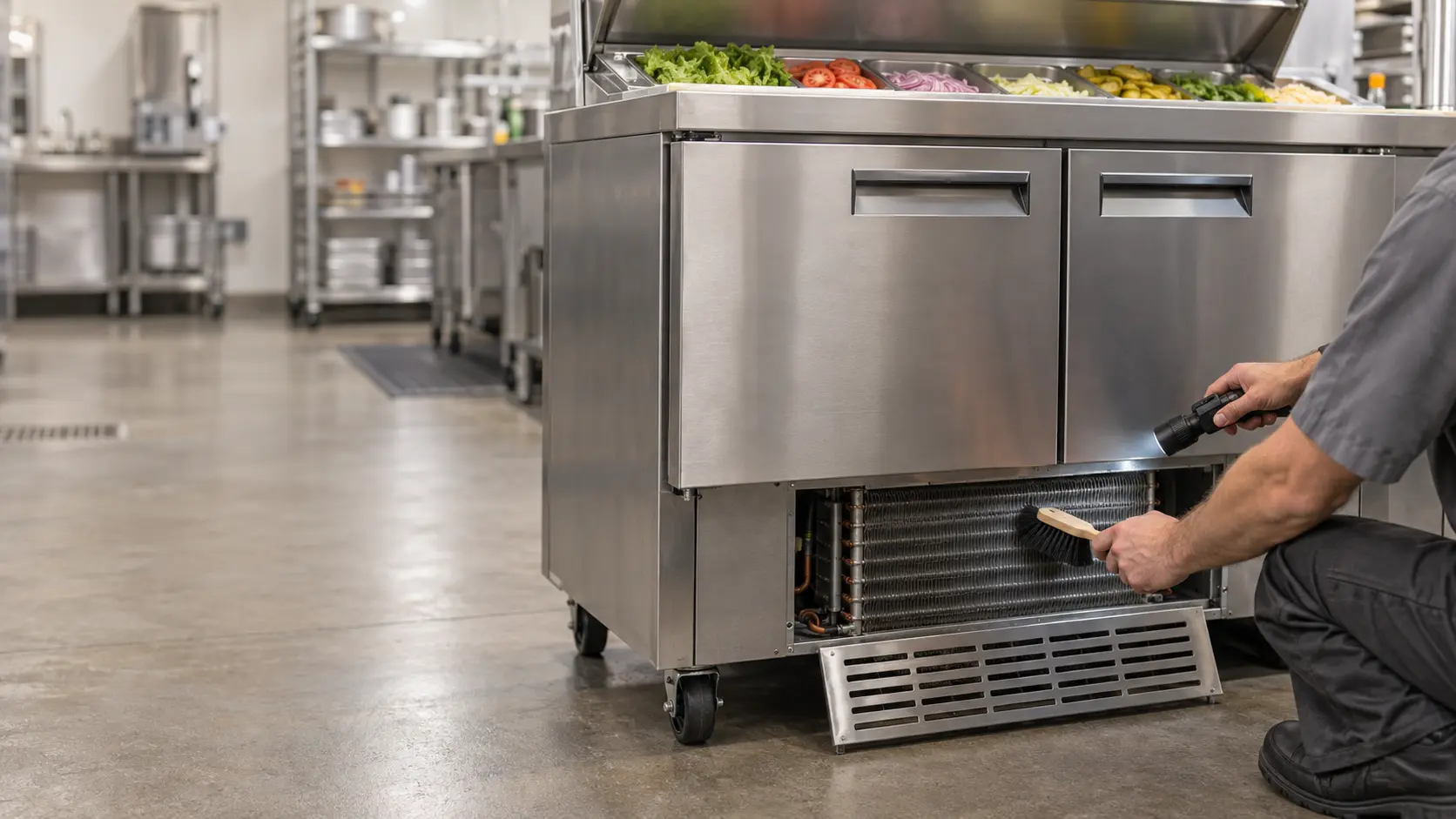
Most prep tables breathe through a front or side grille. Check that it is not covered by a mat, a case of produce or a mop bucket, and that the clearance the owner's manual lists for the sides and back is respected. A table dropped into a line-up with no air gap will cook its own condenser.
Beside the heat
A fryer, flat-top or char grill right beside the table feeds hot air straight into the condenser intake. A heat shield or a spacer cabinet between them often helps more than any repair would. Our guide on space and airflow around rooftop units explains the same rule of thumb for larger equipment.
Is a dirty coil making the table run warm?
A coil clogged with grease and dust makes the compressor run longer to move the same heat, so the cabinet drifts warm on busy days and recovers slowly at night. It is a common cause that crews miss, because the coil sits behind a grille nobody opens.
The signs are a condensing unit that is hot to the touch, a compressor that runs almost without stopping and a grille that looks fuzzy with lint. Switch the unit off at the plug or breaker, brush the coil from the front with a soft brush and use a vacuum, and never a water hose or a wire brush. Fins bend easily and a bent fin blocks air as well as dirt does. Cleaning condenser coils on a schedule gives intervals for reach-ins and prep tables, and a grease-laden coil in a kitchen is cleaned more often than one in a back hall.
| Check | What you see | Likely cause |
|---|---|---|
| Rail warm, cabinet cold | Pans in the well above 41°F, drawers fine | Open lids, overfilled pans, warm product |
| Whole unit warm, compressor never rests | Condensing unit hot, grille dusty | Dirty coil or blocked intake |
| Warm only at peak, fine at night | Recovers after close | Heat from the line, too much load |
| Warm, with frost on back wall | Ice sheet behind the pans | Defrost or evaporator problem |
What can staff change, and what is a repair?
Anything that changes how the table is loaded, placed or cleaned from the front is a staff job; anything behind a panel is a technician's. A short routine at the start of each shift keeps a table honest and gives a service visit a clear history.
- Check the cabinet with a probe thermometer in a pan of water or in product, not by the display alone.
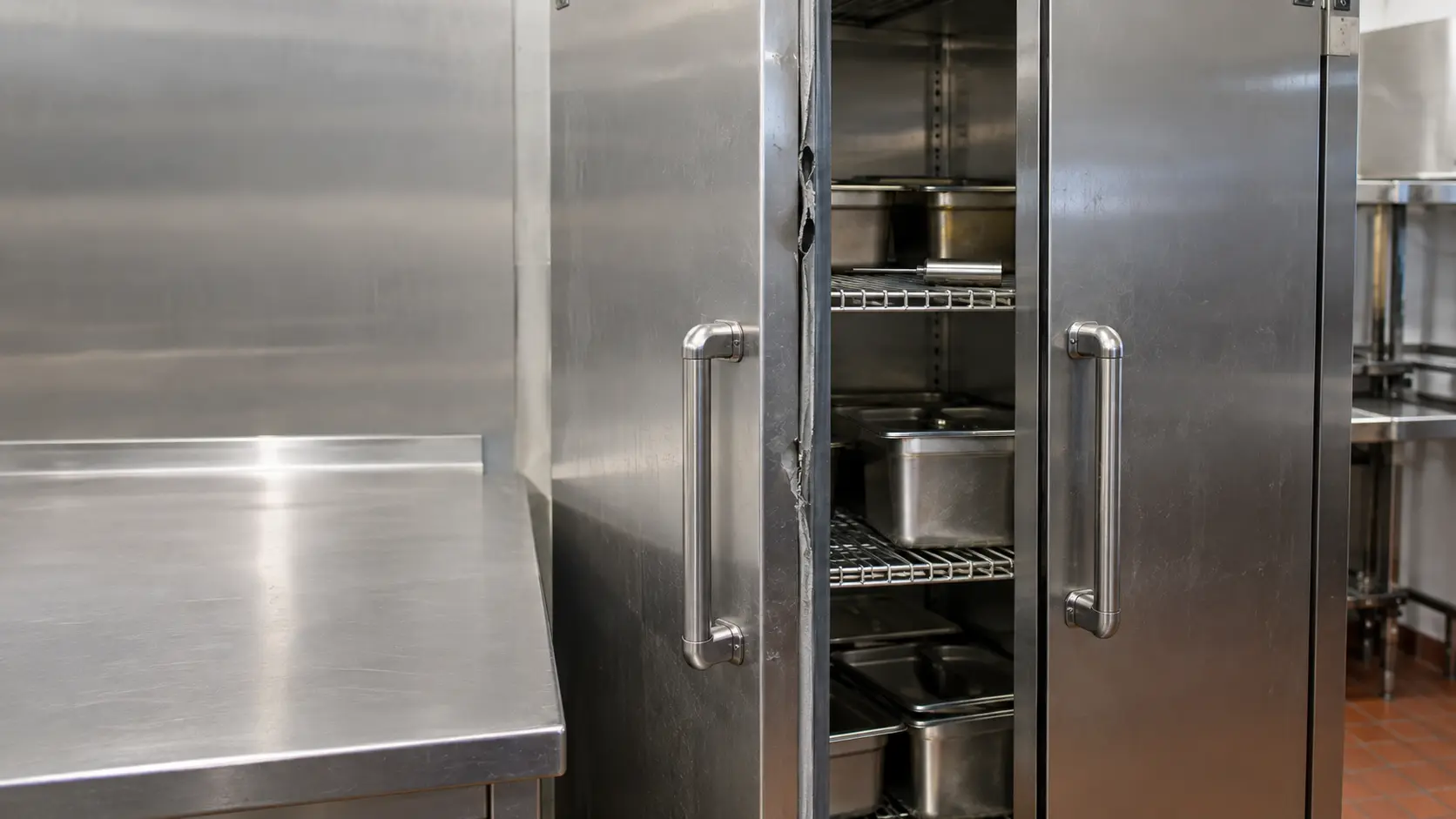
- Check that the lids close fully and the gaskets are not torn or folded.
- Look at the grille and the floor around the unit for blocked air.
- Write the reading and the time on the log; a drift is easy to see in a row of numbers, and the checks a manager can run before booking use the same habit.
Hinges, gaskets and a thermostat probe that has slipped from its clip are quick repairs when a technician has the part. Fan motors, a failing compressor, a leak or an evaporator that ices over are larger jobs. If the unit is warm even with the lid closed, the vents clear and the coil clean, reach-in and prep table repair is the next step, and the "running warm" problem page lists what a technician will check on arrival.
What to do with product that rose above 41°F
The FDA Food Code sets 41°F or below as the cold-holding temperature for foods that need time and temperature control (section 3-501.16), and it allows time instead of temperature as the control only under a written procedure that tracks the clock (section 3-501.19). Do not top up a pan that is warm; move product to a cold unit and tell the manager. Our guide on keeping food safe when cold storage fails walks through the decisions and the clock.
Source: FDA Food Code 2022 — section 3-501.16 sets 41°F or below for cold holding of foods that need time and temperature control